
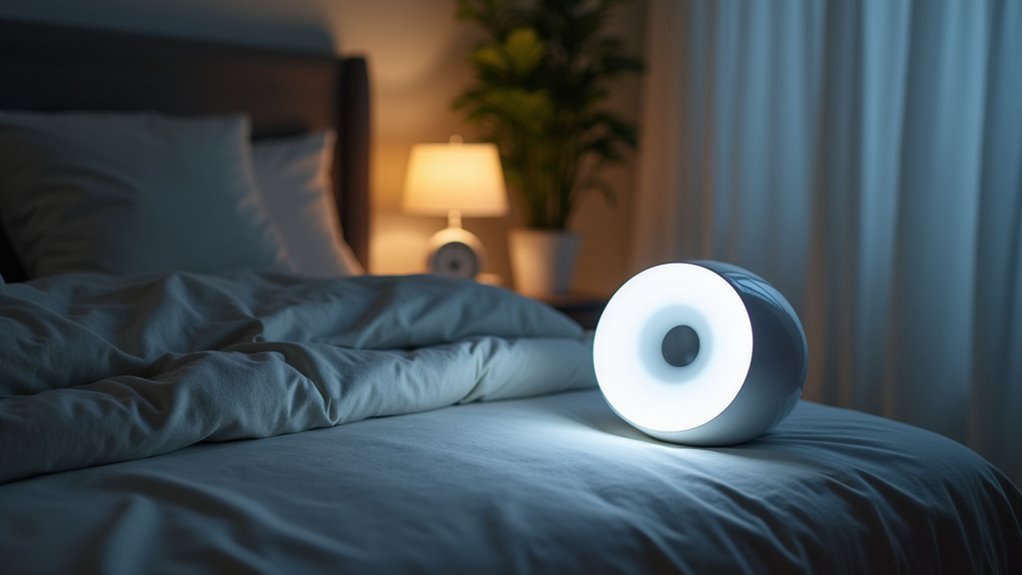
You’ll want light therapy devices that emit 10,000 lux for effective circadian rhythm regulation and better sleep. Top options include light therapy lamps and boxes for stationary use, wake-up lights that simulate gradual sunrise, portable light therapy visors, and alarm clocks with integrated light therapy features. Use these devices for 20-40 minutes each morning, positioned 16-24 inches away from your face. Consistent daily sessions maximize effectiveness for resetting your sleep-wake cycle and discovering ideal treatment strategies.
How Light Therapy Regulates Your Sleep-Wake Cycle
When you’re exposed to bright light, your brain receives a powerful signal that helps synchronize your internal clock with the natural rhythm of day and night.
Light therapy works by influencing your melatonin and serotonin levels, two essential hormones that regulate your sleep-wake cycle and maintain healthy circadian rhythms.
Light therapy resets your body’s natural clock by balancing the key hormones that control when you sleep and wake.
Bright light therapy suppresses melatonin production during the day, keeping you alert and energized. When darkness falls, your body naturally increases melatonin, promoting sleepiness.
This light exposure also boosts serotonin, enhancing your mood and energy levels throughout the day.
Regular light therapy sessions improve sleep quality by resetting disrupted circadian rhythms.
This treatment proves especially effective for seasonal affective disorder (SAD) and various sleep disorders, helping you fall asleep easier and wake up refreshed.
Types of Light Therapy Devices for Sleep Improvement
Several types of light therapy devices can help you achieve better sleep and regulate your circadian rhythms.
Light therapy lamps and light boxes emit 10,000 lux of bright light, providing effective light treatment for insomnia and seasonal affective disorder (SAD). These devices require 20-40 minutes of daily exposure to improve sleep quality and mental health.
Wake-up lights simulate gradual sunrise, increasing light intensity slowly to enhance your mood and reduce morning grogginess.
Light therapy visors offer portable solutions, allowing you to receive blue-enriched white light while performing daily activities.
Alarm clocks with light therapy features mimic natural light patterns, easing your shift from sleep to wakefulness and boosting energy levels throughout the day.
Best Light Therapy Devices for Circadian Rhythm Reset
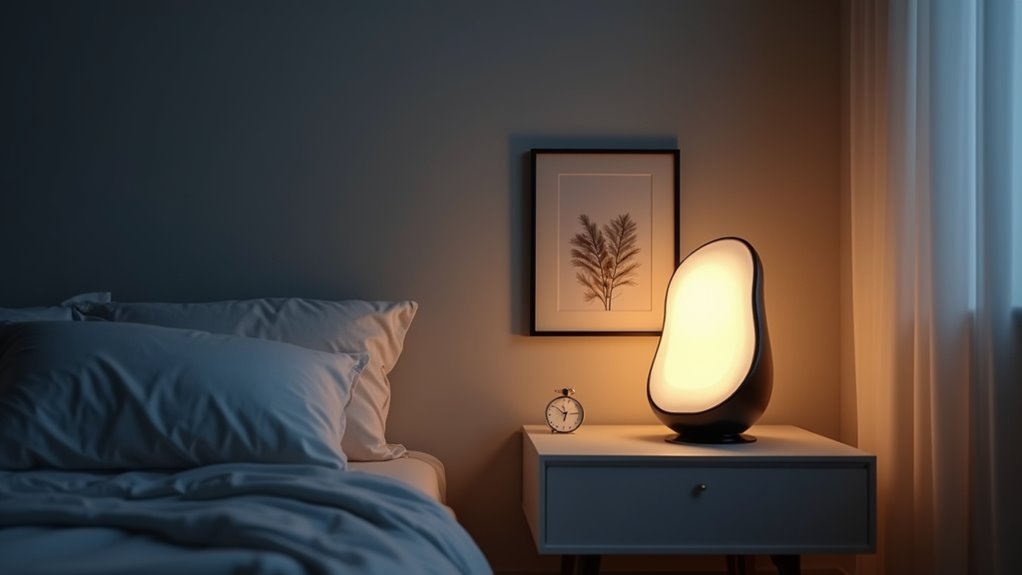
Since your circadian rhythm directly impacts sleep quality and overall well-being, choosing the right light therapy device becomes essential for achieving effective rhythm reset.
Light therapy devices emitting 10,000 lux effectively simulate natural sunlight, helping regulate melatonin and serotonin levels for peak sleep patterns.
For circadian rhythm disorders and seasonal affective disorder, consider these key features:
- Morning light exposure timing – 20-40 minute sessions enhance rhythm realignment
- Consistent daily usage – Regular sessions maximize effectiveness for mood disorders
- Adjustable intensity settings – Customize light exposure based on individual responses
- Sleep specialist recommendations – Professional guidance enhances treatment outcomes
Combining light therapy with other treatments further improves sleep health, particularly for insomnia linked to disrupted circadian rhythms.
Your commitment to daily sessions determines success in resetting your natural sleep-wake cycle.
When and How to Use Light Therapy for Optimal Sleep
Proper timing and technique determine whether your light therapy sessions will successfully improve your sleep quality.
Use your light box in the morning for 20-40 minutes, positioning it 16-24 inches away to receive ideal 10,000 lux exposure. Morning light therapy helps regulate your circadian rhythm without interfering with melatonin production later.
Consistent daily sessions at the same time are essential for lasting results.
Never use light therapy in the evening, as bright light disrupts your natural sleep-wake cycle and prevents you from falling asleep.
Combine light therapy with other sleep treatments for enhanced benefits.
Monitor for side effects like eye strain or headaches, and consult your physician to customize your approach. This systematic method helps you sleep better naturally.
Safety Considerations and Effectiveness of Sleep Light Therapy
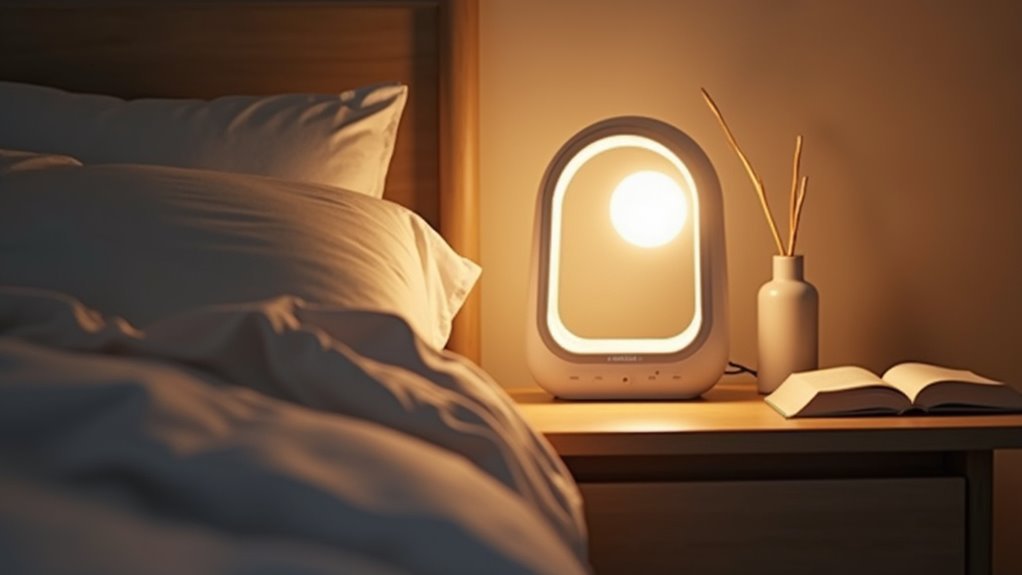
While light therapy devices offer promising benefits for sleep improvement, understanding their safety profile and proven effectiveness helps you make informed decisions about incorporating this treatment into your routine.
Clinical trials demonstrate light therapy’s effectiveness in treating sleep disorders and seasonal affective disorder (SAD), with users experiencing improved mood and energy within two weeks.
However, you’ll need to reflect on safety factors:
- Light intensities: Use devices emitting 10,000 lux for ideal results
- Side effects: Monitor for eyestrain and headaches during initial use
- Medical supervision: Consult healthcare providers, especially if you have bipolar disorder
- Duration: Limit sessions to 20-40 minutes to prevent adverse reactions
Research shows consistent therapy considerably enhances sleep quality and circadian rhythm alignment, making it a proven treatment option when used responsibly.
Frequently Asked Questions
Which Light Helps You Sleep the Best?
You’ll sleep best with bright light therapy devices emitting 10,000 lux used for 20-40 minutes daily, or gradual wake-up lights that simulate sunrise, as they’ll regulate your circadian rhythms effectively.
Which Light Is Best to Induce Sleep?
You’ll sleep best with warm, dim light between 2700K to 3000K that mimics sunset. Avoid blue light and choose red or amber wavelengths instead, as they won’t disrupt your melatonin production like cooler lights do.
What Is the Highest Rated Red Light Therapy Device?
You’ll find the Mito Red Light Professional Laser Therapy Helmet consistently ranks as the highest-rated red light therapy device. It’s FDA-cleared, clinically backed, and users report visible hair regrowth improvements within weeks.
What Frequency of Light Helps You Sleep?
Red light frequencies around 660-850 nanometers help you sleep best. You’ll find this wavelength promotes melatonin production while avoiding blue light’s alertness-inducing effects. It’s gentler on your circadian rhythm during evening hours.


Leave a Reply