
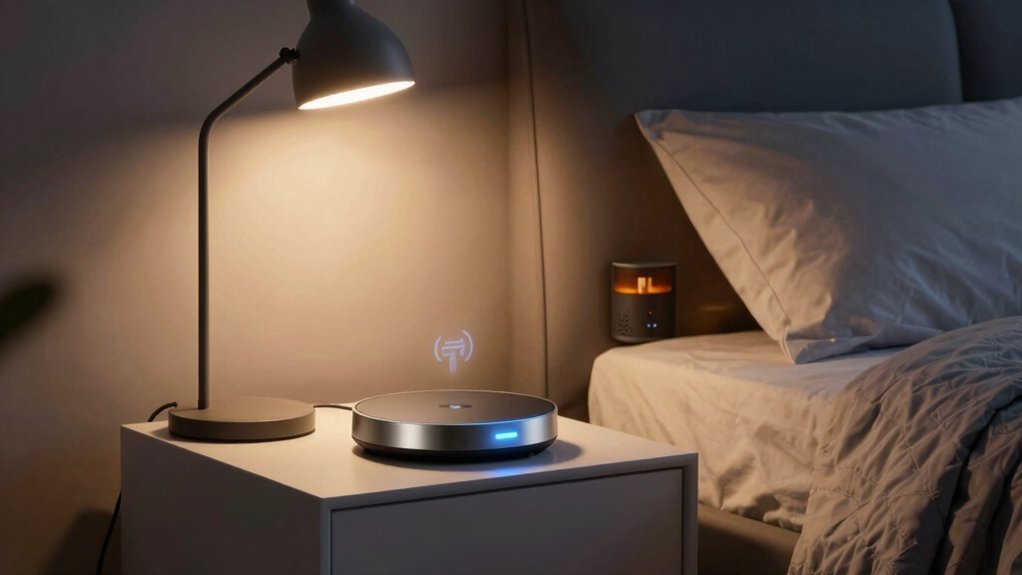
You’re probably already juggling a dozen gadgets to make bedtime smoother, yet most of them work in isolation. Imagine a single controller that syncs your lights, soft music, and even the thermostat, all with sub‑second response and minimal cloud lag. The three options below each promise that kind of seamless, energy‑savvy coordination—if you can pick the one that fits your setup and privacy preferences.
| LED Wi‑Fi RGB Light Strip Controller (Alexa/Google Home) | Mood Maestro | Voice Assistant Compatibility: Alexa, Google Home | Mobile App Control: Magic Home app (iOS/Android) | Scheduling / Automation: On/off scheduling, music sync, grouping | CHECK ON AMAZON | Read Our Analysis | |
| BroadLink RM4mini Smart Remote Hub (Wi‑Fi IR) | Versatile Remote | Voice Assistant Compatibility: Alexa, Google Assistant, IFTTT, Siri (iPhone) | Mobile App Control: BroadLink app (iOS/Android) | Scheduling / Automation: Timers, scenes, temperature‑triggered automation | CHECK ON AMAZON | Read Our Analysis | |
| YoLink Smart Garage Door Sensor with Alerts | Security Sentinel | Voice Assistant Compatibility: Alexa, Google Assistant, IFTTT, Home Assistant | Mobile App Control: YoLink app (requires YoLink hub) | Scheduling / Automation: Open‑door alerts, schedule‑based arming, scene integration | CHECK ON AMAZON | Read Our Analysis |
More Details on Our Top Picks
LED Wi‑Fi RGB Light Strip Controller (Alexa/Google Home)
Looking for a hassle‑free way to set the perfect bedtime ambiance? You can grab the LED Wi‑Fi RGB Light Strip Controller and sync it with Alexa or Google Home. The free Magic Home app lets you pick colors, adjust brightness, and choose patterns from your phone, no IR remote needed. Set schedules so lights fade out at your bedtime, or group strips to control zones independently. Music sync makes the room pulse with your favorite tracks, while voice commands let you turn lights on or off hands‑free. Installation is simple: connect the controller to the strip, plug into power, scan the Wi‑Fi code, and you’re ready. One‑year warranty covers any issues.
- Voice Assistant Compatibility:Alexa, Google Home
- Mobile App Control:Magic Home app (iOS/Android)
- Scheduling / Automation:On/off scheduling, music sync, grouping
- Connectivity Type:Wi‑Fi (2.4 GHz)
- Remote Control Capability:App‑based control, no IR remote needed
- Warranty:1‑year warranty
- Additional Feature:Music‑sync lighting
- Additional Feature:Multi‑strip grouping
- Additional Feature:One‑year warranty
BroadLink RM4mini Smart Remote Hub (Wi‑Fi IR)
If you want a single, low‑cost hub that instantly lets you control every IR‑based device in your bedroom—TV, air conditioner, fan, sound bar—while you drift off, the BroadLink RM4mini is the perfect fit. It handles 50,000+ IR devices, learns new codes, and works via the iOS/Android app on your 2.4 GHz network. Voice commands flow through Alexa, Google Assistant, or Siri, and IFTTT lets you trigger scenes like turning on the AC when temperature spikes. You can set timers, create custom sleep scenes, and view external temperature/humidity sensors. Just keep the line‑of‑sight clear; it won’t handle RF or 5 GHz Wi‑Fi.
- Voice Assistant Compatibility:Alexa, Google Assistant, IFTTT, Siri (iPhone)
- Mobile App Control:BroadLink app (iOS/Android)
- Scheduling / Automation:Timers, scenes, temperature‑triggered automation
- Connectivity Type:Wi‑Fi (2.4 GHz) only
- Remote Control Capability:IR remote emulation for TVs, ACs, etc.
- Warranty:Standard manufacturer warranty (unspecified)
- Additional Feature:50,000+ IR devices
- Additional Feature:Temperature/humidity sensor
- Additional Feature:No RF support
YoLink Smart Garage Door Sensor with Alerts
Worried that a garage door left ajar could ruin your sleep? YoLink’s Smart Garage Door Sensor watches the door 24/7 and sends you an instant alert if it stays open past your preset limit. You can arm it on a schedule or tie it to a “sleep” scene, so it only warns when you’re trying to rest. The sensor works through the YoLink hub, which also talks to Alexa, Google Assistant, IFTTT, and Home Assistant, letting you ask “Is the garage door closed?” or trigger automations that lock the door automatically. Start with basic monitoring, then add control later if you want the hub to open or close the door for you. This flexibility guards against forgetfulness and keeps your perimeter secure while you drift off.
- Voice Assistant Compatibility:Alexa, Google Assistant, IFTTT, Home Assistant
- Mobile App Control:YoLink app (requires YoLink hub)
- Scheduling / Automation:Open‑door alerts, schedule‑based arming, scene integration
- Connectivity Type:Wi‑Fi (via YoLink hub)
- Remote Control Capability:Sensor‑based status alerts (no direct device control)
- Warranty:Standard manufacturer warranty (unspecified)
- Additional Feature:Open‑door alerts
- Additional Feature:Scene‑based arming
- Additional Feature:Hub‑required integration
Factors to Consider When Choosing Smart Home Sleep Scene Controllers That Trigger Lights, Sound, and Temperature
When you pick a sleep scene controller, make sure it works seamlessly with your voice assistant and can sync across all your devices. Look for flexible scheduling and automation options that let you fine‑tune lights, sound, and temperature without wasting energy. Finally, check that it integrates with temperature sensors and includes energy‑saving features to keep your bedroom comfortable and efficient.
Compatibility With Voice Assistants
How well your sleep scene controller syncs with voice assistants determines whether you can dim lights, play soothing sounds, and adjust temperature without lifting a finger. First, confirm the device offers native integration with Alexa, Google Assistant, or Siri; a direct link avoids extra hubs and reduces latency. If a bridge is required, make sure it supports the full sleep‑scene feature set, otherwise you’ll lose one‑tap control. Check the Wi‑Fi spec—most controllers need a 2.4 GHz network, and a weak signal can break voice‑initiated routines. Ensure a single command can trigger lights, audio, and thermostat together, either via the assistant’s built‑in scene feature or a custom routine. Finally, look for IFTTT or Home Assistant support to extend voice control to non‑native devices, keeping your bedtime workflow seamless.
Multi‑Device Synchronization
What matters most is that every light, speaker, and thermostat fires at the same instant, creating a seamless sleep scene. Look for a controller that uses low‑latency protocols—Wi‑Fi, Zigbee, or Bluetooth—so actions occur within a sub‑second window. Avoid cloud‑only triggers that can lag a few seconds. The system should support second‑level scheduling and broadcast a synchronized group command from a central hub or automation platform. Check that it handles conflict resolution: priority rules must stop a thermostat’s temperature change from overriding a lighting cue. Finally, verify that all devices you plan to use are compatible with the hub’s protocol, ensuring the whole sleep routine executes in perfect lockstep.
Scheduling And Automation Flexibility
Ever wondered how a sleep‑scene controller can keep your lights, speakers, and thermostat perfectly in sync? Look for scheduling that lets you set time‑based on/off events, trigger whole scenes, and group devices so lights dim, music fades, and temperature drops together. Automation flexibility means you can add rules—like turning the heater on only if the room stays below 68°F, or pausing a playlist when motion is detected. Choose a system that supports multiple timers and easy editing, so you can prioritize night‑time settings without juggling apps. Voice‑assistant integration (Alexa, Google) and platforms like IFTTT or Home Assistant broaden trigger options, while local processing guarantees low latency and reliability even if your internet drops.
Energy Efficiency Features
While scheduling lets you line up lights, music, and temperature, the next step is ensuring those actions don’t waste power. Choose controllers built on low‑power microcontrollers and radios that drop into deep sleep when idle; this alone cuts baseline draw dramatically. Look for automatic dimming and nighttime scheduling that lower LED brightness, and enable motion sensors so lights only turn on when you’re present. For climate, pick thermostats that cycle efficiently, holding setpoints rather than toggling rapidly. Coordinated sleep scenes should stagger high‑load devices, avoiding simultaneous peaks and shifting non‑essential actions to off‑peak hours. Finally, favor units that provide real‑time energy dashboards, letting you monitor consumption and fine‑tune routines for lower bills.
Integration With Temperature Sensors
Leveraging temperature sensors lets your sleep‑scene controller react instantly to a room’s climate, turning on a soft lamp when it drops below your comfort threshold or dimming lights as the space warms. You should check whether the controller includes a built‑in sensor or requires a separate unit, and confirm that the sensor speaks the same protocol as your hub (Zigbee, Matter, Wi‑Fi). Low‑latency readings are essential; a laggy sensor can fire a lighting cue too late, breaking the soothing transition. Look for apps that display real‑time temperature and humidity, letting you set precise thresholds for lights, sound, or thermostat adjustments. Finally, verify compatibility with your existing automation ecosystem—if the sensor can’t be paired, you’ll lose the seamless, temperature‑driven bedtime routine you want.
Reliability Of Connectivity
Temperature sensing works, but if your controller can’t stay connected, the whole bedtime routine collapses. You need a stable Wi‑Fi link—preferably a 2.4 GHz band if the device only supports that—to avoid intermittent delays in lights, sound, or temperature actions. Cloud‑dependent IR or hub‑based units can lag or fail during service outages, so look for models that process commands locally or on an edge hub. Weak signal or network interference between the controller and router will cause missed triggers, while a mesh network or a strong‑signal setup with clear line‑of‑sight for IR hubs improves cross‑room reliability. Choosing a controller that minimizes internet reliance keeps your sleep scene consistent even when the network hiccups.
Frequently Asked Questions
How Can I Integrate a Sleep Scene Controller With My Existing Smart Thermostat?
You link the controller to your thermostat via its app or Alexa/Google Home, set a sleep scene that triggers temperature adjustments, then enable the scene manually or on a schedule.
Will the Controller Work With Bluetooth-Only Smart Speakers?
Yes, it will work with Bluetooth‑only speakers, but you must pair the controller via Bluetooth, ensure the speaker supports the required audio profile, and verify the firmware is up‑to‑date.
Can I Set up Multiple Users With Different Sleep Scene Preferences?
Yes, you can create separate profiles for each user, assign individual lighting, sound, and temperature presets, and switch between them instantly via the app or voice commands, ensuring personalized sleep scenes every night.
Is There a Way to Schedule Scene Changes Based on Sunrise and Sunset Times?
Yes, you can set sunrise‑based schedules in the app—just enable the “Sunrise/Sunset” toggle, pick your preferred scenes, and the controller will automatically adjust lights, sound, and temperature at those times.
Do These Devices Support Offline Operation During Internet Outages?
Yes, they’ll keep working offline; each controller stores schedules locally and runs its own Wi‑Fi or Bluetooth mesh, so you can still trigger lights, sound, and temperature without internet.


