

You’ll enhance your recovery by implementing these seven blue light blocking strategies: wear red-lens glasses two hours before bedtime to filter 100% of blue wavelengths, activate night mode on all devices during evening hours, follow the 20-20-20 rule every twenty minutes, reduce screen brightness considerably after sunset, install blue light filtering apps like F.lux, switch to amber or red bulbs in your bedroom, and power down electronics three hours before sleep. These combined methods create ideal conditions for natural melatonin production and restorative rest cycles.
Understanding How Blue Light Disrupts Recovery Sleep Cycles
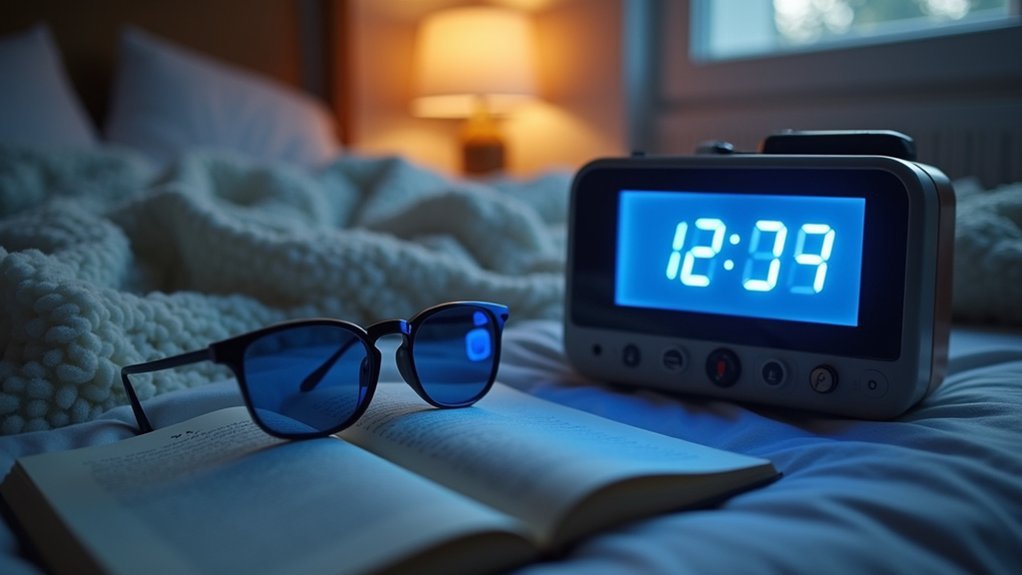
When you expose yourself to blue light from phones, tablets, or computers in the evening, you’re fundamentally telling your brain to stay alert when it should be winding down for recovery.
This artificial light disrupts your circadian rhythm by suppressing melatonin production for up to four hours, directly compromising your body’s natural sleep preparation process.
Your sleep quality suffers considerably from blue light exposure, creating a cascade of recovery problems.
Blue light exposure severely degrades sleep quality, triggering a harmful cascade that undermines your body’s critical recovery processes.
Without adequate melatonin, your growth hormone release decreases during sleep, hampering muscle repair and regeneration.
This disruption prevents your body from performing essential recovery functions that happen during deep sleep phases.
Blue light blocking glasses offer one solution, but understanding the underlying mechanism helps you make informed decisions about your evening screen habits and recovery protocols.
Implementing the 20-20-20 Rule During Evening Screen Time
You can protect your recovery sleep by implementing the 20-20-20 rule during your evening screen sessions.
This strategy involves looking at something 20 feet away for 20 seconds every 20 minutes, giving your eyes vital breaks from blue light exposure.
The timing becomes especially important in the hours before bedtime when your body needs to naturally wind down and prepare for restorative sleep.
Evening 20-20-20 Timing
Although many people practice the 20-20-20 rule during daytime work hours, implementing this strategy during evening screen time becomes even more vital for protecting your sleep quality and recovery.
During evening hours, blue light exposure from digital devices can considerably disrupt melatonin production, making proper timing essential for your evening routine.
You should begin implementing 20-minute intervals at least two hours before bedtime. Set reminders on your phone or computer to maintain consistency.
Each 20-second break allows your eyes to reset and reduces accumulated eye strain from prolonged screen use. Focus on objects across the room or look out a window during these breaks.
This timing strategy becomes increasingly important as evening approaches, since your circadian rhythm becomes more sensitive to blue light exposure closer to sleep time.
Screen Break Benefits
Since your eyes naturally accumulate strain throughout the day, implementing screen breaks during evening hours delivers compounded benefits that extend far beyond simple eye comfort.
The 20-20-20 rule becomes particularly powerful when you’re fighting blue light emissions before bedtime.
Your evening screen break routine creates these measurable improvements:
- Reduced digital eye strain – You’ll experience less burning, dryness, and visual discomfort during prolonged screen time sessions.
- Enhanced productivity – Fighting eye fatigue allows you to maintain sharper focus throughout evening work or entertainment.
- Better sleep quality – Regular breaks help regulate your circadian rhythm by minimizing blue light’s sleep-disrupting effects.
- Long-term vision protection – You’re actively preventing cumulative damage from excessive screen exposure.
These benefits multiply when you consistently prioritize breaks.
Choosing the Right Blue Light Blocking Glasses for Nighttime Use

When should you start wearing blue light blocking glasses to enhance your recovery rest? You’ll want to put on your nighttime glasses at least two hours before bedtime to counteract melatonin suppression from blue light exposure.
For peak sleep quality, choose red lenses that filter 100% of blue and green light wavelengths. These specialized nighttime glasses promote maximum melatonin production, unlike clear lenses that only block 50% of blue light.
While clear options work for evening device use when you need visibility, red lenses deliver superior results for recovery rest.
Look for blue light-blocking glasses tested for effectiveness across the 400nm to 550nm spectrum, as this range most disrupts sleep. Red lenses eliminate eye strain while supporting your body’s natural circadian rhythm, making them essential for serious recovery enhancement.
Adjusting Device Settings and Display Configurations for Better Rest
While blue light blocking glasses provide excellent protection, you can enhance your recovery rest even further by improving your device settings and display configurations.
These simple adjustments work alongside your blue light filtering glasses to minimize melatonin suppression and support your circadian rhythm.
Here are four essential device modifications for better sleep:
- Activate night mode on all devices during evening hours to greatly reduce blue light emissions.
- Focus on adjusting screen brightness to lower levels, which alleviates digital eyestrain and promotes relaxation.
- Install blue light blocking apps like F.lux for customizable filtering based on time of day.
- Switch to warmer display tones in the evening to synchronize with natural light cycles.
Remember to reduce screen time at least three hours before bedtime for ideal melatonin release.
Creating an Optimal Sleep Environment With Red and Amber Lighting
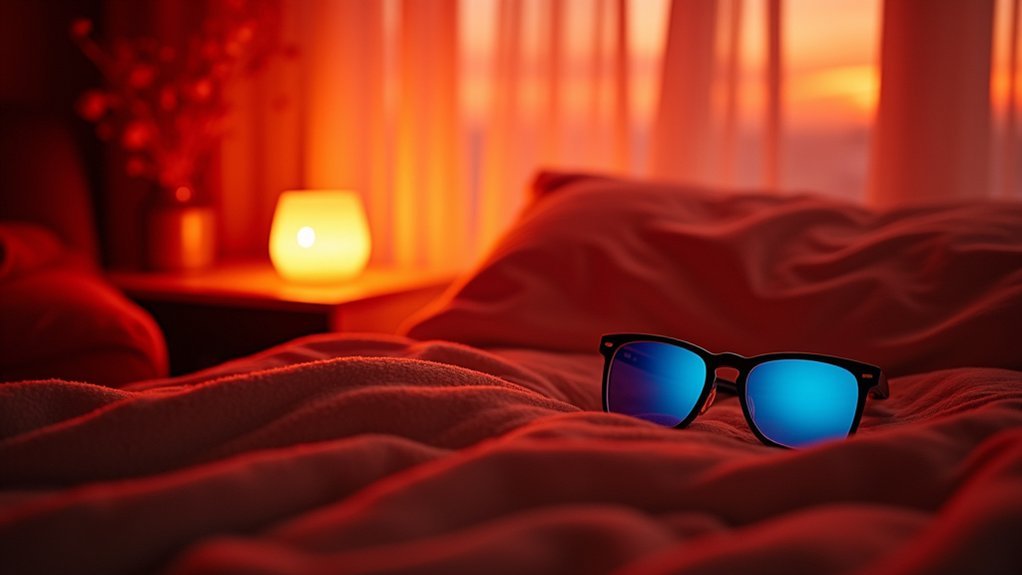
After you’ve optimized your device settings, transforming your bedroom lighting creates the final layer of protection against sleep-disrupting wavelengths.
Red light bulbs block 100% of blue and green light, making them perfect for bedrooms after sunset. They won’t interfere with melatonin production, helping you optimize sleep naturally.
Red light bulbs eliminate sleep-disrupting wavelengths completely, creating the ideal bedroom environment for natural melatonin production and restful sleep.
Amber light provides better visibility while still blocking all blue light wavelengths that disrupt circadian rhythms. You can use amber bulbs in hallways or bathrooms where you need more illumination during nighttime hours.
Both red light and amber light create calming environments that support your body’s recovery processes.
Regular use of these specialized bulbs greatly improves sleep quality and duration, maintaining healthy circadian rhythms without the harsh effects of traditional lighting.
Timing Your Blue Light Exposure Around Natural Circadian Rhythms
Beyond optimizing your physical environment with specialized bulbs, strategic timing of blue light exposure creates the foundation for robust circadian health.
You’ll need to reduce artificial blue light from sundown to sunrise, supporting healthy melatonin production and enhanced sleep quality.
Here’s your timing framework:
- Track sunrise/sunset times – Check local times weekly to adjust your blue light blocking strategies effectively
- Wear blue light blocking glasses – Start using them at sunset to minimize evening exposure
- Activate night mode settings – Switch devices to warm tones after sundown to protect circadian rhythms
- Prioritize natural light exposure – Get bright sunlight during daytime hours to reset your biological clock
Combining Multiple Protection Methods for Maximum Recovery Benefits
You’ll maximize your recovery benefits by stacking multiple blue light protection methods rather than relying on a single approach.
Creating layered defense systems means you’re combining blue light glasses with amber lighting, screen filters, and strategic timing to build thorough protection.
This integrated environmental control approach guarantees you’re addressing blue light exposure from every angle while syncing your strategies with your body’s natural rhythms.
Layered Light Defense Systems
When it comes to maximizing your recovery potential, relying on a single blue light protection method won’t deliver the extensive defense your circadian system needs.
Layered light defense systems combine multiple strategies to reduce your exposure and minimize health risks while improving quality of sleep.
Your all-encompassing approach should include:
- Blue light blocking glasses synchronized with natural light patterns during mornings and evenings
- Device filtering apps and built-in blue light settings on screens
- Blue blocking light bulbs throughout your living spaces to maintain melatonin production
- Ambient lighting adjustments using amber or red bulbs at night
Additionally, integrate the 20-20-20 rule during screen time: every 20 minutes, look at something 20 feet away for 20 seconds.
This multi-layered defense creates ideal conditions for recovery rest.
Timing Protection Strategies
Although layered defense systems provide extensive blue light protection, strategic timing transforms these methods into powerful recovery tools that work synergistically with your body’s natural rhythms.
Your timing protection strategies should begin at sunset when you start wearing blue light blocking glasses to preserve melatonin production. Implement the 20-20-20 rule throughout the day, taking screen breaks every twenty minutes to reduce cumulative exposure.
As evening approaches, activate blue light filtering apps while maintaining your glasses for dual protection against blue light emitted from devices. Establish a consistent sleep routine by powering down electronics three hours before bed.
This systematic approach optimizes your circadian rhythm alignment, dramatically improving sleep quality and maximizing recovery benefits through precise timing coordination.
Environmental Control Integration
The most effective blue light protection emerges when you layer multiple environmental controls to create a thorough defense system that amplifies your recovery potential.
By combining several strategies, you’ll maximize sleep quality while supporting natural melatonin production and reducing eye strain during digital device use.
Your all-encompassing environmental control approach should include:
- Blue light blocking glasses paired with device filtering apps to minimize evening exposure and enhance recovery processes
- Amber or red evening lighting that creates a calming atmosphere supporting natural melatonin cycles
- The 20-20-20 rule implementation during screen time to reduce eye strain and improve comfort
- Sleep sanctuary optimization using blackout curtains and removing electronics from your bedroom
This integrated approach creates the ideal environment for restorative sleep and best recovery.
Frequently Asked Questions
What Is the Best Way to Block Blue Light?
You’ll get the best blue light protection by wearing specialized blue light-blocking glasses that filter harmful 400-500nm wavelengths. They’re more effective than screen filters and directly shield your eyes from damaging emissions.
How to Recover From Too Much Blue Light?
You’ll recover from excessive blue light by implementing the 20-20-20 rule, wearing blue light glasses, activating device night modes, removing electronics from bedrooms, and getting natural sunlight exposure daily.
How Many Hours Before Bed Should I Block the Blue Light?
You should block blue light 2-3 hours before bedtime to maximize melatonin production. This timeframe helps restore your natural circadian rhythm and considerably improves sleep quality after excessive blue light exposure.
How Can You Reduce the Effects of Blue Light Exposure?
You can reduce blue light’s effects by wearing blocking glasses, using device night modes, following the 20-20-20 rule, installing amber bulbs, and syncing exposure with natural sunrise-sunset cycles.
In Summary
You’ll maximize your recovery when you combine these blue light strategies instead of relying on just one. Start with device settings and the 20-20-20 rule, then add amber lighting and quality blocking glasses. Don’t forget timing matters—reduce exposure 2-3 hours before bed. Your sleep quality will improve dramatically when you’re consistent with multiple methods rather than hoping one solution fixes everything.



Leave a Reply