
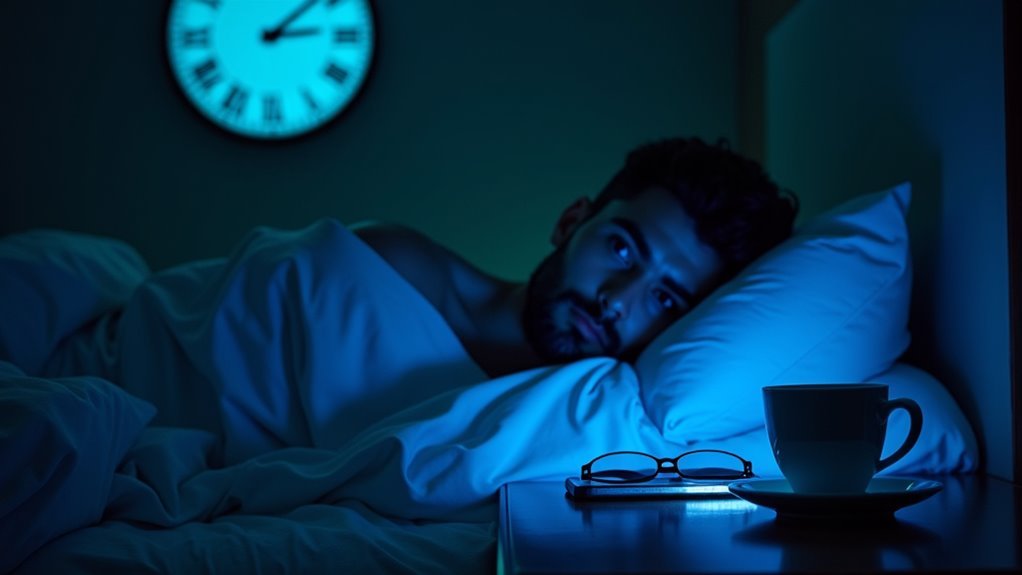
Blue light from your devices sabotages your sleep by suppressing melatonin production, which tricks your brain into thinking it’s daytime. It disrupts your natural circadian rhythm, shifting your 24-hour cycle and causing delayed sleep onset. You’ll experience reduced deep sleep and fragmented rest, leaving you exhausted despite hours in bed. Blue light also increases nighttime alertness when you should be winding down, ultimately creating long-term sleep dysfunction that extends far beyond tonight.
Blue Light Suppresses Melatonin Production

When you scroll through your phone before bed, you’re exposing yourself to blue light that actively suppresses your body’s melatonin production. This hormone regulates your circadian rhythm and signals when it’s time to sleep.
Blue light from electronic devices tricks your brain into thinking it’s still daytime, preventing the natural melatonin release that promotes drowsiness.
Even dim exposure to blue light can considerably lower your melatonin levels, making it harder to fall asleep. Your screen time during evening hours directly interferes with sleep quality by disrupting this essential biological process.
Research shows that limiting light exposure from devices for 2-3 hours before bedtime provides substantial health benefits, allowing your body to naturally prepare for restorative sleep without artificial interference.
Disrupts Your Natural Circadian Rhythm
Beyond disrupting melatonin production, blue light fundamentally alters your body’s internal clock, throwing your circadian rhythm out of sync.
Research shows that exposure to light from screens shifts your natural 24-hour cycle, making you feel alert when you should be preparing for sleep. This misalignment creates a cascade of sleep disorders that compromise restful sleep.
Blue light affect on your internal clock manifests in three critical ways:
- Delayed Sleep Onset – Light suppresses natural drowsiness signals, keeping you awake longer
- Fragmented Sleep Cycles – Disrupted circadian rhythms cause frequent nighttime awakenings
- Morning Grogginess – Misaligned sleep patterns leave you feeling unrested
The quality of your sleep deteriorates as chronic blue light blocking becomes essential for maintaining healthy circadian rhythms and preventing long-term health consequences.
Delays Sleep Onset and Reduces Deep Sleep

Blue light doesn’t just disrupt your circadian rhythm—it creates a domino effect that sabotages your ability to fall asleep quickly and achieve restorative rest.
When you’re exposed to blue light exposure before bedtime, your brain suppresses melatonin production, the hormone vital for triggering sleep onset. This delay means you’ll toss and turn longer, struggling to drift off.
Once you finally fall asleep, blue light’s damage continues. It reduces your deep sleep duration, preventing your body from completing essential recovery processes.
This disruption leads to fragmented sleep throughout the night, leaving you exhausted despite spending hours in bed. Teens vulnerable to these effects suffer most, as they need more restorative sleep.
To improve your sleep quality, reduce exposure to blue light and protect your night’s sleep.
Increases Nighttime Alertness When You Should Be Winding Down
As evening approaches and your body naturally prepares for rest, blue light exposure acts like a biological alarm clock, flooding your system with artificial alertness.
This artificial lighting from screen use tricks your brain into thinking it’s still daytime, disrupting your natural circadian rhythms when you should be winding down.
Blue light exposure creates three major nighttime disruptions:
- Suppresses morning melatonin production – Your body can’t properly signal sleep time
- Maintains heightened alertness levels – Creates artificial wakefulness during natural rest periods
- Confuses your internal clock – Promotes activity when you need relaxation
This constant state of artificial stimulation leads to sleep disorders and chronic sleep deprivation.
Your brain remains in “daytime mode” despite darkness, making quality sleep nearly impossible and leaving you exhausted.
Creates Long-Term Sleep Pattern Dysfunction
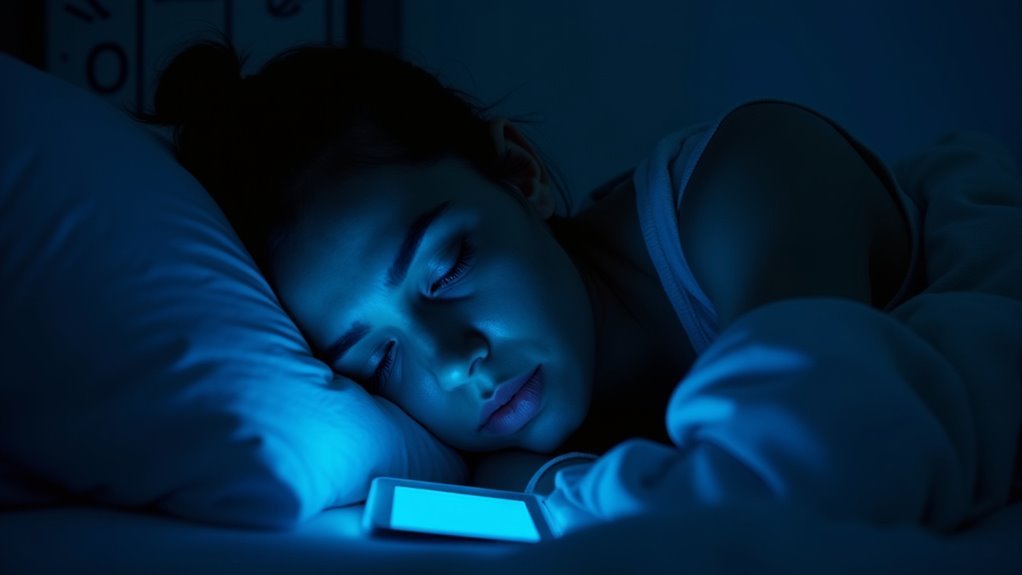
While occasional blue light exposure might seem harmless, repeated nighttime screen use fundamentally rewires your body’s sleep architecture. Chronic exposure to electronic screens creates persistent disruption that extends far beyond a single restless night. Your circadian rhythms become increasingly misaligned, leading to consistently poor sleep quality and extended sleep onset times.
| Duration of Exposure | Sleep Impact | Health Consequences |
|---|---|---|
| 1-2 weeks | Mild disruption | Fatigue, irritability |
| 1-3 months | Moderate dysfunction | Mood changes, concentration issues |
| 6+ months | Severe misalignment | Metabolic disorders, cardiovascular risk |
| 1+ years | Chronic disrupted sleep | Diabetes susceptibility, mental health decline |
The effects of blue light suppress melatonin production consistently, creating a cascade of long-term health problems that compound over time.
Frequently Asked Questions
Why Is Blue Light so Bad for Sleep?
Blue light tricks your brain into thinking it’s daytime, suppressing melatonin production and disrupting your natural circadian rhythm. You’ll struggle to feel drowsy, fall asleep easily, and maintain quality rest throughout the night.



Leave a Reply