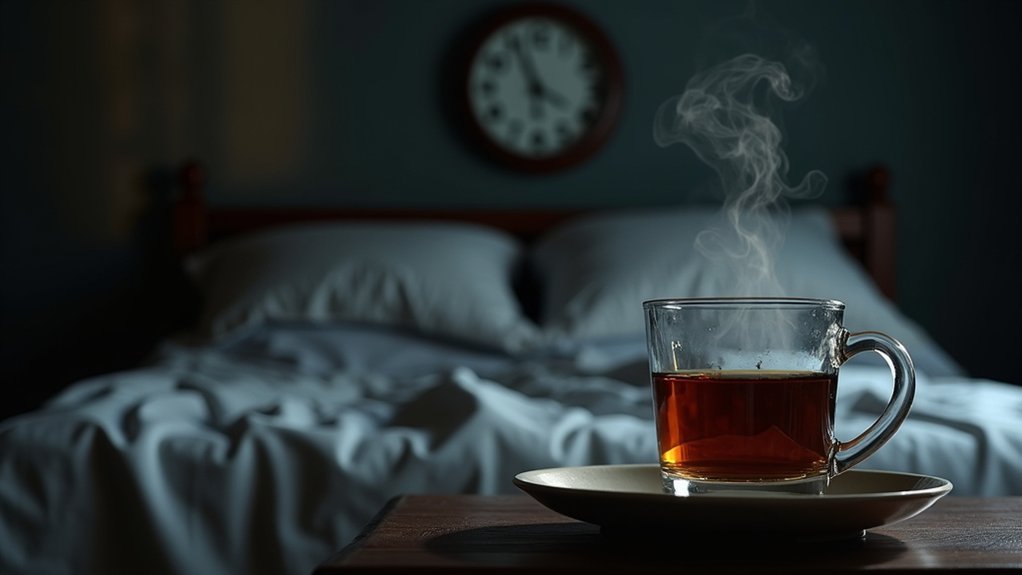
Caffeine disrupts your sleep by blocking adenosine receptors, delaying sleep onset by over 10 minutes per cup when consumed within six hours of bedtime. Alcohol initially sedates you but fragments your deep sleep stages, reducing sleep quality by 4% per drink and preventing proper REM sleep. Together, they create a misleading cycle where caffeine masks alcohol’s effects while both substances damage your sleep architecture. Understanding these mechanisms reveals why your rest suffers despite feeling temporarily better.
The Science Behind Caffeine’s Impact on Sleep Cycles
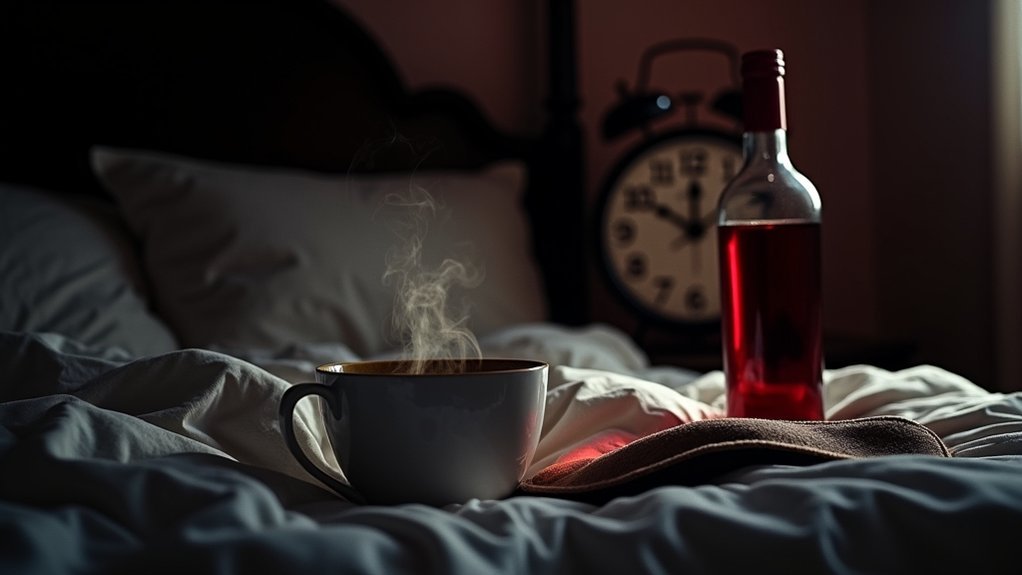
When you consume caffeine within six hours of bedtime, you’re setting yourself up for a restless night that can rob you of precious sleep time.
Caffeine consumption directly disrupts your natural sleep cycles by blocking adenosine receptors, which normally signal drowsiness. This interference delays sleep onset by an average of 10.4 minutes per cup consumed.
Your body’s caffeine intake creates heightened alertness that counteracts your natural inclination to rest. Individual responses vary considerably due to genetic factors and metabolism rates.
Caffeine triggers alertness that fights your body’s natural sleep signals, with effects varying significantly based on your unique genetic makeup.
Regular use builds tolerance, requiring higher doses that worsen sleep disturbances over time. Unlike alcohol consumption, which may initially seem sedating, caffeine’s stimulant effects persistently fragment your sleep architecture, leading to poor sleep quality and compromised daytime functioning.
How Alcohol Disrupts Deep Sleep Stages
Although alcohol might seem like a natural sleep aid due to its sedating effects, it actually sabotages your deep sleep stages in ways that leave you feeling unrefreshed. The sedative effects push you too quickly into deep sleep, disrupting your natural sleep cycle and preventing proper REM sleep. This creates a domino effect of fragmented, disrupted sleep throughout the night.
| Sleep Stage | Without Alcohol | With Alcohol |
|---|---|---|
| Sleep Onset | Gradual shift | Rapid sedation |
| Deep Sleep | Balanced duration | Excessive early on |
| REM Sleep | Normal timing/duration | Delayed or blocked |
| Sleep Continuity | Fewer awakenings | Frequent disruptions |
| Morning Recovery | Refreshed feeling | Unrefreshed fatigue |
Regular consumption leads to chronic sleep issues and measurably poor subjective sleep quality—studies show a 4% decline per drink consumed.
Timing Matters: When Consumption Affects Rest Quality
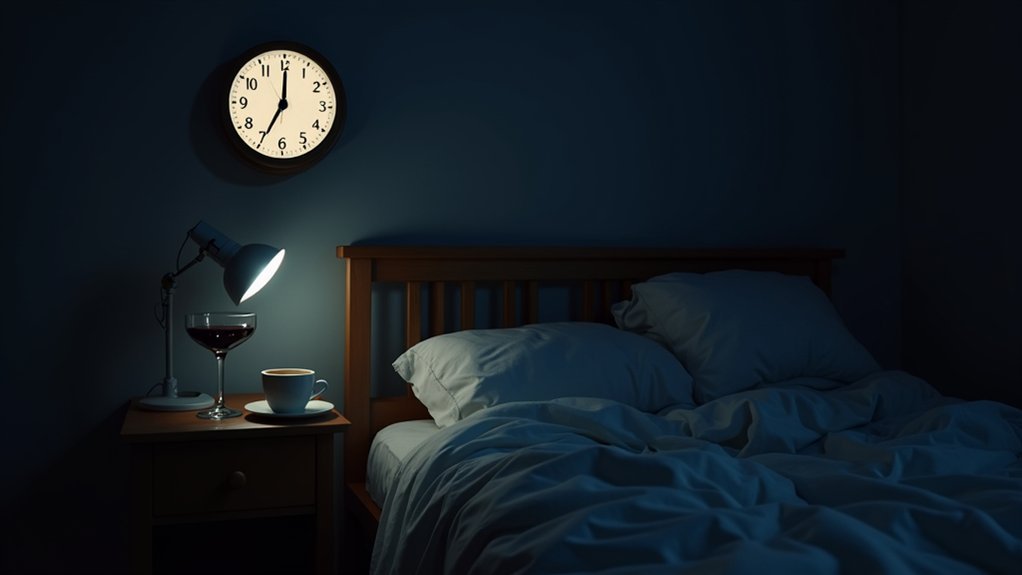
You can enjoy your morning coffee without sleep concerns, but that evening glass of wine poses serious risks to your rest quality.
Caffeine consumed within six hours of bedtime will considerably delay when you fall asleep and reduce your total sleep time.
Even one alcoholic drink before bed decreases your subjective sleep quality by nearly 4%, making timing essential for both substances.
Morning Coffee Benefits
While caffeine gets a bad reputation for disrupting sleep, your morning cup of coffee can actually work in your favor when timed correctly.
Morning coffee consumption effectively counteracts grogginess from alcohol-induced sleep disruptions, helping enhance alertness and performance throughout the day. However, this benefit comes with important caveats you need to evaluate.
Key benefits and considerations of morning coffee:
- Enhanced alertness – Mitigates fatigue from poor sleep quality caused by alcohol intake
- Performance boost – Temporarily improves wakefulness and cognitive function
- Timing advantage – Morning consumption won’t disrupt sleep patterns like afternoon caffeine
- Dependency risk – Relying on coffee to offset alcohol effects creates problematic cycles
- Limited scope – Doesn’t improve actual overall rest quality, only masks symptoms
Evening Alcohol Risks
When you reach for that evening drink to unwind, you’re unknowingly sabotaging the very rest you’re seeking. Alcohol’s effects create a deceptive cycle—while it helps you fall asleep faster initially, it severely compromises your sleep quality throughout the night.
| What Happens | The Reality |
|---|---|
| You feel drowsy | Alcohol disrupts REM sleep cycles |
| Quick sleep onset | Frequent nighttime awakenings occur |
| Relaxation sensation | Your circadian rhythm becomes misaligned |
| Temporary sedation | Perceived sleep quality drops 4% per drink |
| False sleep aid | 70% experience insomnia symptoms |
Unlike caffeine’s morning benefits, evening alcohol consumption fragments your rest, causing chronic sleep issues. Each drink progressively worsens disruption to your sleep architecture, preventing restorative processes your body desperately needs.
Six-Hour Caffeine Window
That afternoon coffee break might feel harmless, but caffeine’s six-hour influence on your sleep creates consequences you can’t always detect.
Your consumption timing directly impacts rest quality, even when you don’t notice the decline. Each cup reduces your total sleep time by approximately 10.4 minutes, while caffeine’s alertness-boosting properties make falling asleep increasingly difficult.
- Caffeine disrupts sleep patterns up to six hours after consumption
- You won’t perceive reduced sleep quality despite actual quantity loss
- Stimulant effects increase alertness when you need to wind down
- Sleep disruption occurs even with seemingly harmless afternoon intake
- Avoiding caffeine after 2 p.m. optimizes evening rest preparation
Unlike alcohol’s immediate sedative effects, caffeine’s sleep interference operates through sustained stimulation that conflicts with your body’s natural evening shift.
The Misleading Interaction Between Caffeine and Alcohol
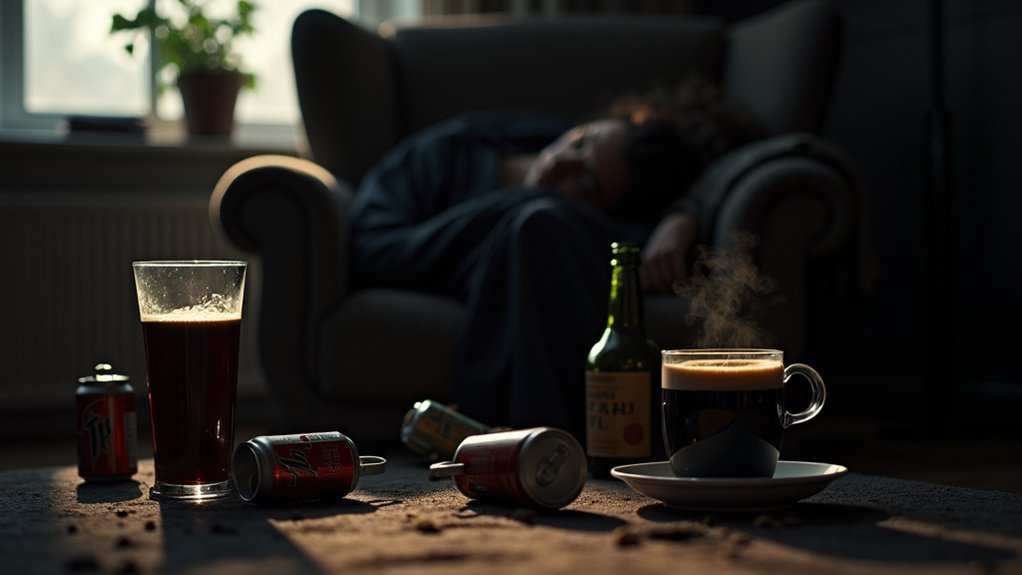
Although caffeine and alcohol each disrupt sleep independently, their combined effects create a deceptive perception that can trap you in a harmful cycle.
Research with finance traders reveals that combined consumption masks the individual negative effects on sleep each substance produces alone. While alcohol causes a decline in sleep quality by nearly 4%, and caffeine reduces sleep duration by over 10 minutes per cup, their interaction effect creates misleading improvements in subjective sleep quality.
The combined consumption of caffeine and alcohol creates a deceptive mask that hides their individual sleep-disrupting effects.
This misperception contributing to continued use becomes problematic because caffeine can’t actually counteract alcohol-induced REM sleep suppression. You’ll experience temporary alertness in the short term, but underlying sleep disruption persists.
This leads to a cycle of self-medication where you rely on both substances, believing your caffeine and alcohol intake improves rest when it actually perpetuates poor sleep patterns.
Long-Term Consequences of Regular Substance Use on Sleep
When you regularly consume caffeine and alcohol to manage your sleep, you’re fundamentally altering your brain’s natural sleep architecture and reducing the quality of restorative REM sleep.
This pattern creates a dangerous dependency cycle where you’ll increasingly rely on these substances to feel alert or drowsy, trapping you in a loop that worsens over time.
Your continued use puts you at serious risk for chronic health problems including anxiety, depression, and cognitive decline that can persist long after you stop using these substances.
Sleep Architecture Deterioration
Regular use of caffeine and alcohol systematically dismantles your sleep’s natural architecture, creating a cascade of disruptions that worsen over time.
Alcohol reduces REM sleep while pushing you too rapidly into deep sleep phases, throwing off your entire sleep cycle. Meanwhile, caffeine consumed later in the day delays sleep onset and fragments your rest patterns. This combination creates chronic insomnia and persistent poor sleep that compounds nightly.
Your sleep architecture becomes increasingly disrupted as these substances interfere with natural shifts between sleep stages:
- REM sleep duration decreases considerably with regular alcohol consumption
- Deep sleep phases occur too early, disrupting natural progression
- Lighter sleep phases become more frequent, causing multiple awakenings
- Sleep quality deteriorates progressively with continued substance use
- Chronic insomnia develops from repeated cycle disruptions affecting overall health
Dependency Cycle Formation
Beyond these immediate architectural disruptions lies a more insidious problem: the formation of a dependency cycle that traps you in worsening sleep patterns.
When you consume caffeine and alcohol together, you’re creating a destructive feedback loop. Your alcohol consumption disrupts sleep, prompting increased caffeine use to combat daytime fatigue.
This caffeine use then reduces your sleep quantity by over 10 minutes per cup, while alcohol decreases sleep quality by 4%. The misleading alertness perception these substances create convinces you they’re helping, despite the underlying negative impacts.
You’ll likely remain unaware of this dependency cycle until chronic insomnia develops, leading to serious health complications including cardiovascular disease and mental health disorders.
Chronic Health Risks
The cumulative damage from regular caffeine and alcohol use extends far beyond temporary sleep disruptions, creating a cascade of serious health consequences that compound over years.
When you consistently compromise your sleep quality through these substances, you’re setting yourself up for chronic health risks that affect every aspect of your well-being.
The disrupted REM sleep patterns from alcohol and caffeine create long-term disturbances that manifest as serious medical conditions.
- Cardiovascular disease develops from chronic insomnia and poor sleep quality
- Cognitive decline accelerates due to sustained REM sleep disruption
- Neurodegenerative disorders increase in likelihood with persistent sleep deprivation
- Mood disorders worsen as emotional regulation becomes impaired
- Immune system dysfunction emerges from continuous sleep disturbances
Individual Sensitivity Variations and Sleep Responses
Millions of people unknowingly sabotage their sleep because they don’t realize how dramatically their individual sensitivity to caffeine and alcohol affects their rest quality.
Your genetic makeup determines how quickly you metabolize caffeine, meaning even small amounts can delay your sleep onset and reduce total sleep time by 10 minutes per cup.
Alcohol creates a deceptive pattern—while it initially helps you fall asleep, it disrupts your sleep architecture and reduces REM sleep by 4% per drink.
You might find yourself trapped in a self-medication cycle, consuming caffeine to combat alcohol-induced fatigue.
If you’re particularly sensitive to alcohol, you’ll face heightened risks of sleep disturbances and obstructive sleep apnea as alcohol relaxes your throat tissues.
Breaking the Cycle of Dependency and Poor Sleep Habits
Although most people view caffeine and alcohol as separate lifestyle choices, you’re likely caught in a destructive feedback loop where these substances work against each other and sabotage your sleep.
This dependency cycle starts when you increase caffeine intake, then rely on alcohol as a misguided sleep management strategy to counteract the stimulation. Unfortunately, this combination creates chronic poor sleep that affects 70% of alcohol users who experience insomnia.
Breaking free requires understanding the true negative impact on your rest:
- Recognize that perceived benefits mask actual sleep disruption
- Understand that abstaining from substances provides ideal sleep quality
- Acknowledge the misperception that combining substances helps sleep
- Seek education on impacts of both caffeine and alcohol consumption
- Address potential long-term health issues from continued poor sleep patterns
Evidence-Based Strategies for Better Sleep Without Substances
Breaking free from substance dependency requires replacing harmful habits with proven sleep strategies that actually work.
You’ll want to establish a consistent sleep schedule that regulates your circadian rhythms naturally. Incorporating regular physical activity into your routine enhances mood while contributing to better sleep quality.
Create a calming nighttime ritual through reading or meditation to facilitate relaxation without substances. You should focus on limiting screen time before bed to prevent disruptions to your sleep cycles.
Establish a peaceful bedtime routine with reading or meditation while avoiding screens to protect your natural sleep rhythms.
Consider incorporating herbal teas like chamomile or valerian root for natural relaxation support. These evidence-based strategies protect your sleep architecture unlike caffeine or alcohol, which artificially manipulate your rest patterns and ultimately worsen sleep quality over time.
Frequently Asked Questions
Why Does Alcohol Ruin My Sleep Quality?
Alcohol disrupts your sleep architecture by reducing essential REM sleep and causing fragmented patterns. It’ll make you fall asleep quickly but creates imbalanced sleep stages, leading to frequent awakenings and poor restoration.
How Do Caffeine and Alcohol Affect Your Sleep?
Caffeine delays your sleep onset by about 10 minutes per cup, while alcohol reduces your REM sleep and causes disturbances. Together, they’ll create a destructive cycle that undermines your rest quality.
How Does Caffeine Affect Sleep Quality?
Caffeine disrupts your sleep by delaying when you fall asleep and reducing total sleep time. It decreases deep sleep stages, increases nighttime wakefulness, and impairs overall sleep quality even when consumed six hours before bedtime.
Why Do Caffeine and Alcohol Affect Me so Much?
You’re likely experiencing heightened sensitivity because your body processes these substances differently than others. Your metabolism, tolerance levels, and genetic factors all influence how strongly caffeine and alcohol disrupt your sleep patterns.


Leave a Reply