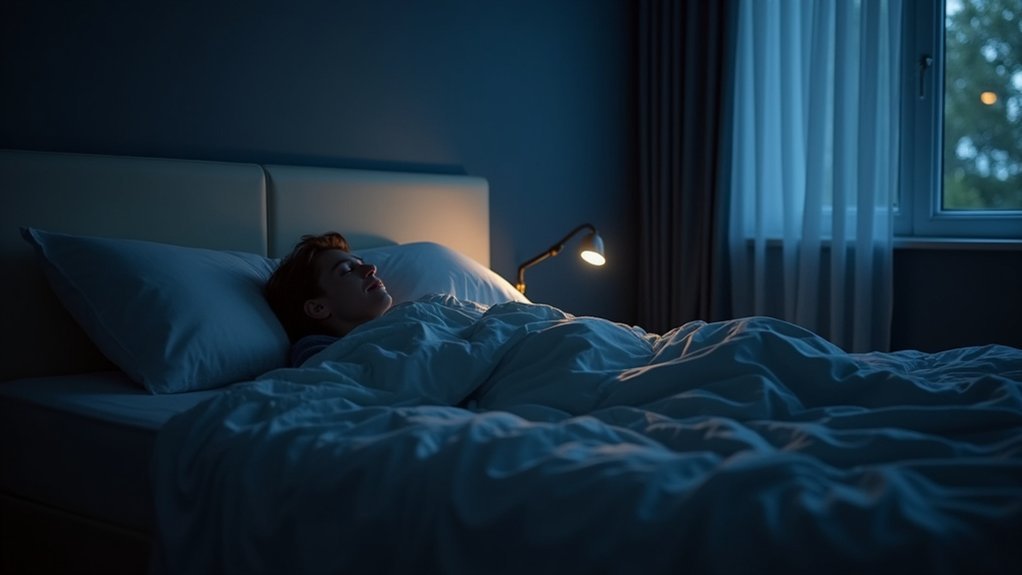
You’ll experience silent breathing interruptions during sleep without the typical snoring, making central sleep apnea harder to detect. Watch for excessive daytime sleepiness, frequent night awakenings with shortness of breath, and severe morning headaches from oxygen deprivation. You may notice difficulty concentrating, memory problems, sudden mood changes, and persistent dry mouth upon waking. Gasping episodes and unexplained drops in blood oxygen levels are serious warning signs that shouldn’t be ignored, as understanding these symptoms can help you take the next step toward better sleep health.
Breathing Interruptions During Sleep Without Snoring

While snoring often signals obstructive sleep apnea, central sleep apnea presents a more silent threat through breathing interruptions that occur without any audible warning signs.
You’ll experience pauses in breathing during sleep that lack the characteristic snoring sounds, making this condition harder to detect. Your brain fails to send proper signals to breathing muscles, causing these silent interruptions that can last from seconds to minutes.
These episodes may happen repeatedly throughout the night, creating significant sleep disruptions even though you won’t hear the typical breathing obstructions. The absence of snoring doesn’t mean you’re breathing normally—your central sleep apnea quietly fragments your sleep, leading to daytime symptoms like excessive sleepiness and concentration difficulties that signal underlying breathing problems.
Excessive Daytime Sleepiness and Fatigue
Exhaustion becomes your unwelcome companion when central sleep apnea disrupts your nightly rest, leaving you struggling with overwhelming daytime sleepiness despite spending adequate hours in bed.
Poor sleep quality creates severe fatigue that compromises your concentration and daily performance. You’ll notice cognitive impairments affecting your ability to think clearly and complete routine tasks effectively.
Severe fatigue from disrupted sleep destroys your ability to concentrate and think clearly during daily activities.
This persistent drowsiness greatly increases your accident risk, especially while driving or operating machinery.
You may experience troubling mood changes, including irritability and depression, that diminish your quality of life.
Without treatment, untreated central sleep apnea can progress to chronic fatigue syndrome, intensifying your daytime exhaustion and mental fog.
These symptoms create a destructive cycle where fatigue breeds more sleep disruption.
Frequent Night Awakenings With Shortness of Breath
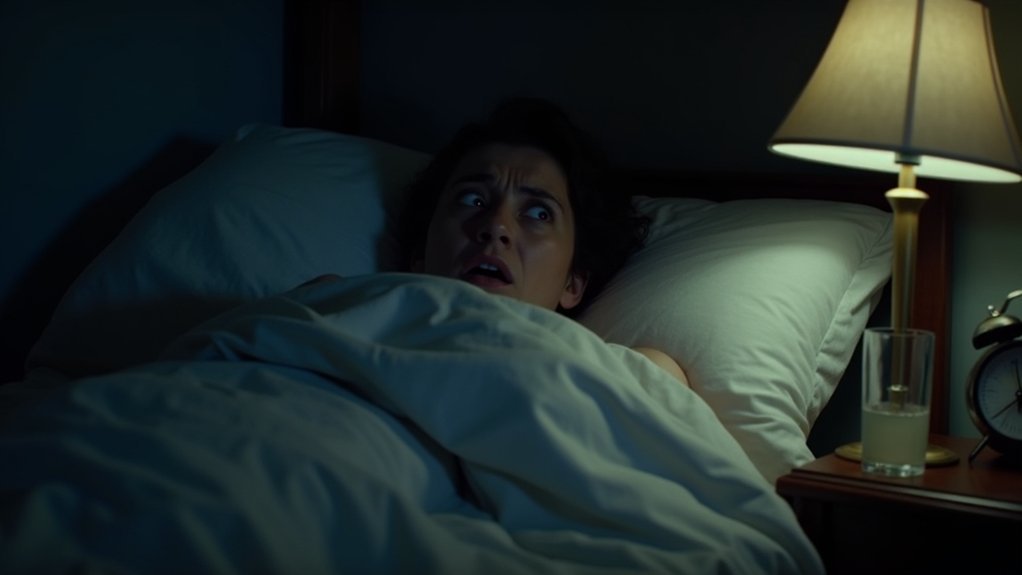
Beyond the relentless fatigue that plagues your waking hours, central sleep apnea creates another disturbing pattern that fragments your nighttime rest. You’ll experience frequent night awakenings with shortness of breath, jolting you from sleep gasping for air. This temporary cessation of breathing stems from your brain’s failure to signal breathing muscles properly.
| Nighttime Symptoms | Frequency | Impact |
|---|---|---|
| Gasping episodes | Multiple times nightly | Disrupted sleep patterns |
| Irregular breathing patterns | Throughout sleep cycles | Chronic fatigue |
| Abrupt awakenings | 5-30+ per night | Excessive daytime sleepiness |
| Breathing cessation | 10+ seconds each | Morning headaches |
These episodes create a vicious cycle where disrupted sleep patterns perpetuate your exhaustion, making recovery impossible without proper treatment intervention.
Severe Morning Headaches Upon Waking
When your brain fails to regulate breathing during sleep, you’ll often wake with severe morning headaches that can persist for hours. Central sleep apnea creates disrupted sleep patterns through oxygen deprivation, causing these debilitating headaches.
Abrupt awakenings occur when pauses in breathing trigger your body’s emergency response, resulting in decreased oxygen levels and elevated carbon dioxide. Over 30% of patients experiencing headaches report this symptom regularly with central sleep apnea.
These headaches resemble tension-type or migraine pain, characterized by dull, aching sensations that can last several hours after waking. The severity often correlates with the frequency of breathing interruptions during sleep.
If you’re experiencing severe morning headaches alongside other sleep apnea symptoms, consult your healthcare provider for proper evaluation and diagnosis to prevent long-term complications.
Difficulty Concentrating and Memory Problems

Since your brain doesn’t receive adequate oxygen during sleep disruptions, you’ll likely struggle with concentration and memory problems throughout the day.
These disrupted sleep patterns from central sleep apnea cause excessive daytime sleepiness that greatly impairs your cognitive abilities. You’ll notice decreased attention span, reduced problem-solving skills, and slower reaction times as cognitive impairment develops. The chronic fatigue makes focusing on daily tasks increasingly challenging.
Additionally, mood changes like irritability and depression often accompany difficulty concentrating, creating a cycle that worsens memory issues.
Your brain simply can’t function at its best when constantly deprived of quality sleep. Seeking proper treatment is essential for restoring your cognitive health and preventing further deterioration of mental performance.
Chronic Insomnia and Trouble Staying Asleep
If you’re experiencing chronic insomnia alongside central sleep apnea, you’ll likely notice distinct sleep fragmentation patterns that leave you tossing and turning throughout the night.
Your sleep becomes broken into numerous short segments rather than flowing through natural sleep cycles, making it nearly impossible to achieve deep, restorative rest.
These nighttime awakening episodes often occur when your breathing pauses trigger your brain to rouse you from sleep, creating a frustrating cycle where you can fall asleep but can’t stay asleep.
Sleep Fragmentation Patterns
Multiple sleep interruptions throughout the night characterize one of the most disruptive aspects of central sleep apnea. Your breathing pauses trigger multiple awakenings, creating a cycle where you can’t achieve restorative sleep. This sleep fragmentation makes difficulty staying asleep your primary concern, as each breathing interruption jolts you from deep sleep phases.
You’ll notice disrupted sleep patterns that extend beyond nighttime hours. Chronic insomnia develops as your body struggles to maintain consistent sleep cycles.
The consequences manifest during waking hours through excessive daytime sleepiness that impairs your concentration and productivity. You may experience mood changes, including increased irritability and difficulty focusing on tasks.
Morning headaches frequently occur due to inadequate oxygen supply throughout the night, signaling that your sleep apnea requires immediate attention.
Nighttime Awakening Episodes
Abrupt awakenings with shortness of breath define the most alarming nighttime awakening episodes you’ll experience with central sleep apnea.
When your breathing stops repeatedly throughout the night, you’ll find yourself gasping for air, creating severe disrupted sleep patterns that prevent quality rest.
These frequent interruptions cause chronic insomnia, making it nearly impossible to fall back asleep after each episode.
Your sleep disturbances will rob you of essential restorative sleep, leading to:
- Excessive daytime sleepiness that affects your daily functioning
- Difficulty concentrating due to insufficient sleep quality
- Morning headaches from reduced oxygen levels during sleep
The frequency of these episodes directly correlates with your daytime symptoms.
If you’re experiencing these patterns regularly, contact your healthcare provider immediately for proper evaluation and treatment.
Sudden Mood Changes and Irritability
When central sleep apnea disrupts your nightly rest, you’ll often notice significant changes in your emotional state and mood stability. Fragmented sleep prevents you from achieving restorative sleep, leading to chronic fatigue that affects your daily interactions. You’ll experience sudden mood changes and irritability as your brain struggles with excessive daytime sleepiness.
| Emotional Impact | Daily Consequences |
|---|---|
| Increased anxiety and depression | Difficulty managing stress effectively |
| Unpredictable mood fluctuations | Strained personal relationships |
| Heightened irritability | Poor professional performance |
These mood changes aren’t just temporary inconveniences—they’re warning signs of central sleep apnea’s broader impact on your mental health. The repeated nighttime awakenings rob your brain of essential recovery time, making concentration challenging and emotional regulation nearly impossible.
Dry Mouth Upon Waking
Beyond emotional disruptions, central sleep apnea manifests through physical symptoms that you’ll notice immediately upon waking.
Dry mouth is a common warning sign that shouldn’t be ignored. When you experience breathing interruptions during sleep, you’re more likely to resort to mouth breathing, especially if your nasal passages are blocked.
Persistent dry mouth upon waking serves as an important early indicator of potential sleep-related breathing disruptions that warrant medical evaluation.
This sleep disorder causes several oral health concerns:
- Insufficient saliva production from repeated nighttime awakenings
- Increased risk of dental problems due to reduced saliva’s protective benefits
- Air dryness from positive airway pressure devices without proper humidifier use
You’ll often wake feeling parched and uncomfortable, reaching for water immediately.
If you’re consistently experiencing dry mouth upon waking, discuss this symptom with your healthcare provider, as it may indicate central sleep apnea requiring medical attention.
Gasping or Choking Episodes During Sleep
You’ll likely experience sudden breathing cessation during sleep if you have central sleep apnea, as your brain temporarily fails to signal your respiratory muscles.
These frightening episodes can jolt you awake with a gasping sensation, leaving you breathless and disoriented.
Your nighttime awakening patterns become disrupted as these choking episodes fragment your sleep throughout the night.
Sudden Breathing Cessation
Although central sleep apnea affects your breathing control center, the most alarming symptom you’ll likely notice is sudden breathing cessation during sleep.
These interruptions can last several seconds to minutes, creating episodes of low blood oxygen that jolt you awake with intense breathlessness.
Your sleep partner might witness these frightening gasping or choking moments before you’re even aware they’re happening.
The constant cycle creates disrupted sleep patterns that prevent restorative rest.
Key impacts of sudden breathing cessation include:
- Frequent awakenings that fragment your sleep quality
- Persistent daytime sleepiness affecting daily functioning
- Anxiety and mood changes from sleep disruption
Recognizing these apnea episodes is essential for diagnosing central sleep apnea and seeking proper medical evaluation.
Nighttime Awakening Patterns
These breathing interruptions don’t just stop and restart silently—they often trigger dramatic nighttime awakening patterns that can leave you gasping for air.
You’ll experience abrupt awakenings accompanied by intense gasping sensations and choking sensations as your breathing suddenly resumes. Unlike other sleep disorders, these episodes rarely involve loud snoring, making them less obvious to sleep partners.
You might feel panicked or confused when jolting awake, unsure what’s happening. These sleep disturbances can occur repeatedly throughout the night, leading to excessive daytime sleepiness that affects your daily functioning.
Monitoring these specific awakening patterns serves as vital diagnostic indicators for identifying central sleep apnea, helping healthcare providers distinguish it from other sleep-related breathing disorders.
Unexplained Drop in Blood Oxygen Levels
When your brain fails to signal your breathing muscles properly, your blood oxygen levels can drop considerably during sleep without any obvious cause.
This unexplained drop in blood oxygen levels is a major warning sign of central sleep apnea that requires immediate attention.
Sleep studies can detect these dangerous oxygen desaturation episodes, often revealing levels below 90%.
These breathing disruptions create serious health consequences:
- Cardiovascular risks increase considerably with repeated low oxygen episodes
- Arrhythmias and heart complications can develop from ongoing oxygen deprivation
- Brain failure to send signals becomes progressively worse without treatment
Don’t ignore these warning signs.
Medical evaluation is essential if you suspect unexplained oxygen drops, as they may indicate underlying health issues beyond central sleep apnea that need prompt diagnosis and treatment.
Frequently Asked Questions
How to Tell if You Have Central Sleep Apnea?
You’ll notice breathing pauses during sleep, sudden awakenings with shortness of breath, excessive daytime sleepiness, morning headaches, and difficulty concentrating. A sleep study’s required for definitive diagnosis of your condition.
What Are the Red Flags for Sleep Apnea?
You should watch for repeated breathing stops during sleep, sudden awakenings with breathlessness, morning headaches, excessive daytime fatigue, irritability, concentration problems, and restless sleep patterns that disrupt your nightly rest.
What Can Be Mistaken for Central Sleep Apnea?
You might confuse obstructive sleep apnea, insomnia, anxiety, depression, or neurological disorders like Parkinson’s with central sleep apnea since they’ll cause similar sleep disruptions, daytime fatigue, and breathing irregularities.
Can Central Sleep Apnea Be Life Threatening?
Yes, you’re facing serious risks with untreated central sleep apnea. You’ll experience repeated oxygen drops that can trigger heart rhythm problems, stroke, or heart failure, especially if you’ve got existing cardiovascular conditions.




Leave a Reply