

Chocolate ruins your REM cycles because it contains caffeine and theobromine, two stimulants that disrupt your sleep architecture. Dark chocolate packs 25mg of caffeine per ounce, while theobromine creates lasting alertness with a 7-12 hour half-life. These compounds interfere with deep sleep stages and memory consolidation processes that occur during REM sleep. Since caffeine’s half-life is 4-6 hours, that evening chocolate treat continues affecting your sleep quality throughout the night, leaving you groggy and mood-disrupted the next day. Strategic timing and chocolate type selection can help you protect your precious REM recovery.
The Science Behind REM Sleep and Caffeine Interference

When you consume chocolate in the evening, you’re unknowingly sabotaging one of your brain’s most critical restoration processes.
Chocolate contains caffeine, which interferes with your ability to achieve quality REM sleep. Even small amounts can considerably impact sleep efficiency, especially from dark chocolate with higher caffeine concentrations.
Dark chocolate’s higher caffeine levels can significantly disrupt your sleep quality, even in surprisingly small amounts.
The caffeine’s 4-6 hour half-life means consuming chocolate within hours of bedtime disrupts your sleep cycles. REM sleep is essential for cognitive functions and emotional stability, serving as your brain’s nightly maintenance period.
When caffeine blocks this process, you experience disrupted REM cycles that impair memory consolidation. The resulting poor sleep quality leaves you groggy and mentally unclear the following day, affecting your overall performance and mood regulation.
How Chocolate’s Stimulant Compounds Disrupt Sleep Architecture
Beyond caffeine alone, chocolate contains a complex mix of stimulant compounds that systematically dismantle your sleep architecture.
Theobromine, one of the primary stimulants found in chocolate, enhances nervous system activity and creates lasting alertness. When you consume chocolate at night, especially varieties with high cocoa content, these compounds work together to disrupt REM sleep cycles.
The high sugar content amplifies this effect by triggering energy spikes that destabilize your natural sleep patterns. Your overall sleep quality deteriorates as these stimulants interfere with deep sleep stages.
Individuals are more sensitive to these effects will experience more severe disruptions, making timing essential. Dark chocolate contains caffeine levels three times higher than milk chocolate, intensifying sleep interference.
Dark vs. Milk vs. White Chocolate: Caffeine Content Breakdown
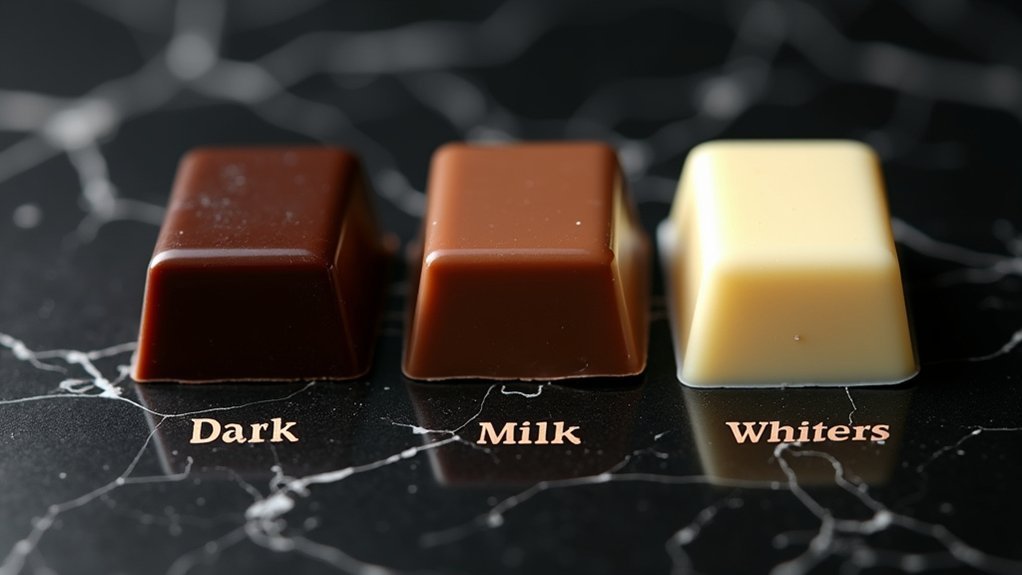
Different chocolate varieties pack dramatically different caffeine punches that’ll impact your sleep in distinct ways.
Dark chocolate delivers the strongest blow with 25 milligrams of caffeine per ounce, making it the worst choice for nighttime chocolate consumption. The higher the cocoa content, the more caffeine and theobromine you’re getting, which directly interferes with your REM sleep cycles.
That evening square of 70% dark chocolate packs enough caffeine to turn your peaceful slumber into a restless night of tossing and turning.
Milk chocolate contains about 8 milligrams per ounce—significantly less than dark chocolate but still enough to cause sleep disruption if you’re sensitive to stimulants.
White chocolate emerges as your safest bet since it contains zero caffeine, allowing you to satisfy chocolate cravings without sabotaging your sleep architecture.
Understanding these caffeine content differences across chocolate types helps you make smarter choices about when and what to indulge in.
Theobromine’s Hidden Role in Sleep Pattern Disruption
While caffeine gets most of the blame for chocolate’s sleep-disrupting effects, theobromine operates as the silent saboteur that’s likely wreaking more havoc on your REM cycles than you realize. This compound directly stimulates your nervous system, triggering heightened alertness that extends far beyond caffeine’s immediate impact.
With a half-life of 7-12 hours, theobromine lingers in your system, continuously disrupting your sleep quality throughout the night.
Dark chocolate packs the highest theobromine punch, containing up to 2.5% of this persistent stimulant. Unlike caffeine’s quick spike and crash, theobromine maintains steady stimulation that interferes with your natural sleep progression.
This compound elevates your heart rate and can trigger anxiety, both preventing the deep, restorative REM cycles your body desperately needs for peak functioning and recovery.
Timing Your Chocolate Consumption for Better REM Recovery

Strategic timing transforms chocolate from a sleep destroyer into an enjoyable treat that won’t sabotage your nightly REM recovery.
You’ll want to finish your chocolate consumption by 7 PM if you’re planning an 11 PM bedtime. This four-hour buffer prevents caffeine and theobromine stimulants from disrupting your sleep cycles when you need them most.
Midday chocolate consumption offers the perfect sweet spot for your health. You’ll satisfy cravings while giving these compounds ample time to metabolize before evening.
Dark chocolate’s caffeine has a 4-6 hour half-life, meaning afternoon timing guarantees stimulants won’t interfere with REM sleep quality.
Individual Sensitivity Factors That Amplify Chocolate’s Sleep Impact
Your genetic makeup acts as the primary gatekeeper determining how severely chocolate disrupts your sleep patterns. Individual sensitivity varies dramatically based on CYP1A2 gene variations that control caffeine metabolism speed. If you’re a slow metabolizer, even small amounts trigger significant sleep disturbances.
Age amplifies chocolate’s impact since older adults process stimulants slower, making you increasingly vulnerable to REM disruption over time.
Psychological factors like stress and anxiety heighten your sensitivity to chocolate’s stimulants, creating a compounding effect on sleep quality.
Your overall health status matters critically. If you have existing sleep disorders or anxiety conditions, chocolate consumption becomes particularly problematic.
These underlying conditions increase your vulnerability to caffeine and theobromine’s sleep-disrupting effects, requiring careful monitoring of intake timing and amounts.
Frequently Asked Questions
Why Does Chocolate Give You Bad Dreams?
You’ll experience bad dreams from chocolate because its caffeine and theobromine stimulate your nervous system, disrupting REM sleep cycles. The sugar causes energy spikes that create restlessness, increasing your chances of nightmares.
Why Does Chocolate Affect My Sleep?
You’re consuming caffeine and theobromine when eating chocolate, which stimulate your nervous system and disrupt sleep patterns. The sugar content also creates energy spikes, making it harder to fall asleep naturally.
Why Shouldn’t We Eat Chocolate at Night?
You shouldn’t eat chocolate at night because it contains caffeine and theobromine that’ll keep you alert, spike your blood sugar levels, and disrupt your ability to fall asleep naturally.
Why Do I Feel Sleepy After Eating Dark Chocolate?
You’re likely experiencing a temporary sugar crash after dark chocolate’s initial energy spike. Your individual sensitivity to caffeine and theobromine differs from others, making you feel drowsy rather than stimulated.




Leave a Reply