
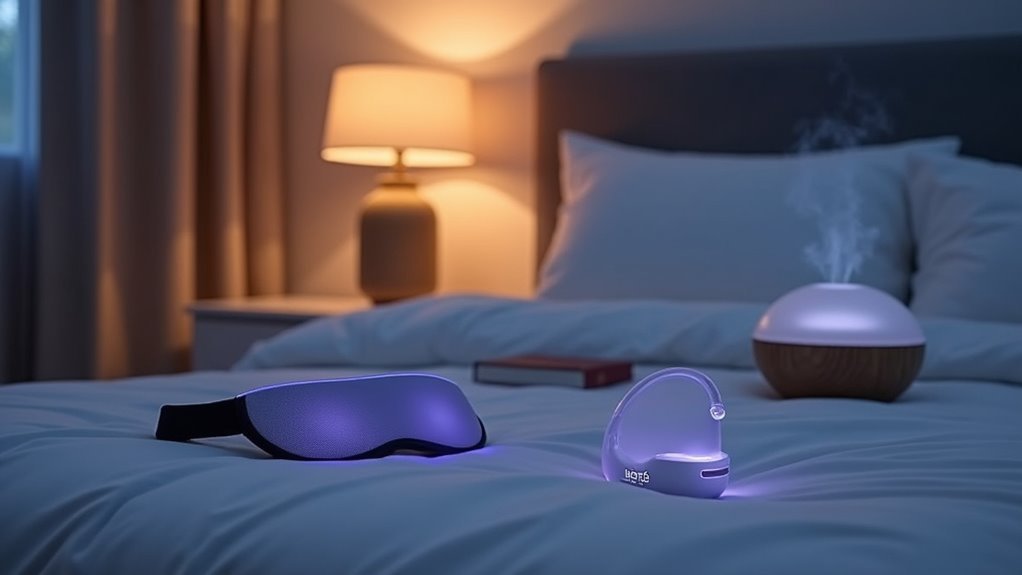
You’ve got five effective CPAP alternatives to explore. Oral appliances like mandibular advancement devices reposition your jaw, achieving 68% success rates for mild-moderate sleep apnea. BiPAP machines offer gentler dual-pressure breathing that’s easier to tolerate. Surgical options including uvulopalatopharyngoplasty and Inspire nerve stimulation devices provide permanent solutions for severe cases. You can also try lifestyle changes like weight loss, positional therapy, and myofunctional exercises that reduce symptoms considerably. These proven treatments offer the relief you’re seeking.
Oral Appliance Therapy for Sleep Apnea
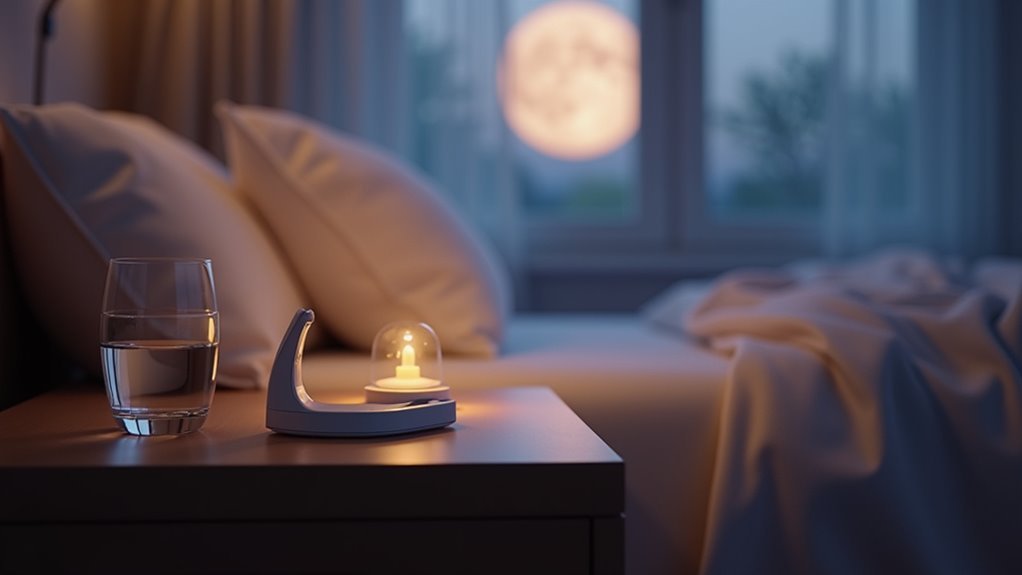
While CPAP machines remain the gold standard for sleep apnea treatment, oral appliance therapy offers a compelling alternative that’s both portable and less intrusive.
These custom-fitted devices include mandibular advancement devices (MADs) and tongue-retaining devices (TRDs) that reposition your jaw or hold your tongue to maintain open airways during sleep.
Custom-fitted oral appliances reposition your jaw or tongue to keep airways open throughout the night.
You’ll find this non-invasive alternative particularly effective if you’re among patients with mild to moderate OSA.
Clinical studies demonstrate that approximately 68-69% of users achieve at least a 50% reduction in their apnea-hypopnea index.
However, you should expect costs between $2,000-$4,000, with potential insurance coverage.
Be aware of possible side effects including dryness, discomfort, and dental issues.
Regular dental check-ups become essential to monitor any complications from extended use.
Bilevel Positive Airway Pressure (BiPAP) Machines
Another machine-based alternative that addresses CPAP’s limitations is the Bilevel Positive Airway Pressure (BiPAP) machine, which delivers two distinct pressure settings rather than one constant flow.
BiPAP machines provide higher inhalation pressure and lower exhalation pressure, making breathing feel more natural for you. This personalized approach proves especially beneficial if you have chronic obstructive pulmonary disease or complex sleep apnea conditions.
The customizable pressure settings allow your healthcare provider to tailor treatment to your unique respiratory patterns.
Studies show BiPAP alternatives can greatly improve adherence rates among patients who struggle with traditional CPAP therapy. If you’ve experienced discomfort with constant pressure machines, BiPAP’s dual-pressure system might offer the sleep apnea solution you need for successful long-term treatment.
Surgical Treatment Options
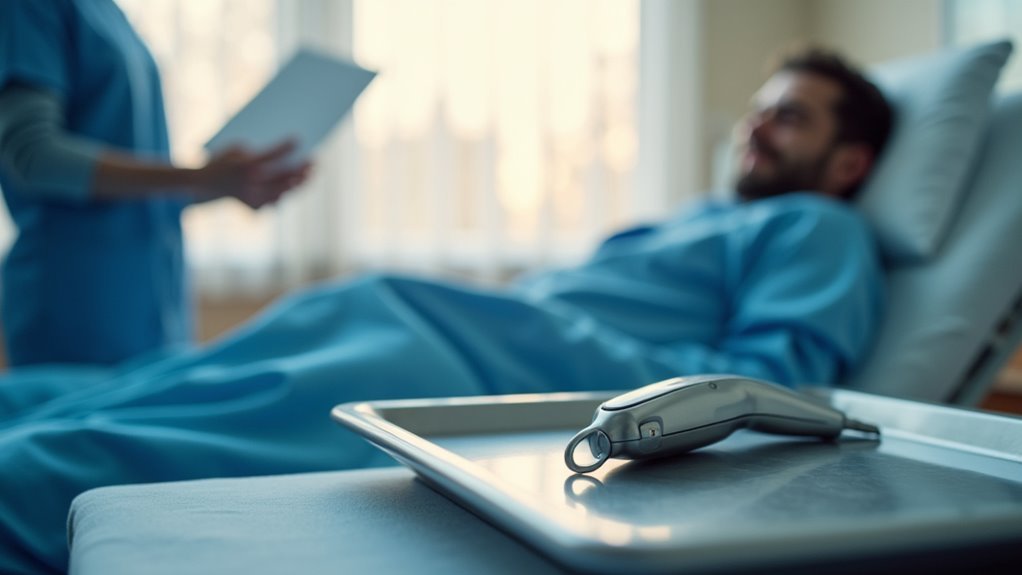
When machine-based therapies prove ineffective or you can’t tolerate CPAP alternatives, surgical treatment options offer a permanent solution for severe obstructive sleep apnea. These procedures target anatomical obstructions that cause airway collapse during sleep.
Uvulopalatopharyngoplasty removes excess throat tissue, reducing your apnea-hypopnea index by approximately 33%.
Genioglossus advancement repositions tongue muscle attachment to prevent obstruction.
Inspire therapy represents a newer approach, using an implanted device that stimulates your hypoglossal nerve to maintain open airways.
An oral surgeon or otolaryngologist must carefully evaluate your candidacy for these procedures.
While surgical options can provide lasting relief, they carry inherent risks and complications.
Success depends on identifying specific anatomical causes and selecting appropriate interventions for your condition.
Hypoglossal Nerve Stimulation Devices
As you explore advanced solutions for sleep apnea, hypoglossal nerve stimulation devices represent a breakthrough technology that targets the root cause of airway obstruction.
The FDA-approved Inspire therapy system offers hope when you can’t tolerate CPAP therapy. This innovative treatment stimulates your hypoglossal nerve during sleep, preventing airway collapse and reducing obstructive sleep apnea episodes.
You’ll need surgical implantation of the pulse generator and leads, but clinical studies demonstrate impressive results. Many patients experience over 50% reduction in their apnea-hypopnea index.
Beyond improved breathing patterns, you’ll likely notice decreased daytime sleepiness and enhanced quality of life. Patient satisfaction rates remain exceptionally high following treatment.
While hypoglossal nerve stimulation requires a significant commitment, it’s proven effective for those seeking alternatives to traditional CPAP therapy.
Lifestyle Modifications and Positional Therapy
While surgical interventions offer promising results, you can often achieve significant improvements in sleep apnea through targeted lifestyle changes and sleep positioning strategies.
Weight loss stands as the most effective modification—losing just 10% of your body weight can reduce your apnea-hypopnea index (AHI) by 26%, dramatically decreasing sleep apnea severity.
Regular exercise enhances overall sleep quality, while positional therapy encourages side sleeping instead of back sleeping, which worsens apnea episodes.
You’ll need to avoid alcohol consumption, as it increases sleep apnea prevalence by 25% and weakens airway muscles.
Myofunctional therapy offers another powerful tool, using targeted oral and facial muscle exercises to reduce AHI by approximately 50%, providing substantial improvements without invasive procedures.
Frequently Asked Questions
Is There Anything Better Than CPAP for Sleep Apnea?
You’ll find several alternatives that might work better than CPAP, including oral appliances for mild cases, Inspire implants for severe OSA, positional therapy, and lifestyle changes like weight loss.
What Can I Use Instead of a CPAP Machine?
You can use oral appliances like mandibular advancement devices, positional therapy pillows, Inspire nerve stimulation implants, APAP machines, or lifestyle changes including weight loss and exercise as CPAP alternatives.
What Is the Most Effective Device for Sleep Apnea?
CPAP remains the most effective device for sleep apnea, but if you can’t tolerate it, oral appliances work best for mild-to-moderate cases, achieving 68-69% success rates in reducing symptoms.
What Is the New Device to Replace the CPAP Machine?
You can consider the Inspire device, an FDA-approved implanted nerve stimulator that activates your hypoglossal nerve during sleep. It’s designed for moderate to severe OSA patients who haven’t responded to CPAP therapy.



Leave a Reply