
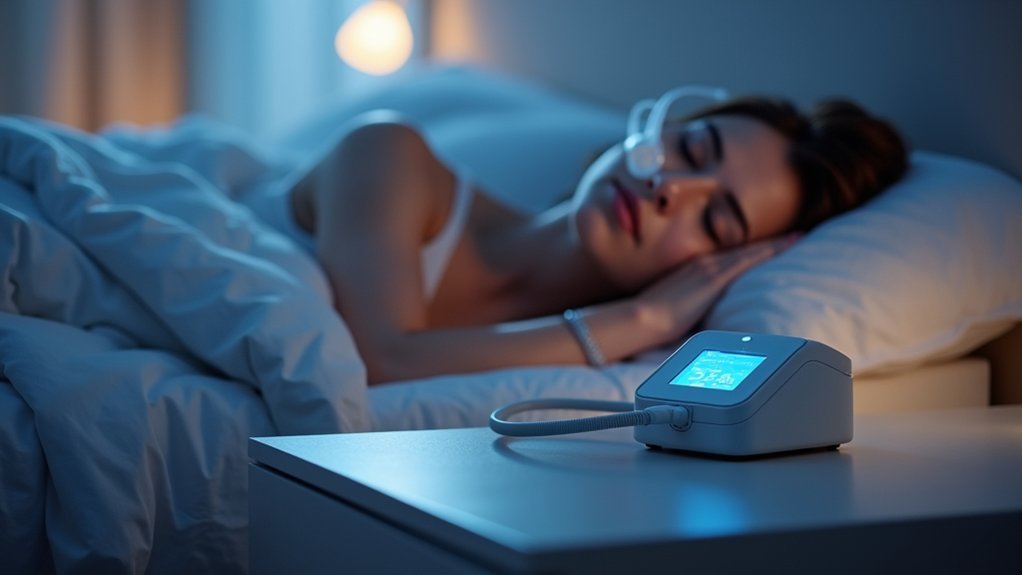
CPAP machines deliver continuous pressurized air through a mask, preventing the tissue collapse that causes breathing interruptions during sleep. You’ll experience reduced breathing events from over 130 per hour to nearly normal levels, while maintaining healthy oxygen saturation of at least 90%. Within the first few nights, you’ll notice longer periods of uninterrupted rest, and 75% of users report complete resolution of daytime sleepiness with improved energy and mood. Discover how these benefits extend far beyond better sleep.
Understanding Sleep Apnea and Its Impact on Daily Life
While you sleep peacefully through the night, your breathing should remain steady and uninterrupted—but for millions of people with sleep apnea, this isn’t the case.
You’ll experience breathing interruptions that can occur over 130 times per hour, preventing quality sleep and leaving you exhausted.
Symptoms of sleep apnea include loud snoring, gasping for air, and morning headaches that affect your daily functioning. You might struggle with excessive daytime fatigue that impacts work performance and relationships.
Sleep apnea symptoms like loud snoring, gasping, and morning headaches can severely disrupt your work performance and personal relationships.
Unfortunately, 90% of cases go undiagnosed, meaning you could be suffering without knowing it.
Untreated sleep apnea leads to serious health issues including hypertension, heart disease, stroke, and cognitive problems.
Seeking proper diagnosis through home sleep tests can identify these dangerous breathing patterns.
How CPAP Machines Work to Improve Breathing During Sleep
Fortunately, CPAP machines offer an effective solution by delivering a continuous flow of pressurized air through a mask that keeps your airways open throughout the night.
This continuous positive airway pressure prevents the tissue collapses that cause obstructive sleep apnea (OSA), allowing you to breathe normally during sleep.
The steady air pressure creates remarkable improvements:
- Dramatic reduction in breathing interruptions – from over 130 events per hour to nearly normal levels
- Enhanced oxygen saturation – maintaining healthy levels of at least 90% throughout sleep
- Immediate sleep quality benefits – increased energy and reduced daytime sleepiness
This treatment for sleep apnea doesn’t just improve your breathing; it transforms your entire sleep experience, helping you wake refreshed and energized.
Immediate Sleep Quality Benefits Reported by CPAP Users

The transformation in sleep quality becomes apparent within the first few nights of CPAP use, with most users experiencing dramatically longer periods of uninterrupted rest.
You’ll likely notice an immediate reduction in snoring, which benefits both you and your bed partner’s sleep. Approximately 75% of users report complete resolution of daytime sleepiness, greatly improving your overall functionality and daily alertness.
Your energy levels will increase considerably as consistent CPAP therapy takes effect. This newfound vitality often motivates users to engage in more physical activities and adopt healthier lifestyle choices.
The remarkable energy boost from CPAP therapy naturally inspires users toward more active, health-conscious lifestyles and improved physical wellness.
Beyond physical improvements, you’ll experience positive mental health benefits. Many users report decreased irritability and improved mood after establishing regular CPAP use, demonstrating how quality sleep directly impacts your emotional well-being and daily performance.
Long-Term Health Improvements From Consistent CPAP Therapy
Beyond immediate sleep improvements, you’ll experience significant long-term health benefits when you maintain consistent CPAP therapy.
Your cardiovascular system strengthens as the treatment reduces blood pressure and lowers your risk of heart disease and stroke.
You’ll also notice enhanced mental clarity and improved mood as CPAP therapy alleviates depression and anxiety while boosting your cognitive performance.
Cardiovascular Risk Reduction
When you use CPAP therapy consistently, you’re not just improving your sleep—you’re actively protecting your heart and reducing your risk of serious cardiovascular events.
Obstructive sleep apnea creates dangerous strain on your cardiovascular system, but CPAP use transforms this threat into manageable risk reduction.
Your blood pressure drops markedly with consistent CPAP therapy, directly lowering your heart attack risk.
You’ll also experience fewer nighttime arrhythmias, improving your overall heart function.
Additionally, CPAP treatment reduces systemic inflammation markers linked to cardiovascular disease.
Consider these powerful cardiovascular improvements:
- Blood pressure normalization – reducing strain on arterial walls and heart muscle
- Decreased arrhythmia frequency – stabilizing your heart’s electrical rhythm patterns
- Enhanced metabolic health – improving insulin sensitivity and reducing metabolic syndrome risk
Your sleep quality gains translate directly into overall health improvements, creating lasting cardiovascular protection.
Mental Health Benefits
CPAP therapy’s impact extends far beyond physical health improvements, delivering profound mental health benefits that transform your emotional well-being.
When you consistently use CPAP treatment for sleep apnea, you’ll experience significant reductions in depression and anxiety symptoms. The improved sleep quality directly enhances your cognitive function and mental clarity, making daily tasks easier and more manageable.
You’ll notice decreased irritability and mood swings as your emotional stability improves.
Research demonstrates that effective sleep apnea management through CPAP therapy reduces mood disorders rates, supporting long-term mental health outcomes.
Enhanced daytime alertness and reduced fatigue contribute to better quality of life, creating a positive cycle where improved sleep directly translates to stronger emotional resilience and overall psychological wellness.
Cognitive Function Enhancement
Since sleep fragmentation disrupts critical brain processes, consistent CPAP therapy becomes a powerful tool for enhancing your cognitive function and protecting your mental sharpness.
When you treat obstructive sleep apnea effectively, you’ll experience measurable improvements in memory, attention, and executive function. This enhanced mental capacity directly impacts your problem-solving abilities and decision-making skills.
Your improved sleep quality from CPAP therapy delivers three key cognitive benefits:
- Sharper focus – reduced daytime sleepiness means clearer concentration during work tasks
- Better memory consolidation – uninterrupted sleep cycles strengthen information retention
- Enhanced emotional regulation – stable mood patterns support rational thinking
Research shows long-term CPAP users experience reduced cognitive decline and dementia-related symptoms.
You’ll notice improved productivity as your overall quality of life increases through better sleep.
Reduced Snoring and Better Sleep for Partners
When you start using a CPAP machine, you’ll likely notice a dramatic reduction in your snoring, which directly improves your partner’s sleep quality.
The continuous airflow prevents the airway collapse that causes those disruptive vibrations, creating a quieter sleep environment for both of you.
This improvement often strengthens relationships by eliminating one of the most common bedroom complaints couples face.
Snoring Elimination Benefits
Although snoring might seem like a minor inconvenience, it can seriously disrupt sleep for both you and your partner. CPAP machines deliver continuous airflow that keeps your airway open, effectively eliminating the obstruction causing your snoring. About 75% of users experience noticeable snoring reduction, creating a quieter sleep environment.
The snoring elimination benefits include:
- Peaceful nights – You’ll both enjoy uninterrupted rest without jarring snoring sounds disrupting your sleep cycles.
- Enhanced relationship satisfaction – Your partner can finally sleep soundly beside you without needing separate bedrooms.
- Improved sleep quality – Deeper sleep becomes possible when airway obstruction isn’t fragmenting your rest.
This dramatic reduction in snoring doesn’t just create quieter nights—it promotes better overall sleep hygiene and enhanced daytime alertness for you.
Partner Sleep Improvement
While you’re experiencing the personal benefits of CPAP therapy, your partner is simultaneously enjoying their own sleep transformation. By maintaining open airways and preventing apnea episodes, CPAP machines eliminate the disruptive snoring that’s been fragmenting your bed partner’s rest for years.
| Partner Sleep Benefits | Impact |
|---|---|
| Snoring elimination | 75% reduction in sleep disruptions |
| Uninterrupted sleep cycles | Deeper, more restorative rest |
| Improved mood enhancement | Better daytime energy levels |
| Enhanced relationship satisfaction | Reduced nighttime conflicts |
| Better sleep quality overall | Synchronized sleep patterns |
Your partner’s improved sleep quality directly translates to mood enhancement and increased energy levels. When CPAP therapy stops your snoring, both of you achieve uninterrupted sleep cycles, creating a healthier sleep dynamic that strengthens relationship satisfaction and overall well-being.
Enhanced Daytime Energy and Cognitive Function
Because sleep apnea fragments your sleep throughout the night, you’re likely struggling with persistent fatigue and mental fog during the day.
CPAP therapy revolutionizes your waking hours by delivering uninterrupted sleep that restores your natural energy and sharpness. Even mild sleep apnea greatly impacts cognitive function, but consistent CPAP use reverses these effects.
You’ll notice transformative improvements in three key areas:
- Mental Clarity – Enhanced memory, concentration, and decision-making abilities replace previous brain fog.
- Physical Energy – Increased energy levels fuel your motivation for exercise and daily activities.
- Professional Performance – Improved overall productivity and focus elevate your work quality.
These changes compound into a higher quality of life.
CPAP therapy doesn’t just improve sleep—it dramatically reduces daytime sleepiness while boosting cognitive performance, enabling you to fully engage with life’s opportunities and relationships.
Cardiovascular Health Benefits of Treating Sleep Apnea
Sleep apnea doesn’t just disrupt your rest—it places dangerous strain on your cardiovascular system that compounds with every interrupted breath.
CPAP therapy provides powerful protection for your cardiovascular health by addressing the root cause of obstructive sleep apnea. When you use CPAP consistently, you’ll experience markedly lower blood pressure, reducing your stroke and heart disease risk.
The treatment of OSA through CPAP improves heart function and decreases dangerous nighttime arrhythmias. You’ll also notice reduced daytime sleepiness, which prevents accidents and lowers stress on your heart.
Additionally, CPAP’s positive impact on mental health creates improved outcomes by alleviating depression and anxiety commonly linked to untreated sleep apnea, further supporting your overall cardiovascular wellness.
Managing Common Side Effects and Adjustment Challenges
Although CPAP therapy delivers transformative health benefits, you’ll likely encounter some initial challenges that can make the adjustment period feel overwhelming.
Don’t let temporary discomfort derail your progress toward better sleep quality.
Common side effects include:
- Nasal congestion and dry mouth – easily resolved with a heated humidifier attachment
- Skin irritation around mask contact points – indicating your mask fits improperly and needs adjustment
- Claustrophobia or general discomfort – affecting 20% of users who need different mask styles
Your adjustment period typically lasts several weeks as you adapt to your CPAP machine.
Maintain regular communication with healthcare providers to troubleshoot settings and optimize comfort.
Persistence remains essential for successful therapy, as overcoming these initial hurdles leads to dramatic improvements in your overall health and nightly rest.
Alternatives to CPAP Therapy for Sleep Apnea Treatment
While CPAP therapy remains the gold standard for sleep apnea treatment, you don’t have to feel trapped if traditional masks and machines aren’t working for your lifestyle. Several alternatives to CPAP can effectively manage your condition.
Oral appliances reposition your jaw to keep airways open, proving particularly effective for mild to moderate cases.
Positional therapy encourages side or stomach sleeping to reduce obstruction, especially beneficial if your apnea worsens when sleeping on your back.
Weight management greatly impacts treatment effectiveness—losing just 10-15% of your body weight can dramatically reduce apnea episodes.
For anatomical issues, surgical options like uvulopalatopharyngoplasty may be necessary.
Combining therapies with lifestyle changes often enhances results, improving your overall sleep quality beyond what single treatments achieve.
When to Consult Your Healthcare Provider About CPAP Treatment
Even when CPAP therapy proves effective for managing sleep apnea, you’ll encounter situations where professional medical guidance becomes vital.
Your healthcare provider can help you adjust to your CPAP machine and address any concerns that arise during treatment.
Contact your provider when you experience:
- Persistent side effects like skin irritation, dry mouth, or nasal congestion that disrupt your sleep quality
- Comfort issues with mask fitting that affect treatment adherence despite consistent usage
- Unchanged symptoms such as snoring or excessive daytime sleepiness after regular CPAP use
Schedule regular follow-up appointments for prescription renewals and treatment plan evaluations.
Open communication guarantees your CPAP therapy remains effective and comfortable, maximizing your sleep quality improvements.
Frequently Asked Questions
Do CPAP Machines Really Help You Sleep Better?
Yes, CPAP machines greatly improve your sleep quality by preventing breathing interruptions throughout the night. You’ll likely experience reduced daytime sleepiness, increased energy levels, better cognitive function, and enhanced overall well-being with consistent use.
What Is the 4 Hour CPAP Rule?
You should use your CPAP machine for at least four hours nightly to receive effective sleep apnea treatment. This minimum duration helps improve sleep quality, reduces apneic events, and often satisfies insurance coverage requirements.
Has CPAP Technology Improved?
CPAP technology’s dramatically improved since early models. You’ll find quieter machines, more comfortable masks, automatic pressure adjustments, heated humidifiers, and remote monitoring capabilities that greatly enhance your therapy experience and treatment outcomes.
Does CPAP Improve Deep Sleep?
Yes, you’ll experience improved deep sleep with CPAP therapy. You’ll spend more time in restorative NREM stages, achieve better sleep efficiency, and wake feeling more refreshed due to enhanced oxygen levels throughout the night.



Leave a Reply