
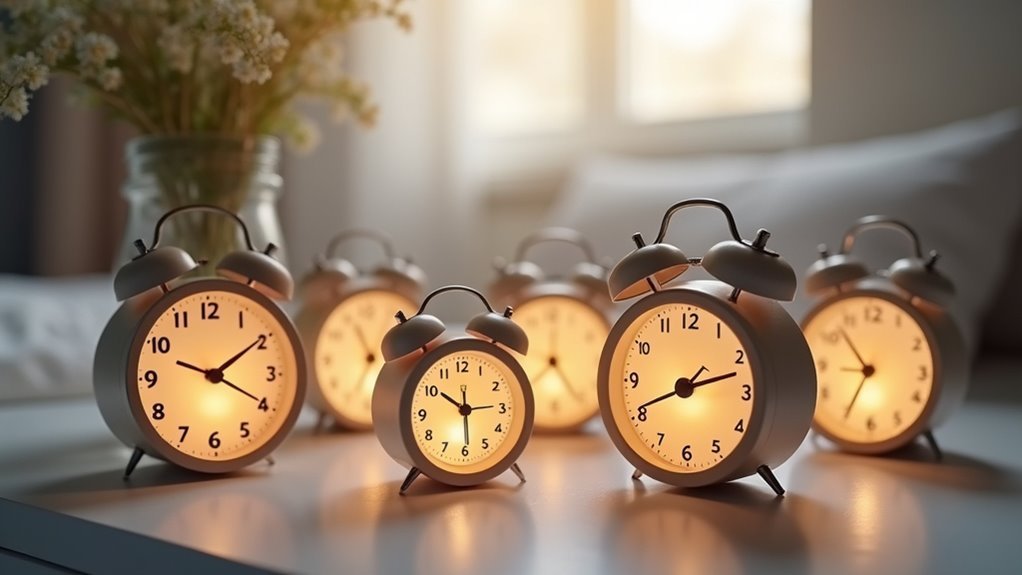
You’ll find the best dawn simulation clocks combine gradual light exposure with customizable features to optimize your sleep-wake cycle. Top performers include the Lumie Bodyclock Luxe 700FM with 15-90 minute sunrise durations, Philips SmartSleep Wake-Up Light offering 20 brightness settings, and Hatch Restore 3 excelling in audio features. Budget options like JALL Wake Up Light ($36) and Dreamegg Sunrise 1 ($60-70) deliver quality without breaking the bank. Positioning your device properly and utilizing sunset features will maximize these scientifically-backed benefits for better mornings ahead.
How Dawn Simulation Technology Regulates Your Circadian Rhythm

While traditional alarm clocks jolt you awake with jarring sounds, dawn simulation technology works with your body’s natural processes by gradually increasing light intensity to mimic a real sunrise.
This approach targets light-sensitive cells in your retina, which respond by suppressing melatonin production and naturally enhancing your alertness upon waking.
Your circadian rhythm functions as an internal clock that regulates when you feel sleepy or alert.
Your body’s internal clock naturally controls your sleep and wake cycles throughout each 24-hour period.
Dawn simulation technology helps align this rhythm with natural light-dark cycles, reducing morning grogginess and improving your overall sleep-wake cycle.
The gradual light exposure signals your brain that it’s time to wake up, making the shift from sleep to wakefulness feel more natural and less abrupt than traditional alarm methods.
Top-Rated Dawn Simulation Clocks Based on Scientific Testing
Understanding how dawn simulation technology works naturally leads to the question of which devices perform best in real-world conditions.
Based on rigorous scientific testing methodologies that evaluate brightness levels, user experience, and sound quality over multiple nights, several Best Sunrise Alarm Clocks stand out.
The Lumie Bodyclock Luxe 700FM tops the list with adjustable sunrise durations from 15 to 90 minutes and 27 sound options.
The Philips SmartSleep Wake-Up Light at $109 offers 20 brightness settings for an effective sunrise experience.
The Hatch Restore 3 excels in audio features, providing dozens of ambient sounds through app compatibility.
These top-performing dawn simulators consistently demonstrate their ability to reduce morning grogginess and improve alertness through gradual light exposure aligned with your circadian rhythms.
Key Features That Make Dawn Simulators Effective for Sleep Optimization
When you’re choosing a dawn simulator, you’ll want to focus on three critical features that directly impact your sleep quality.
The device’s light intensity standards determine how effectively it can replicate natural sunlight, while its circadian rhythm alignment capabilities guarantee your body’s internal clock stays properly synchronized.
Most importantly, the gradual wake mechanisms built into these devices make the difference between jarring awakenings and smooth, natural shifts from sleep to consciousness.
Light Intensity Standards
Although dawn simulators share the common goal of mimicking natural sunrise, their effectiveness hinges on meeting specific light intensity levels that trigger your body’s natural waking response.
Research shows your retina’s light-sensitive cells need approximately 300 lux or higher to effectively stimulate wakefulness, making brightness settings a critical factor when selecting a dawn simulator.
You’ll want to choose models offering adjustable brightness settings ranging from low to high intensities. This flexibility allows you to customize your sunrise simulation based on your sleep depth and sensitivity to light.
Quality dawn simulators provide gradual intensity increases over 15 to 90 minutes, preventing jarring wake-ups while ensuring sufficient brightness to naturally shift your circadian rhythm and promote alertness without morning grogginess.
Circadian Rhythm Alignment
Since your circadian rhythm operates on roughly a 24-hour cycle, dawn simulators work by strategically timing light exposure to reinforce your body’s natural sleep-wake patterns.
These sunrise alarms gradually increase light intensity over 20 to 90 minutes, signaling your body to reduce melatonin production and prepare for waking. This mimics natural sunlight progression, preventing the jarring disruption of traditional alarms.
The warm, golden light therapy enhances mood and alertness while reducing morning grogginess. Your circadian rhythms respond most effectively when exposed to this gentle shift rather than sudden brightness changes.
Many devices offer customizable settings, allowing you to adjust intensity and duration based on personal preferences and seasonal variations. Quality dawn simulators also include sunset routines that gradually dim light, helping you wind down naturally and improving overall sleep quality.
Gradual Wake Mechanisms
Advanced features include:
- Soothing sound options like nature sounds or FM radio
- Automated light intensity based on geographical location
- Seasonal adaptation capabilities for year-round optimization
Brightness and Light Quality Standards for Maximum Wake-Up Benefits
When you’re selecting a dawn simulation clock, the brightness and light quality will determine how effectively it can coax you from deep sleep into a natural waking state.
You’ll need at least 200 lux minimum brightness to wake without jarring disruptions. The light quality matters greatly—warm, golden light around 2700K creates the most natural sunrise simulation, closely mimicking early morning sun.
You’ll benefit from adjustable brightness settings that let you customize intensity for personal comfort and effectiveness.
Advanced models offer color temperature variations, shifting from red to bright white light, optimizing your waking experience through natural sunlight progression. This gradual change from warm to bright light works harmoniously with your circadian rhythms, reducing morning grogginess while providing gentle awakening.
Smart Dawn Simulators Vs Traditional Models: Performance Comparison
When you’re choosing between smart and traditional dawn simulators, you’ll notice significant differences in brightness control and customization options.
Smart models like the Philips SmartSleep HF3654 offer multiple brightness settings and personalized wake-up changes, while traditional versions typically provide fewer intensity levels and basic manual controls.
You’ll also find that smart simulators connect to smartphone apps for remote customization of light and sound settings, whereas traditional models limit you to simple on-device adjustments.
Brightness and Control Features
Twenty brightness levels separate the Philips SmartSleep Wake-Up Light from basic dawn simulators that offer only three or four intensity levels.
Smart dawn simulators deliver precise customizable sunrise simulation through advanced brightness controls, while traditional models limit your options with fixed settings.
You’ll find significant advantages in brightness levels when comparing these technologies:
- Fine-tuned intensity control – Smart models offer multiple color temperatures and gradual adjustments versus basic on/off functionality
- Extended duration options – Advanced simulators like the Lumie Bodyclock Luxe 700FM provide 15-90 minute customizable sunrise simulation periods
- App-based convenience – Models like the Hatch Restore 3 enable smartphone control, replacing cumbersome physical buttons
Traditional dawn simulators focus primarily on basic light functions, while smart versions integrate Bluetooth compatibility and ambient sounds for enhanced sleep optimization.
App Integration Benefits
Although traditional dawn simulators require manual adjustments at the device itself, smart models like the Hatch Restore 3 transform your smartphone into a thorough sleep command center. App integration allows you to customize alarm settings, light intensity, and sound options for a personalized waking experience that adapts to your preferences.
| Feature | Smart Models | Traditional Models |
|---|---|---|
| Customization | Full app control | Preset options only |
| Sound Library | Extensive variety | Limited selection |
| Multiple Alarms | Programmable schedules | Manual setup required |
| Sleep Insights | Tracking & recommendations | None available |
You’ll access broader ambient sound libraries and meditation tracks through these apps, while sleep tracking provides valuable pattern insights. The ability to program multiple alarms and sunset routines improves your adherence to consistent sleep schedules—benefits traditional models simply can’t match.
Budget-Friendly Dawn Simulation Options That Actually Work
Since quality sleep doesn’t require breaking the bank, several dawn simulation clocks deliver effective wake-up experiences at accessible price points.
You’ll find excellent value in these affordable options that won’t compromise your morning routine.
The JALL Wake Up Light stands out as the top budget pick at $36, combining sunrise simulation with bedside lamp functionality.
At just $36, the JALL Wake Up Light delivers dual functionality as both sunrise alarm and bedside lamp.
You’ll get effective waking without harsh traditional alarms.
The Dreamegg Sunrise 1 offers impressive features for $60-$70, including:
- Six customizable wake-up sounds
- Brightness control dials for personalized light intensity
- Reliable sunrise simulation technology
For mid-range budgets, the Philips SmartSleep Wake-Up Light at $109 provides thorough sunrise and sunset features with five wake-up sounds.
These options prove you don’t need expensive alarm settings to optimize your sleep-wake cycle effectively.
Expert Tips for Maximizing Your Dawn Simulator’s Sleep Benefits
Getting the most from your dawn simulation clock requires strategic setup and consistent use rather than simply plugging it in and hoping for better mornings.
Position your dawn simulator at eye level, facing your sleeping position to maximize light exposure that effectively signals wakefulness. Set the light to gradually increase over 30-90 minutes, closely mimicking natural sunrise patterns to regulate your circadian rhythm.
Create a thorough bedtime routine by utilizing the sunset feature, allowing light to dim gradually and signal sleep preparation. Choose models with customizable sound options like nature sounds or gentle melodies to complement the light simulation.
Most importantly, regularly update your programming based on seasonal daylight changes to maintain ideal wake-up and sleep times year-round.
Frequently Asked Questions
What Is the Best Dawn Simulator Clock?
You’ll find the Lumie Bodyclock Luxe 700FM offers the best overall experience with customizable light settings, multiple sounds, and programmable sunrise durations from 15-90 minutes for ideal sleep optimization.
What Is an Alternative to Casper Glow?
You’ll find excellent alternatives like the Hatch Restore 3 with extensive sound options, Philips SmartSleep Wake-Up Light featuring 20 brightness settings, or the budget-friendly JALL Wake Up Light for essential sunrise features.
What Is the Best Alarm Clock for Circadian Rhythm?
You’ll want a sunrise alarm clock that gradually increases light intensity to optimize your circadian rhythm. The Lumie Bodyclock Luxe 700FM and Philips SmartSleep Wake-Up Light are top choices.
Do Sunrise Alarm Clocks Actually Help?
Yes, sunrise alarm clocks actually help you wake up more naturally by gradually increasing light exposure. They’ll reduce your morning grogginess, suppress melatonin production, and improve your overall alertness compared to traditional alarms.




Leave a Reply