

You’ll dramatically improve your circadian health by choosing full spectrum dimmable bulbs with adjustable color temperature. Set morning light to 5000K-6500K for natural wakefulness, then gradually dim lights three hours before bedtime. Switch to warm 2700K lighting in evening hours and position bulbs at eye level for maximum impact. Install dimmers in high-traffic areas, avoid blue light two hours before sleep, and create layered lighting with multiple sources. The strategies below reveal exactly how to implement these changes effectively.
Choose Bulbs With Full Spectrum Color Temperature Control

Since your body’s internal clock depends on light cues to regulate sleep and wake cycles, you’ll want to invest in bulbs that offer full spectrum color temperature control.
These bulbs mimic natural sunlight’s progression throughout the day, supporting your circadian rhythms more effectively than standard lighting.
Full spectrum lighting follows the sun’s natural rhythm, helping your body maintain healthy sleep-wake cycles better than traditional bulbs.
You can adjust these bulbs from cool daylight (5000K) in the morning to warm white (2700K) in the evening. This range enhances daytime alertness while promoting nighttime relaxation. The warmer evening temperatures help trigger melatonin production, preparing your body for sleep.
Full spectrum color temperature control also counteracts disruptive blue light from devices.
Set Morning Light to 5000K-6500K for Natural Wakefulness
When you wake up, your brain needs the right light signal to stop producing melatonin and kickstart your day. Setting your dimmable bulbs to 5000K-6500K mimics bright daylight, effectively signaling your body to wake up naturally.
This cool, bright light enhances alertness and promotes rising energy levels that align with your circadian rhythm. Research shows morning exposure to these light levels improves mood and cognitive function, making it essential for healthy mornings.
Smart bulbs with adjustable color temperature let you automate this process, ensuring consistent circadian support. You can gradually increase intensity through dimming features, simulating natural dawn for gentler awakening.
This approach replaces jarring alarm clocks with biological cues your body recognizes, creating smoother shifts from sleep to wakefulness.
Gradually Dim Lights Starting Three Hours Before Bedtime

As evening approaches, your body naturally begins preparing for sleep by ramping up melatonin production—but bright lights can disrupt this essential process.
You’ll want to start gradually dimming your lights three hours before bedtime to support your healthy circadian rhythm. This dimming schedule mimics natural sunset conditions, signaling your body it’s time to wind down and relax.
By reducing light intensity throughout the evening, you’re helping maximize melatonin production, which is vital for quality sleep.
Smart bulbs make this process effortless—program them to automatically dim over your chosen timeframe, creating a consistent pre-sleep routine without manual adjustments.
This simple lighting strategy won’t just improve your sleep duration; it’ll enhance your overall health by maintaining balanced circadian rhythms night after night.
Switch to Warm 2700K Light in Evening Hours
Beyond dimming your lights, the color temperature you choose plays an equally important role in preparing your body for sleep.
Switch to warm 2700K lighting during evening hours to create a warm glow that mimics natural sunset. This color temperature signals to your body that it’s time to wind down and promotes melatonin release for better sleep readiness.
Warm 2700K bulbs reduce harmful blue light exposure that suppresses melatonin production and disrupts your sleep-wake cycle.
By aligning with your body’s natural circadian rhythms, this warmer lighting helps reinforce healthy sleep patterns.
You’ll find that incorporating 2700K bulbs into your evening routine creates a more comfortable, restful environment that supports better sleep quality and overall circadian health.
Position Dimmable Bulbs at Eye Level for Maximum Impact
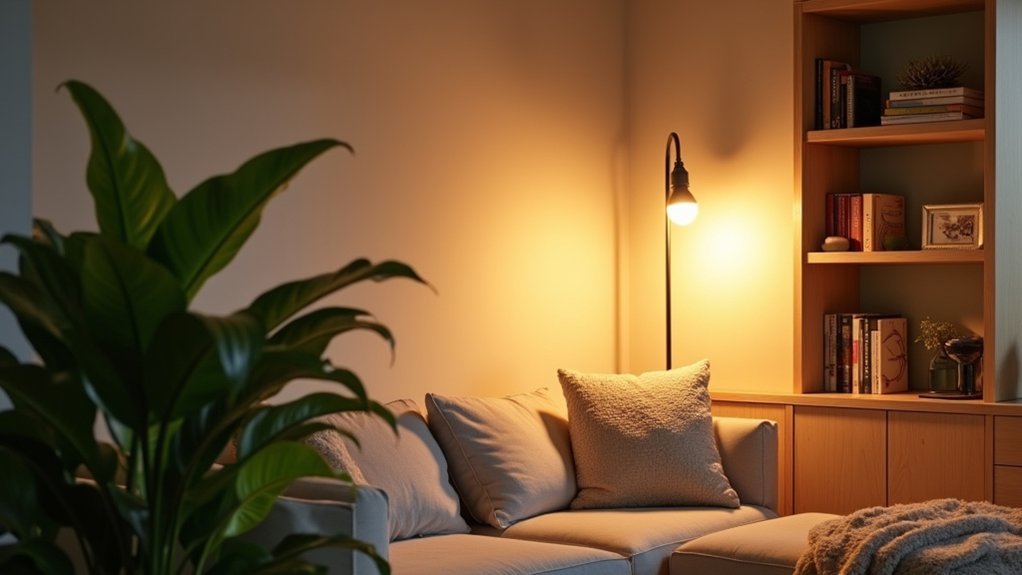
You’ll maximize your dimmable bulbs’ circadian benefits by positioning them at eye level, where they can directly stimulate the specialized cells in your eyes that regulate your internal clock.
This ideal height placement guarantees the light reaches your eyes at the most effective angle, giving you better control over intensity and color temperature throughout the day.
When your bulbs are positioned correctly at eye level, you’ll experience enhanced mood regulation, improved alertness, and reduced eye strain compared to overhead or poorly placed lighting.
Optimal Height Placement
Most people overlook the critical importance of bulb placement, yet positioning your dimmable lights at eye level creates the most powerful impact on your circadian rhythms. When you place lighting at this ideal height, you’re maximizing light exposure to your brain’s photoreceptors, which directly influences your natural sleep-wake cycles.
| Poor Placement | Eye-Level Placement |
|---|---|
| Disrupted sleep patterns | Enhanced circadian regulation |
| Reduced cognitive function | Improved mental clarity |
| Increased glare and discomfort | Comfortable, effective illumination |
| Ineffective light therapy | Maximum therapeutic benefit |
Eye-level positioning guarantees you’ll receive the right intensity and spectrum throughout your day. This strategic placement reduces glare while enhancing your body’s response to light, supporting better mood regulation and overall well-being in both work and living spaces.
Eye-Level Light Benefits
Eye-level lighting minimizes glare while delivering comfortable visual experiences that boost focus and productivity.
You’ll notice reduced eye strain during extended indoor activities, promoting overall well-being. The positioning enables your bulbs to accurately mimic natural light patterns, reinforcing your sleep-wake cycle.
Additionally, you’ll experience smoother shifts between bright and soft lighting, perfectly aligning with daily routines and enhancing sleep readiness when evening approaches.
Use Smart Scheduling to Automate Daily Light Cycles
When you automate your smart bulbs to follow natural light patterns, you’re fundamentally creating an artificial sun that rises and sets on schedule in your home.
This smart home technology transforms your lighting controls into a powerful circadian rhythm support system.
Your automated lighting schedule should include:
- Morning activation – Program cool, bright light (5000-6500K) starting 30 minutes before your wake time
- Midday maintenance – Keep lights at maximum brightness during peak afternoon hours
- Evening change – Gradually shift to warm tones (2700-3000K) starting two hours before bedtime
- Night dimming – Reduce brightness to 10-20% for late evening activities
Smart bulb apps let you customize these changes based on your specific schedule.
Research shows this consistent light exposure greatly improves sleep quality by reinforcing your body’s natural biological cycles.
Install Dimmers in High-Traffic Areas Like Bedroom and Living Room
While smart scheduling handles automation, installing physical dimmers in your bedroom and living room gives you instant manual control over your circadian lighting.
These high-traffic areas benefit most from adjustable brightness since you spend significant time there throughout the day.
Dimmers let you align indoor lighting with your natural rhythm by reducing brightness as evening approaches. This gradual shift signals your body to prepare for sleep, supporting healthy melatonin production.
In your bedroom, dimmed warm light facilitates the winding down process. Your living room becomes cozier for relaxation and social interactions when you can adjust lighting to match activities.
Physical dimmers provide immediate control without reaching for your phone, making it easier to maintain consistent light regulation that supports a healthy, balanced sleep-wake cycle.
Avoid Blue Light Exposure Two Hours Before Sleep
Two hours before your intended bedtime, it’s crucial to eliminate blue light exposure from your environment to support healthy melatonin production.
Blue light from devices disrupts your natural circadian rhythm, making it harder to fall asleep and reducing sleep quality.
Here’s how to minimize blue light exposure:
- Power down electronic devices – Turn off smartphones, tablets, and computers at least two hours before sleep.
- Switch to warm lighting – Replace bright white bulbs with dimmable, red-toned alternatives in evening hours.
- Use blue light filters – Install apps or wear blue light blocking glasses if you must use devices.
- Create a device-free bedroom – Keep electronic screens out of your sleeping space entirely.
This routine helps your body naturally prepare for restorative sleep.
Create Layered Lighting With Multiple Dimmable Sources
You’ll transform your home’s lighting by building three distinct layers that work together to support your circadian rhythm.
Start with ambient lighting as your foundation, add task lighting for focused activities, and finish with accent lights to create the perfect mood.
This strategic approach lets you fine-tune your environment throughout the day, ensuring you’re energized when needed and relaxed when it’s time to wind down.
Ambient Light Foundation Layer
Foundation lighting forms the backbone of any circadian-friendly lighting system, serving as your primary source of general illumination throughout the day. This ambient light layer provides the base brightness that adapts to your natural rhythms, supporting healthy circadian function when properly dimmed.
Your foundational layer should include:
- Overhead fixtures with dimmable capabilities – Install ceiling lights or recessed lighting that can adjust from bright daylight levels to soft evening tones.
- Multiple light sources throughout the room – Distribute several dimmable fixtures to eliminate harsh shadows and create even illumination.
- Warm-to-cool color temperature options – Choose bulbs that shift from energizing cool light during day to relaxing warm light at night.
- Easy dimming controls – Use smart switches or dimmers for effortless brightness adjustments throughout your daily routine.
Task Lighting Precision Control
While your ambient lighting creates the perfect backdrop, task lighting gives you pinpoint control over specific work areas and activities. Position your dimmable bulbs at arm’s length to eliminate glare while maintaining adequate illumination for focused work. This strategic placement enhances productivity without straining your eyes.
Your task lighting should adapt throughout the day to support circadian health. Use brighter, cooler settings during morning hours to promote alertness, then gradually dim to warmer tones as evening approaches. This shift signals your body to prepare for rest.
Incorporate dimmable task lights in home offices, reading nooks, and kitchen workspaces. You’ll seamlessly shift between different activities while maintaining ideal comfort.
The precise control these lights provide allows you to customize intensity based on specific tasks and personal preferences.
Accent Light Mood Enhancement
Accent lighting transforms your space into a dynamic environment that adapts to your circadian needs throughout the day.
When you combine dimmable accent lights with ambient and task lighting, you’ll create layered illumination that supports both productivity and relaxation.
This circadian lighting approach helps regulate your body’s natural rhythms by providing bright, stimulating light when you need alertness and softer, warmer tones for evening wind-down.
Strategic placement of dimmable accent lights offers these benefits:
- Highlight architectural features and artwork while contributing to a calming atmosphere
- Transition seamlessly from daytime brightness to evening warmth
- Reinforce natural cues for alertness and rest through regular intensity adjustments
- Enhance functionality and aesthetics by customizing ambiance according to activity and mood
Monitor and Adjust Light Intensity Based on Seasonal Changes
As seasons shift throughout the year, your body’s circadian rhythm faces different lighting challenges that require strategic adjustments to your indoor environment.
Seasonal changes dramatically impact natural light availability, making it essential to monitor and adjust your indoor light intensity accordingly.
During winter’s shorter days, increase morning light brightness to mimic natural sunlight and boost alertness. Conversely, summer’s extended daylight requires dimming evening lights to promote sleep readiness.
Fall and winter months benefit from brighter artificial lighting to counteract seasonal affective disorder.
Smart dimmable bulbs make these adjustments effortless. You can easily modify brightness levels based on seasonal patterns, helping align your internal clock with external environmental changes.
This proactive approach maintains ideal circadian health year-round.
Frequently Asked Questions
What Light Bulbs Don T Interfere With Circadian Rhythm?
You’ll want warm white LED bulbs with 2700K color temperature or lower. Choose dimmable options or circadian smart bulbs that automatically adjust throughout the day, avoiding bright cool white or blue light in evenings.
Does Dimming Lights Help You Sleep?
Yes, dimming lights helps you sleep better. When you gradually reduce brightness three hours before bedtime, you’ll signal your body to produce melatonin and prepare for sleep naturally.
Which Color Dim Light Is Good for Sleep?
You’ll want warm, amber-colored dim light for sleep. Choose bulbs in the 2700K to 3000K range, as they promote melatonin production and help your body naturally wind down for bedtime.
What Is the Healthiest Light Bulb for Your Eyes?
You’ll want LED bulbs with warm white light around 2700K-3000K for ideal eye health. They’re adjustable, reduce glare, minimize blue light exposure, and support your natural circadian rhythms better than harsh, cooler alternatives.
In Summary
You’ll transform your sleep quality and energy levels by implementing these dimmable bulb strategies. Start with full-spectrum bulbs in key areas, then establish your daily lighting routine—bright mornings, gradual evening dimming, and warm nighttime tones. Don’t forget to position lights at eye level and adjust seasonally. Your circadian rhythm will thank you as you experience more natural wakefulness and deeper, more restful sleep within just a few weeks.




Leave a Reply