

You’ll find five ideal sleep positions that protect your aging spine: back sleeping with a pillow under your knees maintains your spine’s natural curve, side sleeping with a pillow between your legs prevents harmful twisting, semi-reclined positioning reduces lower back pressure, modified fetal position creates space between compressed vertebrae, and adjustable bed configurations offer customizable support. Each position addresses specific spinal concerns while promoting proper alignment. Discover how small adjustments can transform your sleep quality tonight.
Back Sleeping With Knee Support for Optimal Spinal Alignment

When you sleep on your back with a pillow positioned under your knees, you’re actively maintaining your spine’s natural C-shaped curve and reducing harmful pressure on your lower back.
Sleeping on your back with a pillow under your knees maintains your spine’s natural curve and reduces lower back pressure.
This back sleeping position provides even weight distribution, which becomes essential as spinal flexibility decreases with age. For elderly individuals struggling with recovery from discomfort, this alignment proves particularly beneficial.
You can enhance lumbar support by placing a small rolled towel under your waist. If you’re dealing with lower back pain, this position helps alleviate morning stiffness and improves sleep quality.
Don’t forget to experiment with different pillow heights to keep your neck aligned with your spine. This simple adjustment helps you maintain a healthy sleeping posture throughout the night.
Side Sleeping With Pillow Positioning for Senior Comfort
As you shift to side sleeping, you’ll discover this position naturally aligns your spine, pelvis, and hips while greatly reducing lower back pressure.
Proper pillow positioning becomes essential for maximizing spinal health benefits, especially if you’re dealing with degenerative disc disease or osteoarthritis.
Place a pillow between knees to prevent leg twisting and maintain proper alignment throughout the night. This simple adjustment greatly enhances comfort for seniors experiencing joint pain.
Consider investing in a full-length body pillow for additional support that keeps you positioned correctly during sleep.
Your mattress choice matters too—select a medium-firm surface that distributes body weight evenly.
If you wake with discomfort, make gentle position adjustments to restore ideal alignment and promote restorative sleep.
Semi-Reclined Sleep Position for Lower Back Relief

While side sleeping offers excellent spinal alignment, the semi-reclined position provides an alternative solution that’s particularly effective for seniors experiencing chronic lower back pain. This position maintains your spine’s natural curvature while reducing pressure on affected areas.
You’ll find that an adjustable bed or wedge pillows can help you achieve ideal comfort in this position. The semi-reclined angle supports proper spinal health by distributing your body weight more evenly.
| Benefits | Equipment Options |
|---|---|
| Reduces lower back pain pressure | Adjustable bed frames |
| Maintains natural spinal alignment | Wedge pillow systems |
| Improves breathing and reduces acid reflux | Reclining mattress bases |
| Alleviates degenerative disc disease symptoms | Foam positioning wedges |
This position particularly benefits elderly individuals with multiple spinal conditions, offering thorough relief.
Modified Fetal Position for Herniated Disc Management
For seniors dealing with herniated disc pain, the modified fetal position offers targeted relief by creating space between compressed vertebrae.
You’ll lie on your side with knees drawn slightly toward your chest, promoting proper spinal alignment while reducing pressure on herniated discs. This position minimizes the risk of further injury to affected discs.
Place a supportive pillow between knees to maintain hip alignment and reduce lower back strain. This adjustment proves especially beneficial for older adults whose decreased spinal flexibility makes recovery more challenging.
You can make gentle position adjustments throughout the night to manage disc-related pain effectively.
The modified fetal position greatly improves sleep quality by providing consistent pain relief, allowing your body to rest and heal properly during nighttime hours.
Adjustable Bed Configurations for Elderly Spine Support
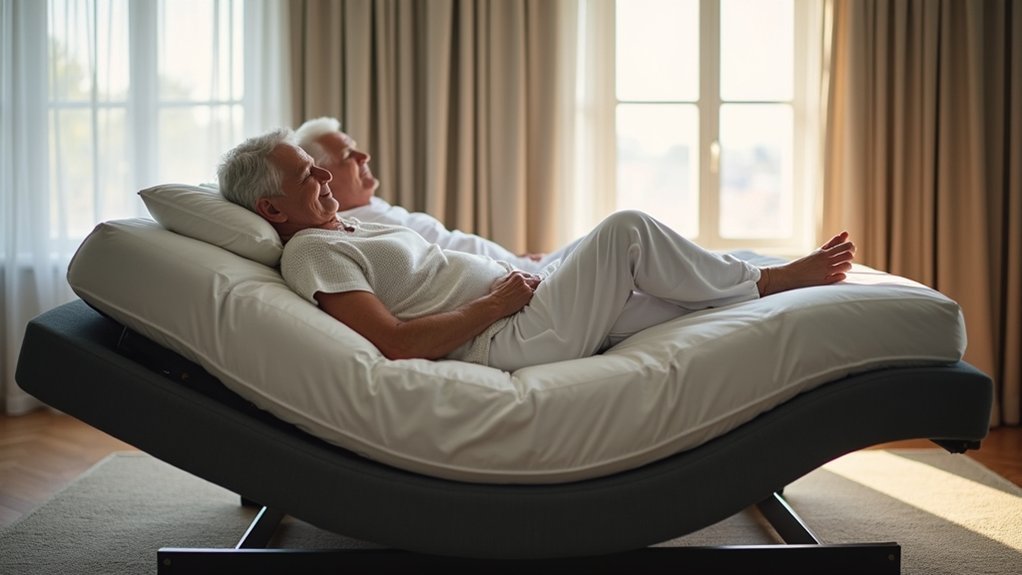
Adjustable beds revolutionize spine support for elderly sleepers by offering customizable positioning that traditional mattresses can’t match. You can elevate your upper body to maintain your spine’s natural curve, which is essential for elderly individuals with degenerative disc disease or osteoporosis. These beds help with spinal alignment by allowing you to adjust head and leg positions, reducing pressure on your lower back and hips.
| Configuration | Benefits | Ideal For |
|---|---|---|
| Head elevated 30-45° | Reduces sleep apnea, heartburn | Respiratory issues |
| Legs elevated 15-30° | Improves circulation | Swelling, varicose veins |
| Zero gravity position | Minimal spinal pressure | Chronic back pain |
| Slight head elevation | Maintains natural curve | General spine support |
| Custom positioning | Personalized comfort | Multiple chronic conditions |
Paired with orthopedic mattresses, adjustable beds support your spine while enhancing sleep quality for ideal recovery.
Frequently Asked Questions
What Is the Best Position to Sleep in With Spine Problems?
You’ll find sleeping on your back with a pillow under your knees works best for spine problems. Alternatively, you can sleep on your side with a pillow between your knees for proper alignment.
What Two Positions Are Not Recommended for the Elderly While in Bed?
You shouldn’t sleep on your stomach since it creates unnatural spinal curves and strains your neck. Also, avoid sleeping on your bad hip as it’ll worsen pain and discomfort.
What Position Should You Sleep in if You Have Curvature of the Spine?
You should sleep on your back with a pillow under your knees, or on your side with a supportive pillow between your knees to maintain proper spinal alignment.
What Sleep Position Is Best for Seniors?
You’ll sleep best on your back with a pillow under your knees, which maintains your spine’s natural curve. Side sleeping with a pillow between your knees also works well for alignment.




Leave a Reply