
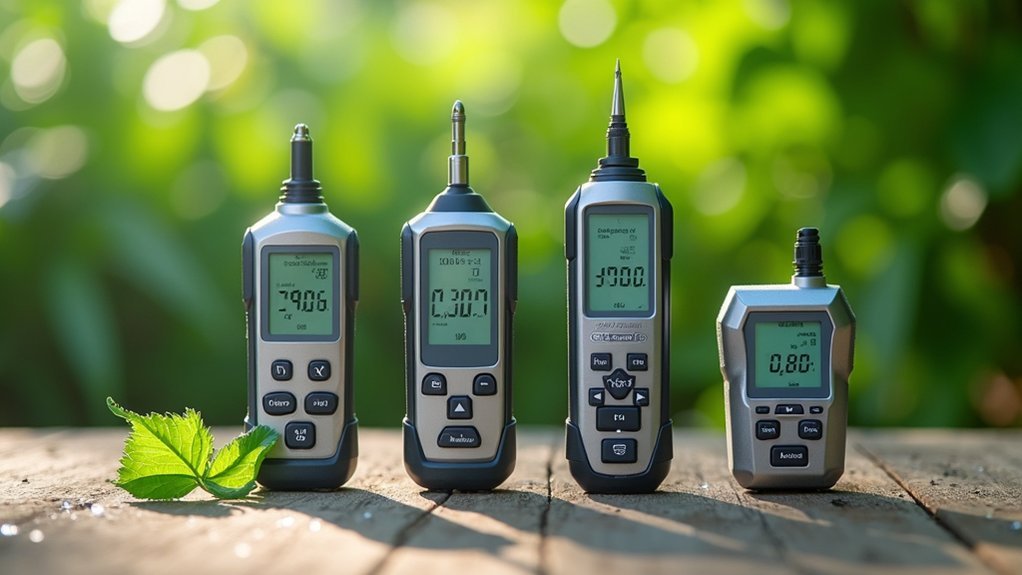
You’ll need five essential tools to measure environmental quality effectively: carbon footprint tracking systems that analyze your greenhouse gas emissions and energy consumption patterns, LCA software platforms that evaluate products from cradle to grave, EMS tools that provide structured frameworks for monitoring sustainability practices, air and water quality instruments with real-time sensors for pollutant detection, and biodiversity impact assessment applications that evaluate ecosystem effects. These extensive measurement solutions will transform your environmental monitoring approach.
Carbon Footprint Analysis and Tracking Systems
While environmental concerns continue to mount globally, carbon footprint analysis has emerged as a fundamental tool for measuring your impact on climate change. These tracking systems calculate your total greenhouse gas emissions in CO2 equivalent tons annually, examining energy consumption, transportation, and resource consumption patterns.
Online calculators from organizations like the EPA require lifestyle data to estimate your emissions against national averages.
You’ll receive personalized tips based on your analysis results, helping identify the most effective sustainable practices for reduction. The systems reveal your largest emission sources, enabling targeted interventions.
Life Cycle Assessment (LCA) Software Platforms
Beyond tracking your personal emissions, Life Cycle Assessment (LCA) software platforms like SimaPro and GaBi offer thorough analysis of products and services from cradle to grave.
These tools evaluate environmental impacts across entire lifecycles, measuring resource consumption and emissions from raw material extraction through disposal. You’ll gain detailed insights into sustainability practices, identifying improvement opportunities through extensive environmental analysis.
LCA tools provide comprehensive lifecycle analysis, revealing sustainability insights and improvement opportunities through detailed environmental impact measurement from extraction to disposal.
LCA platforms include extensive databases with standardized impact data, enabling reliable product comparisons. Multi-user licenses facilitate collaboration between sustainability professionals and product design teams within your organization.
You’ll find these tools increasingly essential for meeting environmental regulations and achieving certifications like ISO 14001. The platforms provide the detailed documentation needed for compliance while supporting data-driven decisions that enhance your organization’s environmental performance.
Environmental Management System (EMS) Tools
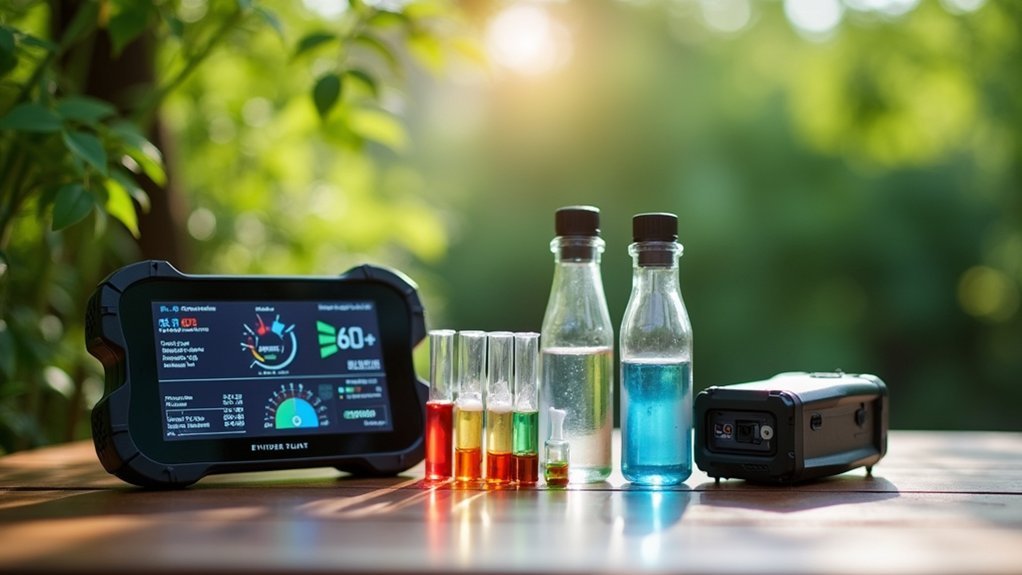
When your organization needs thorough oversight of environmental performance, Environmental Management System (EMS) tools provide the structured framework necessary for monitoring, controlling, and improving sustainability practices.
These platforms help you identify significant environmental impacts while establishing measurable objectives aligned with ISO 14001 standards. You’ll streamline stakeholder communication by documenting environmental policies and performance results, enhancing transparency and accountability throughout your operations.
EMS tools deliver tangible benefits through improved resource efficiency and reduced waste, generating cost savings while ensuring compliance with environmental regulations.
The continuous improvement features adapt to changing conditions and emerging requirements, keeping your sustainability practices current. You’ll effectively engage stakeholders while systematically addressing Environmental Management Systems requirements that drive long-term environmental success.
Air and Water Quality Monitoring Instruments
Building on your extensive environmental management framework, air quality monitoring instruments transform your data collection capabilities from policy documentation to precise, real-time measurement of environmental conditions. These monitoring instruments utilize advanced sensors to detect pollutants like PM2.5, NO2, and O3, providing essential environmental parameters for evaluating public health risks.
Water quality sensors measure pH, dissolved oxygen, and turbidity, ensuring safety standards compliance. IoT-enabled devices integrate seamlessly into smart city systems, enhancing pollution control strategies. Remote sensing technologies expand your monitoring scope through satellite imagery and drones.
| Technology Type | Environmental Parameters | Key Benefits |
|---|---|---|
| Air Quality Sensors | PM2.5, NO2, O3 | Real-time pollutant detection |
| Water Quality Monitors | pH, dissolved oxygen, turbidity | Safety standard compliance |
| IoT-enabled Devices | Multiple parameters | Smart city integration |
| Remote Sensing | Large-scale environmental effects | thorough coverage |
| Automated Stations | Continuous monitoring | Timely pollution responses |
Biodiversity Impact Assessment Applications

As environmental regulations tighten globally, biodiversity impact assessment applications have become critical tools that enable you to evaluate and mitigate your project’s effects on ecosystems before implementation begins.
These applications utilize habitat assessment methods, species inventories, and ecological modeling to quantify potential impacts on flora and fauna.
You’ll find that the Convention on Biological Diversity emphasizes their importance in promoting sustainable development while maintaining ecological integrity.
In the European Union, legal protections require biodiversity considerations in environmental assessments for specific projects.
Advanced tools like the Biodiversity Offsetting Framework help you achieve measurable conservation outcomes, ensuring your development contributes to ecological restoration efforts and habitat preservation while compensating for unavoidable biodiversity losses.
Frequently Asked Questions
Which Tool Most Effectively Assesses Environmental Risk?
You’ll find Life Cycle Assessment tools like SimaPro most effectively assess environmental risk because they analyze thorough impacts across entire product lifecycles, from raw material extraction through disposal, providing holistic risk evaluation.
How Do You Measure Environmental Factors?
You’ll measure environmental factors using specialized sensors and testing equipment. Deploy air quality monitors for pollutants, soil analyzers for composition, water testing kits for pH levels, and sound meters for noise pollution assessment.
What Are the 4 Types of Environmental Monitoring?
You’ll encounter four main types of environmental monitoring: air quality tracking for pollutants, water assessment for safety parameters, soil analysis for health indicators, and waste management evaluation for sustainability practices.
What Are the Five Tools of Environmental Management?
You’ll use five key environmental management tools: Environmental Management Systems for structured frameworks, Life Cycle Assessment tools for product impact evaluation, carbon footprint calculators, environmental indicators and metrics, and monitoring systems.




Leave a Reply