

When you’re working night shifts, timing your espresso consumption within the first 4 hours dramatically improves alertness while protecting your daytime sleep quality. You’ll want to consume caffeine 30-60 minutes before your shift starts, with peak effectiveness occurring between 1-3 AM when your body naturally fights sleepiness. Avoid espresso after 3 AM since caffeine’s 6-hour duration can disrupt melatonin production and steal precious recovery hours. Strategic timing transforms caffeine from a sleep thief into your most reliable performance ally throughout demanding overnight shifts.
Understanding Caffeine’s Impact on Night Shift Performance

When you’re working the graveyard shift, your body naturally fights against staying alert as melatonin production increases and your circadian rhythm signals it’s time to sleep.
That’s where caffeine becomes your strategic ally. Research shows that caffeine consumption can dramatically enhance your alertness and cognitive performance during night shifts, helping you maintain focus in low-light conditions when your brain wants to shut down.
You’ll experience improved reaction times and reduced fatigue when you consume caffeine 30-60 minutes before your shift starts. The effects last up to six hours, giving you sustained energy throughout your work period.
Optimal Espresso Extraction Times for Maximum Alertness
When you’re pulling espresso shots during night shifts, you’ll want to focus on extraction times between 25-30 seconds to maximize caffeine release and maintain peak alertness.
Start with a 5-6 second pre-infusion to boost extraction consistency, which directly impacts the potency of your caffeine dose.
You can further enhance strength by adjusting your grind size to a finer setting, increasing the surface area for ideal water interaction and stronger extraction.
Extraction Time and Caffeine
Since proper extraction timing directly affects caffeine concentration, mastering the 25 to 30-second sweet spot becomes vital for night workers who depend on maximum alertness from their espresso shots.
When you nail this extraction time window, you’ll achieve that perfect 1.5 to 2 oz yield with maximum caffeine release.
Watch your shot’s flow carefully – you want that light tan, translucent stream indicating ideal extraction. White crema signals over-extraction, which actually reduces caffeine effectiveness.
Your grind size plays a significant role here: finer grinds boost extraction rates and caffeine content, while coarser grinds leave you under-extracted with disappointing caffeine levels.
- Feel the confidence of perfectly timed shots delivering peak alertness
- Experience the satisfaction of mastering your caffeine delivery system
- Enjoy sustained energy that powers through demanding night shifts
Pre-Infusion for Potency
While most baristas rush through the brewing process, incorporating a deliberate 5 to 6-second pre-infusion phase transforms your espresso’s caffeine potency and delivers the sustained alertness night workers desperately need.
This vital step allows water to evenly saturate your coffee puck, setting the foundation for superior extraction and enhanced flavor complexity.
You’ll notice pre-infusion dramatically improves your espresso’s strength when combined with ideal 25 to 30-second extraction times.
Watch for that telltale light tan, translucent flow indicating perfect extraction completion.
Consider using a finer grind to slow water flow and maximize caffeine extraction.
Don’t hesitate to experiment with different pre-infusion durations and techniques.
These adjustments will help you achieve the concentrated caffeine kick essential for maintaining sharp focus throughout demanding night shifts.
Grind Adjustments for Strength
Your grind size directly controls extraction speed and determines whether your espresso delivers the concentrated caffeine punch you need during those grueling overnight hours.
When you grind coffee finer, you’re increasing extraction efficiency, pulling more caffeine and flavor compounds from those beans. A coarser grind leads to under-extraction, leaving you with weak espresso that won’t combat fatigue effectively.
Consistency is everything when you’re fighting exhaustion. You’ll need to dial in your grind settings regularly to maintain that perfect extraction balance.
- Fine-tune your grind daily – your alertness depends on it
- Coarse grinds steal your energy – under-extracted shots won’t sustain you
- Perfect extraction means surviving your shift – every adjustment counts for maximum focus
Strategic Coffee Consumption Windows During Night Shifts
When you’re working the night shift, the timing of your coffee consumption can make the difference between staying sharp and crashing at critical moments. Your espresso timing strategy should align with your circadian rhythms to maximize alertness while protecting post-shift sleep quality.
| Time Window | Espresso Consumption | Impact |
|---|---|---|
| Start of Shift | Light consumption | Gradual energy boost |
| 1-3 AM | Peak consumption | Maximum alertness |
| After 3 AM | Avoid/Minimize | Protects sleep cycles |
Consume your espresso during the first half of your shift for ideal performance, as caffeine peaks 30-60 minutes after consumption. Taking short coffee breaks maintains energy levels and reduces fatigue throughout long shifts. Research shows moderate timing can reduce mortality risk by 16% for night workers.
Brewing Techniques That Enhance Focus and Energy

Since brewing technique directly impacts caffeine extraction and flavor balance, mastering your espresso preparation becomes essential for maintaining peak alertness during night shifts.
You’ll want to time your extraction between 25-30 seconds to achieve that balanced flavor profile without overwhelming bitterness. Start with a 5-6 second pre-infusion phase—this guarantees even saturation and smoother taste.
Use a consistent 16-22g dose for reliable caffeine intake, and adjust your grind to a finer setting for maximum extraction.
When your espresso starts with proper technique, you’ll access significant health benefits:
- Enhanced cognitive function that keeps your mind sharp through long shifts
- Sustained energy levels without the crash associated with poor extraction
- Improved focus from balanced caffeine delivery
Regular machine maintenance with backflushing every 40 minutes guarantees consistent results.
Managing Circadian Rhythm Disruption Through Timing
You can minimize circadian rhythm disruption by consuming espresso within a strategic 4-hour window at the start of your night shift.
This timing protects your daytime sleep quality by allowing caffeine to clear your system before you need to rest.
Strategic consumption also helps stabilize hormone levels like melatonin, maintaining your body’s natural sleep-wake cycle despite working unconventional hours.
Strategic Caffeine Window Planning
Although night shift workers face unique circadian challenges, strategic caffeine window planning can transform how your body responds to disrupted sleep cycles.
Strategic timing isn’t just about staying awake—it’s about optimizing your body’s natural rhythms while working against them.
Consuming your espresso during early shift hours leverages caffeine’s peak effectiveness when fatigue typically strikes hardest. This approach influences melatonin production, helping regulate hormonal disruptions that plague night workers.
Research shows morning coffee drinkers experience 16% lower mortality risk, but for night workers, “morning” means your shift’s beginning.
- Reclaim control over your body’s rebellious sleep schedule
- Protect your heart with moderate, well-timed caffeine consumption
- Transform exhausting nights into manageable, productive shifts
Sleep Quality Protection
When night workers mistime their espresso intake, they’re fundamentally fighting a two-front war against both sleep deprivation and circadian chaos. Your body’s natural rhythm expects caffeine in the morning, not during evening shifts. This timing mismatch disrupts hormone production and creates a cascade of sleep quality problems that compound over time.
Strategic timing becomes your protective shield against these disruptions. Research shows morning coffee consumption aligns with your circadian rhythms, even when you’re working nights.
By consuming espresso earlier in your wake cycle rather than closer to your intended sleep time, you’re preserving your body’s ability to shift into restorative sleep phases.
This timing adjustment doesn’t just improve rest—it actively protects your cardiovascular health while maintaining the alertness benefits you need for night work performance.
Hormone Level Stabilization
Since your endocrine system operates on a predictable 24-hour schedule, disrupting it with poorly timed caffeine creates a hormonal domino effect that extends far beyond simple sleep problems.
Night workers face unique challenges in maintaining hormone level stabilization, but strategic coffee timing can minimize circadian disruption.
Morning coffee consumption helps align your cortisol peaks with natural rhythms, even when you’re working unconventional hours.
Research shows this timing supports melatonin regulation and reduces cardiovascular disease risk by 31%. By drinking your espresso during traditional morning hours rather than before night shifts, you’re giving your hormones the best chance to maintain their delicate balance.
- Your melatonin production won’t be completely hijacked by mistimed stimulants
- Cortisol spikes will occur when your body naturally expects them
- Cardiovascular protection increases markedly with proper timing
Equipment Maintenance for Consistent Late-Night Brewing
While your attention might waver during those grueling overnight hours, your espresso equipment demands the same meticulous care it receives during peak daytime service.
You’ll need to backflush group heads every 40 minutes to prevent residue buildup that compromises extraction quality. Clean portafilters every 30 minutes to eliminate contamination from old grounds.
Don’t neglect your grinder—vacuum it daily and perform deep cleaning weekly to remove accumulated oils and particles.
Your grinder requires daily vacuuming and weekly deep cleaning to eliminate oil buildup and particle accumulation that compromises extraction consistency.
Replace shower screens and portafilter baskets every four to six months for consistent extraction. Monitor your burr sharpness carefully, as worn burrs create inconsistent grind sizes that destroy flavor profiles.
When extraction quality declines, it’s time for burr replacement. Maintaining this rigorous cleaning schedule guarantees your late-night espresso shots meet the same standards as daytime service.
Balancing Caffeine Benefits Without Compromising Sleep Recovery
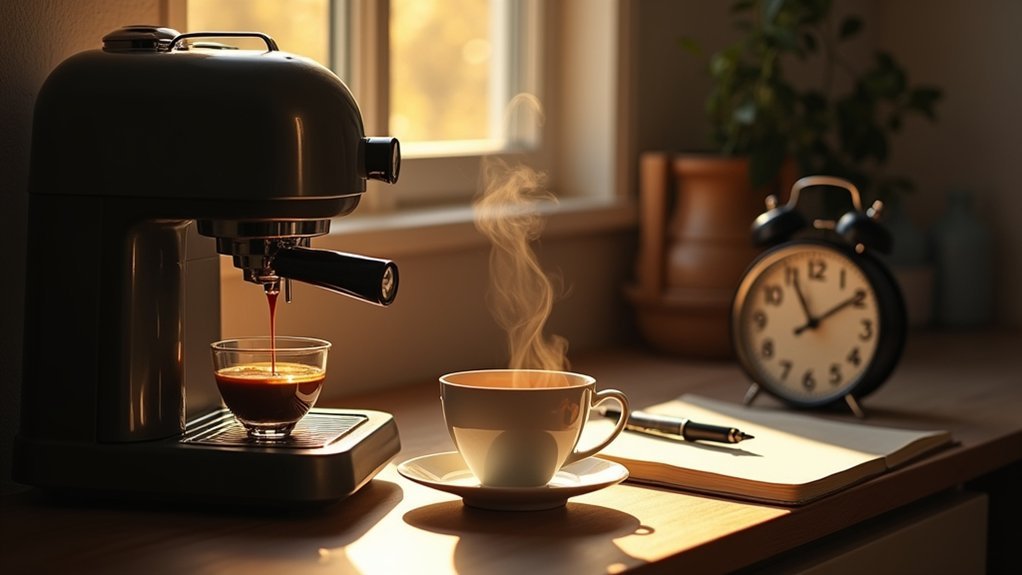
Though caffeine delivers the alertness you desperately need during overnight shifts, strategic timing becomes your most powerful tool for preserving sleep quality.
Research shows consuming coffee before midday offers a 31% lower risk of cardiovascular death while aligning with your natural circadian rhythms. You’ll maximize performance benefits without sabotaging recovery sleep.
Moderate intake of 2-3 cups delivers ideal results compared to light consumption.
However, avoiding afternoon and evening caffeine prevents melatonin disruption that’s essential for quality rest.
- Your body craves the energy boost, but poor timing steals precious recovery hours
- Every late-afternoon cup pushes restful sleep further from reach
- Strategic morning consumption protects both your alertness and your health
You’ll maintain peak performance while safeguarding the restorative sleep that keeps you functioning effectively shift after shift.
Frequently Asked Questions
What Is the 2 1 Rule for Espresso?
You’ll follow the 2:1 rule by using twice the espresso yield compared to your coffee dose. For eighteen grams of coffee, you’ll extract thirty-six grams of liquid espresso, creating balanced flavor extraction.
Why Do You Need to Time Espresso?
You need to time espresso to achieve ideal extraction between 25-30 seconds, ensuring balanced flavor and preventing over-extraction. Timing helps you maintain consistency and adjust grind size for perfect taste.
What Is the 10 Second Rule for Espresso?
You’ll extract espresso for 25-30 seconds from initial flow. If it’s over 30 seconds, you’re over-extracting and creating bitterness. Under 20 seconds means under-extraction, producing sour, weak flavors.
Why Do Italians Drink Espresso Before Bed?
You’ll find Italians drink espresso before bed because they view it as a digestive aid and social ritual. They believe the small caffeine amount promotes relaxation rather than disrupting sleep patterns.




Leave a Reply