
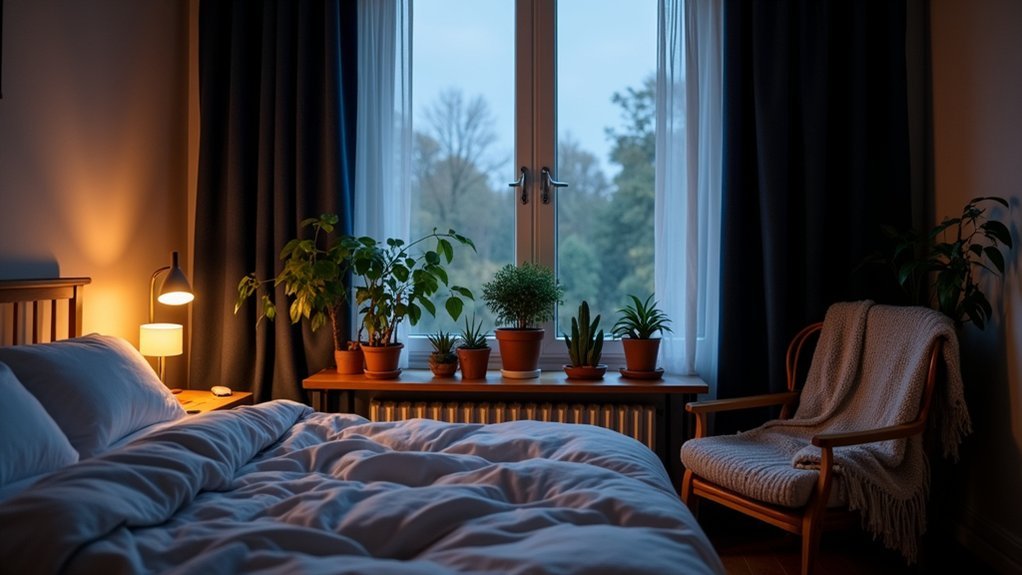
You’ll achieve ideal evening brightness reduction by layering blackout curtains with heavy drapes and installing light-blocking window film that eliminates up to 99% of external light. Switch to warm white bulbs (2700K-3000K) instead of cool blue tones, position your bed away from windows, and add dimmable smart lighting controls for gradual reduction. Create an electronics-free wind-down zone with dark accent walls using navy or charcoal paint. These foundational strategies will transform your bedroom environment in ways you haven’t yet discovered.
Layer Blackout Curtains With Heavy Drapes
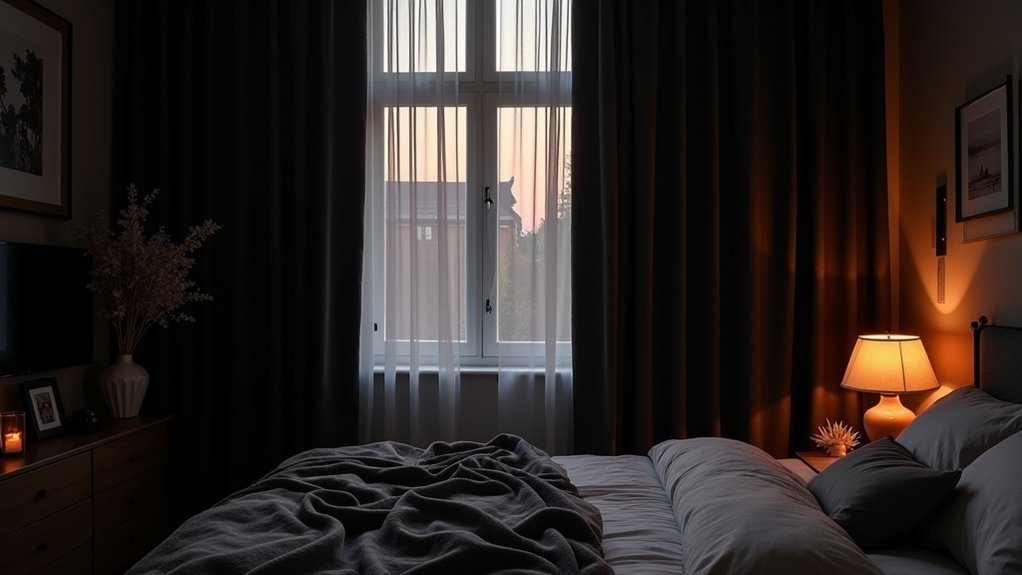
When you’re struggling with unwanted light seeping into your bedroom during evening hours, layering blackout curtains with heavy drapes creates an exceptionally effective barrier against external illumination.
This dual-layer approach blocks light more thoroughly than either window treatment alone, ensuring ideal darkness for quality sleep.
The combination enhances insulation properties, maintaining consistent bedroom temperatures while minimizing light penetration.
Heavy drapes add stylistic appeal, allowing you to achieve cohesive room design without sacrificing functionality.
You’ll also notice reduced outside noise, creating a more peaceful sleeping environment.
Choose darker colors for both blackout curtains and heavy drapes to maximize light absorption and blocking capabilities.
This strategic layering transforms your bedroom into a sanctuary, effectively eliminating disruptive evening brightness that interferes with your natural sleep patterns.
Install Light-Blocking Window Film
If you’re seeking a permanent solution that doesn’t require bulky window treatments, light-blocking window film offers an invisible barrier that eliminates up to 99% of external light pollution.
This specialized film reflects sunlight and blocks UV rays while maintaining your room’s comfortable temperature and enhancing privacy.
You’ll find installation surprisingly simple—no professional help needed. The adhesive backing applies easily to any window size, making it accessible for most homeowners.
Various film types provide different darkness levels and heat reduction options, letting you customize your light control preferences.
Light-blocking window film proves more cost-effective than traditional curtains or blinds, lasting several years without peeling or fading.
Unlike expensive curtains that fade and wear out, light-blocking window film delivers years of reliable performance at a fraction of the cost.
You can reduce external light effectively while maintaining your window’s clean appearance and functionality.
Use Warm White Light Bulbs Instead of Cool Blue Tones
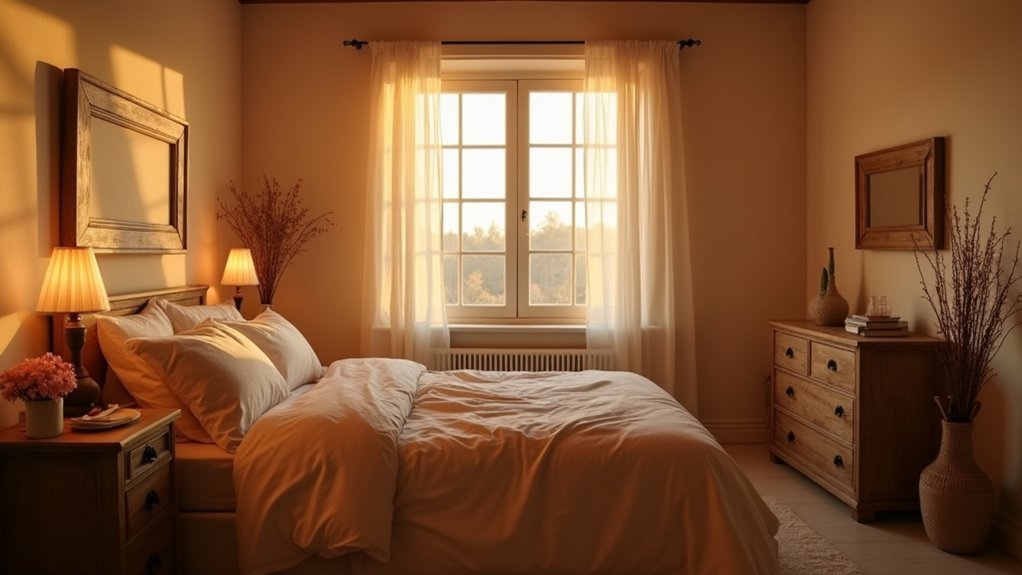
While window treatments block external light sources, the artificial lighting you choose inside your home plays an equally crucial role in evening brightness reduction.
Cool blue-toned lighting from traditional LED and fluorescent bulbs disrupts your circadian rhythms, making it harder to wind down. Switching to warm white bulbs creates the ideal sleep environment.
Here’s why warm white lighting transforms your bedroom:
- Promotes melatonin production – Color temperatures between 2700K-3000K signal your body it’s time to sleep
- Creates cozy atmosphere – Warm tones make your space more inviting and relaxing
- Improves quality of sleep – Studies show warm environments enhance overall rest and well-being
- Supports natural rhythms – Helps your body shift smoothly into restful states
Position Furniture to Block External Light Sources
You can greatly reduce evening light intrusion by strategically positioning your furniture to create natural barriers against external sources.
Place your bed away from windows and use tall pieces like bookshelves or wardrobes along walls that face street lights or neighboring illumination.
Select furniture with light-absorbing materials and arrange pieces to cover gaps where curtains don’t fully block unwanted brightness.
Strategic Bed Placement
When external light sources disrupt your sleep environment, strategic bed placement becomes your first line of defense against unwanted illumination.
You’ll dramatically improve your sleep quality by positioning your bed thoughtfully to minimize light coming through windows and other sources.
Here are four effective strategic bed placement techniques:
- Position your bed away from windows – Create maximum distance between your sleeping area and direct external light sources like street lamps and vehicle headlights.
- Place your bed in a corner opposite the window – This arrangement naturally reduces nighttime light exposure while maximizing room functionality.
- Use your headboard as a light barrier – Position tall headboards strategically to block light coming from specific directions.
- Arrange tall furniture near windows – Deploy dressers and bookshelves as natural light-blocking shields while maintaining room flow.
Window-Blocking Furniture Arrangement
Beyond repositioning your bed, transforming your existing furniture into strategic light barriers offers another powerful approach to evening brightness control.
Your window-blocking furniture arrangement can effectively shield external light sources without sacrificing daytime functionality. Place tall bookshelves or dressers directly against windows to create physical barriers against street lamps and outdoor lighting.
Position larger pieces away from windows to minimize light reflection that could amplify room brightness. Choose bed frames with high headboards that naturally obstruct incoming light while maintaining visual appeal.
Strategically place nightstands and decorative items to create additional light shields. This thoughtful furniture arrangement guarantees maximum light blockage during evening hours while preserving natural illumination throughout the day, creating an ideal balance for your bedroom environment.
Light-Absorbing Material Selection
While furniture positioning creates physical barriers, selecting materials that absorb rather than reflect light dramatically enhances your bedroom’s darkness levels.
You’ll transform your space into a sleep sanctuary by choosing light-absorbing materials that minimize unwanted ambient lighting.
- Choose thick carpets and heavy curtains – These dense fabrics trap light particles and prevent reflection from hard surfaces throughout your room.
- Invest in upholstered furniture – Fabric-covered headboards, chairs, and ottomans absorb light more effectively than glossy or metallic surfaces.
- Select darker-toned decor – Deep blues, charcoals, and rich browns naturally absorb light rather than bouncing it around your space.
- Incorporate sound-absorbing elements – Materials like fabric wall panels serve dual purposes, reducing both light reflection and noise for ideal sleep conditions.
Add Dimmable Smart Lighting Controls
As darkness settles in each evening, dimmable smart lighting controls offer you precise command over your bedroom’s illumination, creating the perfect environment for winding down.
These systems seamlessly adjust brightness levels, supporting your shift into evening routines and promoting the relaxation needed for a good night’s sleep.
Smart lighting systems effortlessly transition your bedroom from day to night, naturally guiding your body toward restful sleep.
You can program many smart lighting systems to mimic natural sunsets, gradually dimming to signal your body it’s time to rest.
Integration with home automation hubs lets you control lights remotely through smartphone apps or voice commands, enhancing convenience considerably.
Dimmable LEDs reduce energy consumption compared to traditional bulbs while maintaining efficiency.
Warm-dim fixtures with smart controls create cozy evening atmospheres while preserving functional brightness for necessary tasks.
Seal Window and Door Light Gaps
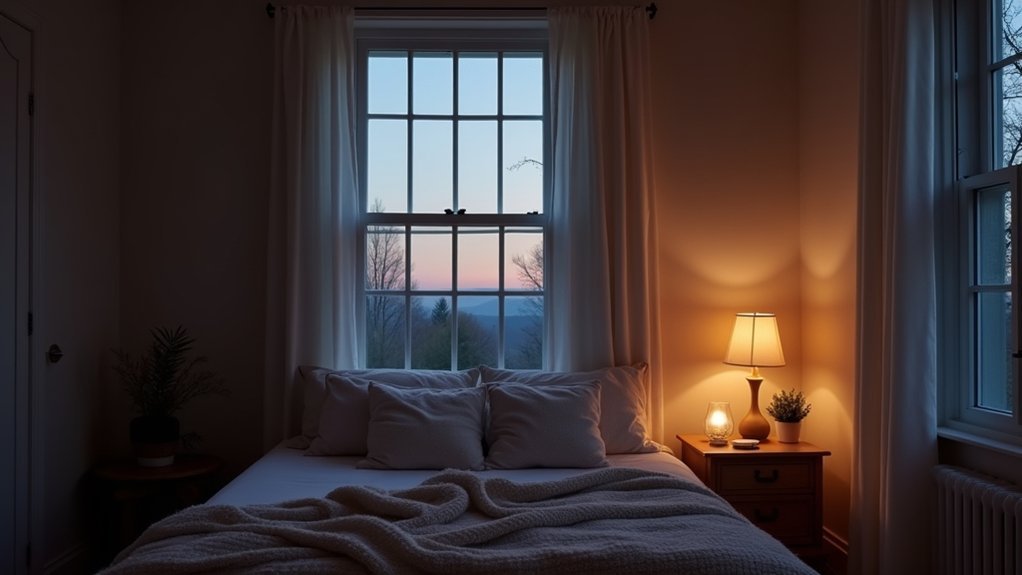
Even small gaps around windows and doors can undermine your evening darkness goals, allowing persistent light leaks that disrupt your sleep preparation.
When you seal window and door light gaps effectively, you’ll create the dark room environment essential for quality rest.
Here’s how to eliminate troublesome light infiltration:
- Apply weather stripping around window frames and door edges to block light sneaking through cracks and crevices.
- Use caulking to seal permanent gaps around window frames, preventing both light entry and energy loss.
- Install door sweeps beneath bedroom doors to stop light from spilling in from hallways or adjacent rooms.
- Maintain seals regularly by inspecting and replacing worn materials that compromise your dark environment over time.
Choose Dark Paint Colors for Accent Walls
When you introduce dark paint colors on an accent wall, you’ll transform your bedroom into a sophisticated retreat that naturally absorbs excess light and promotes evening relaxation.
Consider deep navy, charcoal, or forest green for maximum impact without overwhelming your space. These darker hues create striking contrast while absorbing light that could otherwise cause glare, contributing to a restful environment perfect for winding down.
Dark accent walls in navy, charcoal, or forest green absorb harsh light and create the perfect atmosphere for restful sleep.
Your dark accent wall will anchor the room’s design, making lighter furnishings and decor pop while enhancing overall brightness perception.
To maintain balance, pair your dark wall with lighter elements throughout the space. This prevents your bedroom from feeling closed in while still delivering the intimate, cozy atmosphere that dark paint colors provide for better sleep preparation.
Install Motorized Blackout Blinds
You’ll transform your bedroom’s light control when you install motorized blackout blinds that automatically open and close at scheduled times.
These smart systems integrate seamlessly with your existing home automation, letting you adjust lighting through voice commands or smartphone apps without leaving your bed.
The complete darkness they provide blocks virtually all external light, creating an ideal sleep environment that naturally supports your body’s melatonin production.
Smart Automation Benefits
As technology transforms our daily routines, motorized blackout blinds offer a sophisticated solution that automatically manages your bedroom’s light exposure without any manual intervention.
These smart automation systems eliminate guesswork and create ideal sleep conditions through intelligent programming.
The key advantages of smart automation include:
- Programmable scheduling – Set your blackout blinds to close automatically at your preferred bedtime and open gradually for natural wake-up lighting.
- Remote smartphone control – Adjust your blinds from anywhere in your home without leaving your comfortable bed.
- Voice assistant integration – Control your window treatments hands-free using smart home devices like Alexa or Google Assistant.
- Consistent sleep schedule maintenance – Timer functions help regulate your circadian rhythm by blocking light pollution during designated rest hours.
Light Blocking Effectiveness
How effectively do motorized blackout blinds actually block unwanted light from entering your bedroom? These advanced window treatments deliver exceptional light blocking effectiveness by completely sealing out external light sources.
You’ll achieve total darkness that’s essential for optimal melatonin production and deeper sleep cycles. Motorized blackout blinds outperform traditional curtains and standard blinds by eliminating gaps where light typically sneaks through.
Their precise fit and automated positioning guarantee consistent coverage across your entire window surface. You won’t deal with uneven hanging or manual adjustments that compromise light blocking.
The remote control and timer programming features let you maintain perfect darkness without disrupting your sleep routine. You can schedule automatic closure before bedtime, creating an ideal sleep environment that greatly enhances your overall sleep quality and daytime alertness.
Create a Electronics-Free Wind-Down Zone
When you designate a specific area in your bedroom as an electronics-free wind-down zone, you’re creating a powerful signal to your body that it’s time to shift from day to night.
This dedicated space eliminates stimulating blue light exposure while encouraging relaxation activities that lower cortisol levels.
Here’s how to make your room the perfect electronics-free sanctuary:
- Remove all screens – Keep phones, tablets, and TVs out of your designated wind-down area.
- Add soft light sources – Use warm-toned lamps or candles instead of harsh overhead lighting.
- Include calming activities – Place books, journals, or meditation cushions in your zone.
- Choose soothing colors – Incorporate peaceful blues, greens, or earth tones in your decor.
This approach reduces anxiety and creates consistent sleep hygiene habits.
Optimize Lamp Placement for Gentle Evening Illumination
Strategic lamp placement transforms your bedroom into a sleep-friendly haven by directing gentle illumination exactly where you need it most.
Position lamps near essential areas like your bedside or reading nook to create focused lighting that enhances comfort without harsh brightness. Choose warm white bulbs that promote melatonin production, signaling your body to prepare for sleep.
Install adjustable brightness features that allow gradual light reduction throughout the evening, easing your shift to rest. Avoid placing lamps directly across from windows to prevent glare and maintain soft, inviting ambiance.
Create layered evening illumination by combining table lamps, floor lamps, and wall sconces. This balanced approach lets you customize lighting based on time and activity, supporting your natural circadian rhythm for better sleep quality.
Frequently Asked Questions
How to Bring More Light Into a Dark Bedroom?
You’ll brighten your dark bedroom by painting walls light colors, positioning mirrors near windows, choosing furniture with thin legs, hanging sheer curtains, and arranging pieces to avoid blocking natural light sources.
What Lighting to Have in Your Room Before Bedtime?
You’ll want warm white lamps instead of overhead lights sixty minutes before bed. Dim them gradually using smart controls, and make certain you’ve got blackout curtains blocking outside light pollution completely.
How to Sleep When the Room Is Bright?
You’re struggling to sleep in bright conditions, so install blackout curtains or blinds to block external light. Use a sleep mask for extra darkness and dim overhead lights sixty minutes before bedtime.
How to Lighten up Dark Bedroom Furniture?
You can lighten dark bedroom furniture by adding light-colored throws, switching to bright lamp shades, placing mirrors nearby to reflect light, or applying removable light wood contact paper over surfaces.
In Summary
You’ll sleep better when you’ve transformed your bedroom into a darkness sanctuary. Start with blackout curtains and window film, then switch to warm lighting with dimmer controls. Don’t forget to move furniture strategically and paint accent walls in darker hues. Create that electronics-free zone you need for proper wind-down time. These brightness reduction strategies will revolutionize your evening routine and help you achieve the restful sleep you deserve.




Leave a Reply