

Your body’s core temperature naturally peaks between 6-8 PM due to circadian rhythms, making late afternoon workouts align with ideal physiological conditions for performance. However, exercising too close to bedtime raises your core temperature when it should be dropping, disrupting melatonin production and sleep quality. The hypothalamus acts as your biological thermostat, and vigorous exercise creates an artificial temperature spike that interferes with your natural cooling process. Understanding these temperature patterns can help you enhance your workout timing for better results.
How Circadian Rhythms Control Your Body’s Internal Temperature Clock
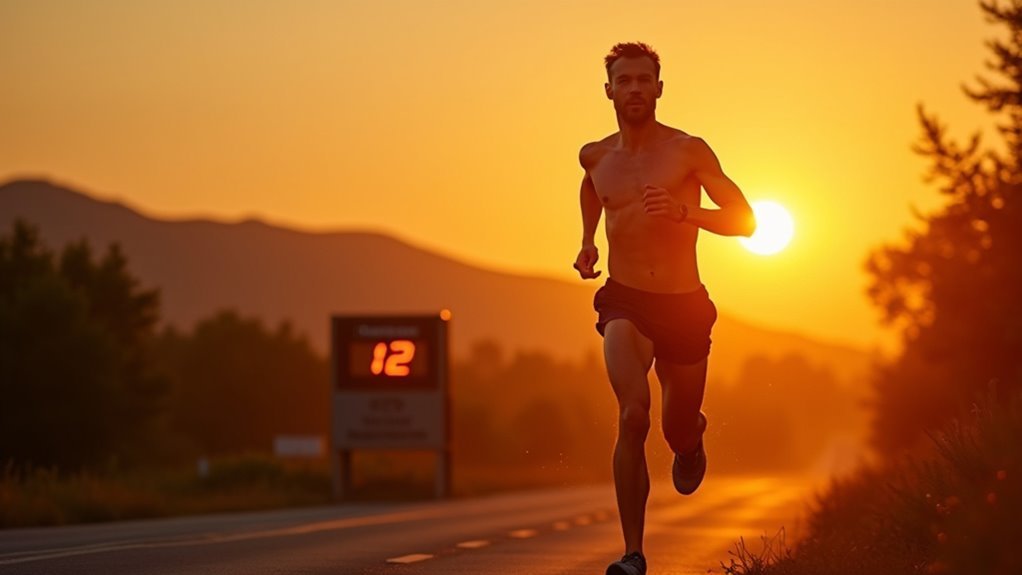
While you sleep through the night and work through the day, your body’s internal clock orchestrates a precise temperature dance that directly impacts when you’ll perform your best during exercise.
Your circadian rhythms operate on a 24-hour cycle, with your hypothalamus serving as command central for temperature regulation. This biological thermostat systematically adjusts your core body temperature throughout the day, typically reaching peak warmth during late afternoon and evening hours.
Your hypothalamus acts as a biological thermostat, systematically warming your core temperature to peak levels during late afternoon and evening.
When your body temperature rises, your muscles become more flexible and your blood flow increases, creating ideal conditions for physical performance.
Understanding these natural fluctuations helps you align your exercise timing with your body’s thermal peaks, maximizing workout effectiveness while working with your biology rather than against it.
The Science Behind Body Temperature Fluctuations Throughout the Day
Your body’s internal thermostat operates on a precise 24-hour schedule, with your core temperature naturally rising and falling in predictable patterns throughout each day.
This circadian rhythm drives your temperature to its lowest point around 4-6 AM, then steadily climbs to peak between 6-8 PM.
Understanding these daily fluctuations helps you identify the ideal windows for different types of exercise based on when your body naturally runs hottest or coolest.
Circadian Rhythm Controls Temperature
The precision of your body’s internal clock governs far more than when you feel sleepy or alert—it orchestrates a complex symphony of temperature fluctuations that directly impacts your exercise performance.
Your circadian rhythm controls this temperature regulation through the hypothalamus, creating predictable patterns throughout each day. You’ll experience your lowest body temperature during early morning hours, then witness a gradual climb toward peak temperatures between 4-6 PM.
This temperature rise enhances your muscle flexibility and circulation, optimizing your body for physical activity. When you exercise during these peak temperature hours, you’re working with your body’s natural rhythm rather than against it.
However, disrupted sleep patterns or irregular schedules can throw off this delicate timing, compromising both temperature regulation and workout effectiveness.
Daily Temperature Peak Patterns
Understanding these temperature variations requires examining what happens inside your body every 24 hours. Your body temperature naturally starts at its lowest point around 36.1°C (97°F) in early morning, then gradually climbs throughout the day.
By late afternoon and evening, it peaks at approximately 37.2°C (99°F). This daily temperature rise isn’t random—it’s driven by hormonal fluctuations including cortisol and testosterone levels that regulate your body’s internal thermostat.
As your temperature increases, your blood flow improves, delivering more oxygen to your muscles. This enhanced circulation boosts your flexibility, endurance, and strength capacity.
Smart exercise timing takes advantage of these natural peaks. When you work out during your body’s temperature high points, you’ll experience better performance and more effective metabolic responses for peak cardiovascular health.
Why Your Core Temperature Peaks in Late Afternoon and Evening

While you might assume your body temperature remains constant throughout the day, it actually follows a predictable rhythm that reaches its highest point during late afternoon and evening hours.
Your core body temperature naturally peaks during this time due to circadian rhythms that regulate physiological processes across 24-hour cycles. This temperature increase enhances blood flow and muscle flexibility, making late afternoon ideal for your exercise routine.
During these peak hours, your mitochondrial efficiency reaches its highest levels, maximizing energy usage in muscle cells. The elevated temperature also boosts your metabolic rate, enhancing fat oxidation and workout effectiveness.
Additionally, hormonal fluctuations create testosterone and cortisol peaks in late afternoon, contributing to greater strength and performance capacity when you exercise during these prime hours.
How Exercise-Induced Heat Production Affects Sleep Preparation
However, this natural temperature peak that makes late afternoon workouts so effective creates a potential challenge for your sleep quality.
When you exercise close to bedtime, the heat production elevates your core body temperature at precisely the wrong time. Your body needs to cool down for sleep onset, but vigorous exercise keeps you in a heightened state of alertness with increased temperature and heart rate.
This disrupts melatonin release, delaying your ability to fall asleep. The key is timing – completing workouts at least 1-2 hours before bed allows sufficient cooling for proper sleep preparation.
Morning or early afternoon exercise works best, promoting fatigue while aligning with your circadian rhythm for ideal sleep quality.
The 90-Minute Rule: Optimal Exercise Cutoff Before Bedtime

Research consistently demonstrates that finishing your workout at least 90 minutes before bedtime creates the ideal window for quality sleep.
The 90-Minute Rule exists because your body temperature needs sufficient time to drop back to baseline levels after exercise. When you engage in high-intensity workouts too close to bedtime, your elevated core temperature interferes with your body’s natural cooling process that signals sleep readiness.
Evening exercise also increases your heart rate and alertness, making it harder to shift into a restful state. Your body temperature must decrease for melatonin production to begin effectively.
Morning Workouts and Their Impact on Temperature Regulation
Your body’s temperature naturally sits at its lowest point during the morning hours, creating a unique set of challenges and opportunities for exercise performance. When you exercise in the morning, you’ll need longer warm-ups to achieve ideal muscle flexibility since your body temperature starts low.
However, this timing offers significant advantages for your circadian rhythm alignment, improving insulin sensitivity and temperature regulation throughout your day.
Morning workouts enhance fat oxidation, allowing your body to burn stored fat more effectively. As your body temperature rises during exercise, you’ll experience improved blood flow and muscle relaxation, reducing cardiovascular stress.
This makes morning sessions particularly beneficial for individuals with coronary artery disease, as the increased body temperature and relaxed blood vessels create safer workout conditions.
Afternoon Exercise Sessions and Peak Performance Windows
When your body clock reaches mid to late afternoon, you’ll discover your natural performance window opening as core temperature peaks and creates perfect conditions for intense training.
Your elevated core temperature enhances muscle flexibility, allowing you to push harder with reduced injury risk. Research confirms that afternoon exercise timing aligns perfectly with ideal hormonal levels and increased neural activation, boosting your strength and speed capabilities considerably.
You’ll experience lower perceived exertion during these sessions, enabling more intense workouts that deliver superior results.
Your blood sugar control improves dramatically, with levels dropping 30-50% during afternoon training. This peak performance window leverages your circadian rhythm’s natural support, making afternoon workouts ideal for maximizing intensity and effectiveness while your body temperature remains ideally elevated.
Evening Training Effects on Overnight Temperature Recovery
When you exercise in the evening, your body’s elevated temperature creates a unique opportunity for enhanced heat dissipation during sleep.
Your core temperature naturally drops as you shift into rest, and this cooling process becomes more pronounced after evening training sessions.
This temperature decline pattern directly influences how efficiently your body recovers overnight, affecting everything from muscle repair to metabolic restoration.
Heat Dissipation During Sleep
Although evening exercise initially raises your core body temperature, it sets the stage for enhanced heat dissipation during sleep that can greatly improve your overnight recovery.
When you exercise in the evening, your blood vessels become more elastic, reducing vascular resistance and promoting better circulation throughout the night. This improved circulation creates an efficient heat management system while you rest.
Your heart rate and efficiency also benefit from evening workouts, with studies showing lower blood pressure and enhanced cardiovascular function.
These improvements contribute to more effective temperature recovery during sleep hours. The post-exercise cooling effect helps your body shift into sleep more efficiently, since lowering your core temperature is essential for initiating sleep processes and supporting ideal metabolic function overnight.
Recovery Temperature Patterns
While evening exercise creates an initial temperature spike, your body’s overnight recovery follows distinct thermal patterns that differ markedly from morning workout recovery.
When you train in the evening, your core temperature doesn’t decline as quickly during sleep compared to morning sessions. This slower cooling rate means you’ll maintain an elevated baseline body temperature throughout the night.
This sustained warmth isn’t necessarily problematic—it can actually enhance your muscle repair processes by improving blood circulation.
Your elevated overnight temperature also supports better thermoregulation and metabolic function during sleep.
However, how exercise affects your recovery patterns depends on proper post-workout management. You’ll need adequate hydration and cooling strategies to optimize these temperature changes and guarantee your body temperature works in favor of, rather than against, effective recovery.
How Pre-Sleep Exercise Disrupts Natural Temperature Decline
Since your body follows a precise internal schedule, exercising too close to bedtime throws off the natural temperature drop that signals it’s time to sleep.
When you engage in pre-sleep exercise, you’re fundamentally fighting against your internal body clock’s carefully orchestrated evening routine. Your core temperature naturally decreases in the evening as part of your circadian rhythm, but vigorous workouts elevate your body temperature just when it should be declining.
This temperature disruption creates a cascade of sleep-disrupting effects. Your elevated body temperature increases heart rate and metabolic activity, making it difficult to wind down.
Additionally, the artificial temperature spike reduces melatonin production and alters your sleep architecture. To maintain ideal sleep quality, you should complete intense workouts at least two to three hours before bedtime.
The Role of Muscle Heat Generation in Sleep Quality
When you exercise, your muscles generate significant heat that can disrupt your body’s natural circadian rhythm and interfere with its preparation for sleep.
The timing of your workout directly impacts how this muscle-generated heat affects your sleep quality, as your body needs to cool down effectively before you can fall asleep easily.
Understanding the connection between thermoregulation and sleep quality helps you optimize when and how intensely you exercise to support better rest.
Muscle Heat and Circadian Rhythm
As your muscles generate heat during exercise, they’re setting off a complex thermal cascade that directly impacts how well you’ll sleep later.
Your circadian rhythm naturally regulates body temperature fluctuations throughout the day, and muscle heat generation aligns perfectly with your peak physical performance in late afternoon. When you exercise consistently at specific times, you’re helping synchronize your muscle clocks with your body’s natural rhythms, promoting better metabolic health.
The heat your muscles produce enhances blood flow and flexibility, creating ideal conditions for stable sleep patterns.
Evening workouts are particularly effective because elevated muscle heat improves blood vessel elasticity, leading to that essential temperature drop during sleep that enhances your overall sleep quality and duration.
Exercise Timing Sleep Impact
While your muscles pump out heat during exercise, they’re orchestrating a sophisticated thermal ballet that determines whether you’ll drift off peacefully or toss and turn for hours. Your exercise timing directly impacts sleep quality through body temperature regulation. When you work out, muscle contractions generate heat that raises your core temperature, triggering post-exercise cooling that signals your body to prepare for rest.
| Exercise Timing | Body Temperature Effect | Sleep Quality Impact |
|---|---|---|
| Morning (6-8 AM) | Gradual temperature rise | Improved evening sleep onset |
| Afternoon (2-4 PM) | Peak thermal response | Enhanced deep sleep phases |
| Evening (6-8 PM) | Moderate heat generation | Better muscle relaxation |
| Late Night (9+ PM) | Delayed cooling process | Potential sleep disruption |
Strategic workout scheduling maximizes melatonin release while ensuring adequate cooling time before bedtime.
Thermoregulation Sleep Quality Connection
Because your muscles generate significant heat during exercise, they’re fundamentally programming your sleep schedule through sophisticated thermoregulatory mechanisms.
Your body’s thermoregulation system requires cooler temperatures to initiate quality sleep, making exercise timing essential for ideal rest.
When you work out too close to bedtime, elevated muscle heat disrupts your natural temperature decline needed for sleep onset. Your increased heart rate and body temperature create physiological arousal that conflicts with sleep preparation.
Key thermoregulation factors affecting your sleep quality:
- Morning workouts establish consistent temperature patterns aligned with circadian rhythms
- Evening exercise delays sleep onset by maintaining elevated body temperature
- Regular exercise timing enhances your body’s natural temperature regulation
- Proper workout scheduling maximizes both physical performance and restful sleep
Understanding this connection helps you strategically time workouts for better sleep outcomes.
Temperature-Based Recovery Strategies for Different Exercise Times
When you finish exercising, your body’s temperature regulation needs change dramatically depending on what time of day you worked out.
Morning sessions require cooling strategies like proper hydration and breathable fabrics since your body temperature’s already elevated from overnight heat accumulation.
During afternoon workouts, when your metabolic rate peaks, you’ll benefit from ice packs or cold showers post-exercise to combat naturally higher body temperature.
Evening exercise in the heat demands gentle stretching and hydration to lower your temperature before sleep, preventing disrupted rest patterns.
These temperature-based recovery strategies become essential during afternoon and evening sessions when cool-down periods help prevent overheating and heat-related illnesses.
You’ll optimize recovery by adjusting your hydration and nutrition based on workout timing, as your metabolic needs vary throughout the day.
How Hydration and Thermoregulation Influence Sleep Onset
Your hydration status directly affects how well your body can cool itself down, which plays a vital role in whether you’ll fall asleep easily after evening workouts.
When you’re properly hydrated, your body’s thermoregulation mechanisms work efficiently to dissipate heat and lower your core temperature—a necessary process for sleep onset.
However, if you’ve exercised late in the day while dehydrated, you’ll likely struggle with elevated body temperature that prevents your natural sleep processes from kicking in.
Hydration’s Sleep Impact
Since your body relies on proper hydration to regulate temperature, maintaining adequate fluid levels becomes essential for quality sleep onset. When you’re dehydrated, your body temperature regulation becomes impaired, making it harder to achieve the natural cooling process required for sleep.
Even mild dehydration can elevate your core body temperature, directly affecting your ability to fall asleep and maintain restful sleep throughout the night.
Proper hydration supports several critical sleep mechanisms:
- Maintains ideal thermoregulation for natural body cooling
- Supports healthy circadian rhythm alignment
- Prevents nocturnal temperature spikes that disrupt sleep
- Enhances overall sleep quality through stable temperature control
Your hydration levels throughout the day directly influence how effectively your body can cool down at bedtime, ultimately determining your sleep quality and overall rest.
Temperature Regulation Mechanisms
Understanding how your body manages temperature during sleep reveals why hydration plays such a critical role in this nightly process. Your body uses sophisticated mechanisms to maintain ideal core temperature for quality rest.
When you’re well-hydrated, your temperature regulation systems function efficiently. Sweating and increased blood flow to your skin help dissipate heat effectively. However, dehydration impairs these processes, causing elevated body temperature that disrupts sleep onset.
| Hydration Level | Temperature Control | Sleep Quality |
|---|---|---|
| Well-hydrated | Stable core temp | Better onset |
| Moderately dehydrated | Slightly impaired | Delayed sleep |
| Severely dehydrated | Poor regulation | Disrupted sleep |
Physical activity intensifies this relationship by raising your body temperature. Proper hydration enhances your body’s cooling ability after exercise, facilitating smoother sleep changes.
Evening Exercise Effects
Evening workouts create a unique physiological response that can actually enhance your sleep preparation when combined with proper hydration.
When you exercise later in the day, your body temperature initially rises but then drops considerably afterward, triggering natural cooling mechanisms that promote sleep onset. This temperature regulation works alongside improved blood vessel elasticity to optimize thermoregulation throughout the night.
Your evening exercise routine offers several sleep-enhancing benefits:
- Enhanced melatonin production through the body’s cooling response
- Improved relaxation and lower blood pressure levels
- Better hydration maintenance that prevents sleep-disrupting overheating
- Reduced dehydration risk that negatively impacts temperature control
Adequate fluid intake post-workout becomes essential, as proper hydration supports your body’s natural cooling processes and creates the ideal physiological environment for quality sleep.
Creating the Perfect Post-Exercise Cooling Protocol
When you finish an intense workout, your body’s elevated temperature and heightened metabolic state require strategic intervention to optimize recovery and prevent overheating.
Start with immediate hydration to restore your body’s natural cooling mechanisms, as dehydration severely hampers temperature regulation and increases overheating risks.
Take a cool shower or bath to rapidly lower your core temperature while promoting blood flow and reducing muscle soreness.
Apply cold packs or ice towels to pulse points like your wrists and neck, where high blood flow allows efficient heat dissipation.
Change into light, breathable clothing that facilitates moisture evaporation and maintains comfortable body temperature.
Finally, engage in gentle stretching or low-intensity activities to support gradual cooling while preventing sudden heart rate drops for smoother recovery.
Synchronizing Your Workout Schedule With Your Body’s Temperature Rhythm
Your body’s internal temperature naturally fluctuates throughout the day, creating distinct windows where exercise performance peaks and recovery accelerates. Understanding these rhythms helps you maximize workout effectiveness while enhancing recovery.
Your internal body temperature reaches its peak in late afternoon, enhancing muscle readiness and flexibility. Morning sessions align with your circadian rhythm, boosting insulin sensitivity and fat burning. Evening workouts provide unique cardiovascular benefits by improving arterial elasticity, which helps lower blood pressure.
To synchronize effectively:
- Schedule high-intensity workouts during afternoon temperature peaks
- Plan morning sessions for metabolic and fat-burning goals
- Use evening exercises to target cardiovascular health
- Exercise regularly at consistent times to reinforce circadian patterns
Consistency matters most—when you exercise regularly at the same time, you’ll synchronize your body’s internal clocks for peak performance.
Frequently Asked Questions
Why Does Exercise Affect Body Temperature?
When you exercise, your muscles contract and burn energy, generating heat that raises your internal temperature. Your body responds by increasing blood flow and sweating to cool you down.
Why Do I Overheat so Easily When Exercising?
You’re likely overheating because you’re dehydrated, exercising in hot humid conditions, or haven’t acclimated to heat yet. Your fitness level and body’s cooling efficiency also affect how easily you overheat during workouts.
How Can Exercise Affect Temperature?
Exercise raises your body temperature as muscles generate heat during contraction. You’ll establish a new steady-state temperature, balancing heat production with loss through sweating and increased skin blood flow.
Why Does My Body Temperature Go up When I Exercise?
Your muscles generate heat when they contract and burn energy during exercise. Your body temperature rises because this heat production increases faster than your body’s cooling mechanisms like sweating can dissipate it.




Leave a Reply