
You’ll discover that fan noise creates the perfect natural white noise solution for better sleep by producing consistent frequencies from 20 Hz to 20 kHz that effectively mask disruptive sounds. This mechanical background audio helps lower your cortisol levels, promotes faster sleep onset, and establishes healthier bedtime routines for both adults and children. Unlike expensive sound machines, fan noise offers an accessible way to create stable auditory environments that enhance sleep quality and concentration throughout the night.
Understanding the Science Behind Fan Noise for Better Sleep

While you sleep, your brain continues processing sounds around you, which is why that sudden car horn or slamming door can jolt you awake.
Fan noise creates an effective audio shield by generating consistent white noise sounds that mask these disruptive interruptions. When your fan operates, it produces frequencies between 20 Hz to 20 kHz, covering a broad spectrum that drowns out irregular noises.
Fan noise acts as a protective audio barrier, producing consistent white noise across a wide frequency range that effectively masks sudden, sleep-disrupting sounds.
This steady hum triggers physiological changes in your body, potentially lowering cortisol levels and promoting relaxation. Your brain learns to associate this consistent sound with sleep time, creating a conditioned response that improves sleep onset.
For those dealing with sleep disorders or living in noisy environments, fan noise provides a natural, accessible solution that enhances sleep quality without requiring specialized equipment.
How Fan Noise Masks Distractions and Promotes Relaxation
Beyond improving sleep quality, fan noise serves as a powerful tool for creating distraction-free environments throughout your day. The consistent sound effectively masks sudden noises that can break your concentration during work or study sessions.
You’ll find that this steady auditory backdrop creates a stable environment where unexpected sounds won’t jolt you from your focus. The ambient characteristics of fan noise naturally lower your anxiety levels, promoting a sense of calm that’s essential for productivity and relaxation.
When you’re surrounded by this gentle hum, your brain receives fewer disruptive audio signals, allowing you to maintain deeper concentration. This sound barrier proves particularly valuable if you’re a light sleeper or live in noisy environments where external disturbances frequently interrupt your peace.
Benefits of Using Fan Sounds for Babies and Children
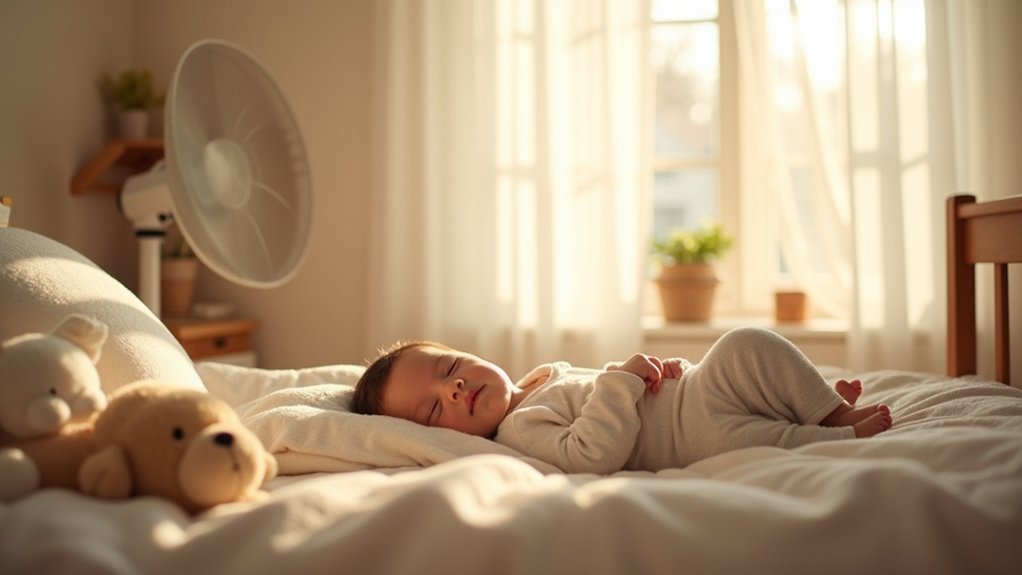
When you’re seeking a gentle solution for your baby’s sleep challenges, fan sounds offer remarkable benefits that can transform restless nights into peaceful slumber.
Research shows that this white noise reduces the time infants need to fall asleep while promoting longer sleep durations. The consistent ambient noise masks sudden sounds that might startle your child awake, preventing sleep disruptions from external noises.
You’ll find that fan sounds create a rhythmic, calming environment that helps establish consistent bedtime routines. Many parents report their children settle down and relax more easily when fan noise provides a comforting backdrop.
This natural white noise solution works by creating an uninterrupted sleep environment, allowing both babies and older children to enjoy the deep, restorative rest they need for healthy development.
Comparing Fan Noise to Other White Noise Options
Fan noise stands out among white noise options for its unique mechanical quality that many parents find more natural and comforting than synthetic alternatives.
Unlike electronic white noise machines that produce various artificial sounds, fan noise offers consistent, soothing background audio that effectively masks household distractions. You’ll find this simple solution more accessible than specialized equipment, whether using an actual fan or playing recordings.
Research shows fan noise promotes stable auditory environments that support faster sleep onset and deeper sleep cycles.
You’ll appreciate how it creates privacy in shared spaces while maintaining that familiar, comforting quality many users prefer.
While rain or ocean sounds can be beneficial, fan noise’s mechanical consistency and widespread availability make it a practical choice for establishing reliable sleep routines.
Safety Considerations When Using Audio Sleep Aids
You’ll need to take several important safety measures when using fan noise or any audio sleep aids to protect your hearing and health.
Keep volume levels moderate and avoid placing speakers too close to your sleeping area, especially if you have children or babies in the room.
If you’re experiencing persistent sleep issues or notice any hearing problems while using these audio aids, it’s essential to consult with a healthcare professional rather than relying solely on sound-based solutions.
Volume and Hearing Protection
Several important safety considerations should guide your use of fan noise and other audio sleep aids to protect your hearing health. You’ll want to keep volumes at moderate levels to prevent potential hearing damage from prolonged exposure. Never place speakers near babies, as their sensitive hearing can be easily affected by loud sounds.
| Safety Aspect | Recommendation |
|---|---|
| Volume Level | Keep at moderate, comfortable levels |
| Speaker Placement | Away from babies and young children |
| Headphone Use | Choose comfort-designed, sound-isolating models |
| Warning Signs | Discontinue if hearing issues develop |
| Medical Issues | Consult physician for persistent problems |
If you experience any hearing issues while using audio sleep aids, discontinue use immediately and consult a physician. Consider using headphones designed for comfort and sound isolation while monitoring volume levels.
Speaker Placement Guidelines
While proper volume control forms the foundation of safe audio sleep aid usage, strategic speaker placement creates an equally important layer of protection for your hearing health.
You’ll want to position speakers at a moderate distance from your sleeping area to reduce sound intensity while maintaining the calming effect you’re seeking. This distance naturally decreases the volume that reaches your ears, providing an additional safety buffer.
Never place speakers directly next to babies or young children, as their developing hearing is particularly vulnerable to damage. Even at seemingly safe volumes, close proximity can create harmful sound levels for little ears.
Consider positioning speakers across the room or using ceiling-mounted options to distribute sound evenly throughout your space without creating concentrated audio zones near your head.
Medical Consultation Recommendations
Beyond the technical aspects of safe audio sleep aid usage, certain situations require professional medical guidance to protect both your hearing and overall health.
You should consult a physician if you’re experiencing significant sleep difficulties or if audio sleep aids aren’t improving your sleep quality after consistent use.
If you notice any hearing issues while using fan noise or other audio sleep aids, discontinue use immediately and seek professional advice.
Don’t ignore potential warning signs like ringing in your ears, muffled hearing, or increased sensitivity to sounds.
Remember that these audio solutions serve entertainment purposes only and shouldn’t replace proper medical treatment for sleep disorders or tinnitus.
Your healthcare provider can evaluate underlying conditions and recommend appropriate treatments tailored to your specific needs.
Optimal Volume Levels and Duration for Fan Noise Therapy
Getting the most from fan noise therapy requires finding your personal sweet spot for both volume and timing.
You’ll want to maintain moderate volume levels that provide effective sound masking without risking hearing damage. Start by experimenting with different volumes—some people find lower levels more soothing, while others prefer slightly louder sounds to block distractions.
For duration, you can use fan noise anywhere from 75 minutes to 10 hours, depending on your sleep cycles and preferences.
Many users benefit from continuous exposure throughout the night, as it creates a consistent auditory environment that promotes better sleep and relaxation.
Remember to keep speakers away from babies for safety, and adjust settings based on what works best for your individual needs.
Creating the Perfect Sleep Environment With Ambient Sounds
Once you’ve mastered your fan noise settings, you can transform your entire bedroom into a sleep sanctuary by strategically incorporating ambient sounds into your nighttime routine.
Position your speakers at moderate volume levels to avoid hearing damage while maximizing the masking effects of disruptive noises. The 75-minute duration of quality fan noise audio provides substantial coverage for your sleep cycle, creating that consistent audio environment your brain craves.
You’ll notice how ambient sounds reduce distractions that typically interrupt your rest. This leads to improved sleep quality and better focus during daytime activities like studying or working.
User Experiences and Real-World Effectiveness
While individual responses to fan noise vary considerably, thousands of users have shared their experiences with this natural white noise solution across different platforms and applications.
You’ll find that reactions span from enthusiastic endorsements to occasional dissatisfaction, reflecting the personal nature of sound preferences.
Most users report significant benefits in three key areas:
- Sleep Quality Enhancement – Many find the 75-minute track effectively blocks distractions and promotes deeper rest.
- Improved Focus – Students and professionals use it to maintain concentration during work or study sessions.
- Baby Soothing – Parents rely on it as a natural solution for calming infants.
However, you should understand that this audio serves entertainment purposes only, making no medical claims about treating sleep disorders or conditions.
Accessing and Using Fan Noise Audio Resources
Since fan noise has proven effective for countless users, you’ll want to know how to access these audio resources easily and use them safely.
Relaxing White Noise offers multiple options for their “Fan Noise for Sleeping” audio. You can stream the 75-minute version on YouTube or purchase the mp3 from their website for offline use. If you need extended listening, a 10-hour version’s available on YouTube. For variety, check out the curated Sleep Sound Playlist on SoundCloud.
| Platform | Duration | Format |
|---|---|---|
| YouTube | 75 minutes | Stream |
| Website | 75 minutes | MP3 |
| YouTube | 10 hours | Stream |
| SoundCloud | Playlist | Various |
Keep volume at safe levels, especially around babies. If you’re experiencing significant sleep difficulties, consult a physician since these sounds are for entertainment and relaxation, not medical treatment.
Frequently Asked Questions
Does a Fan Act as White Noise?
Yes, you’ll find that a fan creates consistent low-frequency sound that effectively masks background noises. It doesn’t produce true white noise, but it generates similar soothing sounds that help you sleep better.
How to Make Fan Noise Go Away?
You can reduce fan noise by adjusting to lower speeds, positioning it farther away, using soundproofing materials, maintaining clean blades, or switching to a quieter motor model.
Why Shouldn’t You Use White Noise All Night?
You shouldn’t use white noise all night because it can damage your hearing at high volumes, mask important safety sounds, create dependency, and potentially interfere with your brain’s natural sleep responses.
Is It Okay to Sleep With Fan Noise?
You can sleep with fan noise if it helps you relax and fall asleep. Just keep the volume moderate to protect your hearing and consult a doctor for serious sleep issues.


Leave a Reply