
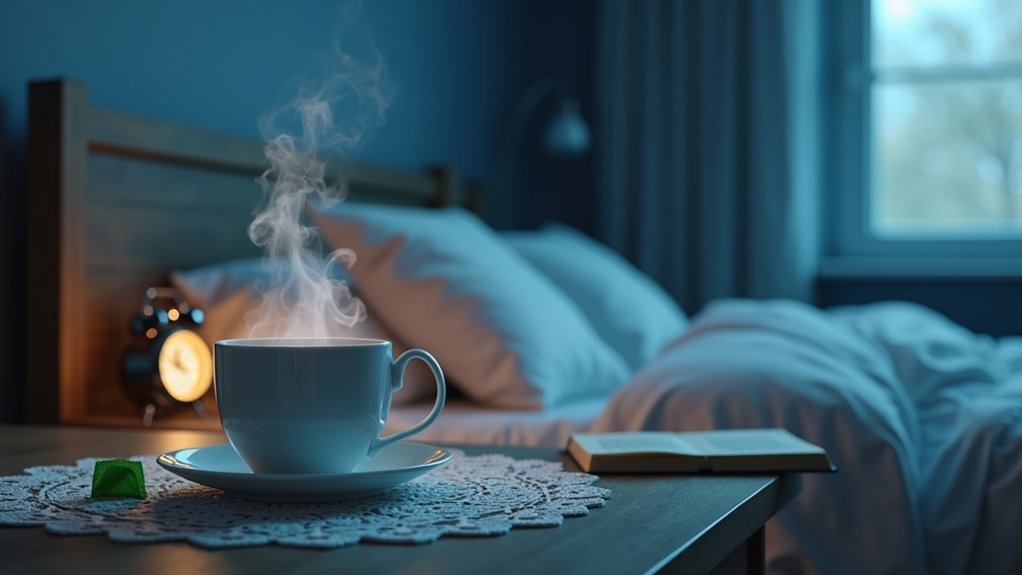
Green tea disrupts your rest because it contains 30mg of caffeine per cup, which stimulates your central nervous system and interferes with sleep onset for 4-6 hours after consumption. Even though L-theanine provides calming effects, it can’t fully counteract caffeine’s stimulating properties. Additionally, green tea’s diuretic effect increases nighttime urination, fragmenting your sleep cycles. Your individual caffeine sensitivity also plays a role, with some people experiencing disruption from even small amounts. Understanding ideal timing can help you enjoy green tea without sacrificing sleep quality.
Caffeine Content in Green Tea Affects Sleep Onset

Although green tea contains considerably less caffeine than coffee, its 30 mg per cup can still interfere with your ability to fall asleep. When you drink green tea during nighttime hours, the caffeine stimulates your nervous system, making sleep onset more challenging.
Green tea’s 30 mg of caffeine per cup can still disrupt sleep when consumed during nighttime hours.
Your individual sensitivity determines how much this affects you – some people experience disruption from even small amounts of caffeine found in green tea.
The timing matters greatly. If you consume green tea within two hours of bedtime, you’re likely to face difficulties falling asleep.
While green tea contains theanine, an amino acid that can promote relaxation, it doesn’t counteract caffeine’s stimulating effects for everyone. Your sleep quality depends on understanding how caffeine impacts your personal sleep patterns and adjusting consumption accordingly.
L-Theanine Cannot Fully Counter Caffeine’s Stimulating Effects
Many people turn to green tea before bed believing that L-theanine will offset caffeine’s alertness-boosting properties, but this assumption proves problematic.
While L-theanine does promote relaxation, it can’t fully negate caffeine’s stimulating effects on your sleep cycle. You’ll still experience wakefulness from the 30 mg of caffeine in each cup, even with L-theanine’s calming influence present.
Your individual sensitivity to caffeine plays a significant role here. Some people might feel the relaxation benefits, while others will still face considerable sleep disturbances.
L-theanine doesn’t induce actual sleepiness—it simply reduces stress responses. Since caffeine’s effects persist for four to six hours, you’re likely to struggle with sleep onset regardless of L-theanine’s presence in your evening tea.
Individual Sensitivity to Caffeine Varies Significantly

Your body’s response to caffeine isn’t the same as everyone else’s due to genetic differences in how you process this stimulant.
Some people can drink coffee late at night without issue, while you might find that even green tea’s modest 30mg of caffeine keeps you awake for hours.
These variations stem from differences in your metabolism rate and genetic makeup, which determine how quickly caffeine clears from your system and at what threshold it disrupts your sleep.
Genetic Caffeine Processing Differences
When you sip green tea before bedtime, your genetic makeup determines how quickly your body processes its caffeine content. The CYP1A2 gene controls caffeine metabolism, and genetic variations in this gene create significant individual differences in how you handle caffeine.
If you’re among the 30% with slower processing variants, you’ll experience heightened caffeine sensitivity that can trigger sleep disturbances hours after consumption.
Your caffeine clearance rate directly impacts whether that evening cup disrupts your rest. Slow metabolizers can’t efficiently break down caffeine, leading to prolonged stimulation even from green tea’s modest caffeine content.
This genetic predisposition means you might experience insomnia and anxiety from amounts that don’t affect quick metabolizers. Understanding your genetic caffeine processing helps you make informed decisions about timing consumption.
Sleep Disruption Thresholds
Even 30 milligrams of caffeine—the typical amount in green tea—can derail sleep for sensitive individuals, while others won’t notice any disruption from this modest dose.
Your personal sleep disruption threshold depends on several factors, including your genetics, regular caffeine consumption habits, and overall health status.
If you’re highly sensitive to caffeine, consuming green tea even six hours before bedtime can greatly compromise your sleep quality.
You might find yourself lying awake, struggling with delayed sleep onset, or experiencing fragmented rest throughout the night.
Understanding your individual sensitivity level is essential for determining when to stop caffeine intake.
Pay attention to how your body responds to green tea at different times, and adjust your consumption accordingly to protect your sleep.
Metabolism Rate Variations
While caffeine affects everyone differently, your genetic makeup largely determines how quickly your body processes the stimulant from green tea. If you’re a slow metabolizer, you’ll feel caffeine’s effects longer and more intensely.
Fast metabolizers break down caffeine efficiently, reducing its impact on sleep quality. Your individual sensitivity plays an essential role in how green tea disrupts your rest. Some people can’t tolerate even green tea’s modest 30mg of caffeine without experiencing alertness that interferes with sleep.
Others might drink it hours before bed with minimal effects. Your metabolism rate affects caffeine’s four to six-hour half-life. Age, medications, and overall health further influence how your body handles caffeine, making your response unique and potentially problematic for nighttime consumption.
Increased Nighttime Urination Disrupts Sleep Cycles

Although green tea contains less caffeine than coffee, its fluid content poses a notable threat to your sleep quality through increased nighttime urination. When you consume green tea before bed, you’re increasing your fluid intake considerably, which directly leads to more frequent bathroom trips during the night.
The caffeine content, approximately 30mg per cup, compounds this issue by enhancing the diuretic effect, especially if you’re caffeine-sensitive.
Drinking green tea less than two hours before bedtime dramatically increases your risk of nighttime awakenings due to urinary urgency. These interruptions fragment your sleep cycles, preventing you from achieving restorative deep sleep phases.
Studies confirm that fluids consumed close to bedtime are primary contributors to sleep disturbances, making timing essential for uninterrupted rest.
Central Nervous System Stimulation at Bedtime
Despite green tea’s reputation as a calming beverage, its caffeine content acts as a powerful central nervous system stimulant that can sabotage your ability to fall asleep.
When you drink green tea before bedtime, you’re introducing approximately 30 mg of caffeine into your system. This stimulation creates a cascade of sleep-disrupting effects:
- Extended alertness – Caffeine keeps your brain active when it should be winding down.
- Increased energy levels – Your body fights against natural drowsiness signals.
- Heightened nervous system activity – Mental stimulation prevents proper relaxation.
- Counteracted calming effects – Even L-theanine can’t fully overcome caffeine’s impact.
Individual sensitivity varies greatly, with some people developing insomnia from even small caffeine amounts.
Since caffeine’s half-life spans four to six hours, evening green tea consumption can disrupt your entire sleep cycle.
Four to Six Hour Caffeine Half-Life Impact
When you drink green tea, caffeine’s four to six hour half-life means half the stimulant remains active in your system long after you’ve finished your cup.
This extended presence creates critical sleep disruption windows that can sabotage your rest if you’re not strategic about timing.
You’ll need to understand how this metabolism timeline affects your body’s ability to wind down for quality sleep.
Caffeine Metabolism Timeline
Since caffeine has a half-life of four to six hours, that cup of green tea you’re sipping at 8 PM will still have roughly 15 mg of caffeine coursing through your system by midnight.
Your metabolism processes caffeine at different rates depending on individual factors, which directly impacts when you should stop consuming green tea before sleep. Understanding this timeline helps prevent caffeine from disrupting your rest.
Here’s how caffeine affects your sleep schedule:
- 6+ hours before bed: Safest window for most people to enjoy green tea without sleep disruption
- 4-6 hours before bed: Moderate risk depending on your caffeine sensitivity levels
- 2-4 hours before bed: High likelihood of delayed sleep onset and reduced sleep quality
- Less than 2 hours: Almost guaranteed sleep interference for caffeine-sensitive individuals
Your personal caffeine sensitivity determines exactly when you should stop drinking green tea.
Sleep Disruption Windows
The four to six hour caffeine half-life creates distinct sleep disruption windows that’ll affect your rest quality differently depending on when you drink green tea. Your body’s caffeine sensitivity determines how severely these windows impact your sleep patterns.
| Consumption Time | Sleep Impact |
|---|---|
| 6+ hours before bed | Minimal disruption for most people |
| 4-6 hours before bed | Moderate sleep quality reduction |
| Less than 4 hours before bed | Substantial nighttime awakenings |
If you’re highly sensitive to caffeine, even green tea consumed in early evening can trigger insomnia. The 30mg of caffeine per cup might seem modest, but it’s enough to cause difficulty falling back asleep once awakened. Individual metabolism rates vary greatly, making personal awareness essential for determining your best green tea cutoff time.
Sleep Quality Vs Sleep Quantity Disruption
Although green tea contains L-theanine that promotes relaxation, its 30 mg of caffeine per cup creates a paradox that affects both how well you sleep and how much sleep you actually get.
The caffeine content disrupts sleep quality by making it harder to fall asleep, while simultaneously reducing sleep quantity through frequent nighttime awakenings.
Here’s how drinking green tea before bed impacts your rest:
- Sleep onset delays – Caffeine blocks adenosine receptors, preventing natural drowsiness
- Fragmented sleep cycles – Stimulants cause multiple wake-ups throughout the night
- Increased bathroom trips – Fluid consumption leads to sleep interruptions from urination
- Overpowered relaxation benefits – Caffeine’s stimulating effects overshadow L-theanine’s calming properties
Your body experiences both quality degradation and quantity reduction when caffeine interferes with natural sleep processes.
Timing Matters: How Close to Bedtime Affects Rest
Understanding these disruptions leads to an important question: when exactly does green tea’s timing become problematic for your sleep? The answer lies in caffeine’s persistence in your system.
With approximately 30 mg of caffeine per cup and a half-life of four to six hours, green tea consumed within two hours of bedtime greatly disrupts your rest. You’ll experience increased nighttime awakenings and frequent urination interrupting your sleep cycles.
Your individual caffeine sensitivity determines how early you need to stop drinking green tea. Some people experience sleep disturbances from even early evening consumption.
To optimize your rest, finish your last cup six to eight hours before bedtime. Don’t rely on L-theanine’s relaxing effects to counteract caffeine’s stimulation—timing remains essential for quality sleep.
Comparison With Other Caffeinated Beverages
When comparing green tea to other caffeinated beverages, you’ll find it sits in the middle range of sleep disruption potential.
While green tea contains about 30 mg of caffeine per cup—significantly less than coffee’s 95 mg—it can still disrupt sleep for sensitive individuals.
Here’s how different beverages compare for nighttime consumption:
- Coffee: Highest caffeine content, most likely to interfere with sleep quality
- Black tea: Moderate caffeine levels, roughly three times more than green tea
- Green tea: Lower caffeine but still enough to cause nighttime awakenings
- Herbal teas: Completely caffeine-free options like chamomile or rooibos
Your sensitivity to caffeine determines how much each beverage will affect your rest, making herbal teas the safest bedtime choice.
Physical Vs Mental Sleep Disruption Symptoms
Green tea’s sleep disruption manifests in two distinct ways: physical symptoms that wake you up and mental symptoms that prevent you from falling asleep in the first place.
Physically, you’ll experience nighttime urination from increased fluid intake, interrupting your sleep cycles and causing frequent awakenings.
The 30mg of caffeine in green tea creates mental symptoms by increasing alertness when you need to wind down. While theanine promotes relaxation, it can’t fully counteract caffeine’s stimulating effects for everyone.
If you’re prone to anxiety or stress, caffeine will exacerbate your mental unrest, making it harder to achieve peaceful sleep.
Understanding these dual mechanisms helps explain why green tea causes such extensive sleep disruption.
Better Alternatives for Evening Relaxation
Since green tea sabotages your sleep, you’ll want caffeine-free herbal teas that actually support relaxation.
These evening alternatives create the perfect bedtime routine without disrupting your rest.
Top caffeine-free options for evening relaxation:
- Chamomile – Contains apigenin, an antioxidant that binds to brain receptors and promotes sleepiness through natural calming effects.
- Peppermint – Soothes digestive issues and relieves physical tension, making it an ideal comforting choice for nighttime unwinding.
- Rooibos – Rich in antioxidants while supporting heart health and improving sleep quality without causing nighttime awakenings.
- Timing matters – Drink herbal teas about an hour before bed to establish healthy sleep hygiene.
These alternatives transform your evening routine into a relaxation ritual that actually enhances sleep quality instead of sabotaging it.
Optimal Green Tea Consumption Schedule for Better Sleep
You’ll maximize green tea’s benefits by drinking it in the morning when your body naturally craves caffeine and energy.
If you need an afternoon boost, finish your last cup at least six to eight hours before bedtime to prevent sleep disruption.
When evening arrives, switch to caffeine-free herbal teas that’ll actually promote relaxation instead of keeping you awake.
Morning Green Tea Benefits
While evening green tea can sabotage your sleep, morning consumption offers the perfect solution for enjoying tea’s benefits without nighttime disruption.
Starting your day with green tea provides ideal hydration after hours without fluid intake, while kickstarting your metabolism for enhanced energy throughout the day. This morning ritual delivers powerful antioxidants and L-theanine without compromising your sleep quality later.
Morning green tea benefits include:
- Enhanced cognitive function – Improved focus and mood that lasts all day
- Better hydration – Replenishes fluids lost during sleep
- Metabolic boost – Jumpstarts fat burning and energy production
- Digestive support – When consumed post-breakfast, aids nutrient absorption
Afternoon Consumption Timing Guidelines
Understanding proper timing transforms your green tea experience from sleep saboteur to perfect afternoon companion. Strategic consumption timing guarantees you’ll harvest green tea’s benefits without compromising your sleep quality.
The sweet spot for afternoon green tea consumption falls between 2 PM and 3 PM. This timing provides sustained energy while allowing caffeine’s four-to-six-hour half-life to diminish before bedtime.
| Time Window | Caffeine Impact | Sleep Quality Effect |
|---|---|---|
| 2:00-3:00 PM | Moderate alertness | Minimal disruption |
| 4:00-5:00 PM | Extended stimulation | Possible interference |
| 6:00+ PM | High sleep risk | Significant disruption |
You’ll want to finish your green tea at least six to eight hours before bed. If you’re caffeine-sensitive, stick to morning consumption only. This approach maximizes afternoon focus while protecting your nighttime rest.
Evening Alternative Tea Options
When evening arrives and you’re craving a warm cup of tea, caffeine-free herbal options become your best allies for maintaining quality sleep.
These evening alternatives won’t interfere with your natural sleep cycle like green tea’s caffeine content would.
Herbal teas offer numerous benefits that actively promote relaxation and better sleep:
- Chamomile tea – Contains apigenin, a compound that binds to brain receptors to induce drowsiness
- Rooibos tea – Naturally caffeine-free with minerals that support muscle relaxation
- Passionflower tea – Traditionally used to reduce anxiety and improve sleep quality
- Lavender tea – Contains linalool, which calms the nervous system
These caffeine-free alternatives let you enjoy a comforting bedtime ritual without compromising your rest.
Frequently Asked Questions
What Happens if You Drink Green Tea Before Bedtime?
You’ll likely experience disrupted sleep from green tea’s 30mg caffeine content, which can delay sleep onset. You might also wake frequently due to increased urination from fluid intake, reducing your overall sleep quality.
Why Can’t I Sleep After Green Tea?
You can’t sleep after green tea because caffeine stimulates your nervous system, keeping you alert. Even though L-theanine promotes relaxation, it doesn’t fully counteract caffeine’s energizing effects for most people.



Leave a Reply