

You’ll sleep better with guided imagery meditation by creating the right environment first—dim your lights and maintain a cool 60-67°F temperature. Choose calming scenarios like a starlit meadow or peaceful stream that engage all your senses. Practice the 4-7-8 breathing technique while visualizing stress leaving your body. Combine progressive muscle relaxation with imagery of warm light flowing through each muscle group. Establish a consistent 10-15 minute nightly routine to access deeper sleep benefits.
Create a Peaceful Sleep Environment for Guided Imagery

Before you begin your guided imagery meditation, you’ll need to transform your bedroom into a sanctuary that supports deep relaxation.
Start by dimming the lights to signal your brain it’s time to unwind. Maintain a comfortable temperature between 60-67°F, as this range optimizes sleep quality. Choose soft fabrics for your bedding and pillows, creating tactile comfort that enhances your peaceful scene visualization.
Dim lighting, cool temperatures of 60-67°F, and soft fabrics create the ideal foundation for effective guided imagery meditation.
Introduce calming scents like lavender or chamomile through essential oils to calm your mind naturally.
Create a quiet environment by minimizing distractions with white noise or gentle nature sounds. This relaxation involves preparing your space thoughtfully, allowing deeper focus during guided imagery.
When you’re breathing deeply in this serene setting, your meditation becomes more effective and shifts seamlessly into restful sleep.
Choose Calming Visualization Scenarios That Promote Rest
Once your sleep environment is prepared, selecting the right visualization scenarios becomes essential for guiding your mind toward rest. Effective bedtime meditation relies on calming visualization that engages all five senses for an immersive experience. Nature-based imagery works particularly well, as studies show it can reduce anxiety and improve sleep quality considerably.
| Scenario Type | Sensory Elements | Benefits |
|---|---|---|
| Starlit meadow | Cool grass, cricket sounds, gentle breeze | Promotes deep relaxation |
| Peaceful stream | Water trickling, soft moss, fresh air | Reduces stress levels |
| Warm summer night | Blooming flowers, soft blankets, night sounds | Triggers relaxation response |
These relaxation techniques create mental associations between specific scenarios and sleep. Consistent practice of sleep meditation helps train your mind to shift efficiently into restful slumber, making guided imagery an invaluable tool for promoting rest.
Use Deep Breathing Techniques to Enhance Imagery Effectiveness
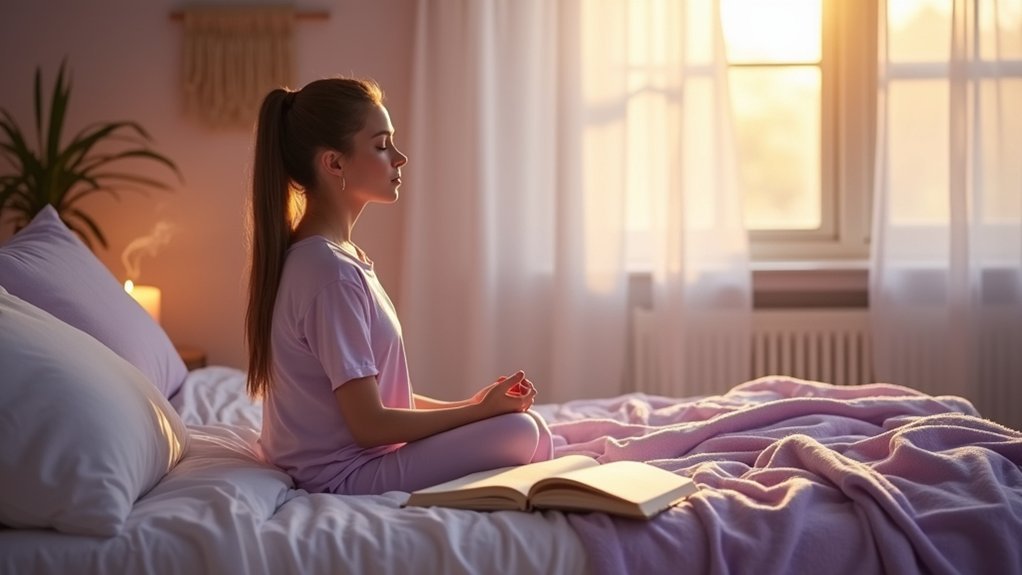
While your chosen visualization scenario sets the foundation for restful sleep, combining it with intentional breathing techniques amplifies the meditation’s effectiveness considerably.
Deep breathing serves as the bridge between your body and mind, creating ideal conditions for guided imagery to flourish. Start by inhaling slowly through your nose and exhaling through your mouth, allowing each breath to release stress and anxiety while calming racing thoughts.
The 4-7-8 technique works particularly well—inhale for four counts, hold for seven, then exhale for eight. This rhythmic pattern enhances relaxation and deepens your mindfulness meditation practice.
As you take these deep breaths, visualize tension leaving your body with each exhalation. This combination helps you fall asleep faster and improve your sleep quality naturally.
Practice Progressive Body Relaxation During Visualization
Progressive muscle relaxation transforms your guided imagery session into a thorough mind-body experience that prepares you for deeper sleep. This meditation technique involves systematically tensing and releasing each muscle group while you visualize peaceful scenes.
Start from your toes and work upward, combining the body scan with guided imagery for enhanced effectiveness.
As you practice progressive muscle relaxation during visualization, create vivid mental pictures:
- Imagine warm golden light flowing through each muscle as it releases tension
- Visualize stress melting away like ice in sunshine as you take each deep breath
- Picture yourself sinking into a soft cloud as your body becomes completely calm
This combined approach considerably reduces anxiety and improves sleep quality. The systematic muscle release paired with visualization amplifies your relaxation response, supporting better mental health and creating an ideal shift into restful sleep.
Develop a Consistent Bedtime Imagery Routine

Establishing a nightly guided imagery routine transforms sporadic relaxation attempts into a powerful sleep-inducing ritual. Set aside 10-15 minutes each night for guided meditation, creating a consistent bedtime routine that signals your mind it’s time to unwind.
Choose one peaceful visualization scene, like lying under stars, and return to it nightly for maximum effectiveness. Incorporate deep breathing exercises while you visualize, focusing on inhaling and exhaling to achieve a calm state.
Use calming audio recordings or apps designed for guided imagery to facilitate your relaxation and stress management practice. Dim your lights and minimize distractions to create an immersive environment.
This consistent approach will greatly improve your sleep quality and help you achieve better sleep naturally.
Frequently Asked Questions
How to Use Guided Imagery to Sleep?
Find a comfortable position, close your eyes, and breathe deeply. Visualize a peaceful nighttime scene like stargazing. Progressively relax each body part while imagining tension melting away with every exhale.
What Meditation Should I Do Before Bed?
You should practice body scan meditation, starting from your head and moving down to your toes. This technique releases physical tension and calms racing thoughts, helping you shift smoothly from wakefulness to sleep.
Is It Okay to Do TM Before Bed?
Yes, you can practice TM before bed. It’ll help you relax, reduce stress, and shift into sleep more easily. Just make certain you’re in a quiet environment and listen to your body’s response.
Is It Good to Listen to Guided Meditation While Sleeping?
You can listen to guided meditation while sleeping to enhance relaxation and improve sleep quality. Choose sleep-specific meditations since active ones might keep you awake and disrupt your rest.




Leave a Reply