

You’re sabotaging your sleep quality every time you eat a heavy meal within three hours of bedtime, triggering a cascade of digestive processes that keep your body active when it should be winding down for rest. Large meals prioritize digestion over sleep preparation, causing acid reflux, heartburn, and frequent awakenings throughout the night. Your overworked digestive system prevents you from entering restorative sleep phases, leaving you restless and tired. There’s much more to uncover about optimizing your evening eating habits.
How Heavy Meals Impact Your Sleep Cycle
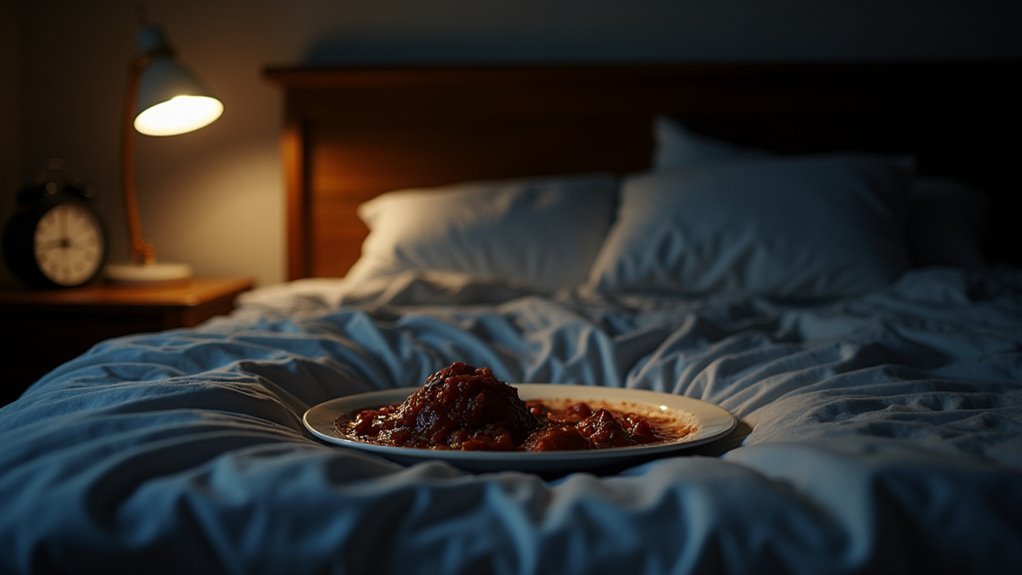
When you consume a heavy meal close to bedtime, your body kicks into overdrive to digest the food, making it markedly harder to fall asleep and stay asleep throughout the night.
Heavy meals trigger acid reflux and heartburn, creating uncomfortable sensations that disrupt your sleep cycle. The intensive digestive process keeps your system active when it should be winding down, leading to restlessness and frequent nighttime awakenings.
Late-night eating also throws off your circadian rhythm since insulin sensitivity naturally decreases at night. This metabolic disruption causes hormonal imbalances that affect your overall sleep quality and increases next-day hunger cravings.
Research shows eating within two to four hours of sleep notably reduces sleep quality, creating a cycle where poor rest leads to more late-night eating habits.
The Science Behind Digestion and Sleep Disruption
Understanding the biological mechanisms behind late-night eating reveals why your digestive system and sleep patterns clash so dramatically. When you consume large meals close to bedtime, your body prioritizes digestion over sleep preparation.
Your stomach produces excess stomach acid to break down food, but lying down allows this acid to flow backward, triggering gastroesophageal reflux disease and painful heartburn.
This digestive chaos directly impacts your sleep quality through frequent nighttime awakenings. Your circadian rhythm becomes disrupted as your body struggles between rest and digestion modes.
Additionally, your insulin sensitivity naturally decreases at night, making your metabolism less efficient at processing calories. Instead of entering restorative sleep phases, you’ll experience sleep disturbances as your overworked digestive system fights against your body’s natural desire for rest.
Timing Matters: When to Stop Eating Before Bed

You’ll want to stop eating 2 to 4 hours before bedtime to give your body enough time to process food without interfering with sleep.
Your digestive system naturally slows down as you prepare for rest, making late meals harder to break down and more likely to cause discomfort.
Understanding how your eating schedule aligns with your body’s internal clock can dramatically improve both your sleep quality and overnight recovery.
Optimal Eating Cutoff Times
Since your body requires time to properly digest food before entering restorative sleep phases, you’ll want to establish a clear cutoff time for eating each evening.
Ideal eating cutoff times fall between 2 to 4 hours before bedtime, with heavy meals requiring the full 3-4 hour window to prevent acid reflux and nighttime awakenings that compromise sleep quality.
When you eat too close to bedtime, you’re disrupting your circadian rhythm and reducing insulin sensitivity, which increases fat storage during nighttime hours.
Late-night digestion also forces your body to work when it should be resting, leading to fragmented sleep and increased discomfort.
Creating a consistent eating schedule with early meal cutoffs improves your overall well-being by supporting natural sleep cycles and ensuring proper digestion completion before rest.
Digestion and Sleep Cycles
When your digestive system works overtime during sleep hours, it creates a cascade of physiological disruptions that fragment your rest and compromise recovery. Heavy meals consumed close to bedtime force your body to prioritize digestion over restorative sleep processes, leading to poor sleep quality and frequent sleep disturbances throughout the night.
Your digestive system naturally slows during sleep, making late-night eating particularly problematic. When you consume a nighttime snack or large meal within two hours of sleep, you’re likely to experience acid reflux and other digestive issues. These conditions prevent you from reaching deeper sleep stages essential for physical recovery.
Adjusting your eating habits to stop consuming food 2-4 hours before bedtime allows proper digestion completion, markedly improving your overall sleep experience and morning alertness.
Foods That Worsen Nighttime Sleep Quality
Although you might think late-night snacks are harmless, certain foods can sabotage your sleep quality in ways you wouldn’t expect. Heavy meals high in fat and sugar trigger indigestion and acid reflux, creating uncomfortable nights filled with digestive distress.
Spicy foods elevate your body temperature while disrupting digestion, making it nearly impossible to fall asleep peacefully.
Caffeine-containing foods like chocolate block adenosine, your brain’s natural sleep chemical, keeping you wired when you should be winding down.
Sugary snacks create problematic blood sugar spikes followed by sudden crashes, causing you to wake repeatedly throughout the night.
When you eat close to bedtime, you’re also increasing your risk of developing GERD symptoms, which directly compromise your ability to achieve restorative sleep.
Acid Reflux and Heartburn From Late-Night Eating

One of the most disruptive consequences of late-night eating manifests as acid reflux and heartburn, transforming what should be restful hours into uncomfortable episodes of digestive distress.
When you consume a large meal close to bedtime, you’re setting yourself up for potential sleep disturbances as stomach contents flow back into your esophagus while lying down. This positioning irritates your lower esophageal sphincter, triggering the uncomfortable burning sensation you know as heartburn.
High-fat foods particularly worsen these digestive issues, creating poor sleep patterns that can persist throughout the night. If you suffer from GERD, late-night eating considerably amplifies your symptoms, including nausea and that trapped-food sensation in your chest, making quality rest nearly impossible to achieve.
Weight Gain Risks From Eating Heavy Meals at Night
Beyond digestive discomfort, late-night heavy meals pose significant weight gain risks that can undermine your long-term health goals.
Your body’s decreased insulin sensitivity at night makes calories from heavy meals more likely to convert into stored fat. Late-night eating frequently leads to excessive calorie intake, pushing you beyond daily targets and contributing to gradual weight gain.
These nighttime awakenings from heavy meals disrupt essential metabolic processes that regulate your weight.
You’ll often reach for unhealthy food choices during late hours—calorie-dense snacks that compound the problem. The relationship extends beyond immediate effects, as late-night eating disrupts your hormonal balance, increasing hunger and cravings the following day.
This creates a cycle where poor sleep quality from heavy meals perpetuates overeating patterns.
Light Snacks Vs Heavy Meals: Making Better Choices
When hunger strikes before bedtime, your choice between a light snack and a heavy meal determines whether you’ll enjoy restful sleep or spend the night tossing and turning.
Your late-night food choices hold the power to either unlock peaceful slumber or guarantee a restless night ahead.
Heavy meals within two to four hours of bedtime greatly impact sleep quality by prolonging digestion and increasing nighttime awakenings. Your body struggles to process large amounts of food while trying to rest.
Light snacks offer superior benefits for sleep duration:
- Tryptophan-rich options like yogurt and almonds promote natural relaxation and faster sleep onset
- Nutrient-dense choices prevent hunger-related sleep disruptions without overwhelming your digestive system
- Strategic meal timing with small snacks helps stabilizing blood sugar levels throughout the night
Smart snacking choices support your body’s natural sleep processes rather than fighting against them.
Sleep-Promoting Foods for Evening Consumption
You can strategically choose foods that naturally support your body’s sleep mechanisms rather than working against them.
Tryptophan-rich options like turkey, almonds, and oats help boost serotonin and melatonin production, while natural melatonin sources such as tart cherry juice directly support your sleep-wake cycle.
Magnesium-containing evening snacks like bananas or Greek yogurt relax your muscles and stabilize blood sugar levels, creating ideal conditions for restful sleep.
Tryptophan-Rich Food Options
Since tryptophan converts into serotonin and melatonin—two compounds essential for sleep regulation—choosing the right evening foods can dramatically improve your rest quality.
You’ll find excellent tryptophan sources in turkey, salmon, and yogurt, which naturally boost melatonin production for faster sleep onset.
Consider these powerful nighttime combinations:
- Nuts with complex carbohydrates: Almonds or walnuts paired with oats enhance tryptophan availability while delivering muscle-relaxing magnesium.
- Whole grain toast with turkey: This combination maximizes tryptophan’s journey to your brain through strategic carbohydrate pairing.
- Bananas with chia seeds: These provide potassium and magnesium alongside tryptophan for thorough muscle relaxation.
When you consume these foods in the evening, you’re supporting your body’s natural serotonin production, creating ideal conditions for deep, restorative sleep without the digestive burden of heavy meals.
Natural Melatonin Sources
Nature provides a wealth of foods that contain melatonin directly, offering you a simple way to boost your body’s sleep-inducing hormones without supplements. Cherries stand out as exceptional natural melatonin sources, perfect for evening consumption to enhance sleep quality. Almonds deliver both melatonin and magnesium, promoting muscle relaxation and longer sleep duration. Bananas contribute potassium, magnesium, and tryptophan that support serotonin production and calmness. Oats provide melatonin while their beta-glucan guarantees blood sugar stabilization, preventing nighttime awakenings.
| Food | Key Components | Sleep Benefits |
|---|---|---|
| Cherries | Natural melatonin | Regulates sleep-wake cycle |
| Almonds | Melatonin, magnesium | Muscle relaxation, longer sleep |
| Bananas | Potassium, tryptophan | Promotes calmness |
| Oats | Melatonin, beta-glucan | Prevents sleep disruptions |
| Herbal teas | Calming compounds | Enhanced relaxation |
Magnesium-Containing Evening Snacks
While your body prepares for restorative sleep, magnesium acts as nature’s relaxation mineral, directly influencing your nervous system’s ability to wind down effectively. This essential nutrient regulates neurotransmitters that calm your mind, making magnesium-rich foods perfect evening snacks for better sleep.
Research shows low magnesium levels trigger sleep disturbances and insomnia symptoms. You’ll find incorporating these foods into your nighttime routine greatly improves sleep quality:
- Almonds and pumpkin seeds – Pack concentrated magnesium for muscle relaxation
- Dark chocolate and spinach – Provide calming compounds alongside magnesium content
- Bananas – Combine magnesium with natural sugars for gentle sleep preparation
Adults need 310-420mg magnesium daily, and consuming these evening snacks helps meet requirements while promoting deeper nighttime rest through enhanced relaxation.
Creating Healthy Evening Eating Habits for Better Rest
Although evening cravings can tempt you toward heavy comfort foods, establishing mindful eating habits during your final hours before bed plays a vital role in achieving restorative sleep.
You’ll improve your sleep quality by avoiding high-fat foods and maintaining reasonable portion sizes. Instead, choose a light snack containing tryptophan, such as turkey or bananas, which promotes relaxation without overwhelming your digestion.
Creating a consistent eating schedule that aligns with your natural rhythms helps regulate hunger and prevents late-night overeating.
Syncing your meals with your body’s natural clock creates a powerful defense against midnight snacking temptations.
You should stop consuming large meals at least three hours before bedtime to avoid acid reflux and digestive disruption. Incorporating these practices into your bedtime routine guarantees you’ll fall asleep comfortably and wake up refreshed.
Frequently Asked Questions
Can Eating a Large Meal Before Bed Disrupt Sleep?
Yes, you’ll disrupt your sleep if you eat a large meal before bed. You’re likely to experience indigestion, acid reflux, and restlessness, making it harder to fall asleep and stay asleep.
Can Heavy Meals Affect Your Sleep?
Yes, heavy meals can markedly affect your sleep. You’ll experience longer time falling asleep, increased nighttime awakenings, acid reflux, and disrupted circadian rhythms when you eat large portions close to bedtime.
What Happens When You Eat a Heavy Meal at Night?
When you eat a heavy meal at night, you’ll likely experience acid reflux, heartburn, and digestive discomfort. Your sleep quality suffers, you’ll have trouble falling asleep, and your body stores more calories as fat.
Why Should We Not Eat Heavy Food at Night?
You shouldn’t eat heavy food at night because it causes acid reflux, disrupts your sleep quality, interferes with your circadian rhythm, slows digestion, and increases fat storage risk.




Leave a Reply