

You can enhance your sleep quality with seven proven herbal teas: chamomile contains apigenin that promotes drowsiness and reduces nighttime awakenings, lavender calms your nervous system with sedative compounds, valerian root increases GABA levels for faster sleep onset, passionflower interacts with GABA receptors to quiet racing thoughts, magnolia offers potent sedative effects through honokiol and magnolol, and low-caffeine green tea provides EGCG’s relaxing benefits. Timing and preparation techniques maximize these natural sleep aids’ effectiveness.
Chamomile Tea for Natural Sleep Enhancement

When you’re searching for a natural way to improve sleep quality, chamomile tea stands out as one of the most scientifically-backed options available. This gentle herb contains apigenin, a flavonoid that binds to brain receptors, promoting relaxation and drowsiness.
Research shows women who incorporated chamomile tea into their bedtime routine experienced fewer sleep issues within two weeks.
Women who added chamomile tea to their nightly routine saw significant sleep improvements in just two weeks.
You’ll find that sipping this soothing tea before bed can reduce nighttime awakenings, helping you achieve more restful sleep.
Beyond natural sleep enhancement, chamomile’s dual benefits include its ability to reduce anxiety, making it an excellent addition to your evening ritual.
However, if you’re allergic to plants in the daisy family, avoid chamomile to prevent adverse reactions.
Lavender Tea to Calm the Mind and Body
You’ll find that lavender tea’s gentle sedative compounds naturally prepare your mind and body for restful sleep.
When you’re dealing with anxiety or daily stress, this aromatic brew can greatly calm your nervous system and reduce tension.
The key to maximizing lavender tea’s benefits lies in proper brewing techniques and drinking it at the right time before bed.
Lavender’s Natural Sedative Properties
Since lavender tea’s reputation as a natural sleep aid stems from centuries of traditional use, you’re tapping into a well-established remedy when you brew this fragrant herbal tea.
The sedative properties come from aromatic compounds like linalool, which naturally lower your stress levels and prepare your mind for rest.
Research shows lavender tea can reduce anxiety and improve sleep quality, particularly benefiting women who drink it regularly.
When you incorporate this calming tea into your bedtime routine, you’ll experience these key benefits:
- Decreased fatigue and anxiety symptoms within just two weeks of consumption
- Reduced depression indicators that contribute to sleep disturbances
- Enhanced relaxation signals that tell your body it’s time to unwind
These calming effects make lavender tea an excellent natural alternative for better sleep.
Anxiety and Stress Relief
Beyond its sleep-enhancing benefits, lavender tea serves as a powerful ally against daily anxiety and stress that can overwhelm your mind and body. This herbal remedy works by influencing neurotransmitters that regulate mood, effectively lowering stress levels and promoting tranquility. When you incorporate lavender tea into your nighttime routine, you’re creating a natural pathway to relaxation that prepares you for quality sleep.
| Benefit | Timeline |
|---|---|
| Reduced anxiety symptoms | Within 2 weeks |
| Improved mood regulation | Daily consumption |
| Enhanced stress relief | Immediate effects |
| Better sleep quality | First use |
Research shows women experienced less fatigue and depression symptoms after just two weeks of regular consumption. Since the FDA recognizes lavender as safe, you can confidently use this accessible tea for thorough anxiety management and enhanced rest.
Optimal Brewing and Timing
Getting the most from lavender tea’s calming properties starts with proper brewing technique and strategic timing. When brewing tea, you’ll want to steep 1 to 2 teaspoons of dried lavender buds in boiling water for 5 to 10 minutes to extract beneficial compounds that promote relaxation.
For ideal timing and to improve sleep quality, consider these guidelines:
- Drink 1 to 2 hours before bedtime to allow your body to wind down naturally
- Start with smaller amounts to assess tolerance and avoid mild side effects like headaches
- Make it part of your bedtime routine to signal it’s night time for rest
Herbal teas for sleep work best when consumed consistently as part of your evening ritual, helping establish healthy sleep patterns.
Valerian Root Tea as a Traditional Sleep Remedy
When you’re searching for a natural way to improve your sleep, valerian root tea offers a time-tested solution that’s been helping people rest better for centuries. This herbal tea works as a natural remedy by potentially increasing gamma-aminobutyric acid (GABA) levels in your brain, promoting relaxation and reducing anxiety.
| Benefits | Considerations |
|---|---|
| Helps you fall asleep faster | May cause vivid dreams |
| Improves sleep quality | Possible stomach upset |
| Reduces anxiety naturally | Morning drowsiness potential |
Research suggests this sleep aid can enhance your overall rest, though you’ll want to consult your healthcare provider before starting any valerian root regimen. While generally safe, it’s especially important to seek medical advice if you’re pregnant, breastfeeding, or taking medications.
Passionflower Tea for Anxiety Relief and Rest
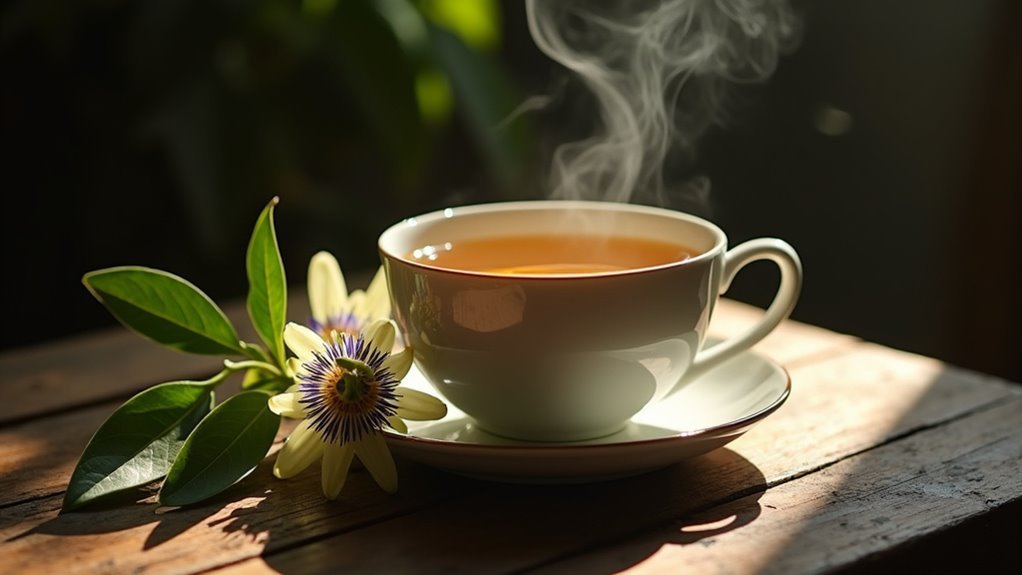
If you’re struggling with nighttime anxiety that keeps you awake, passionflower tea offers a gentle, natural solution that’s gained scientific backing.
This herbal brew works by interacting with GABA receptors in your brain, helping calm racing thoughts while promoting deeper, more restorative sleep.
You’ll find that passionflower tea addresses both the anxiety that prevents sleep and the quality of rest you actually get once you drift off.
Natural Anxiety Reduction Benefits
Although anxiety often disrupts your ability to fall asleep naturally, passionflower tea offers a gentle solution that addresses both concerns simultaneously. This herbal remedy’s sedative properties work by increasing GABA levels in your brain, promoting deep relaxation and calming your nervous system.
Research demonstrates passionflower tea’s effectiveness for anxiety reduction through three key mechanisms:
- Neurotransmitter enhancement – Boosts GABA production to naturally reduce anxious thoughts
- Sleep quality improvement – Helps you achieve more restful, uninterrupted sleep cycles
- Gentle sedation – Provides calming effects without harsh side effects
You’ll find that regular consumption creates a natural pathway to improved sleep while managing anxiety symptoms. This safe, well-tolerated option gives you control over your nighttime routine without dependency concerns.
Sleep Quality Enhancement Effects
Beyond its anxiety-reducing properties, passionflower tea creates measurable improvements in your overall sleep architecture and restfulness. Studies demonstrate that drinking this herbal tea before bedtime enhances subjective sleep quality compared to placebo treatments. The tea’s compounds boost gamma-aminobutyric acid (GABA) levels, a neurotransmitter that promotes relaxation and reduces anxiety.
| Sleep Benefit | How Passionflower Tea Helps |
|---|---|
| Faster Sleep Onset | GABA increase calms racing thoughts |
| Deeper Rest Cycles | Natural compounds promote sustained sleep |
| Reduced Night Wakings | Anxiety relief prevents midnight disruptions |
| Morning Alertness | Better sleep quality improves next-day energy |
However, recent research shows inconsistent results, suggesting you shouldn’t rely solely on passionflower tea for insomnia. Incorporating these teas into your bedtime routine alongside other relaxation techniques maximizes their sleep-enhancing potential.
Magnolia Tea With Sedative Compounds
When you’re searching for a natural sleep aid, magnolia tea offers potent sedative compounds that can help you drift off more easily.
This herbal tea contains honokiol and magnolol, which work to promote relaxation and improve sleep quality naturally.
Animal studies show these compounds can reduce insomnia effectively, though more human research is needed.
One promising study found women who drank magnolia tea for three weeks experienced better sleep quality and reduced depression symptoms.
Here’s how magnolia tea’s health benefits can transform your nighttime routine:
- Reduces anxiety through natural sedative compounds that calm your nervous system
- Combats insomnia by helping you fall asleep faster and stay asleep longer
- Promotes deep relaxation without the side effects of pharmaceutical sleep aids
While research continues, magnolia tea shows real promise for natural sleep enhancement.
Low Caffeine Green Tea for Improved Sleep Quality
Another gentle option for your evening routine is low caffeine green tea, which offers unique sleep-promoting benefits without the stimulating effects of regular green tea.
This variant contains EGCG (epigallocatechin-3-O-gallate), a compound that contributes to its sedative effects and helps improve sleep quality naturally.
You’ll find that incorporating low caffeine green tea into your bedtime routine provides a calming effect that combats insomnia without causing jitteriness.
Small studies show participants experienced reduced fatigue and better sleep when consuming this tea before bed.
Unlike regular varieties, low caffeine versions won’t overstimulate your system, making them ideal for nighttime consumption.
Adding this tea to your evening ritual enhances relaxation and supports healthy sleep hygiene practices for consistently better sleep.
Optimal Timing and Safety Guidelines for Bedtime Teas
While herbal teas offer excellent sleep benefits, timing your consumption correctly maximizes their effectiveness and prevents sleep disruptions.
You’ll want to drink chamomile or other herbal tea 1-2 hours before bedtime to reduce stress and anxiety while allowing your body to prepare for rest.
Follow these safety guidelines for your bedtime routine:
- Start small – Begin with one cup to assess tolerance before increasing
- Time it right – Stop consuming fluids at least 2 hours before sleep to avoid nighttime bathroom visits
- Seek guidance – If you’re pregnant or breastfeeding, consult a doctor before adding herbal tea to your routine
Anyone taking medications should also speak with healthcare providers to prevent interactions.
This approach helps you improve sleep while maintaining safety.
Frequently Asked Questions
Which Herbal Tea Is Best Before Bed?
You’ll find chamomile tea works best before bed since it contains apigenin, a flavonoid that reduces nighttime awakenings. You can also try passionflower or lavender tea for their proven sedative effects.
What Is the Best Tea for Relaxing Night Time?
You’ll find chamomile tea works best for nighttime relaxation since it contains apigenin, which calms your mind and body. Lavender tea’s another excellent choice that’ll reduce your anxiety and improve sleep quality naturally.
What Tea Is Good for Night Shift?
You’ll find chamomile and valerian root teas excellent for unwinding after night shifts. Passionflower tea reduces anxiety while lavender tea combats fatigue. Drink them 1-2 hours before daytime sleep for ideal rest.
What Is the Best Herb to Drink at Night?
You’ll find chamomile’s your best nighttime choice since it contains apigenin, which directly reduces anxiety and promotes sleepiness. It’s milder than valerian root but more consistently effective than passionflower for most people.




Leave a Reply