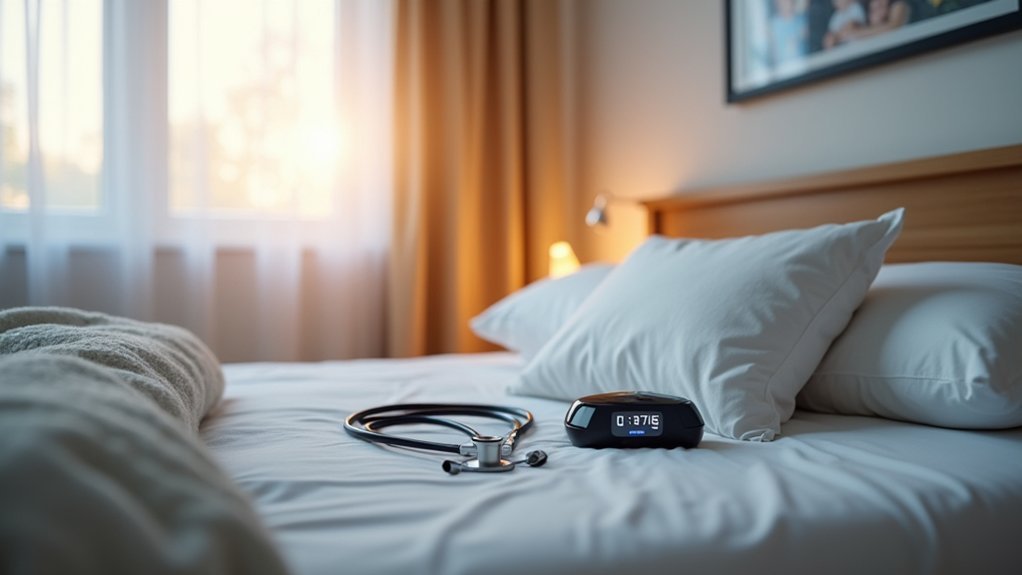
Home apnea testing devices matter most because they’re revolutionizing sleep disorder diagnosis by bringing accurate testing directly to your bedroom. You’ll experience 95% sensitivity rates while avoiding uncomfortable lab environments and long wait times. These cost-effective devices, priced between $150-$500, use advanced sensors to monitor your breathing patterns, oxygen levels, and heart rate without cumbersome wires. They’re especially valuable if you live in rural areas or feel anxious about clinical settings, making early detection more accessible than ever before.
How Home Apnea Testing Devices Transform Sleep Disorder Diagnosis
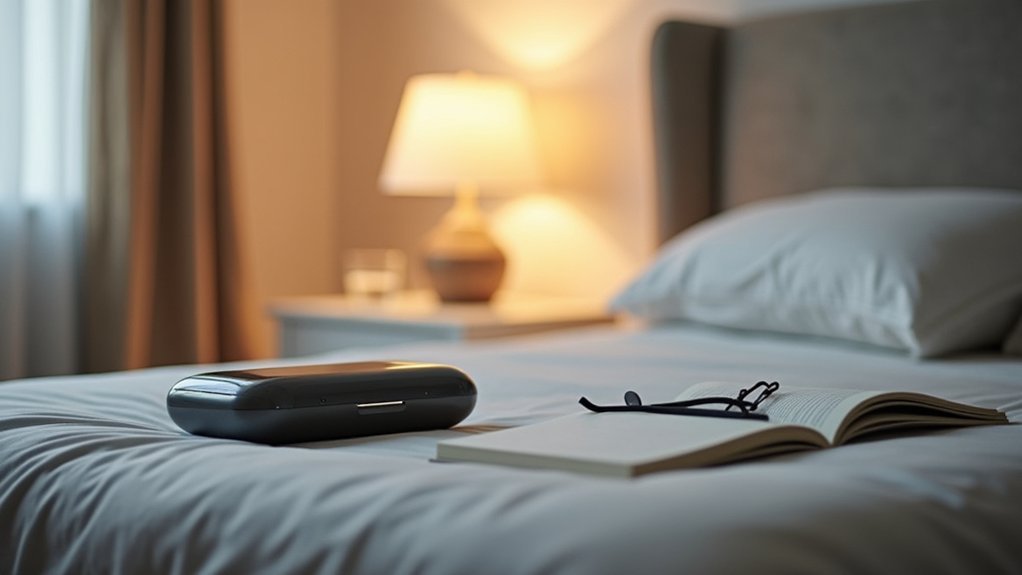
While traditional sleep studies have long required overnight stays at specialized facilities, home apnea testing devices are revolutionizing how doctors diagnose sleep disorders by bringing accurate testing directly to your bedroom.
You’ll benefit from non-invasive technology that monitors your breathing patterns, oxygen saturation, and heart rate without the stress of unfamiliar environments. This home sleep apnea test achieves remarkable accuracy in diagnosing sleep disorders, particularly obstructive sleep apnea, with sensitivity rates reaching 95%.
You’ll experience improved accessibility, especially if you live in rural areas, along with shorter wait times for diagnosis. Cost-effective testing makes screening more affordable, while the convenience encourages more people to seek evaluation for potentially serious sleep conditions that might otherwise remain undetected.
The Technology Behind Wearable Home Sleep Testing Equipment
The advanced sensors in wearable home sleep testing devices represent a significant leap forward from traditional monitoring equipment.
You’ll find these non-invasive sensors in wrist-worn monitors and fingertip probes that track blood oxygen levels, heart rate, and breathing patterns while you sleep comfortably at home. The technology eliminates cumbersome wires, making comfortable testing possible for patients who’d avoid traditional sleep labs.
Advanced wearable sensors track vital sleep metrics wirelessly at home, offering comfortable monitoring without traditional lab constraints.
These devices focus on respiratory events, measuring oxygen saturation, movement, and sleep position to identify obstructive sleep apnea symptoms.
You’ll benefit from their impressive 90% diagnostic accuracy for initial assessment of sleep disorders. The cost-effective design, ranging from $150 to $500, makes this technology accessible to more patients seeking reliable sleep apnea diagnosis.
Clinical Accuracy and Reliability of At-Home Sleep Monitoring
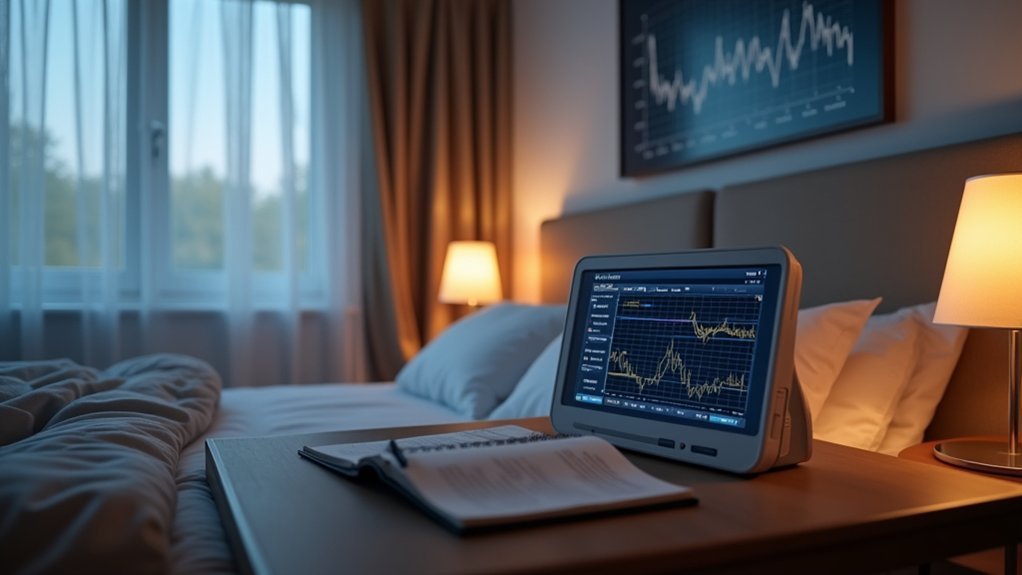
Although home sleep apnea tests can’t match the thorough monitoring of laboratory polysomnography, they deliver impressive diagnostic accuracy that makes them valuable tools for detecting obstructive sleep apnea.
Your home sleep test provides 81-95% sensitivity for identifying moderate to severe cases, while specificity ranges from 66-100% for the Apnea-Hypopnea Index.
The clinical accuracy demonstrates strong reliability through:
- Positive predictive value of 79.4-96%, confirming OSA when results indicate its presence
- Negative predictive value of 92%, accurately ruling out sleep disorders in tested patients
- Consistent monitoring capabilities despite potential sensor dislodgement limitations
However, you should understand that these devices can’t detect non-respiratory sleep disorders, which may impact overall diagnostic reliability for complex cases requiring extensive evaluation.
Cost-Effectiveness and Accessibility Benefits Over Laboratory Studies
Beyond their diagnostic capabilities, home sleep apnea testing devices offer compelling financial advantages that make sleep disorder evaluation accessible to a broader patient population. You’ll find HSATs cost-effectively priced between $150-$500, dramatically reducing expenses compared to traditional laboratory studies. Insurance coverage typically supports these tests for patients showing high likelihood of moderate to severe obstructive sleep apnea, enhancing accessibility.
| Factor | Home Sleep Testing | Laboratory Studies |
|---|---|---|
| Cost Range | $150-$500 | Several thousand dollars |
| Wait Times | Minimal delays | Extended scheduling |
| Convenience | Test at home | Overnight lab stay |
| Rural Access | No travel required | Distance barriers |
| Anxiety Level | Comfortable environment | Clinical setting stress |
The convenience of home sleep apnea testing eliminates travel barriers, particularly benefiting rural areas where sleep centers aren’t readily available. You’ll experience shorter wait times for diagnosis and sleep disorder assessments.
Overcoming Barriers to Sleep Apnea Detection and Treatment
While traditional sleep studies create multiple hurdles that prevent timely diagnosis, home sleep apnea testing devices systematically eliminate the most common barriers patients face when seeking evaluation and treatment.
You’ll find these devices address critical obstacles that have historically delayed obstructive sleep apnea (OSA) detection.
The COVID-19 pandemic accelerated adoption as patients avoided clinical settings, yet home sleep test accessibility remained constant. With positive predictive value (PPV) reaching 96%, you’re getting reliable diagnosis without traditional testing complications.
Key barriers eliminated include:
- Geographic limitations – Rural patients access testing without traveling to distant sleep centers
- Scheduling conflicts – You control timing rather than waiting for lab availability
- Testing anxiety – Familiar home environment reduces stress-related sleep disruption
This barrier removal facilitates earlier intervention, directly improving patient outcomes through prompt treatment initiation.
Frequently Asked Questions
Are Sleep Apnea Tests at Home Accurate?
Home sleep apnea tests are quite accurate, delivering 81-95% sensitivity and 92% negative predictive value. You’ll get reliable results for moderate to severe cases, though sensor issues can sometimes affect accuracy.
What Is the Most Accurate Test to Diagnose Sleep Apnea?
Polysomnography remains the most accurate test you’ll find for diagnosing sleep apnea. It’s the gold standard that monitors your brain waves, breathing, and movements overnight in a sleep lab setting.
What Is the Difference Between a Sleep Study in a Lab and at Home?
You’ll get thorough brain and body monitoring with multiple sensors during lab studies, while home tests focus mainly on breathing patterns and oxygen levels using simplified devices in your own bed.
What Are the Disadvantages of Home Sleep Testing?
You’ll face sensor dislodgement, missed mouth breathing, poor sleep quality affecting results, limited monitoring channels missing other disorders, and single-night testing that may not reflect your typical patterns.



Leave a Reply