

Your hormones orchestrate your sleep-wake cycle, but imbalances create chaos that leaves you exhausted yet wired. When cortisol peaks at night instead of morning, it suppresses melatonin production and disrupts your natural rhythm. Estrogen and progesterone fluctuations during PMS, menopause, or life changes trigger insomnia, hot flashes, and restless nights. This creates a vicious cycle where poor sleep further destabilizes hormones, making quality rest even more elusive. Understanding these patterns can help you reclaim restorative sleep.
Understanding the Sleep-Wake Cycle and Hormonal Regulation

Although you mightn’t realize it, your body operates on a sophisticated internal clock that orchestrates when you feel alert and when you’re ready to sleep. This sleep-wake cycle depends on circadian rhythms that control hormonal regulation throughout your day.
Your brain releases melatonin when darkness falls, signaling it’s time to rest, while cortisol peaks each morning to boost alertness. Estrogen and progesterone also influence your sleep patterns, particularly during menstrual cycles, pregnancy, and menopause.
When these hormones fall out of balance, you’ll experience sleep disturbances that can disrupt your entire system. Unfortunately, poor sleep creates a vicious cycle by causing further hormonal imbalances, ultimately compromising your overall health and perpetuating rest-related problems.
Cortisol Imbalances and Their Impact on Sleep Quality
When you’re stressed or dealing with insomnia, your cortisol levels often spike at night instead of dropping naturally, creating a vicious cycle that disrupts your sleep quality.
This nighttime cortisol surge suppresses melatonin production and keeps your mind racing when you should be winding down for rest.
You can break this disruptive pattern by implementing targeted stress management techniques that help regulate your cortisol rhythm and restore healthy sleep cycles.
High Cortisol Nighttime Effects
Since cortisol naturally follows a circadian rhythm that peaks in the morning and drops at night, elevated evening levels can wreak havoc on your sleep cycle. High cortisol at nighttime directly suppresses melatonin production, making it harder to fall asleep and maintain restful slumber.
This hormonal imbalance creates a vicious cycle where stress fuels insomnia, leading to fragmented sleep patterns that leave you exhausted.
When your cortisol remains elevated during evening hours, you’ll experience disrupted sleep quality that manifests as daytime fatigue, irritability, and concentration problems. Chronic elevation can even contribute to sleep apnea, further compromising your rest.
You can combat these effects by implementing proper sleep hygiene practices, stress reduction techniques like meditation, and regular exercise to help regulate your cortisol levels naturally.
Managing Cortisol Sleep Disruption
Breaking the cycle of cortisol-induced sleep disruption requires a strategic approach that targets both the underlying stress response and your sleep environment. When elevated cortisol levels interfere with your sleep patterns, you’ll need to actively manage cortisol levels through proven stress-reduction techniques.
Regular mindfulness practice and physical activity help restore hormonal balance by naturally lowering this stress hormone throughout the day.
Creating consistent bedtime routines signals your body to reduce cortisol production as evening approaches. You can improve sleep quality by avoiding stimulating activities before bed and maintaining a cool, dark sleeping space.
These combined strategies break the vicious cycle where sleep disruption leads to more stress, which further elevates cortisol and perpetuates insomnia, ultimately helping you achieve more restful sleep.
Melatonin Disruption and Circadian Rhythm Disorders

As darkness falls, your pineal gland triggers the release of melatonin, an essential hormone that signals your body to prepare for sleep. When hormone imbalances disrupt this process, your internal clock becomes misaligned with environmental cues, creating circadian rhythm disorders that make falling asleep and waking up difficult.
Blue light from screens suppresses melatonin production, throwing off your natural sleep-wake cycle. These disruptions don’t just delay sleep onset—they reduce sleep efficiency and prevent you from reaching restorative sleep stages like deep sleep and REM.
Your melatonin levels naturally decline after age 40, increasing your risk of sleep disturbances. Stress, shift work, and travel across time zones further create melatonin imbalances, leading to insomnia and other sleep disorders that compromise your rest quality.
Estrogen and Progesterone Fluctuations Throughout Women’s Lives
Your estrogen and progesterone levels change dramatically throughout your life, creating a cascade of sleep challenges that shift with each phase.
During your monthly cycle, you’ll likely sleep better when estrogen peaks but struggle with insomnia as progesterone drops before menstruation.
When menopause arrives, these same hormonal fluctuations trigger hot flashes and night sweats that can shatter your sleep patterns for years.
Menstrual Cycle Sleep Impact
Throughout your menstrual cycle, estrogen and progesterone levels rise and fall in a carefully orchestrated dance that greatly impacts your sleep quality and patterns.
During the luteal phase, rising progesterone can trigger sleepiness or paradoxically cause insomnia. As estrogen peaks, you’ll likely experience deeper, more restorative sleep. However, when both hormones plummet before menstruation, you’re prone to sleep disturbances and insomnia.
PMS compounds these issues, creating additional barriers to quality rest. These hormonal changes also disrupt your REM sleep, particularly during the premenstrual phase.
If you have polycystic ovary syndrome, irregular periods and hormonal imbalances worsen sleep problems and increase sleep apnea risk. Understanding these cyclical patterns helps you anticipate and manage sleep challenges effectively.
Menopause Sleep Disruption
When menopause arrives, your body’s declining estrogen and progesterone levels create a perfect storm for sleep disruption.
Hot flashes and night sweats jolt you awake repeatedly, preventing deep rest. Lower progesterone makes you irritable and unable to relax, while decreased estrogen reduces your REM sleep, leaving you exhausted and moody.
These hormonal changes don’t just affect sleep patterns—they increase your risk of developing sleep apnea, putting you at similar risk levels as men.
Your overall sleep quality deteriorates as restorative sleep becomes elusive.
However, estrogen replacement therapy offers hope for some women experiencing menopause.
This treatment can alleviate symptoms caused by hormonal fluctuations, potentially restoring better sleep patterns and improving your nightly rest during this challenging phase.
How Sleep Deprivation Creates a Vicious Cycle of Hormonal Imbalance
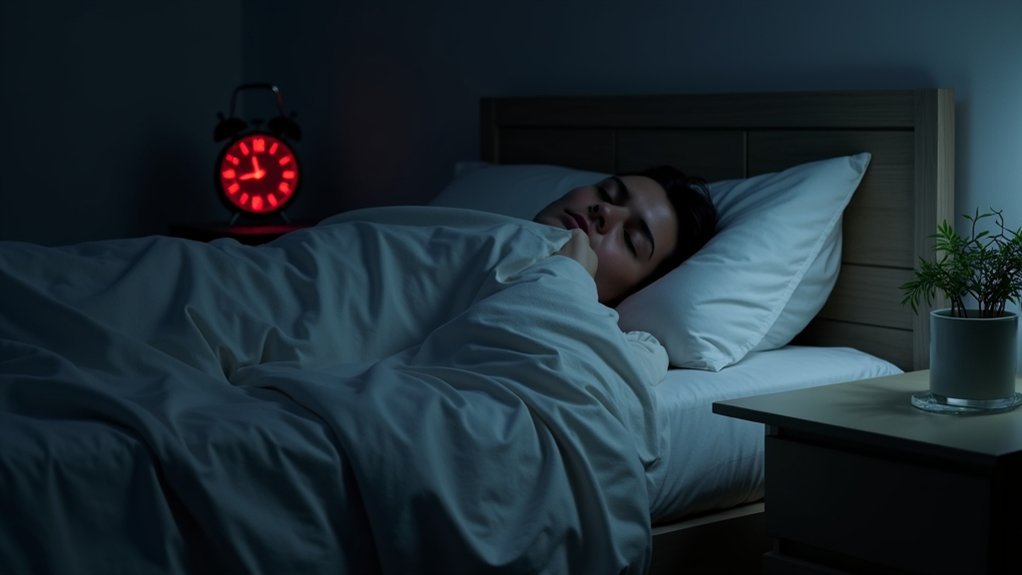
Sleep deprivation doesn’t just leave you feeling groggy—it triggers a cascade of hormonal disruptions that make quality rest even harder to achieve. When you’re sleep-deprived, your cortisol levels spike, creating stress that disrupts your sleep-wake cycle. Your insulin resistance increases, raising diabetes risk while melatonin production decreases, making sleep more elusive.
| Hormone Effect | Impact on Sleep |
|---|---|
| Elevated cortisol | Creates stress, disrupts sleep patterns |
| Reduced leptin levels | Increases hunger, affects sleep quality |
| Decreased melatonin production | Makes falling asleep difficult |
| Lower estrogen and progesterone | Disrupts menstrual cycles, worsens sleep |
This hormonal imbalance becomes self-perpetuating. Poor sleep affects your reproductive health, while disrupted leptin levels increase cravings, creating weight gain that further compounds sleep issues.
Identifying Signs Your Hormones Are Disrupting Your Sleep
Although your body sends clear signals when hormones are interfering with your sleep, these warning signs are often overlooked or attributed to other causes.
You might experience difficulty falling asleep during PMS due to hormonal fluctuations affecting melatonin production. Night sweats during menopause can wake you repeatedly, destroying sleep quality and leaving you exhausted.
Hormonal fluctuations during PMS and menopause create sleep disruptions that leave women feeling exhausted and unable to rest properly.
If you’re constantly craving snacks late at night, your hunger hormones are likely imbalanced from insufficient sleep. Waking up feeling wired despite being tired indicates elevated cortisol levels disrupting your natural rest cycle.
Irregular periods combined with snoring or breathing interruptions suggest a hormone imbalance affecting sleep architecture. Recognizing these patterns is essential for effective stress management and restoring healthy sleep.
Restoring Hormonal Balance for Better Sleep Quality
Since your body’s hormonal symphony directly orchestrates your sleep-wake cycle, restoring balance requires a strategic approach that addresses both the root causes and symptoms of disruption.
When estrogen and progesterone fluctuations trigger insomnia, you’ll need targeted interventions to reclaim quality sleep.
Here’s your roadmap to hormonal restoration:
- Implement stress management techniques – Practice deep breathing exercises and meditation to regulate cortisol levels and support natural hormonal rhythms.
- Maintain a consistent sleep schedule – Train your body’s internal clock by sleeping and waking at the same times daily.
- Create a sleep-conducive environment – Minimize blue light exposure before bedtime to enhance melatonin production.
- Consider bioidentical hormone replacement therapy – Consult healthcare providers about HRT options if you’re experiencing significant menopausal hormonal imbalances affecting your rest.
Frequently Asked Questions
How Does Hormonal Imbalance Affect the Menstrual Cycle?
Hormonal imbalances disrupt your menstrual cycle by causing irregular periods, missed cycles, or heavy bleeding. When estrogen’s elevated, you’ll experience painful periods. Low progesterone can stop your cycle completely, preventing ovulation.
Do Hormones Affect the Sleep Cycle?
Yes, hormones greatly affect your sleep cycle. Estrogen and progesterone fluctuations disrupt sleep quality, while stress elevates cortisol levels that suppress melatonin production, making it harder for you to fall asleep naturally.
How Do Hormonal Imbalances Affect the Entire Body?
Hormonal imbalances disrupt your metabolism, mood, energy levels, and immune function. They’ll affect your weight, blood sugar, cardiovascular health, and cognitive performance, creating widespread issues throughout your body’s systems.
What Hormone Imbalance Causes Sleep Issues?
Several hormone imbalances disrupt your sleep. Elevated cortisol interferes with melatonin production, while declining estrogen and progesterone cause insomnia. You’ll also experience sleep issues when insulin sensitivity decreases from poor rest.




Leave a Reply