

You can cool your bedroom without AC by blocking sunlight with thermal blinds, creating cross-ventilation with strategically positioned fans, and placing ice bowls in front of running fans for instant cooling. Switch to LED lighting, use cold water bottles for spot relief, and time heat-generating activities for evening hours. Install exhaust fans to remove hot air, open windows during cooler hours, and optimize door positioning to control airflow. These techniques can drop temperatures by 15-20 degrees and provide thorough cooling solutions for any situation.
Block Direct Sunlight With Window Coverings

One of the most effective ways to keep your bedroom cool is blocking direct sunlight before it enters your space.
Window coverings like thermal blinds or curtains can block up to 80% of solar heat and UV rays, dramatically reducing indoor temperatures during peak hours.
Thermal blinds and curtains dramatically cut solar heat by up to 80%, keeping bedrooms significantly cooler during peak daylight hours.
You’ll also want to take into account reflective window film, which prevents heat absorption by up to 50% while still allowing natural light through.
Blackout curtains offer dual benefits – they block direct sunlight and reduce greenhouse effect caused by direct sun exposure.
Keep your windows covered during the hottest parts of the day to prevent heat accumulation.
Don’t forget to dust or steam clean your window coverings regularly to maintain their heat-blocking effectiveness and guarantee ideal cooling performance.
Create Strategic Cross-Ventilation With Fans
You’ll achieve the most effective bedroom cooling by positioning one fan in a window facing outward to expel warm air while keeping another window open for cool air intake.
This strategic placement creates a vacuum effect that pulls fresh air through your room while forcing hot air outside.
The key is ensuring your outward-facing fan fits snugly in the window frame to prevent air leaks that would reduce the system’s efficiency.
Window Fan Placement Strategy
Strategic fan placement transforms your bedroom into a natural cooling system by creating powerful cross-ventilation that pulls hot air out while drawing cooler air in.
Position one window fan facing outward to expel warm air, creating a vacuum effect that automatically draws cool air through a second open window. Ascertain your outward-facing fan fits snugly in the window frame to prevent air leaks that’ll diminish cooling efficiency.
Open another window across the room to maximize cross-ventilation and allow fresh air to replace expelled hot air.
Keep bedroom doors closed to maintain the vacuum effect and enhance airflow. Start your fan system around 6:00 p.m. when outside temperatures drop, optimizing the cooling process for comfortable sleeping conditions.
Vacuum Effect Creation
Creating an effective vacuum requires precise fan positioning that harnesses natural pressure differences to force air circulation through your bedroom.
Place a fan in one window facing outward to expel warm air while opening another window to draw in cooler air. This setup creates powerful cross-ventilation that can cool without AC effectively.
Ensure your outward-facing fan fits snugly to prevent air leaks that compromise cooling efficiency.
Close all other windows and doors throughout your house to maintain the vacuum effect. Start this system around 6:00 p.m. when outdoor temperatures naturally drop, maximizing the influx of cool air.
Monitor indoor temperatures and experiment with different fan placements to optimize effectiveness.
This strategic approach can rival traditional air conditioning’s cooling power.
Use the Ice Bowl Cooling Method

You can create an instant cooling system by placing a bowl of ice and cold water directly in front of your fan.
This simple setup transforms your regular fan into a makeshift air conditioner as it blows the chilled air throughout your bedroom.
To get the best results, position the fan so it’s blowing directly over the ice bowl and experiment with different bowl sizes to find what works best for your space.
Simple Ice Bowl Setup
One of the most effective DIY cooling methods involves placing a large bowl filled with ice cubes directly in front of a running fan. This ice bowl setup creates an instant cooling effect by circulating chilled air throughout your bedroom.
Position the fan so it’s directed toward the area where you want to feel the coolest air.
For better results, use a larger bowl filled with ice water rather than just ice cubes. This extends the cooling duration and improves overall effectiveness.
Set your fan to a higher speed to maximize the cooling breeze generated as the ice melts.
This energy-efficient alternative to air conditioning only requires a fan and ice, dramatically reducing your electricity costs while keeping you comfortable.
Maximize Cooling Effectiveness
While a basic ice bowl setup provides immediate relief, strategic placement and timing can amplify your cooling results considerably. Position multiple bowls with ice in front of fans at different room angles to create cross-ventilation patterns. Set your fan in front of the largest ice bowl at maximum speed for ideal air circulation.
| Factor | Basic Setup | Maximized Setup |
|---|---|---|
| Bowl Size | Single small bowl | Multiple large bowls |
| Ice Amount | 2-3 cups | 6-8 cups total |
| Fan Speed | Medium | High |
| Placement | One corner | Strategic angles |
| Duration | 2-3 hours | 4-6 hours |
These advanced cooling techniques create uniform temperature distribution throughout your space. Replace melted ice every few hours to maintain consistent effectiveness and enjoy prolonged comfort.
Position Exhaust Fans to Remove Hot Air
Strategic placement of exhaust fans can dramatically reduce your bedroom’s temperature by actively pulling hot air out of the space.
Exhaust fans strategically positioned in your bedroom create powerful cooling by actively removing trapped hot air from the space.
You’ll want to position these fans strategically to maximize their cooling potential and create effective airflow patterns.
- Install exhaust fans in windows to directly remove hot air from your bedroom, especially during peak heat hours.
- Mount fans at the highest point in your room to capture rising warm air most effectively.
- Create cross-ventilation by pairing exhaust fans with open windows to draw cool air in while pushing warm air out.
- Run kitchen and bathroom exhaust fans to prevent excess heat and humidity from reaching your bedroom.
- Clean fans regularly to maintain peak performance and airflow capacity.
Open Windows During Cooler Evening Hours
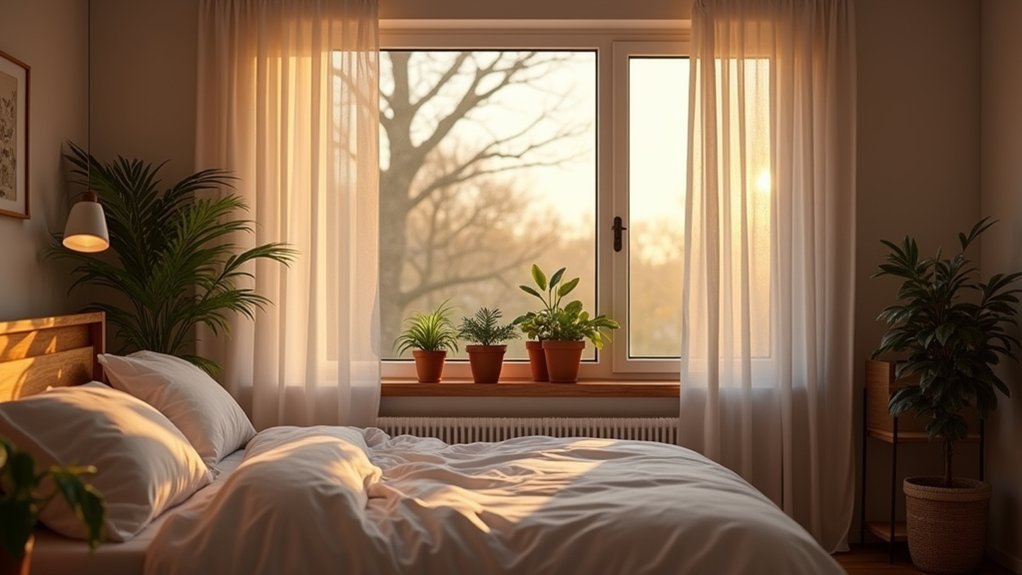
As temperatures drop in the evening, opening your windows creates a natural cooling system that can considerably reduce your bedroom’s temperature without any energy costs. This night-flush ventilation strategy replaces warm indoor air with invigorating cool air from outside.
For maximum effectiveness, open window panels on opposite sides of your bedroom to establish powerful cross-breezes that flow directly through your space. This airflow pattern greatly drops room temperature overnight.
| Time | Action | Result |
|---|---|---|
| 7 PM | Open windows on opposite walls | Cross-breezes begin cooling |
| 9 PM | Cool air replaces warm indoor air | Temperature drops noticeably |
| 11 PM | Steady airflow maintains comfort | ideal sleep conditions |
| 6 AM | Close windows before heat arrives | Preserve cool air benefits |
| 8 AM | Lower blinds completely | Block incoming morning warmth |
Close windows and blinds before morning heat arrives to maintain coolness throughout early morning hours.
Hang Damp Sheets Near Open Windows
Taking your window cooling strategy one step further, you can amplify the temperature drop by hanging damp sheets directly in front of your open windows. This natural air conditioning method works by cooling warm air as it passes through the wet fabric before entering your room.
Here’s how to maximize this technique to keep your house cool:
- Soak sheets completely in cool water and wring out excess moisture
- Hang them securely in front of your open windows using curtain rods or clips
- Re-dampen the sheets every few hours to maintain cooling effectiveness
- Use lightweight cotton or linen fabrics for better airflow and faster evaporation
- Combine with fans to circulate the cooled air throughout your bedroom
This cost-effective method harnesses evaporative cooling while adding beneficial humidity to dry climates.
Switch to Heat-Reducing LED Lighting
While you’re blocking hot air from entering your bedroom, don’t overlook the heat sources already inside your room.
Traditional incandescent bulbs generate significant heat, making your space uncomfortably warm. Switching to LED lighting can reduce heat output by up to 80%, creating a noticeably cooler environment.
LEDs convert more energy into light rather than heat, unlike incandescent bulbs that waste energy as thermal radiation.
You’ll immediately feel the difference in room temperature after making this simple swap.
Beyond cooling benefits, LEDs slash your energy bills by using 75% less electricity and last approximately 25,000 hours, meaning fewer replacements.
This sustainable cooling solution enhances overall bedroom comfort and improves sleep quality during hot nights when every degree matters.
Utilize Cold Water Bottles for Spot Cooling
You can transform ordinary water bottles into powerful cooling tools by filling them with cold water or ice and placing them strategically around your sleeping area.
Position one bottle under your legs and another near your pillow to create targeted cooling zones that’ll help regulate your body temperature throughout the night.
For maximum effectiveness, freeze multiple bottles overnight and rotate them as needed, ensuring you’ll have cool relief that lasts for hours.
Strategic Bottle Placement
Frozen water bottles transform into powerful cooling tools that can dramatically lower your bedroom temperature without electricity.
Strategic placement maximizes their effectiveness by targeting specific areas where you’ll feel the greatest relief. Position these makeshift ice packs where they’ll create ideal air circulation patterns throughout your space.
- Place frozen bottles directly in front of your fan to create a DIY air conditioning system that pushes chilled air across the room.
- Position smaller bottles under your sheets before bedtime to cool your sleeping surface for immediate comfort.
- Experiment with different locations around your bedroom to identify spots that enhance natural airflow patterns.
- Keep backup frozen water bottles ready for rotation throughout the night.
- Target areas near your head and feet for maximum cooling impact.
Ice Duration Tips
Since frozen water bottles naturally warm up over time, maximizing their cooling duration requires smart preparation and rotation strategies.
Use smaller bottles filled with cold water since they freeze faster and thaw more gradually than larger containers. Position a box fan nearby to circulate air around the bottles, extending their effectiveness as temperatures drop throughout the night.
Keep multiple bottles in rotation—while some cool your sleeping area, others should be freezing as replacements.
Wrap bottles in thin towels to prevent condensation and create comfortable contact surfaces. Replace warming bottles every 2-3 hours for consistent cooling.
Store backup frozen bottles in your freezer so you won’t experience gaps in cooling while waiting for new ones to freeze completely.
Time Your Heat-Generating Activities
When afternoon temperatures soar, running heat-generating appliances can turn your home into a furnace and make cooling your bedroom nearly impossible.
The key is strategically timing these activities to keep your bedroom cooler throughout the day.
Smart scheduling of heat-generating activities can greatly reduce indoor temperatures:
- Schedule baking and dishwasher use for cooler evening hours when outdoor temperatures drop
- Do laundry at night since dryers considerably raise indoor heat levels during operation
- Prepare no-cook meals or grill outside during hot days to avoid heating your home with the oven
- Limit incandescent bulbs during peak heat hours as they produce unnecessary warmth
- Plan household chores like vacuuming or ironing for early mornings or late evenings when it’s more bearable
Time your activities wisely for maximum cooling benefit.
Optimize Door Positioning for Airflow Control
While you might think keeping all doors open creates better airflow, strategic door positioning actually gives you more control over your home’s temperature.
Keep doors closed in occupied rooms during hot daytime hours to trap cooler air and prevent warm air from entering. Close off unused rooms entirely to concentrate cool air where you need it most.
Close doors in occupied rooms during hot hours to trap cool air and seal out heat from unused spaces.
When evening arrives and temperatures drop, open your doors to promote circulation throughout your house.
Create effective cross-breezes by opening doors alongside windows on opposite sides of your home, allowing air outside to flow naturally through your living spaces.
Monitor outdoor temperatures throughout the day and adjust door positions accordingly—closed during peak heat, open when cooler air outside becomes available.
Frequently Asked Questions
How to Cool Down a Bedroom Without AC?
You can cool your bedroom by placing a fan in the window facing outward, keeping curtains closed during daytime, putting ice bowls near fans, and scheduling heat-generating activities for evening hours.
How to Make a Bedroom Cool Without AC?
You’ll create cross-ventilation by positioning fans outward in windows while opening others. Block sunlight with curtains, hang damp towels near windows, and choose breathable cotton bedding for maximum cooling.
How to Cool a Bedroom With No AC?
You’ll want to open windows on opposite sides for cross-ventilation, position fans strategically to pull cool air in, keep curtains closed during daytime, and use ice-filled bowls near fans for instant cooling.
How Can I Cool My Room Without Air Conditioning?
You can create cross-ventilation by positioning fans in windows, close curtains during daylight hours, open windows at night for cooler air, place ice near fans, and hang damp towels by windows.



Leave a Reply