
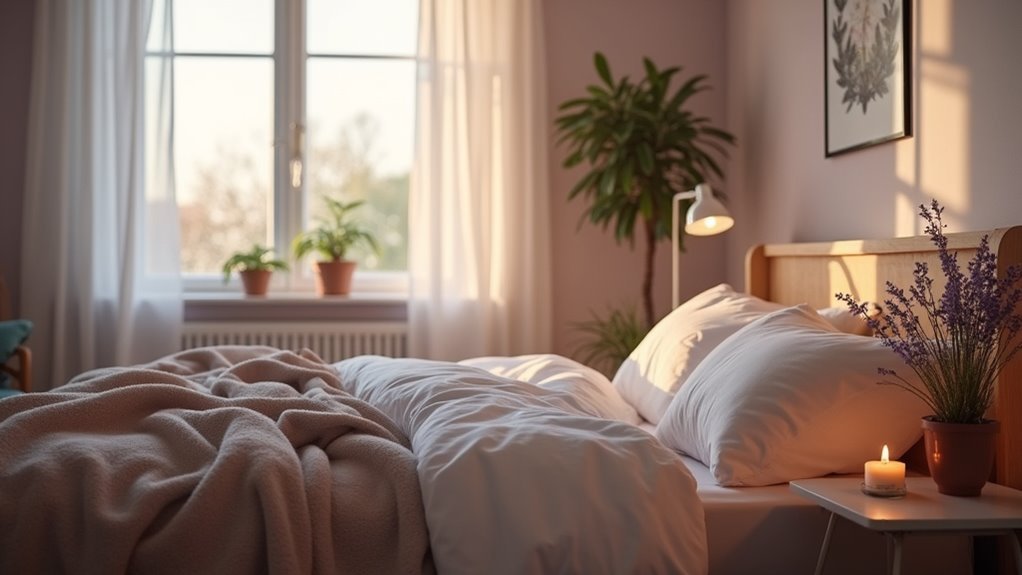
You can transform your bedroom into a sleep sanctuary by maintaining temperatures between 60-67°F, eliminating noise with white noise machines or earplugs, and creating complete darkness using blackout curtains. Choose a supportive mattress and breathable bedding materials like cotton or bamboo. Keep your space clean and clutter-free with weekly dusting routines. Incorporate calming scents like lavender through diffusers or aromatherapy sprays. Reserve your bedroom exclusively for sleep and intimacy to strengthen your sleep associations and access deeper rest.
Maintain the Ideal Bedroom Temperature
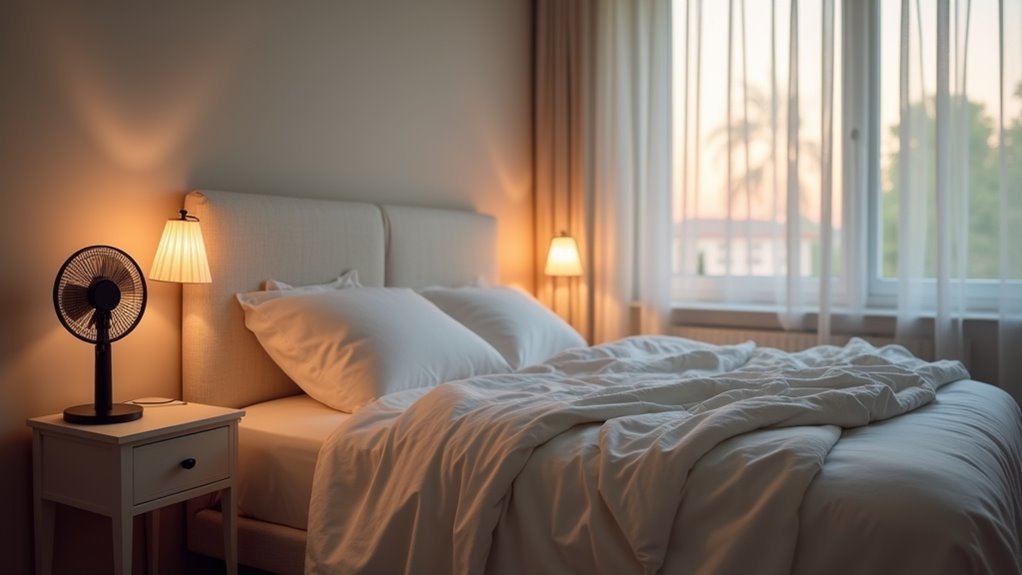
When you’re trying to achieve quality sleep, your bedroom temperature plays an essential role in how quickly you fall asleep and stay asleep throughout the night.
The ideal bedroom temperature ranges between 60 to 67 degrees Fahrenheit, supporting your body’s natural temperature drop that promotes sleepiness. You’ll want to experiment with different sleep temperature settings using fans, air conditioning, or adjusting bedding layers to find your most comfortable setting.
Preventing overheating helps avoid frequent awakenings that disrupt sleep. Choose lightweight sleepwear made from breathable fabrics like cotton for proper temperature regulation.
Additionally, investing in a quality mattress suited to your preferred sleep temperature considerably impacts your overall sleep quality, ensuring you achieve a restful night consistently.
Eliminate Noise and Sound Disturbances
Beyond temperature control, unwanted sounds can considerably disrupt your sleep cycles and prevent you from reaching the deeper, restorative stages of sleep.
To eliminate noise effectively, you’ll want to create a consistent auditory background using a white noise machine or fan. High-quality earplugs offer another solution, especially if you’re a sensitive sleeper in noisy environments.
White noise machines and quality earplugs create consistent auditory backgrounds that effectively mask disruptive sounds for sensitive sleepers.
Implement soundproofing techniques by hanging heavy curtains and installing acoustic panels. Rearrange furniture to place heavy items against walls that border noisy areas.
Don’t overlook sealing gaps around windows and doors with weather stripping—these small openings let outside sound disturbances infiltrate your sleep environment.
Maintain a quiet atmosphere by turning off TVs and electronics before bed to minimize potential distractions.
Create Complete Darkness in Your Sleep Space
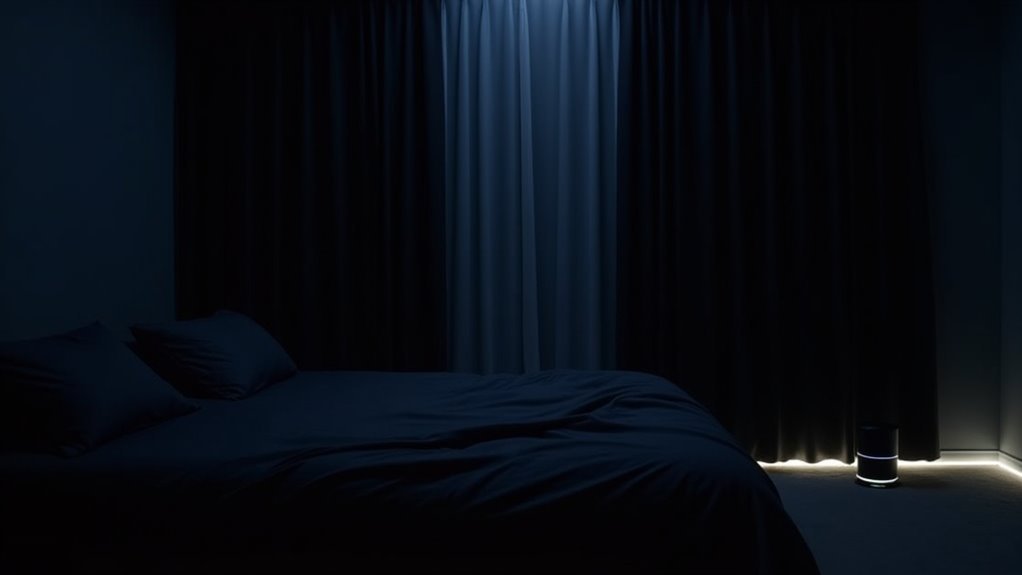
You’ll need to tackle both external light sources streaming into your bedroom and the subtle indoor lighting that disrupts your sleep.
Start by installing blackout curtains or shades to block streetlights, early morning sun, and any outdoor illumination from entering your space.
Next, eliminate indoor light pollution by covering LED displays on electronics, using opaque tape on alarm clocks, and turning off devices that emit even small amounts of light throughout the night.
Block External Light Sources
Although your bedroom might seem dark enough at night, even small amounts of light can interfere with your body’s natural sleep processes and prevent you from achieving truly restorative rest.
To create a relaxing sleep environment, you’ll need to block external light sources that disrupt your sleep cycles. Install blackout curtains that eliminate up to 99% of sunlight penetration, ensuring complete darkness throughout the night.
These window treatments effectively enhance melatonin production, which is essential for deep sleep quality. Additionally, cover LED displays from alarm clocks and electronic chargers with opaque tape or fabric.
Even these tiny light sources can interfere with your body’s ability to maintain proper sleep rhythms and achieve the restorative rest you need.
Minimize Indoor Light Pollution
Since artificial indoor lighting can greatly disrupt your sleep quality even after you’ve blocked external sources, you’ll need to address light pollution that originates within your own bedroom.
To minimize indoor light pollution effectively, implement dim lighting during evening hours to signal your circadian rhythms that bedtime approaches. This strategy enhances melatonin production naturally.
Turn off or cover electronic devices emitting light, including alarm clocks and chargers, as even minimal light exposure disrupts sleep cycles.
If complete darkness isn’t achievable with blackout curtains or room darkening window treatments alone, use a sleep mask for additional protection.
- Bedroom bathed in complete darkness with covered electronics
- Gentle amber lighting gradually dimming as evening progresses
- Peaceful sleeping figure wearing comfortable sleep mask
These steps create a restful sleep environment supporting deeper rest.
Choose the Right Mattress and Bedding
When you’re building your ideal sleep environment, your mattress and bedding choices form the foundation of quality rest.
You’ll need to select the right mattress type based on your preferences—memory foam provides contouring support while latex offers responsive comfort. Replace your mattress every 7-10 years to maintain proper support and sleep quality.
Your pillow should align your neck and spine according to your sleeping position: thin for stomach sleepers, medium for back sleepers, and thick for side sleepers.
Choose breathable materials like cotton or bamboo for temperature regulation and moisture-wicking properties.
Don’t overlook hygiene—wash your sheets and pillowcases every two weeks to reduce allergens and maintain cleanliness, which directly impacts your overall comfort and health.
Keep Your Bedroom Clean and Clutter-Free
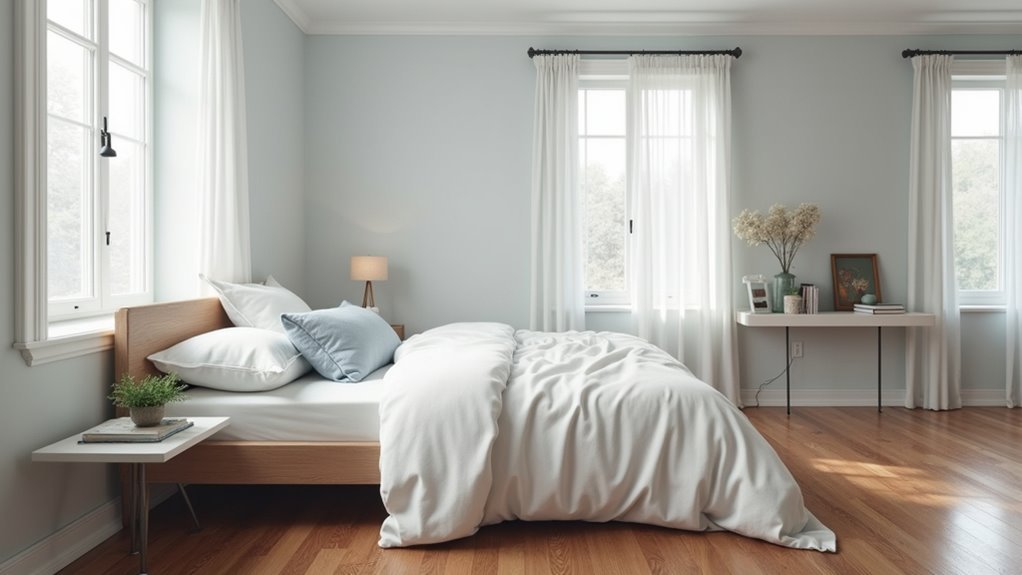
You’ll sleep better when your bedroom stays clean and organized, so make decluttering a daily habit by putting items back in their designated places.
Wash your sheets, pillowcases, and other bedding every one to two weeks to eliminate allergens and body oils that can disrupt your rest.
Set aside time each week to dust surfaces and vacuum carpets, as this removes dust mites and other particles that negatively impact sleep quality.
Remove Bedroom Clutter Daily
Every night before bed, removing clutter from your bedroom transforms the space into a true sleep sanctuary.
Daily decluttering creates a good sleep environment by reducing stress and anxiety levels that accumulate throughout the day. When you establish this nightly routine, you’re actively minimizing allergens like dust mites that gather on scattered items and surfaces.
Your organized bedroom directly correlates with better sleep hygiene, as visual distractions won’t compete for your attention when you’re trying to wind down.
Storage solutions like bins help you quickly tuck away personal items, maintaining that peaceful atmosphere you need to improve sleep quality.
- Clothes folded neatly in drawers instead of draped over chairs
- Books returned to shelves rather than scattered across nightstands
- Electronics charging in designated spots away from your bed
Regular Bedding Washing Schedule
Since fresh bedding directly impacts your sleep quality, establishing a consistent washing schedule becomes essential for maintaining your bedroom sanctuary.
You should wash your sheets at least every two weeks to eliminate dust mites, allergens, and bacteria that compromise sleep quality and duration. If you sweat excessively or share your bed with pets, weekly washing becomes vital for good health and comfort.
Use hot water at 130°F or higher to effectively kill dust mites and bacteria during your washing schedule. This practice prevents body oils and allergens from accumulating, creating a comfortable environment that supports healthy sleep.
Regular bedding maintenance doesn’t just promote better sleep—it transforms your bedroom into an organized, clutter-free space that naturally encourages rest and relaxation.
Dust and Vacuum Weekly
Beyond maintaining fresh linens, your bedroom’s overall cleanliness plays a significant role in sleep quality. Dust mites and allergens accumulate quickly, potentially causing respiratory issues that disrupt your rest.
You’ll want to establish regular cleaning routines that include weekly vacuuming and dusting to create a clean sleep environment.
Use a vacuum with HEPA filter to effectively capture tiny particles that standard vacuums miss. This helps reduce allergens and promotes better sleep quality for any healthy adult.
Don’t overlook surfaces like nightstands and shelves when dusting.
- Microscopic dust mites invisibly dancing across your carpet fibers
- Fresh, crisp air flowing freely through your spotless bedroom sanctuary
- Peaceful slumber undisturbed by allergen-induced congestion or sneezing
Weekly maintenance creates a pleasant sleep environment that supports restorative rest.
Use Calming Scents and Aromatherapy
How can you transform your bedroom into a sanctuary that naturally guides you toward restful sleep?
Incorporating calming scents through aromatherapy creates a powerful foundation for better rest. Essential oils like lavender, chamomile, and bergamot notably enhance sleep quality by helping you promote relaxation and reduce nighttime anxiety.
Use a diffuser to disperse these oils, creating a soothing atmosphere that encourages deeper sleep. Aromatherapy sprays work excellently when applied to pillows and linens, infusing your sleep environment with gentle fragrances.
Consider adding aromatic plants like jasmine or chamomile to your bedroom—they’ll improve air quality while releasing natural fragrances throughout the night.
Research shows that specific scents, including peppermint and heliotropin, effectively reduce sleep disturbances and boost overall sleep efficiency, making aromatherapy an essential sleep optimization tool.
Establish Proper Bedroom Use Policies
While aromatherapy sets the sensory foundation for better sleep, establishing clear boundaries around how you use your bedroom creates the behavioral framework that supports consistent rest.
Keep your bedroom reserved exclusively for sleep and intimacy to strengthen your mind’s association with restfulness. Avoid working, studying, or engaging in stimulating activities in bed, as these can disrupt sleep quality and good health habits.
Creating a good sleep sanctuary requires removing electronics that emit blue light exposure and maintaining a clutter-free environment. Instead of soothing music or TV, keep the space as quiet as possible.
- Picture yourself reading peacefully in soft lamplight before bed
- Visualize a minimalist nightstand with only essential items
- Imagine electronics charging in another room while you rest
This behavioral discipline supports creating a good sleep routine that enhances overall quality.
Frequently Asked Questions
How Do You Create the Perfect Sleeping Environment?
You’ll create perfect sleeping conditions by maintaining temperatures between 60-67°F, installing blackout curtains, using white noise machines, choosing breathable cotton bedding, and keeping your bedroom organized and clutter-free for maximum relaxation.
What Is the 10 3 2 1 Rule for Sleep?
The 10 3 2 1 rule means you’ll stop caffeine 10 hours before bed, avoid alcohol 3 hours prior, skip heavy meals 2 hours beforehand, and eliminate screens 1 hour before sleeping.
What Is the Best Way to Sleep for Optimal Sleep?
You’ll sleep best by maintaining consistent bedtimes, keeping your room dark and cool, choosing proper pillows for your position, and avoiding screens before bed to optimize rest.
What Is the 20-Minute Rule for Sleep?
If you can’t fall asleep within twenty minutes, you should leave your bedroom and do something relaxing until you’re sleepy. This prevents your bed from becoming associated with frustration and wakefulness.



Leave a Reply