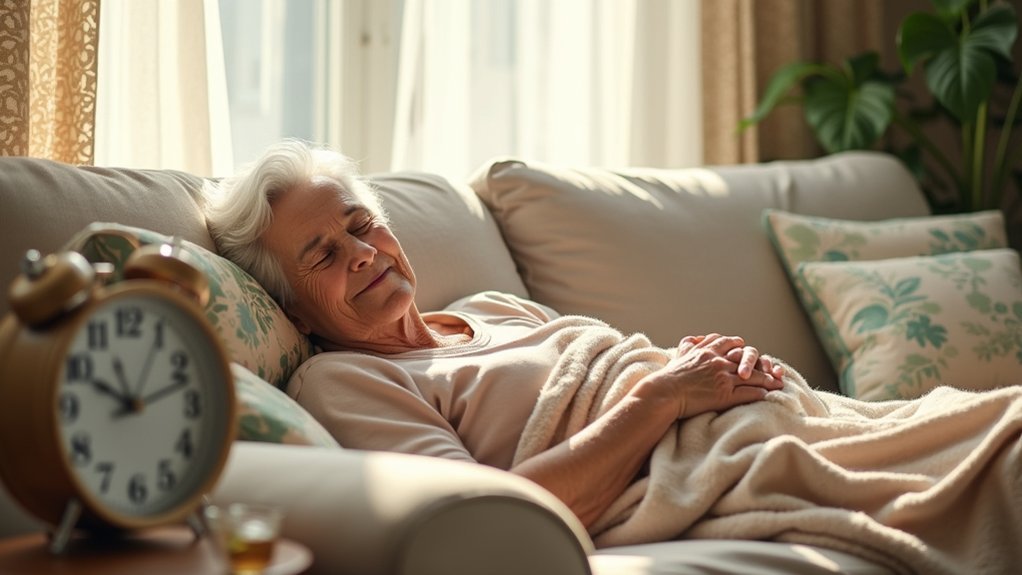
For seniors, you’ll get the most benefit from naps lasting 20-30 minutes. This duration enhances cognitive function and boosts energy levels without causing grogginess that comes from longer sleep periods. You should schedule your nap between 1 and 3 p.m. to align with your natural circadian rhythms and avoid disrupting nighttime sleep. Keeping naps under 30 minutes prevents you from entering deep sleep stages that leave you feeling drowsy afterward. Understanding proper timing and environment can maximize these restorative benefits.
Understanding Sleep Changes in Older Adults

As you age, your sleep patterns naturally shift, often resulting in lighter sleep and more frequent nighttime awakenings that can leave you feeling less rested. These changes affect most older adults and can greatly impact your daily energy levels.
Your sleep cycles become shorter and less restorative, which increases daytime sleepiness and creates a greater need for napping during the day.
Additionally, your circadian rhythms undergo notable changes as you get older. These shifts can alter when you naturally feel tired and alert throughout the day.
While you still need 7-8 hours of sleep nightly, achieving quality rest becomes more challenging. Understanding these natural changes helps explain why many seniors experience elevated fatigue levels and why shorter naps can become an essential tool for maintaining energy and well-being throughout your day.
Benefits of Napping for Senior Health and Well-being
Given these sleep challenges, strategic napping offers remarkable health benefits that can transform your daily experience. Short 20-30 minute naps greatly boost your cognitive functions, enhancing memory and reaction times essential for maintaining independence.
The benefits of napping extend beyond mental clarity—regular afternoon rest can reduce your risk of cardiovascular issues, including heart disease and stroke, while promoting better senior health overall.
You’ll notice improved emotional well-being as napping reduces stress and anxiety levels. When you time your naps for early afternoon, you’re working with your natural circadian rhythms rather than against them.
This strategic timing provides restorative benefits without disrupting nighttime sleep patterns, reducing fatigue and increasing alertness for daily activities.
Recommended Nap Duration for Adults Over 65

When you’re over 65, you’ll want to stick to naps that last around 30 minutes to maximize alertness without causing grogginess.
You should schedule these brief rest periods between 1 and 3 p.m. when your body naturally experiences an energy dip.
Consider how often you’re napping and whether it’s truly benefiting your overall health rather than creating dependency or disrupting your nighttime sleep.
Optimal 30-Minute Duration
Research consistently shows that 30 minutes represents the sweet spot for senior napping. This ideal nap length delivers maximum benefits without the drawbacks of longer sleep periods.
When you nap for 30 minutes, you’ll boost alertness while avoiding deep sleep stages that cause grogginess. This duration prevents sleep inertia, ensuring you wake up refreshed and energized rather than disoriented.
The benefits of maintaining this prime timing include:
- Enhanced cognitive functions like memory and logical reasoning
- Improved mood throughout your day
- Reduced fatigue and increased energy levels
- Better maintenance of your nighttime sleep quality
Timing and Frequency
Beyond duration, the timing and frequency of your naps play crucial roles in maximizing their effectiveness. Your body’s natural circadian rhythms make early afternoon, between 1 p.m. and 3 p.m., the perfect nap time. This midday nap provides an energy boost while preserving your nighttime sleep schedule.
| Timing | Frequency | Benefits |
|---|---|---|
| 1-3 p.m. | 1-2 times/week | Enhanced cognitive function |
| Early afternoon | Occasional | Improved cardiovascular health |
| Midday | Regular but limited | Better alertness |
| Post-lunch | Monitor based on sleep quality | Sustained energy levels |
When taking naps, frequent napping beyond twice weekly can disrupt your overall sleep patterns. The ideal nap length for adults over 65 combines proper timing with mindful frequency, ensuring you’ll reap benefits without compromising your nighttime rest.
Health Benefits Considerations
As you age, strategic napping becomes a powerful tool for maintaining both physical and mental well-being. Understanding the health benefits of proper nap length helps you maximize these advantages while avoiding potential risks.
Research shows that 20-30 minute naps deliver significant health benefits for seniors without triggering grogginess from deep sleep phases:
- Enhanced cognitive function – Short afternoon naps boost alertness and mental clarity
- Improved mood regulation – Thirty-minute naps reduce stress and elevate emotional well-being
- Cardiovascular protection – Regular weekly napping lowers your risk of heart-related problems
- Better sleep quality – Proper timing preserves nighttime rest patterns
However, you should avoid naps exceeding 90 minutes, as longer durations correlate with increased risks of high blood pressure and type 2 diabetes in seniors.
Timing Your Naps for Maximum Effectiveness
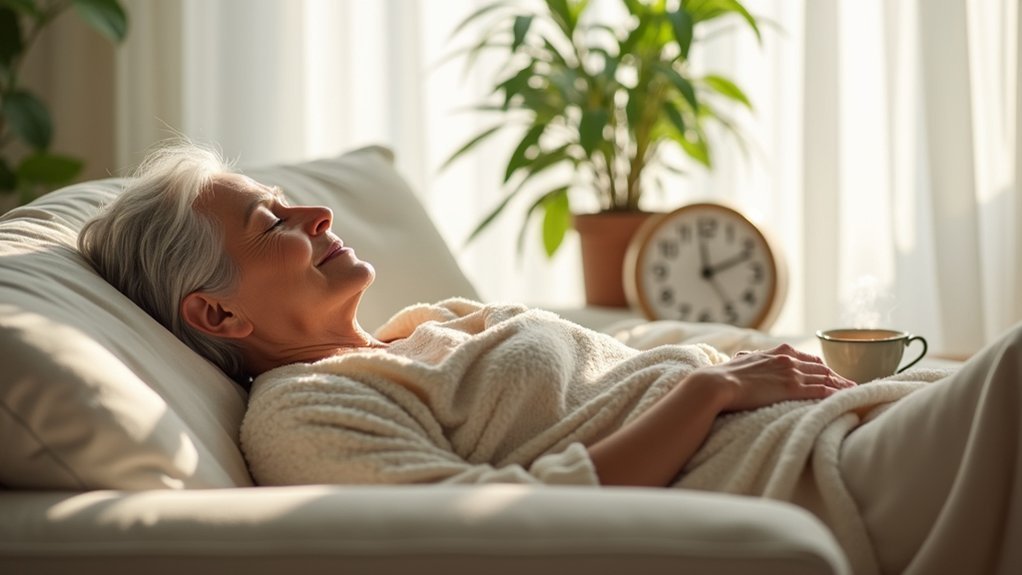
When you’re planning your daily nap, timing becomes just as essential as duration for maximizing the restorative benefits. The sweet spot for nap times falls between 1 to 3 p.m., perfectly aligning with your body’s natural circadian rhythm.
This window helps you combat the post-lunch dip in energy that many seniors experience after meals. Your desired nap length of 20 to 30 minutes works best during these afternoon hours, preventing grogginess while boosting alertness.
Establishing a consistent nap routine during this timeframe enhances your overall energy levels throughout the day. However, you’ll want to avoid napping too late in the afternoon, as these afternoon naps can interfere with nighttime sleep quality and make falling asleep at bedtime more challenging.
Creating the Perfect Napping Environment for Seniors
You can’t just focus on nap timing—your environment plays an equally essential role in determining how restorative your rest will be.
Creating the perfect napping space involves three key elements that’ll transform your afternoon rest from restless tossing to rejuvenating sleep.
Let’s examine how ideal room temperature, proper noise and light control, and comfortable bedding work together to maximize your napping benefits.
Optimal Room Temperature
Temperature plays an essential role in determining how well you’ll nap as a senior. The best room temperature for quality rest falls between 60 to 67 degrees Fahrenheit. Since seniors often experience heightened sensitivity to temperature changes, maintaining a comfortably cool environment becomes vital for sleep quality.
Creating the ideal napping environment involves several temperature-related considerations:
- Set your thermostat between 60-67°F to promote deeper, more restorative sleep.
- Use fans or air conditioning to improve air circulation and maintain consistent cooling.
- Choose breathable bedding made from cotton materials to help regulate your body temperature.
- Combine cool temperatures with darkness and quiet to minimize disturbances.
These adjustments will enhance comfort during your nap while preventing overheating that could disrupt your rest.
Minimizing Noise and Light
Beyond temperature control, managing noise and light levels creates an equally significant foundation for quality senior naps.
You’ll want to eliminate disruptive sounds that can prevent deep sleep and cause sleep problems. A white noise machine effectively masks sudden noises like traffic or household sounds, helping you maintain consistent rest. Consider removing hearing aids or using earplugs to further reduce disturbances.
Light control is equally essential for good sleep hygiene.
Install blackout curtains to block outside brightness, or use an eye mask for immediate darkness. Even small amounts of light can disrupt your body’s natural sleep signals, preventing you from achieving the restorative rest you need.
Creating this controlled environment transforms ordinary naps into revitalizing naps that leave you energized and alert.
Comfortable Bedding Essentials
Comfort forms the cornerstone of effective senior napping, starting with your choice of mattress and bedding materials. A comfortable mattress providing adequate support prevents discomfort that disrupts your rest, while worn-out surfaces can strain your body.
Your pillow selection should match your sleeping position and firmness preferences to maintain proper neck alignment.
Key bedding essentials include:
- Breathable fabrics like cotton or bamboo that regulate temperature during naps
- Proper pillows tailored to your preferred firmness and sleeping style
- Weighted blankets that promote security and relaxation for enhanced comfort
- Quality mattress that supports your body without being too soft
Creating this quiet environment with blackout curtains and sound machines, combined with these bedding fundamentals, transforms your napping experience into restorative rest that energizes rather than leaves you groggy.
Common Napping Mistakes Seniors Should Avoid
While napping can provide significant benefits for seniors, many fall into common traps that diminish these advantages or create new problems.
One major mistake is taking naps longer than 30 minutes, which causes grogginess upon waking and sleep inertia. You should avoid napping after 3 p.m., as late-day rest interferes with nighttime sleep quality.
Keep naps under 30 minutes and finish before 3 p.m. to avoid grogginess and protect your nighttime sleep quality.
Don’t skip naps altogether—regular short naps enhance alertness and overall well-being when done correctly. Avoid using naps to compensate for poor nighttime sleep; consistent quality nighttime rest remains essential for long-term health.
Finally, don’t nap in bright or noisy environments that prevent restful sleep. Short naps work best when timed properly and taken in ideal conditions.
When Napping Becomes a Concern for Older Adults
Although napping can enhance your daily energy and cognitive function, certain patterns should raise red flags about your overall health.
When excessive daytime napping becomes routine, you’re potentially disrupting your circadian rhythms and creating problematic cycles.
Watch for these warning signs:
- Naps exceeding 90 minutes – Any nap taken for extended periods increases health risks like high blood pressure and type 2 diabetes.
- Sleep inertia lasting hours – Feeling groggy long after waking suggests your napping habits are counterproductive.
- Disrupted nighttime sleep – Difficulty falling asleep or staying asleep indicates daytime rest is interfering with natural sleep patterns.
- Persistent low mood or drowsiness – These symptoms warrant consultation with your healthcare provider to assess underlying conditions.
Frequently Asked Questions
How Long Should a 70 Year Old Nap?
You should nap for 20-30 minutes to avoid grogginess and maintain nighttime sleep quality. Schedule your nap between 1-3 p.m. to align with your natural circadian rhythms and enhance alertness.
What Is the 30-90 Rule for Taking a Nap?
You should nap for 30-90 minutes to complete a full sleep cycle without grogginess. Thirty-minute naps boost energy quickly, while 90-minute naps help recover from sleep deprivation and improve cognitive function.
What Is the Healthiest Length for a Nap?
You’ll get the most health benefits from a 20-30 minute nap. This duration boosts your alertness and cognitive performance without causing grogginess or disrupting your nighttime sleep patterns.
Is 10 Hours Sleep Too Much for a 70 Year Old?
You’re likely sleeping too much at 10 hours nightly. Seniors typically need 7-8 hours, and excessive sleep can indicate health issues or increase risks for cardiovascular problems and cognitive decline.



Leave a Reply