
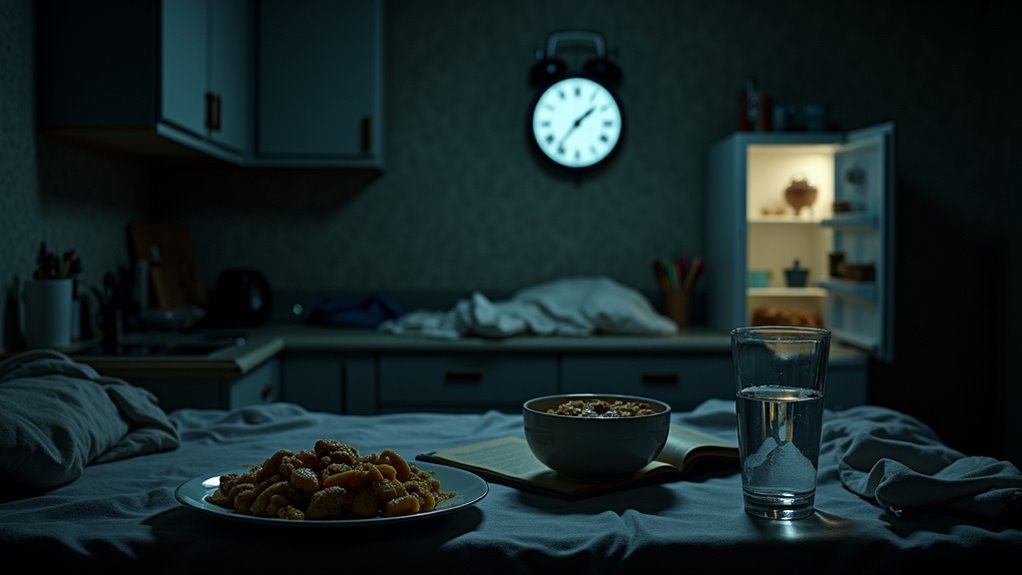
Late-night eating disrupts your rest by keeping your digestive system active when it should be winding down, forcing your body into an alert state rather than sleep mode. You’ll experience delayed melatonin production, elevated body temperature from digestion, and blood sugar spikes that trigger nighttime awakenings. High-fat meals extend digestion time and prevent deeper sleep stages, while gastroesophageal reflux creates physical discomfort. These disruptions fragment your sleep patterns and compromise restoration, though understanding the complete mechanisms reveals effective strategies for better rest.
The Science Behind Late Night Eating and Sleep Disruption

While your body prepares for rest each evening, late-night eating forces your digestive system to remain active when it should be winding down. This disruption delays sleep onset and prevents the deep, restorative rest you need.
Research reveals that consuming meals within three hours of bedtime greatly impacts your sleep quality, causing increased nighttime awakenings. High-calorie meals compound these problems by disrupting your circadian rhythm and making it harder to achieve quality sleep.
Eating within three hours of bedtime disrupts circadian rhythms and significantly reduces sleep quality through frequent nighttime awakenings.
Your body’s insulin sensitivity naturally decreases at night, meaning late-night calories are more likely stored as fat, creating long-term health issues.
Additionally, habitual late-night eating elevates blood pressure and blood sugar levels, creating a cycle where poor eating habits continuously interfere with your sleep patterns and overall wellness.
How Your Circadian Rhythm Gets Thrown Off Track
When you eat late at night, you’re fundamentally hijacking your body’s master clock and forcing it to operate against its natural programming. Your circadian rhythm depends on consistent timing cues, and late-night eating sends conflicting signals that disrupt this delicate system.
Food intake close to bedtime delays melatonin secretion, the hormone responsible for initiating sleepiness. This disruption prevents your body from shifting smoothly through natural sleep cycle stages, directly compromising sleep quality.
Your metabolic processes also suffer when you consume meals near bedtime. Instead of winding down, your digestive system remains active, preventing the natural metabolic slowdown essential for restorative rest.
Additionally, eating within three hours of sleep increases insulin resistance, creating a cascade of hormonal imbalances that further destabilize your circadian rhythm and perpetuate poor sleep patterns.
Digestive Processes That Keep You Awake

Because your digestive system demands significant energy to break down food, late-night eating fundamentally forces your body into an active state when it should be preparing for rest.
When you consume meals close to bedtime, your metabolism kicks into high gear, releasing digestive enzymes that increase blood flow and elevate your body temperature.
This digestive activity creates several sleep-disrupting effects:
- Delayed sleep onset – High-fat meals require extended digestion time, preventing your natural sleep cycle from beginning
- Physical discomfort – Active digestive processes cause restlessness and prevent deeper sleep stages
- Blood sugar fluctuations – Late consumption of high-calorie foods leads to glucose crashes, triggering nighttime awakenings
Your digestive system’s continued activity basically hijacks your body’s preparation for restorative sleep, leaving you tired and lethargic the following morning.
Blood Sugar Spikes and Sleep Quality
When you eat late at night, your blood sugar levels spike just as your body’s preparing for rest, creating a metabolic conflict that disrupts your sleep cycle.
These fluctuations force your system to work overtime processing glucose instead of focusing on restorative sleep processes.
You’ll likely experience restlessness, frequent awakenings, and that groggy feeling the next morning as your body struggles to manage both blood sugar regulation and quality rest.
Blood Sugar Fluctuations
While you might think that late-night snack won’t affect your sleep, consuming high-sugar foods close to bedtime creates a rollercoaster effect with your blood sugar that can wreck your rest.
Research reveals that blood sugar levels fluctuate more dramatically with poor meal timing, directly impacting your sleep quality.
Late-night eating triggers several disruptive patterns:
- Initial spikes from high-sugar foods followed by crashes that cause nighttime awakenings
- Increased insulin resistance overnight, making your body work harder when it should be resting
- Chronic dysregulation that compounds over time, creating persistent restless sleep
Even carbohydrates, which can stabilize blood sugar when consumed properly, become problematic when eaten excessively before bed.
This pattern establishes a cycle where poor timing continuously undermines your body’s natural sleep processes.
Sleep Disruption Mechanisms
As your blood sugar climbs from that late-night cookie or bowl of cereal, your brain receives mixed signals that directly sabotage your sleep architecture. This sleep disruption occurs when carbohydrates trigger alertness precisely when you need relaxation.
Late-night eating creates a biological conflict—elevated glucose levels signal wakefulness while your circadian rhythm demands rest. The mechanism becomes clear when you consume high-sugar foods within four hours of bedtime.
Your body experiences energy surges followed by crashes, causing frequent awakenings throughout the night. These blood sugar fluctuations prevent you from reaching deep sleep stages crucial for restoration.
Poor meal timing disrupts your natural sleep cycles, making you toss and turn. Nighttime eating fundamentally hijacks your sleep quality, leaving you restless when you should be recovering.
Metabolic Changes During Nighttime Eating

Although your body operates on a natural 24-hour cycle, late-night eating throws your metabolic processes into disarray just when they should be winding down for rest.
Eating late at night creates a cascade of physiological changes that directly impact your sleep quality and overall health.
Your body experiences three key metabolic disruptions when you consume late-night meals:
- Increased insulin resistance – Your insulin sensitivity naturally decreases throughout the day, making nighttime calories more likely to convert into stored fat.
- Elevated body temperature – Active digestion raises your metabolic rate and core temperature, making it harder to fall asleep.
- Disrupted circadian rhythm – High-calorie, sodium-rich foods delay melatonin secretion, causing digestive disruption and frequent awakenings throughout the night.
The Connection Between Late Meals and Sleep Stages
These metabolic disruptions don’t just affect your body’s processing systems—they fundamentally alter how your brain cycles through the different stages of sleep throughout the night.
When you engage in late-night eating within three hours of bedtime, you’re disrupting your sleep quality by preventing proper progression through essential sleep stages. High-fat meals prolong digestion, delaying deep restorative sleep onset.
This interference throws your internal clock out of sync, disrupting melatonin secretion and natural sleepiness patterns. You’ll experience more frequent awakenings during the night, preventing your brain from completing vital sleep cycles.
Consequently, you’ll wake up with increased tiredness and lethargy, even after spending adequate time in bed.
Physical Symptoms That Interfere With Rest
When you eat late at night, your body produces a cascade of uncomfortable physical symptoms that directly sabotage your ability to fall and stay asleep. Late-night eating triggers digestive discomfort as your system struggles to process food when it should be winding down.
Heavy meals and high-fat meals elevate your body temperature and metabolic rate, making restful sleep nearly impossible.
The most disruptive symptoms include:
- Gastroesophageal reflux symptoms like heartburn and nausea that worsen when lying down
- Blood sugar crashes from high-sugar foods causing restlessness and nighttime awakenings
- Digestive strain that keeps your body actively working instead of resting
These physical responses create a domino effect, prolonging the time it takes to fall asleep and considerably degrading your overall sleep quality throughout the night.
Sleep Architecture Disruption From Evening Snacks
Beyond these immediate physical discomforts, evening snacks create deeper disruptions to your sleep’s fundamental structure.
Late-night eating delays melatonin secretion, which you need to feel sleepy and maintain proper sleep-wake cycles. When you consume high-fat meals close to bedtime, prolonged digestion keeps your digestive system active, preventing shifts into deeper sleep stages.
Research shows you’ll experience more nighttime awakenings if you eat within three hours of bedtime, resulting in fragmented sleep patterns. Your metabolism stays elevated after late meals, interfering with the natural body temperature drop that signals sleep onset.
This nighttime eating pattern disrupts sleep architecture while reducing overall sleep quality through increased restlessness and potential sleep apnea symptoms.
Body Temperature and Late Night Digestion
While your body naturally cools down to signal bedtime, late-night eating triggers a cascade of digestive processes that work against this essential temperature drop.
When you consume food close to bedtime, your body temperature rises as digestion kicks into high gear, keeping you alert when you should be winding down.
This thermal disruption creates several issues:
- Elevated metabolic rates increase heat production, interfering with your circadian rhythm
- High-fat meals prolong digestion, maintaining higher body temperature for extended periods
- Digestive discomfort from conditions like gastroesophageal reflux disease compounds the problem
The increased blood flow to your gastrointestinal tract during late-night eating further disrupts your body’s natural cooling process.
Blood rushes to digest late-night meals, working against your body’s natural bedtime cooling mechanism and disrupting quality sleep.
This interference with your sleep patterns prevents the temperature regulation necessary for restful sleep, leaving you tired upon waking.
Long-Term Sleep Pattern Changes From Nighttime Eating
Although occasional late-night snacking might seem harmless, consistently eating before bed creates a destructive cycle that fundamentally alters your body’s natural sleep-wake patterns.
Your circadian rhythm becomes confused when you regularly consume late-night snacks, as your internal clock struggles to coordinate sleep and digestion processes. This disruption delays melatonin secretion, preventing your body from naturally preparing for rest.
Over time, nighttime eating establishes poor sleep quality patterns that become increasingly difficult to break. You’ll experience chronic sleep disturbances and persistent tiredness upon waking.
The long-term consequences extend beyond fatigue—your disrupted sleep patterns contribute to obesity and metabolic issues, which further compound sleep problems.
Breaking this cycle requires eliminating evening meals to restore your body’s natural rhythms.
Frequently Asked Questions
Does Eating Late at Night Disrupt Your Sleep?
Yes, eating late at night disrupts your sleep by interfering with your circadian rhythm, delaying melatonin production, and keeping your digestive system active when it should be resting for recovery.
Why Do You Not Feel Rested if You Eat Too Much Late at Night?
You don’t feel rested because late-night eating keeps your body working to digest food, which maintains alertness and prevents deep sleep, leaving you fatigued when you wake up.
Does Eating Late at Night Ruin Your Metabolism?
Eating late at night doesn’t completely ruin your metabolism, but it considerably disrupts it. You’ll experience increased insulin resistance, elevated blood sugar levels, and disrupted circadian rhythms that reduce your metabolic efficiency.
What Happens to My Body if I Eat Late at Night?
When you eat late at night, your body’s circadian rhythm gets disrupted, delaying melatonin production. Your insulin resistance increases, digestion prolongs, sleep quality decreases, and you’ll experience more frequent awakenings throughout the night.




Leave a Reply