

You’ll make better sleep decisions when you understand that mattress firmness operates on a 1-10 scale where your body weight, sleep position, and personal comfort preferences determine your ideal rating. Side sleepers typically need softer options (3-6) for pressure relief, while back sleepers require medium-firm support (6-7), and stomach sleepers need firmer surfaces (7+) to maintain proper spinal alignment. Your weight also matters—lighter individuals prefer softer mattresses, while heavier sleepers need firmer options for adequate support and durability.
Understanding Mattress Firmness and Sleep Quality

When you’re searching for the perfect mattress, understanding the firmness scale becomes vital for achieving quality sleep. This mattress firmness guide uses a 10-point system where 6.5 represents medium firmness—the sweet spot that balances pressure relief and support for most sleepers.
Your body weight, shape, and preferred sleeping position directly influence how you’ll perceive firmness. Side sleepers need softer surfaces (3-6) for pressure relief at shoulders and hips. Back sleepers require medium-firm options (6-7) to maintain proper spinal alignment. Stomach sleepers benefit from firmer mattresses (7+) that prevent hip sinking and back pain.
The wrong firmness level disrupts your sleep quality and causes discomfort. That’s why personal testing remains important—what feels perfect for others mightn’t work for your unique body type and sleeping habits.
The 1-10 Mattress Firmness Scale Explained
Ten distinct firmness levels make up the universal mattress scale that helps you navigate countless options and find your ideal sleep surface.
The mattress firmness scale runs from 1 to 10, with each number representing specific comfort characteristics.
Ratings 1-3 indicate soft mattresses that cradle your body deeply with minimal support, perfect if you’re a lighter side sleeper.
Medium firmness ratings of 4-6 balance comfort and support, making them versatile choices for back and combination sleepers.
Your firmness rating preferences shift toward 7-9 if you’re a stomach sleeper or heavier individual needing maximum support and minimal sinkage for proper spinal alignment.
Rating 10 represents extra firm mattresses with maximum support but limited comfort cushioning, making them unsuitable for most sleepers.
Firmness Vs Support: Key Differences
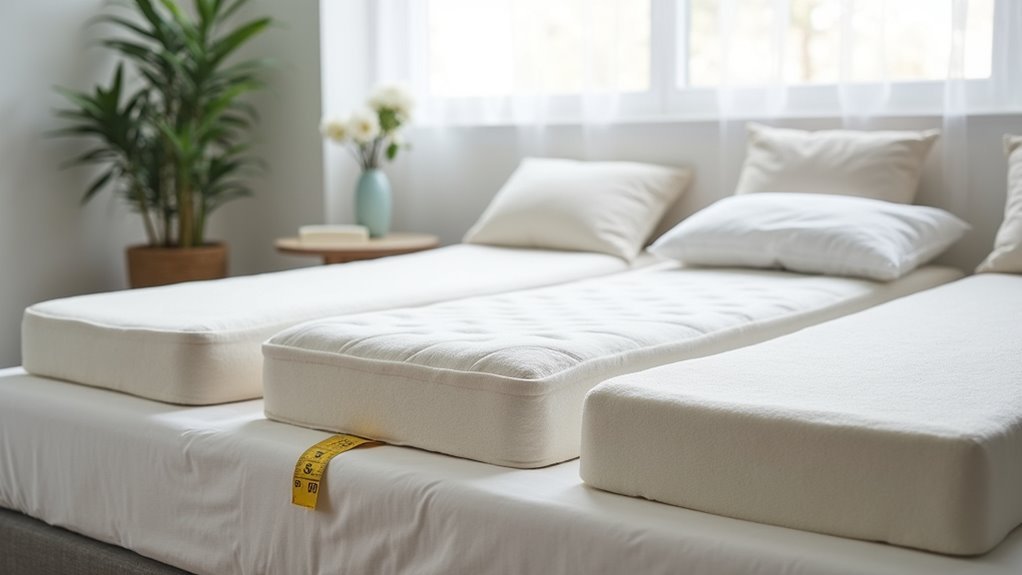
Although many shoppers use firmness and support interchangeably, these two mattress characteristics serve completely different purposes in your sleep experience.
Firmness describes what you feel immediately when lying down – that initial soft or firm sensation. It’s measured on a 1-10 scale, with comfort and changeover layers determining this feeling.
Support, however, involves how well your mattress maintains proper spinal alignment and pressure relief throughout the night. Your mattress’s base layer – featuring materials like steel springs, high-density foam, or latex – provides this essential support.
You can have a firm mattress that lacks adequate support, causing discomfort and misalignment. Understanding this distinction helps you choose a mattress that delivers both the firmness you prefer and the support your body needs for quality sleep.
How Body Weight Affects Mattress Firmness Choice
Your body weight plays an essential role in determining which mattress firmness will feel most comfortable and supportive for your sleep needs.
If you weigh under 130 pounds, you’ll typically prefer softer mattresses that provide better contouring and pressure relief for your lighter frame.
Average weight sleepers between 130-230 pounds generally find medium-firm options around 6.5 on the firmness scale offer the best balance of comfort and support across different sleeping positions.
Heavier individuals over 230 pounds often require firmer mattresses rated 7 and above to prevent excessive sinking and maintain proper spinal alignment.
The key is matching your body weight with appropriate support systems like high-density foam or sturdy innerspring coils to guarantee peak comfort and durability.
Best Mattress Firmness for Side Sleepers

If you’re a side sleeper, you’ll want to target a firmness level between 3 to 6 on the scale to allow proper contouring around your shoulders and hips.
This softer range provides essential pressure point relief while maintaining enough support to keep your spine properly aligned throughout the night.
You’ll need to take into account how your body weight interacts with these firmness levels, as heavier sleepers may require slightly firmer options within this range to prevent excessive sinking.
Side Sleeper Firmness Range
When you sleep on your side, you’ll need a mattress that rates between 3 to 6 on the firmness scale to achieve ideal comfort and spinal alignment. This range allows for deep sinkage that relieves pressure on your shoulders and hips while maintaining proper support.
Your best firmness within this range depends on several factors:
- Body weight – Heavier side sleepers often need softer mattresses for adequate pressure relief.
- Personal preference – Some side sleepers prefer slightly firmer surfaces for added support.
- Mattress materials – Memory foam provides superior contouring compared to innerspring designs.
Soft mattresses with plush comfort layers contour to your body’s curves, while zoned support systems target pressure points.
You should test mattresses in your natural side sleeping position, as individual factors greatly influence how firmness feels to you.
Pressure Point Relief
Two critical pressure points require special attention when you’re a side sleeper: your shoulders and hips. These areas bear most of your body weight and need adequate cushioning to prevent discomfort and pain.
A mattress rated between 3 to 6 on the firmness scale provides the ideal pressure relief for side sleepers by allowing your body to sink deeply enough that these joints aren’t strained.
When your mattress offers proper contouring, it distributes your weight evenly and maintains spinal alignment throughout the night. Models like the Layla and Helix Sunset excel at this balance.
Zoned support systems further enhance pressure relief by providing targeted softness where you need it most while maintaining support in other areas, ensuring you wake up refreshed rather than sore.
Spinal Alignment Considerations
While pressure relief addresses immediate comfort, achieving proper spinal alignment determines whether you’ll wake up pain-free or with nagging aches.
For side sleepers, your mattress must create the perfect balance between contouring and support to maintain a straight spine from head to toe.
Your spinal alignment depends on three critical factors:
- Shoulder sinkage – Your mattress should allow sufficient give at the shoulder while supporting your torso.
- Hip contouring – Proper cushioning around your hips prevents misalignment and maintains natural curves.
- Weight considerations – Side sleepers over 230 pounds typically need a medium-firm mattress (around 6.5) for adequate support.
Zoned support features can enhance this alignment by providing targeted cushioning where you need it most, ensuring your spine stays properly positioned throughout the night.
Ideal Firmness Levels for Back Sleepers
Back sleepers require a specific firmness range to maintain proper spinal alignment throughout the night. The ideal firmness for back sleepers falls between 6 and 7 on the firmness scale, with medium-firm mattresses around 6.5 being best. This firmness level preserves your spine’s natural S-curve while preventing your lower back from sinking too deeply.
You’ll want to avoid extremes—overly firm mattresses create pressure points and lower back tension, while soft mattresses cause hip and shoulder misalignment.
Hybrid mattresses work exceptionally well for back sleepers, combining foam comfort with innerspring support.
Your body weight influences firmness preference. If you’re heavier, you’ll need a firmer mattress for adequate support. Lighter individuals typically prefer softer feels while maintaining proper alignment.
Optimal Mattress Firmness for Stomach Sleepers
You’ll need a firmer mattress as a stomach sleeper to prevent your midsection from sinking too deeply and creating an unnatural arch in your spine.
Your ideal firmness level falls between 7 and 9 on the firmness scale, providing the pushback necessary to keep your hips aligned with your shoulders.
This firm support becomes even more critical if you’re heavier, as additional weight can cause greater compression and compromise your spinal alignment.
Firm Support Requirements
Because stomach sleeping places unique pressure on your spine, you’ll need a firm mattress rated between 7 and 9 on the firmness scale to maintain proper alignment. This firmness prevents your hips from sinking too deeply, which would create an unnatural spinal curve and cause lower back pain.
Your firm mattress requirements depend on three key factors:
- Body weight – Heavier stomach sleepers need firmer support (8-9 rating) to prevent sagging.
- Mattress type – Hybrid and innerspring models provide solid core support with minimal comfort layers.
- Comfort threshold – Lighter individuals may find 6-7 firmness sufficient while maintaining spine alignment.
The firm surface keeps your hips level with your shoulders, ensuring neutral spine positioning throughout the night.
This support structure reduces neck and back strain that commonly affects stomach sleepers on softer surfaces.
Spinal Alignment Considerations
Proper spinal alignment forms the foundation of comfortable stomach sleeping and directly influences your mattress firmness needs.
When you sleep on your stomach, your spine naturally curves more than in other positions, making proper support essential. A firm mattress prevents your hips and midsection from sinking too deeply, which would create an unnatural arch in your lower back.
Without adequate support, stomach sleepers often experience morning stiffness and chronic pain. The firm surface keeps your spine in a neutral position throughout the night, reducing strain on your vertebrae and surrounding muscles.
This alignment also prevents your neck from hyperextending, which commonly occurs when softer surfaces allow your body to sink unevenly while maintaining spinal alignment.
Combination Sleepers and Firmness Selection
While side, back, and stomach sleepers can focus on mattresses tailored to their specific position, combination sleepers face a unique challenge in finding the right firmness level.
You’ll need a mattress that accommodates multiple sleeping positions throughout the night. Medium firmness ratings between 6 to 6.5 typically work best for combination sleepers, offering balanced support and pressure relief.
Consider these key factors when selecting your mattress:
- Body weight influence – Lighter sleepers may prefer softer options, while heavier individuals need firmer support to prevent excessive sinkage.
- Mattress responsiveness – Choose materials that allow easy repositioning without feeling trapped.
- Spinal alignment needs – Guarantee proper support for back and stomach positions while providing adequate cushioning for side sleeping.
Testing mattresses in person helps you find the ideal balance for your unique sleep patterns.
Mattress Materials and Their Impact on Firmness
Beyond finding the right firmness number for your sleep style, the materials inside your mattress play a major role in how that firmness actually feels.
Memory foam creates softer surfaces through body contouring, while high-density polyfoam and latex deliver firmer support and comfort. Innerspring mattresses with higher-gauge steel coils produce firmer sleeping surfaces due to reduced give and increased structural support.
Hybrid designs blend foam comfort layers with innerspring systems, typically resulting in medium-firm feel that balances softness with support.
The thickness and density of comfort layers directly affect sinkage and pressure relief, altering your firmness perception.
Cooling technologies and breathable mattress materials enhance airflow, creating more supportive sleeping experiences by reducing heat retention.
Understanding how different materials influence firmness level helps you choose mattresses that deliver your desired comfort.
Signs Your Mattress Firmness Isn’t Right
How can you tell when your mattress firmness isn’t working for your body? Your sleep quality and morning comfort provide clear indicators that it’s time to reassess your choice.
Here are three key warning signs:
Watch for these telltale signs that your mattress firmness needs adjustment for better sleep quality.
- Morning pain and stiffness – You’ll wake up with persistent aches in your lower back, neck, or shoulders when your mattress firmness doesn’t support your body properly.
- Restless nights – Frequent tossing and turning signals that your mattress is either too soft or too firm for your needs.
- Poor spinal alignment symptoms – Numbness or tingling in your limbs upon waking indicates your spine isn’t properly aligned during sleep.
Additionally, excessive sinking or feeling like you’re lying on top without contouring means the firmness doesn’t match your personal comfort preferences and sleep position.
Special Considerations for Couples and Shared Beds
Choosing the right mattress firmness becomes more complex when two people share the same bed.
You’ll need to take into account both partners’ sleeping positions, body weights, and individual preferences when selecting firmness levels. If you and your partner have different firmness needs, look for customizable mattresses with adjustable comfort layers that let each person select their ideal support level.
For shared beds, prioritize motion isolation through pocketed coils or memory foam to minimize sleep disruptions from your partner’s movements.
A queen or king-size mattress provides adequate space for different sleeping styles without interference.
Test mattresses together in-store to find a compromise that works for both partners.
This collaborative approach guarantees you’ll both enjoy better sleep quality and comfort throughout the night.
Testing and Choosing Your Perfect Firmness Level
When you’re ready to find your ideal mattress firmness, you’ll want to experience different options firsthand rather than relying solely on online descriptions.
Testing a mattress in person is essential since your body weight, shape, and sleeping position dramatically affect firmness perception and overall comfort.
Here’s your action plan for testing:
- Lie down for at least 10-15 minutes in your typical sleeping position to get an accurate feel.
- Test multiple firmness levels around your suspected preference range to compare differences.
- Consider your partner’s needs if you’re sharing the bed to find a compromise that works.
Remember that mattress firmness will evolve during the breaking-in period, which lasts at least 30 nights.
Your body and the mattress both need time to adjust properly.
Frequently Asked Questions
What’s the Best Firmness of a Mattress to Sleep On?
You’ll want medium-firm around 6.5 if you’re unsure, but side sleepers need softer (3-6), back sleepers prefer medium-firm (6.5), and stomach sleepers require firmer (7+) for proper spinal alignment.
Is There a Scale for Mattress Firmness?
Yes, there’s a standardized mattress firmness scale ranging from 1 to 10. You’ll find 1 represents extremely soft mattresses, while 10 indicates extremely firm ones, helping you compare different models objectively.
What Is Comfort Level 3 for a Mattress?
Comfort level 3 represents a soft mattress that’ll cradle your body with significant sinkage. You’ll experience excellent pressure relief if you’re a lightweight side sleeper, but heavier individuals might face spine misalignment issues.
What Mattress Firmness Do Most Hotels Use?
You’ll find most hotels use medium-firm mattresses rated 6-7 on the firmness scale. They’re choosing this level because it accommodates various sleeping positions while providing adequate support and comfort for diverse guests.




Leave a Reply