

You should rotate your mattress every 3-6 months for innerspring and hybrid models, while memory foam and latex mattresses need rotation only every 1-2 years. If you’re a couple with different weights, rotate every 3 months, but solo sleepers can wait 6-12 months depending on body weight. Premium memory foam requires more frequent rotation initially—every 2 weeks for 3 months, then every 6 months. This schedule can extend your mattress lifespan by over a year when you understand the complete maintenance strategy.
Understanding the Difference Between Mattress Rotation and Flipping
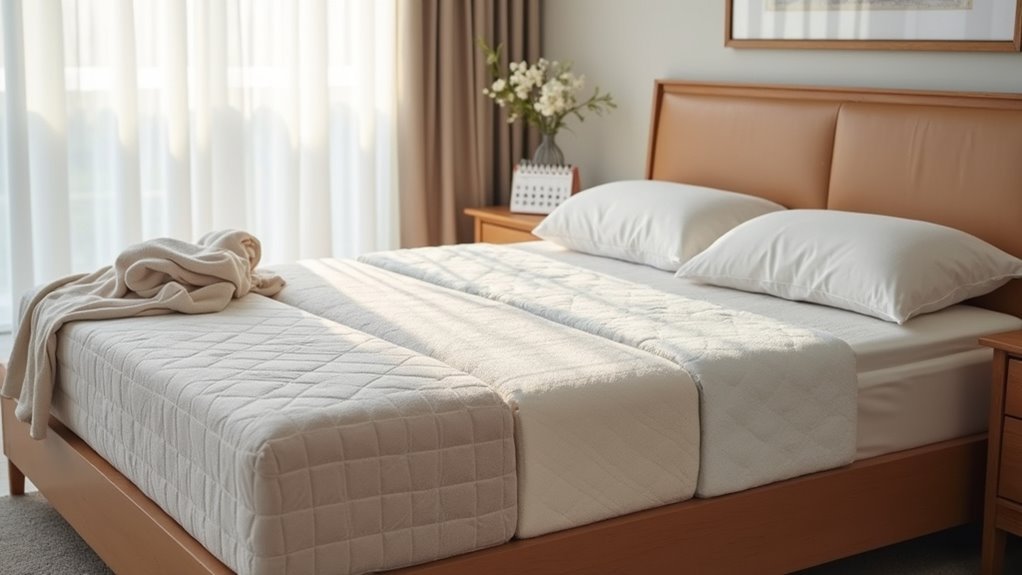
While both mattress rotation and flipping can extend your mattress’s lifespan, they’re fundamentally different maintenance practices that serve distinct purposes.
Mattress rotation involves turning your mattress 180 degrees from head to foot, promoting even wear across the sleeping surface. This technique works for all mattress types and helps prevent body impressions while maintaining comfort.
Rotating your mattress 180 degrees every few months promotes even wear and prevents uncomfortable body impressions from forming.
Flipping, however, means turning your mattress completely over to use the opposite side. You can only flip double-sided mattresses safely, as most modern one-sided mattresses aren’t designed for this practice. Flipping one-sided mattresses can actually compromise support and comfort.
Before attempting to flip, always check your mattress label to confirm it’s double-sided. Regular rotation every three to six months benefits all mattresses, while flipping applies only to specific designs.
Why Regular Mattress Rotation Extends Lifespan
When you rotate your mattress regularly, you’re preventing uneven wear patterns that develop when the same areas bear your body weight night after night.
This practice distributes pressure evenly across the entire surface, ensuring that no single section becomes prematurely compressed or worn down.
Prevents Uneven Wear Patterns
Since your body naturally gravitates toward the same sleeping position night after night, specific areas of your mattress bear the brunt of your weight consistently.
This concentrated pressure creates permanent dips and sags that compromise your comfort and reduce support where you need it most. When you rotate your mattress regularly, you’re actively redistributing this wear across the entire surface, preventing these damaging pressure points from forming.
Without rotation, uneven wear patterns develop quickly, creating uncomfortable valleys that force your spine into poor alignment.
These worn spots become increasingly problematic, making restful sleep difficult and forcing premature mattress replacement. By maintaining a consistent rotation schedule, you’ll extend lifespan considerably while preserving the even distribution of internal materials that keep your mattress supportive.
Distributes Weight Pressure Evenly
Every night, your hips and shoulders create concentrated pressure zones that gradually compress your mattress’s internal materials in those specific areas.
Without mattress rotation, these pressure points continuously target the same spots, causing uneven deterioration and compromising structural integrity.
When you distribute weight through regular rotation every three to six months, you’ll shift these concentrated forces to different areas of your mattress.
This practice guarantees even support across the entire surface while preventing the formation of permanent body impressions.
Your mattress’s fillings and materials receive balanced compression, maintaining their supportive properties longer.
Regular maintenance through rotation helps prevent sagging in high-pressure zones, allowing your mattress to extend lifespan by up to a year or more compared to non-rotated alternatives.
Maintains Structural Mattress Integrity
Although mattress materials are designed to withstand nightly compression, they’ll gradually break down without proper maintenance strategies.
When you rotate your mattress every three months, you’re actively preserving its structural integrity by preventing concentrated stress points that cause premature deterioration. This systematic maintenance approach guarantees fillings distribute evenly, preventing the formation of permanent body impressions and sagging that compromise your mattress’s core stability.
Regular rotation helps your mattress maintain its intended shape and support characteristics, directly contributing to consistent comfort levels throughout its lifespan.
Rotation Schedule for Memory Foam and Latex Mattresses
When you own a memory foam or latex mattress, you’ll need to rotate it every 1 to 2 times per year to guarantee even wear and maximize its lifespan.
Regular mattress rotation redistributes pressure points, preventing sagging in high-use areas where your hips and shoulders rest. This maintenance practice enhances the support your memory foam provides, contributing to better sleep quality over time.
You shouldn’t flip these mattresses like traditional models – they’re designed specifically for rotation only.
Always check your manufacturer’s guidelines first, as some models have unique recommendations that differ from standard practices.
Consistent rotation prevents permanent indentations and maintains structural integrity.
This simple maintenance step greatly extends your mattress’s functional life while preserving comfort levels throughout its use.
Rotation Guidelines for Innerspring and Hybrid Mattresses

Innerspring and hybrid mattresses require more frequent rotation than their foam counterparts, needing attention every three to six months to maintain peak performance.
When you rotate your mattress regularly, you’ll promote even wear and extend lifespan considerably.
Here’s your rotation schedule based on mattress age:
- Newer innerspring mattresses: Rotate every six months to maintain ideal comfort and support
- Older innerspring models: Increase rotation frequency up to five times yearly as springs lose resilience
- Hybrid mattresses: Follow the three-to-six-month rule since they combine innerspring and foam layers
Regular rotation prevents sagging and body impressions that compromise your sleep quality.
Consistent mattress rotation maintains proper support and prevents uncomfortable indentations that disrupt restful sleep.
Always check manufacturer’s specific guidelines first, as some designs have unique requirements.
This simple maintenance routine keeps your mattress performing consistently throughout its entire lifespan.
Special Considerations for Tempur-Pedic and Premium Memory Foam
When you own a Tempur-Pedic or premium memory foam mattress, you’ll need to follow a different rotation approach than traditional innerspring models.
These mattresses require more frequent rotation during their initial break-in period, then shift to longer intervals between rotations once they’re properly conditioned.
You’ll also need to understand specific memory foam care requirements that differ considerably from other mattress types.
Initial Break-In Period
While most mattresses benefit from regular rotation, Tempur-Pedic and premium memory foam models require special attention during their initial break-in period.
These premium materials need time to properly conform to your body shape while maintaining consistent support.
During the first three months, you’ll need to rotate your mattress every two weeks to guarantee proper settling. This frequent rotation prevents uneven wear and preserves the luxurious comfort these mattresses are known for.
Follow this schedule for best results:
- Weeks 1-12: Rotate every two weeks
- After 3 months: Switch to every six months
- Long-term: Some manufacturers suggest annual rotations
Following manufacturer guidelines during this critical period greatly extends your mattress’s lifespan while maintaining even wear patterns across the surface.
Extended Rotation Intervals
Once your Tempur-Pedic or premium memory foam mattress completes its break-in phase, you can shift to extended rotation intervals that work with these materials’ unique properties. Regularly rotating your mattress becomes less frequent but remains essential for peak performance.
| Mattress Type | Rotation Frequency | Key Benefits |
|---|---|---|
| Tempur-Pedic | Every 3-6 months | Prevents sagging, maintains support |
| Premium Memory Foam | 1-2 times per year | Distributes wear, extends lifespan |
| High-Quality Models | Annually | Preserves comfort layers |
Memory foam mattresses require different care than traditional spring mattresses. Following manufacturer-specific guidelines guarantees you’re distributing pressure points evenly across the surface. This consistent mattress rotation schedule will extend the lifespan of your investment while maintaining the specialized comfort these materials provide.
Memory Foam Care
Three critical factors separate memory foam care from traditional mattress maintenance: material sensitivity, structural design, and manufacturer specifications.
You’ll need to adjust your mattress rotation approach for memory foam mattresses to achieve ideal comfort and lifespan.
Here’s your specialized rotation strategy:
- Tempur-Pedic Schedule: Rotate every 3-6 months after initial bi-weekly rotations for three months to guarantee even wear
- Standard Memory Foam: Rotate 1-2 times yearly to prevent sagging and maintain consistent support
- Never Flip: Only rotate—flipping disrupts the engineered support layers
Following proper manufacturer guidelines can extend your mattress lifespan by over a year.
Memory foam’s pressure-sensitive nature requires strategic rotation to distribute body weight evenly, preventing permanent indentations in high-pressure areas while maintaining the specialized comfort these mattresses provide.
How Weight Distribution Affects Rotation Frequency
One factor consistently determines how often you’ll need to rotate your mattress: the distribution of weight across its surface. When partners have notably different body weight, you’ll notice uneven wear and tear developing faster at pressure points where the heavier sleeper rests.
| Sleep Situation | Weight Difference | Rotation Frequency |
|---|---|---|
| Solo sleeper (light) | N/A | 6-12 months |
| Solo sleeper (heavy) | N/A | 4-6 months |
| Couple (similar weight) | Minimal | 4-6 months |
| Couple (different weight) | Notable | 3 months |
Greater weight disparities create deeper impressions that compromise your mattress’s structural integrity. You’ll need to rotate your mattress more frequently to prevent permanent sagging and maintain proper spinal alignment. This proactive approach extends your mattress’s lifespan while ensuring consistent comfort across its entire surface.
Rotation Strategies for Guest Room and Occasional Use Mattresses

While guest room mattresses don’t endure nightly use, they still require strategic rotation to prevent deterioration during dormant periods.
Even unused mattresses suffer from gravity and time, making regular rotation essential for preserving structural integrity and guest comfort.
You’ll need to adjust your maintenance approach since guest room mattresses face unique challenges like sporadic weight distribution and extended idle time.
Here’s your rotation strategy for occasional-use mattresses:
- Standard rotation: Rotate your mattress every six months minimum to maintain shape and comfort.
- Heavy-use periods: Increase rotation frequency to every three to four months if guests are frequent or heavier.
- Single-sided precautions: Only rotate single-sided models—never flip them, as this causes improper support.
Invest in a mattress protector to shield against spills and stains while simplifying maintenance.
During each rotation, inspect for wear and tear or sagging that might indicate premature replacement needs.
Step-by-Step Guide to Properly Rotating Your Mattress
Although rotating your mattress might seem straightforward, following proper technique guarantees you won’t strain your back or damage your mattress during the process.
Start by clearing your bedroom of bedding and nearby furniture to create adequate workspace. Locate the turning handles if your mattress has them—they’ll make handling considerably easier.
Next, rotate your mattress 180 degrees, moving the head section to the foot of your bed frame. This step-by-step approach promotes even wear across the entire surface.
If you own a double-sided mattress, flip it completely over after rotation for ideal comfort.
Follow this process every three months or adhere to manufacturer-specific frequency recommendations for best results.
When Single-Sided Mattresses Should Never Be Flipped
Unlike their double-sided counterparts, single-sided mattresses feature a carefully engineered design that’s meant to function exclusively on one surface.
Flipping these mattresses will cause discomfort and compromise their structural integrity, ultimately damaging their performance.
Here’s why you should never flip single-sided mattresses:
- Design disruption – The comfort layers and zoning are optimized for one side only, making flipping counterproductive to your sleep quality.
- Accelerated wear – Flipping causes materials to break down faster, leading to premature sagging and reduced lifespan.
- Warranty violations – Ignoring manufacturer guidelines by flipping can void your warranties, leaving you without protection.
Instead of flipping, rotate these mattresses 180 degrees every three to six months to guarantee even wear while maintaining their intended functionality.
Identifying Mattresses With Zoned Comfort Systems That Shouldn’t Rotate
Since zoned comfort systems target specific body regions with tailored support levels, rotating these mattresses can disrupt their carefully engineered design.
You’ll find these specialized zones in hybrid and memory foam mattresses where different firmness areas support your head, torso, and legs differently.
When you rotate mattresses with zoned comfort systems, you’re misaligning these support zones, which compromises your spinal alignment and overall sleep comfort.
You can identify these mattresses by checking for marketing materials that mention “targeted support zones” or “body-specific comfort areas.”
Always review manufacturers instructions before rotating, as they’ll explicitly state whether rotation is recommended.
Ignoring these guidelines doesn’t just affect your comfort—it can void your warranty coverage, leaving you without protection for your investment.
Signs Your Current Rotation Schedule Needs Adjustment
When your mattress starts showing visible dips or uneven wear patterns, it’s telling you that your current rotation schedule isn’t cutting it.
Your mattress is sending you a clear message: it’s time to rethink your rotation strategy.
Your body’s sleeping on a surface that’s compromising your comfort and developing unwanted pressure points.
Watch for these key indicators that demand immediate changes to your mattress rotation schedule:
- Physical discomfort – You’re waking up with aches or feeling pressure points that weren’t there before.
- Visible deterioration – Lumps, sagging, or lack of support signal uneven filling distribution.
- Age factor – Mattresses over three years without quarterly rotation show accelerated signs of wear.
For couples with significant weight differences, you’ll need increased rotation frequency beyond standard recommendations.
Adjusting your routine now will prolong mattress lifespan and restore proper sleep support.
Maximizing Mattress Longevity Through Consistent Maintenance
Your mattress is a crucial investment that deserves proper care to reach its full lifespan potential. Consistent rotation every three months creates even distribution of fillings, preventing premature sagging in pressure points like hips and shoulders.
You’ll prevent uneven wear that shortens mattress lifespan considerably when you rotate your mattress regularly.
Beyond rotation, regular maintenance enhances your efforts. Use a quality mattress protector to shield against spills, dust mites, and allergens.
Clean your mattress periodically following manufacturer instructions. These practices work together with consistent rotation to maintain ideal performance.
For specialty mattresses like Tempur-Pedic, follow specific guidelines—rotating every 3-6 months can extend lifespan beyond the typical 8-10 years.
This all-encompassing approach guarantees your mattress continues contouring effectively to your body while maximizing your investment.
When Rotation Can No Longer Extend Your Mattress Life
Even with diligent rotation, you’ll eventually notice telltale signs that your mattress has reached its maintenance limits.
Persistent sagging, visible body impressions, and ongoing discomfort during sleep indicate that rotation can’t restore your mattress’s original support and comfort levels.
When these symptoms appear despite consistent care, it’s time to accept that material breakdown has progressed beyond what maintenance can address.
Signs Replacement Is Needed
Although rotating your mattress can greatly extend its lifespan, there comes a point when even the most diligent maintenance routine can’t salvage a worn-out mattress.
Recognizing when signs replacement is needed prevents you from suffering through poor sleep quality.
Here are three key indicators your sagging mattress requires replacement:
- Visible body impressions that remain even after rotation demonstrate compromised internal structure and inadequate support for proper comfort.
- Persistent morning pain in your back or joints signals your mattress can no longer provide the support your body needs during sleep.
- Age exceeding eight years means materials have naturally degraded, regardless of visible condition.
When these warning signs appear, rotation won’t restore adequate support, making replacement essential for quality rest.
Comfort Beyond Maintenance Limits
Most mattresses reach a point where rotation becomes ineffective against the natural breakdown of internal materials.
Even with regular rotation following a prime schedule, your mattress lifespan naturally ends after 6-8 years. You’ll notice visible sagging, deep impressions, and persistent discomfort that rotation can’t fix. These signs indicate structural failure where maintenance no longer restores comfort and support.
Memory foam and other materials degrade regardless of care, losing their ability to provide proper alignment.
When you experience ongoing sleep discomfort or wake up with aches, it’s time to replace your mattress. Continuing to use a worn mattress despite diligent rotation can lead to health issues like chronic back pain.
Recognize when wear and tear has progressed beyond what rotation can address.
Frequently Asked Questions
How Frequently Should You Rotate a Mattress?
You should rotate most mattresses every three months for even wear. However, memory foam and latex mattresses need rotation only 1-2 times yearly, while older innerspring mattresses require 2-5 rotations annually.
How to Extend the Life of a Mattress?
You’ll extend your mattress’s life by rotating it every three months, using a protective cover, cleaning regularly, and maintaining proper support. These practices prevent sagging and can add years to your mattress.
Should I Rotate My Mattress 180?
Yes, you should rotate your mattress 180 degrees every three months. This prevents uneven wear, sagging, and dips from forming. Regular rotation extends your mattress’s lifespan considerably while maintaining comfort.
How Often Should You Switch Out Your Mattress?
You should replace your mattress every 6 to 8 years when comfort and support decline. Watch for sagging, lumps, or discomfort as signs it’s time for a new one.




Leave a Reply