

You’ll boost melatonin production by creating a dark environment with blackout curtains and eliminating blue light from electronics at least 30 minutes before bed. Choose warm color palettes featuring soft yellows, muted oranges, and earthy tones that support your circadian rhythm. Maintain your bedroom temperature between 60-67°F and remove all screens to create an electronics-free zone. Keep your space clutter-free with smart storage solutions that reduce visual distractions. These design strategies work together to optimize your body’s natural sleep hormone production and transform your bedroom into a restorative sanctuary.
Dark and Light-Controlled Environments for Natural Melatonin Release
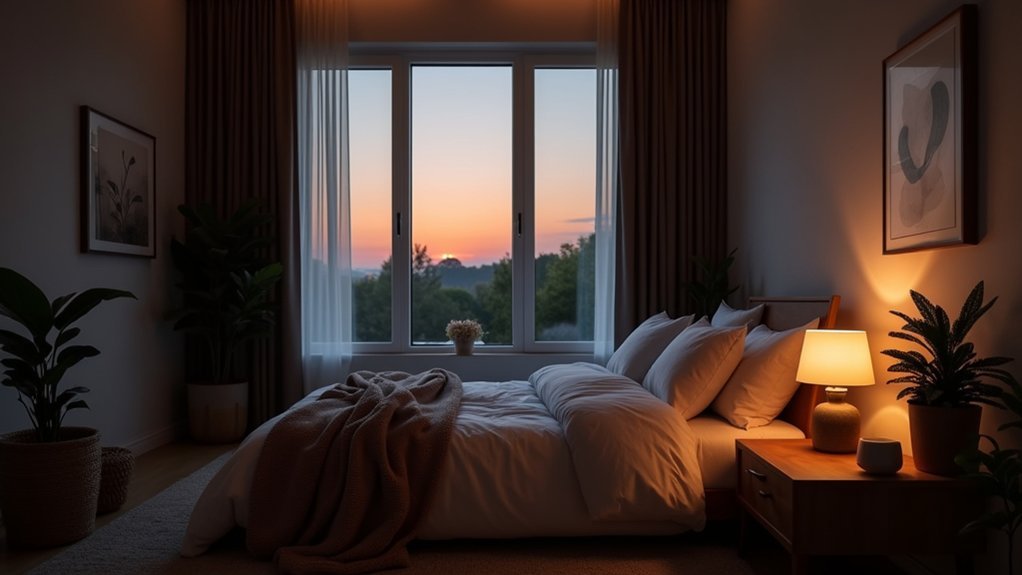
When you’re designing your bedroom to maximize melatonin production, controlling light exposure becomes your most powerful tool.
Creating a dark bedroom environment is essential since even minimal light can disrupt melatonin production. Install blackout curtains that completely block external light sources to maintain your ideal sleep environment.
You’ll also need to eliminate blue light from electronic devices, as screens greatly suppress melatonin levels. Establish at least 30 minutes of screen-free time before bed to support natural hormone release.
Keep your room temperature between 60-67°F to signal your body for sleep preparation.
During daytime, expose yourself to natural light, especially mornings, to regulate your circadian rhythm and guarantee proper melatonin timing for improved sleep quality.
Warm Color Palettes That Support Circadian Rhythm Balance
Beyond controlling light exposure, your bedroom’s color palette plays an essential role in supporting your body’s natural sleep-wake cycle.
Warm color palettes create a soothing environment that directly influences melatonin production and circadian rhythms. These hues mimic sunset’s gentle glow, signaling your brain it’s time for relaxation.
Warm bedroom colors naturally signal your brain to wind down by mimicking sunset’s gentle glow and supporting healthy sleep rhythms.
Implementing warm colors in your bedroom design enhances sleep quality through:
- Soft yellows and muted oranges that encourage melatonin release while creating comfort
- Earthy tones with lower saturation that reduce stress and lower heart rates
- Cohesive warm accessories and bedding that support your biological clock’s natural function
Your sleep space becomes more inviting when you incorporate gentle peach tones and warm neutrals.
This strategic color approach transforms your bedroom into a sanctuary that actively promotes restorative sleep.
Electronics-Free Zones to Minimize Blue Light Disruption
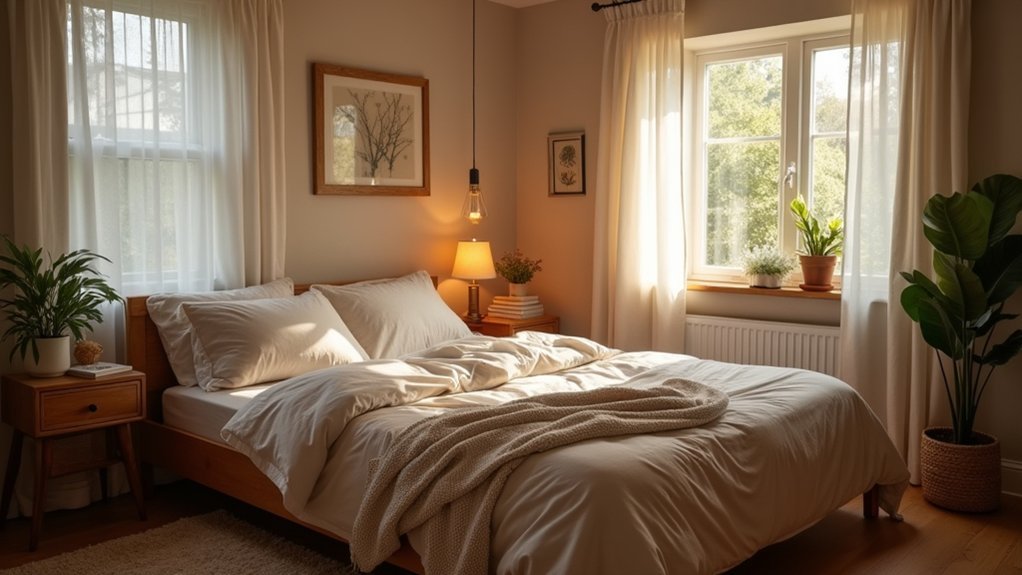
Creating an electronics-free zone in your bedroom directly targets one of sleep’s biggest enemies: blue light emission from digital devices.
You’ll dramatically boost your melatonin production by removing televisions, smartphones, and computers from your sleep space. This strategic interior design choice creates a calming atmosphere dedicated purely to relaxation.
Studies show you’ll experience higher melatonin levels and improved sleep duration when you eliminate screens from your bedroom environment.
Aim for at least 30 minutes of screen-free time before bed to allow your body’s natural preparation for rest.
An electronics-free zone transforms your bedroom into a serene sanctuary that supports better sleep quality.
You’re not just removing distractions—you’re actively cultivating an environment where your circadian rhythm can function effectively for restorative sleep.
Temperature-Optimized Spaces for Enhanced Sleep Hormone Production
Your bedroom’s temperature plays a significant role in triggering melatonin production alongside the electronics-free environment you’ve established.
The ideal temperature range of 60-67°F (15-19°C) signals your body to release this vital sleep hormone, dramatically improving sleep quality.
Your body naturally releases melatonin when bedroom temperatures drop to 60-67°F, creating the perfect conditions for restorative sleep.
Strategic bedroom design choices can maintain this perfect climate for enhanced melatonin production.
Essential temperature enhancement strategies include:
- Install fans or air conditioning to maintain consistent cooling throughout the night
- Choose breathable bedding materials like cotton or linen that regulate body temperature naturally
- Monitor air quality with proper ventilation to guarantee fresh, cool airflow
Remember that comfort levels vary individually, so you’ll need to fine-tune your bedroom’s temperature settings.
This personalized approach guarantees maximum melatonin production while creating the perfect sleep sanctuary for your specific needs.
Clutter-Free Sanctuaries That Promote Deep Restorative Sleep
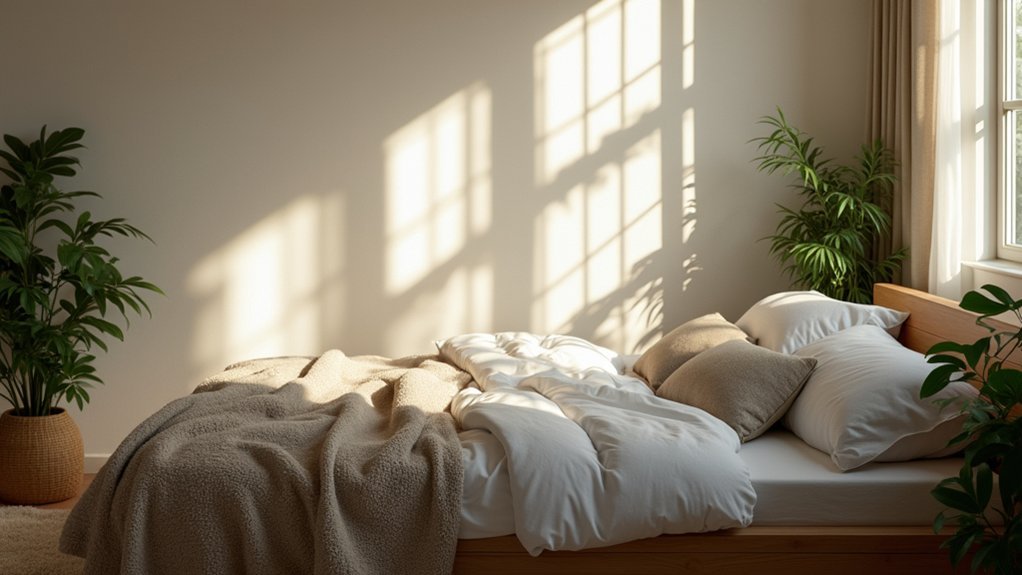
Physical clutter in your bedroom creates mental chaos that directly interferes with melatonin production, making it essential to establish a clean, organized sleep sanctuary.
When you maintain a clutter-free environment, you’ll dramatically improve sleep quality by reducing visual distractions that trigger stress responses. Your brain associates tidy spaces with relaxation, naturally promoting deeper melatonin secretion.
Smart storage solutions help eliminate unnecessary items while creating the serene ambiance needed for deep restorative sleep.
Replace visual chaos with calming decor that supports mental clarity and peaceful shifts into sleep.
Regular decluttering sessions transform your bedroom into a true sanctuary where ideal light control and organized surroundings work together, allowing your body’s natural melatonin rhythms to flourish and deliver consistently restorative rest.
Frequently Asked Questions
What Is the Best Decor for a Calming Bedroom?
You’ll create tranquility with soft blues, greens, and earthy tones on walls. Add blackout curtains, minimize clutter, introduce lavender scents through diffusers, and choose breathable, supportive bedding for ultimate relaxation.
What Should Your Bedroom Environment Be Like for Better Sleep?
You should keep your bedroom completely dark using blackout curtains, maintain temperatures between 60-67°F, remove all electronics, and stick to consistent sleep schedules to optimize your sleep environment naturally.
How to Design a Soothing Master Bedroom?
Choose soft blues and muted greens for your walls. Install blackout curtains to block light completely. Keep your room cool between 60-67°F. Remove all electronics and create dedicated spaces for relaxation activities.
What Is the Best Color for a Bedroom to Help You Sleep?
You’ll sleep better with soft, muted colors like light blues, greens, or warm neutrals. These low-saturation hues reduce visual stimulation and promote relaxation, helping your body produce melatonin naturally for improved sleep quality.
In Summary
You’ll transform your sleep quality by implementing these five melatonin-boosting bedroom designs. Start with blackout curtains and warm lighting, then choose earth-toned colors that won’t overstimulate your brain. Remove all electronics from your sleeping space, keep the temperature between 65-68°F, and declutter completely. These changes work together to optimize your body’s natural hormone production, helping you fall asleep faster and wake up more refreshed every morning.



Leave a Reply