

After 40, you’ll face multiple triggers disrupting your sleep, starting with declining progesterone and estrogen levels that make falling and staying asleep harder. Hot flashes and night sweats can jolt you awake unexpectedly, while your risk of sleep apnea increases 2-3 times. Life stresses from work, family, and aging parents compound the problem, along with chronic health conditions requiring multiple medications. Screen time and irregular schedules further sabotage your rest, creating a perfect storm of sleep disruptions that demands targeted solutions.
Hormonal Changes During Perimenopause and Menopause

While you might expect your forties to bring more restful nights after decades of establishing good sleep habits, hormonal changes during perimenopause and menopause can turn your once-reliable sleep patterns upside down.
As progesterone levels decline, you’ll find it harder to fall asleep naturally. Meanwhile, decreasing estrogen makes staying asleep throughout the night increasingly difficult.
These sleep disturbances affect nearly half of all women during perimenopause, yet many don’t realize hormonal fluctuations are the culprit.
You’re not alone if you’re experiencing these unexpected changes. The hormonal shifts also trigger nighttime hot flashes that jolt you awake unexpectedly.
For menopausal women, these disruptions represent a significant departure from previous sleep experiences, requiring new strategies to restore quality rest.
Hot Flashes and Night Sweats Impact on Sleep
Hot flashes and night sweats represent the most disruptive symptoms you’ll face during this hormonal shift.
These sudden temperature spikes don’t just wake you up—they’re already interrupting your sleep cycle before you even realize it’s happening. Research shows you’ll often awaken moments before a hot flash begins, indicating your body’s anticipating these disruptions.
Even if you don’t consciously experience hot flashes, sleep disturbances during menopause can still plague your nights.
The connection between these symptoms and poor sleep quality often goes unrecognized, leaving many women puzzled about their restless nights.
You can greatly improve your sleep by addressing nighttime hot flashes through targeted lifestyle modifications or medical treatments, breaking this cycle of disruption.
Increased Risk of Sleep Apnea After 40
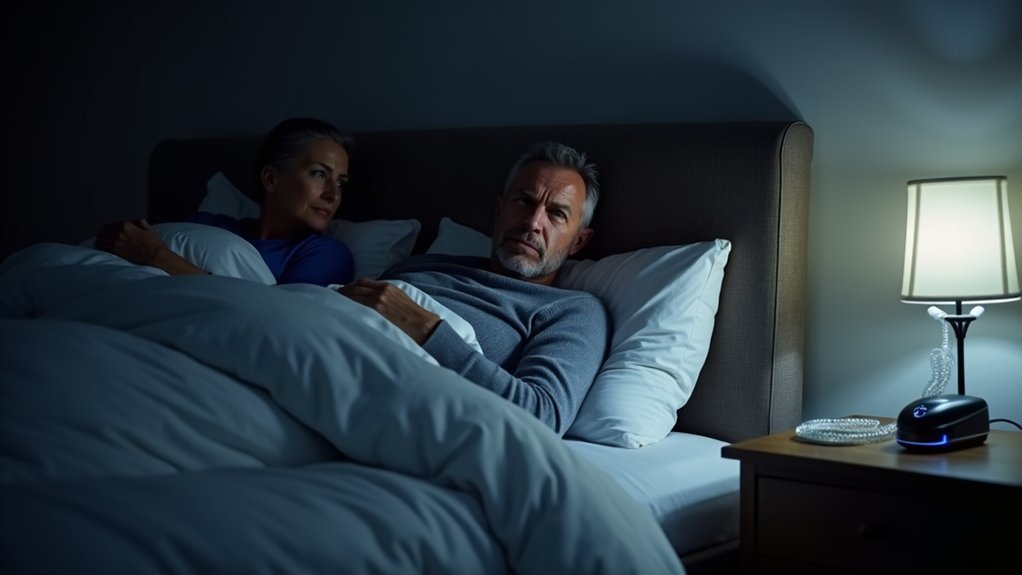
As you enter your 40s, hormonal shifts dramatically increase your risk of developing sleep apnea, with post-menopausal women facing a 2-3 times higher likelihood compared to their younger selves.
You mightn’t recognize the warning signs since women’s symptoms often present more subtly than men’s—think excessive daytime sleepiness and morning dry mouth rather than obvious gasping episodes.
These breathing disruptions don’t just steal your sleep; they can intensify other menopausal symptoms like fatigue and mood swings, creating a cycle that further damages your sleep quality.
Hormonal Changes Increase Risk
When you reach your 40s, hormonal changes greatly increase your likelihood of developing obstructive sleep apnea, particularly if you’re a woman approaching or experiencing menopause.
The decline of estrogen and progesterone creates perfect conditions for sleep disorders to emerge.
Your risk multiplies considerably during this change:
- Breathing passages narrow as muscle tone decreases without hormonal support
- Throat tissues relax excessively during sleep, blocking your airway repeatedly
- Sleep quality deteriorates as your body struggles to maintain normal breathing patterns
- Subtle symptoms emerge like morning headaches and daytime fatigue that you might dismiss
You’re 3.5 times more likely to develop obstructive sleep apnea after menopause compared to your pre-menopausal years.
Understanding this connection helps you recognize when nighttime breathing disruptions aren’t just normal aging.
Post-Menopausal Sleep Apnea
Post-menopausal women face a dramatically heightened sleep apnea risk that many don’t see coming.
You’re 2 to 3 times more likely to develop this condition compared to your premenopausal years due to hormonal changes affecting airway stability during sleep.
The loss of estrogen and progesterone greatly impacts your upper airway muscle tone, making obstruction more likely.
Unlike men’s obvious symptoms, you’ll likely experience subtler signs like excessive daytime sleepiness rather than loud snoring, which often delays diagnosis.
Post-menopausal sleep apnea affects approximately 3.5 times more women after hormonal changes occur.
If you’re over 40, screening becomes essential since untreated sleep apnea leads to serious cardiovascular complications and cognitive impairment.
Don’t dismiss persistent fatigue as normal aging.
Subtle Female Symptoms
While men typically present with loud snoring and gasping episodes, you’ll likely experience sleep apnea’s more insidious warning signs that masquerade as everyday fatigue.
These subtle manifestations often get dismissed as normal aging or symptoms of menopause, leading to dangerous underdiagnosis.
Your sleep apnea warning signs might include:
- Morning headaches that feel like a fog settling over your thoughts
- Restless sleep with frequent tossing and turning throughout the night
- Daytime exhaustion that coffee can’t cure, even after a full night’s rest
- Difficulty concentrating during routine tasks you’ve always handled easily
The hormonal changes during menopause compound this problem, making your symptoms blend seamlessly with other midlife challenges.
You’re facing a perfect storm where serious sleep disorders hide behind expected shifts in comfort.
Life Stress and Mental Health Factors

As women enter their 40s, life’s mounting responsibilities create a perfect storm for sleep disruption. You’re likely juggling caring for children while supporting aging parents, creating overwhelming stress that directly impacts your sleep quality.
Financial pressures and increased workloads compound these challenges, making restful nights increasingly elusive.
Your mental health bears the brunt of these pressures. Anxiety and depressive symptoms become more prevalent with age, creating a vicious cycle where poor sleep worsens your emotional well-being.
The mental load you carry—managing household responsibilities, family schedules, and societal expectations—triggers frequent insomnia and nighttime awakenings.
When you’re constantly exposed to intense worrying, your sleep cycle becomes disrupted. Your mind races when it should be winding down, making quality rest nearly impossible to achieve.
Age-Related Changes in Sleep Architecture
Beyond the stressors weighing on your mind, your body’s internal sleep machinery undergoes fundamental changes after 40. Your sleep architecture naturally shifts, creating a cascade of disruptions that weren’t present in your younger years.
These physical transformations include:
- Deep sleep erosion – Your slow-wave sleep stages diminish, leaving you with lighter, more fragmented rest.
- Shortened sleep cycles – Total sleep time decreases, robbing you of essential restoration hours.
- REM sleep reduction – Critical memory consolidation and emotional regulation phases become compromised.
- Increased vulnerability – Nighttime awakenings multiply, with nearly half of adults over 40 struggling to sleep through the night.
Hormonal fluctuations during perimenopause and menopause amplify these architectural changes, creating a perfect storm of sleep disruption that impacts your overall well-being.
Chronic Health Conditions and Medications
When chronic health conditions enter the picture after 40, they bring their own arsenal of sleep disruptors that compound the architectural changes already underway. Arthritis pain, diabetes complications, and nocturia create persistent nighttime awakenings that fragment your rest.
| Condition | Sleep Impact |
|---|---|
| Arthritis | Joint pain disrupts sleep positioning |
| Diabetes | Blood sugar fluctuations cause awakenings |
| Sleep Apnea | Breathing interruptions fragment sleep cycles |
Your medications add another layer of complexity. Antidepressants, corticosteroids, and blood pressure medications often trigger sleep disturbances through their side effects. When you’re managing multiple prescriptions—a phenomenon called polypharmacy—these conflicting effects multiply your sleep problems.
The good news? Effectively managing your chronic health conditions through lifestyle adjustments and medication timing can greatly reduce these nighttime disruptions.
Lifestyle Factors That Worsen Sleep Quality
While chronic conditions create their own sleep challenges, the lifestyle choices you make daily often prove equally destructive to your rest. Your hectic schedule juggling work, children, and aging parents creates overwhelming stress that directly impacts your ability to fall asleep peacefully.
Daily lifestyle choices can sabotage your sleep just as much as any medical condition, turning rest into an elusive goal.
Common lifestyle changes that trigger poor sleep include:
- Increased caffeine and alcohol consumption – Your busy lifestyle leads to more stimulants during the day and nightcaps that fragment sleep cycles.
- Irregular sleep schedule – Work commitments and social obligations force inconsistent bedtimes that disrupt your circadian rhythm.
- Screen time before bed – Late-night emails or scrolling overstimulate your mind when it should be winding down.
- Lack of personal time – Your overwhelmed mind can’t relax without proper self-care and decompression periods.
Frequently Asked Questions
Why Is It Harder to Sleep in Your 40S?
Hormonal changes during perimenopause make sleep harder in your 40s. You’ll experience hot flashes, night sweats, and frequent awakenings. Increased stress from work and family responsibilities, plus higher sleep apnea risk, worsen sleep quality.
Why Do I Keep Waking up at 3am in Perimenopause?
You’re waking at 3am because declining estrogen and progesterone disrupt your sleep cycles. You’ll likely experience hot flashes, increased anxiety, and hormonal imbalances that trigger these consistent early morning awakenings during perimenopause.
Why Am I Having Trouble Sleeping at Night All of a Sudden?
You’re likely experiencing sudden sleep troubles due to hormonal fluctuations affecting your sleep-wake cycle, increased stress levels, or the onset of sleep disorders that commonly emerge during perimenopause and beyond.
What Causes Sleep Disturbance in Perimenopause?
Your declining progesterone and estrogen levels disrupt sleep patterns, while hot flashes wake you unexpectedly. You’re also facing increased sleep apnea risk and heightened anxiety from hormonal fluctuations and life stressors.
In Summary
You’re experiencing nighttime disruptions because your body’s changing in multiple ways after 40. Your hormones are shifting, you’re facing more stress, and your sleep patterns are naturally evolving. Don’t ignore these changes—they’re signals that you need to adjust your approach to sleep. Focus on managing stress, creating better sleep habits, and addressing any underlying health issues. You can reclaim your rest with the right strategies.




Leave a Reply