
You’re losing sleep because regular pajamas trap sweat against your skin, creating uncomfortable humidity that disrupts your body’s natural cooling process. Moisture-wicking pajamas use specialized hydrophilic and hydrophobic fibers that actively pull moisture away through capillary action, allowing rapid evaporation and temperature regulation. These advanced fabrics prevent skin irritation, reduce night sweats, and maintain consistent dryness for deeper, more restorative sleep. The science behind ideal fabric choices reveals even more cooling strategies.
How Moisture-Wicking Technology Works in Sleepwear
When you’re tossing and turning from night sweats, moisture-wicking technology in your pajamas works by using specialized hydrophilic and hydrophobic fibers that actively pull sweat away from your skin’s surface.
These fibers create capillary action, spreading moisture across the fabric where it evaporates quickly instead of staying trapped against your body.
You’ll find synthetic materials like polyester excel at these moisture-wicking properties, though natural alternatives like bamboo also wick away moisture effectively while providing breathable comfort.
The technology prevents your sleepwear from absorbing excess moisture, maintaining low moisture regain that keeps you dry.
Advanced moisture-wicking fabrics actively repel water absorption, ensuring your pajamas maintain optimal dryness levels for comfortable, uninterrupted sleep.
Many moisture-wicking pajamas include antimicrobial treatments that fight odor-causing bacteria, helping you stay cool and fresh throughout the night without experiencing that clammy feeling.
Understanding Capillary Action and Sweat Evaporation
When you wear moisture-wicking pajamas, you’re benefiting from capillary action—a natural process where liquid moves through tiny spaces in the fabric’s fiber structure.
This movement pulls sweat away from your skin to the fabric’s surface, where it can evaporate quickly and cool your body.
Understanding how different fiber types work together to create this effect helps explain why these pajamas keep you comfortable throughout the night.
How Capillary Action Works
As you slip into moisture-wicking pajamas, capillary action begins working immediately to pull sweat away from your skin through the fabric’s microscopic channels. This natural phenomenon relies on adhesive forces between liquid and solid surfaces, allowing moisture to travel along fiber pathways without external assistance.
| Component | Function | Result |
|---|---|---|
| Hydrophilic fibers | Attract water molecules | Initial moisture absorption |
| Hydrophobic fibers | Repel excess moisture | Enhanced transport efficiency |
| Microscopic channels | Create pathways for liquid flow | Directional moisture movement |
Your pajamas’ ability to wick moisture depends on this capillary action working alongside fabric structure. The fibers create a network that spreads sweat across larger surface areas, promoting faster evaporation. This combination of capillary forces and strategic fiber placement guarantees moisture-wicking fabrics keep you comfortable throughout the night.
Sweat Evaporation Science
Once sweat reaches your pajamas’ outer surface through capillary action, evaporation becomes the critical factor that determines your comfort level. Your body heat creates the energy needed for moisture to transform from liquid to vapor, effectively cooling your skin in the process. This evaporation absorbs heat from your body, naturally regulating your temperature during warm nights.
Moisture-wicking fabrics excel at spreading sweat across their surface, creating maximum exposure to air. This distribution accelerates evaporation rates compared to traditional materials that trap moisture against your skin.
The fabric’s low moisture regain prevents excess absorption, ensuring sweat doesn’t accumulate within the fibers. Instead, the material focuses on wicking away perspiration quickly, maintaining the dry environment essential for comfortable sleep throughout hot nights.
Fiber Structure Benefits
The microscopic architecture of moisture-wicking fibers creates a sophisticated transport system that outperforms traditional cotton pajamas.
You’ll benefit from engineered structures that combine hydrophilic and hydrophobic properties, creating an efficient moisture management system.
The fiber structure advantages include:
- Capillary action channels – Tiny spaces between fibers draw sweat away from your skin through natural wicking forces.
- Synthetic materials blend – Polyester combines with natural fibers to optimize both comfort and quick-drying properties.
- Low moisture regain design – Fibers absorb minimal water while maximizing evaporation speed.
- Enhanced airflow weave – Strategic fabric construction promotes ventilation and accelerates moisture dispersal.
These structural innovations help regulate body temperature by moving perspiration efficiently through the fabric layers, spreading moisture across larger surface areas for faster evaporation and superior nighttime comfort.
Best Fabric Types for Night Sweat Management
When you’re choosing moisture-wicking pajamas, you’ll need to compare synthetic fibers like polyester and nylon against natural options such as bamboo and merino wool.
You should also consider how advanced moisture management technology can enhance your sleepwear’s performance through engineered fabric blends.
Your comfort depends on selecting fabrics with ideal breathability features that’ll keep you cool and dry throughout the night.
Synthetic Vs Natural Fibers
Although both synthetic and natural fibers offer distinct advantages for night sweat management, understanding their unique properties will help you choose the right pajama fabric for your sleep needs.
Synthetic fibers like polyester and nylon excel at moisture-wicking through their hydrophobic nature, quickly moving sweat away from your skin for rapid evaporation.
Meanwhile, natural fibers such as bamboo and merino wool use hygroscopic properties to absorb moisture and release it gradually into the air.
Consider these key differences:
- Performance: Synthetic fibers generally provide superior moisture-wicking capabilities
- Comfort: Natural fibers offer better breathability and softness for sensitive skin
- Innovation: Hybrid fabrics combine both fiber types for enhanced performance
- Specialization: Many brands engineer specific fabrics for ideal temperature control and moisture management
Your choice ultimately depends on prioritizing performance versus comfort.
Moisture Management Technology
Modern moisture management technology transforms how pajama fabrics handle perspiration, utilizing advanced engineering to create perfect sleep environments.
You’ll find that innovative solutions like drirelease® technology revolutionize how moisture-wicking fabrics perform, guaranteeing hot sleepers stay comfortable throughout the night. These technologies enhance capillary action, allowing sweat to spread across fabric surfaces for rapid evaporation.
When you choose pajamas with advanced moisture management systems, the fabric feels noticeably different against your skin.
Hybrid materials combine synthetic and natural fibers, maximizing moisture control while maintaining comfort. The engineering behind these fabrics focuses on creating hydrophobic surfaces that actively repel moisture while promoting airflow.
This technological approach guarantees you experience consistent dryness, making even the warmest nights manageable for peak sleep quality.
Fabric Breathability Features
Breathability transforms ordinary sleepwear into powerful temperature regulation systems, with specific fabric types delivering superior performance for night sweat management.
When you’re a hot sleeper, choosing the right breathable materials makes the difference between restful sleep and tossing all night. Moisture-wicking fabrics work through strategic fiber construction that promotes airflow while moving sweat away from your skin.
Top fabric choices for hot sleepers:
- Linen – Natural weave structure creates maximum air circulation, preventing heat buildup.
- Bamboo – Naturally antimicrobial with excellent moisture transport through capillary action.
- Merino wool – Temperature-regulating properties that adapt to your body’s changing needs.
- Modal/Lyocell – Synthetic-natural blends offering soft texture with reliable moisture management.
These breathable materials prevent fabric saturation while maintaining comfort throughout fluctuating nighttime temperatures.
Synthetic Vs Natural Fibers for Temperature Control
When you’re choosing moisture-wicking pajamas, the fiber type dramatically impacts how well they’ll regulate your body temperature throughout the night.
Synthetic fibers like polyester and nylon excel at temperature control because they’re hydrophobic, repelling moisture and wicking sweat away from your skin efficiently. These materials dry faster than natural alternatives, keeping you comfortable during night sweats or hot flashes.
Natural fibers such as bamboo and merino wool offer a different approach. Their hollow cores create capillary action that promotes moisture evaporation while maintaining breathability.
Though they absorb some moisture, they still provide excellent airflow for balanced comfort.
You’ll find the best performance with specialized blends like drirelease®, which combines synthetic and natural fiber benefits for ideal moisture management and enhanced sleep comfort.
Top-Rated Moisture-Wicking Pajama Brands and Products
Several leading brands have earned top ratings for their moisture-wicking pajama collections, each bringing distinct advantages to help you achieve better sleep comfort.
- Lusomé’s Eva Sleepshirt – Features specialized fabric that excels in moisture management, making it perfect for hot flashes and temperature regulation during sleep.
- HUE SleepWell Pajama Pant – Offers soft rayon fabric with effective moisture-wicking abilities at great value, ideal for sensitive skin and comfortable nighttime wear.
- Eberjey’s Gisele Long PJ Set – Combines stylish design with modal fabric that performs well in laundering tests, suitable for year-round moisture-wicking comfort.
- Coolibrium’s Ultimate Sleep Tank – Provides size-inclusive options designed to wick away moisture quickly while maintaining comfort during hot summer nights and temperature fluctuations.
Who Benefits Most From Sweat-Wicking Sleepwear
If you’re someone who wakes up drenched in sweat or constantly kicks off blankets because you’re overheating, moisture-wicking pajamas can transform your nights.
You’ll find these specialized sleepwear options particularly beneficial if you suffer from night sweats due to medical conditions, medications, or hormonal changes.
Whether you’re naturally a hot sleeper or dealing with specific health issues, sweat-wicking fabrics work to pull moisture away from your skin and help regulate your body temperature throughout the night.
Night Sweats Sufferers
Millions of people worldwide experience night sweats, a condition that transforms peaceful sleep into a cycle of waking up drenched and uncomfortable.
Whether you’re dealing with hormonal changes, certain medications, or underlying health conditions, moisture-wicking pajamas offer essential relief by keeping your body cool and dry throughout the night.
These specialized garments help you:
- Maintain consistent body temperature by quickly absorbing and dispersing sweat for faster evaporation
- Prevent skin irritation and infections through hydrophobic fibers that repel moisture effectively
- Avoid post-sweat chills that occur when damp sleepwear makes you cold and shivery
- Improve overall sleep quality by eliminating the discomfort of wet clothing
Hot Sleep Personalities
While night sweats represent a specific medical concern, certain sleep personalities naturally run hot and can transform any bedroom into an uncomfortable sauna.
If you’re someone who constantly kicks off blankets, flips pillows to the cool side, or wakes up overheated, you’re likely a hot sleeper who’d benefit immensely from moisture-wicking pajamas.
Hot sleepers include individuals experiencing hormonal changes like menopause, where temperature fluctuations disrupt sleep quality.
These specialized fabrics work by drawing moisture away from your skin, creating a cooling effect that regulates your body temperature throughout the night.
Whether you live in warm climates or simply generate more body heat, moisture-wicking sleepwear can keep you cool and comfortable, preventing that clammy feeling that ruins restful sleep.
Testing Methods for Moisture Management Performance
Before you purchase moisture-wicking pajamas, you’ll want to understand how manufacturers test their performance claims. The Moisture Management Tester (MMT) evaluates how effectively fabrics can wick away sweat and manage moisture absorption rates.
The Good Housekeeping Institute Textiles Lab conducts thorough evaluations that examine:
- Absorption speed – How quickly fabric takes in moisture from your skin
- Drying capabilities – How effectively materials release moisture management back to air
- Fabric durability – Strength, pilling resistance, and shrinkage under repeated use
- Real-world performance – Consumer feedback on actual comfort during sleep
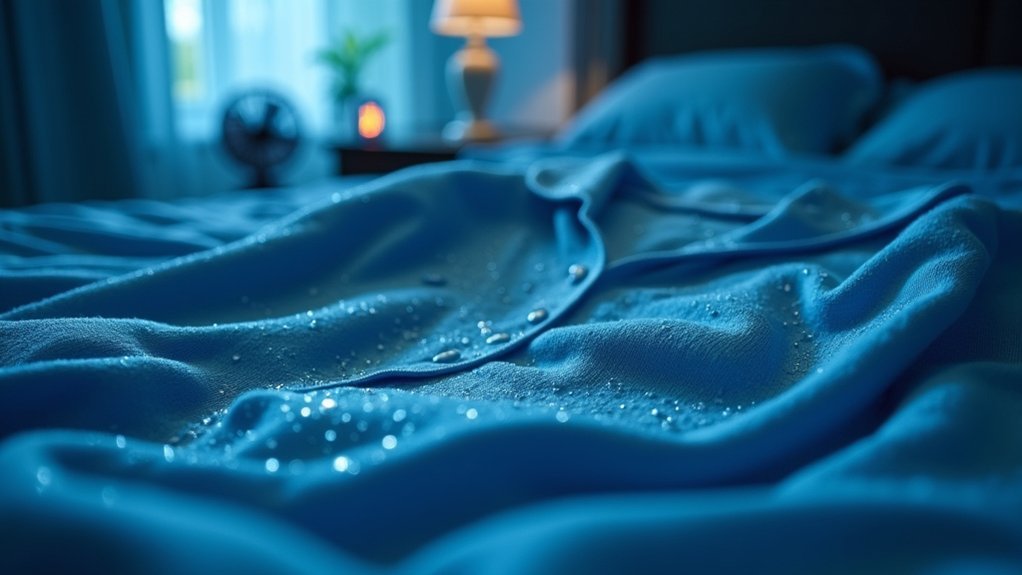
During testing, quality fabrics demonstrate water droplets spreading across surfaces rather than beading up. This spreading indicates superior sweat-wicking properties.
Consumer tester feedback complements laboratory data, ensuring pajamas perform well beyond controlled testing environments.
Identifying Quality Moisture-Wicking Features
When shopping for moisture-wicking pajamas, you’ll need to recognize specific fabric characteristics that separate high-performing sleepwear from ordinary cotton.
Look for synthetic fibers like polyester or specialized blends such as drirelease® that actively transport sweat away from your skin rather than absorbing it. Quality moisture-wicking fabrics exhibit low moisture regain and high capillary action, ensuring efficient moisture movement for faster evaporation.
Advanced synthetic fibers create efficient moisture highways that pull sweat away from skin for rapid evaporation and superior sleep comfort.
You’ll want fabrics combining hydrophilic properties that attract moisture with hydrophobic fibers that repel it, creating superior moisture management.
Prioritize lightweight, breathable construction that promotes airflow to keep you cool and dry throughout the night. Antimicrobial and odor-resistant treatments prevent bacterial growth and skin irritation, delivering fresher sleep comfort during those sweltering summer nights.
Additional Cooling Strategies for Better Sleep
Beyond selecting the right moisture-wicking pajamas, you can implement several complementary strategies to create an ideal sleep environment that keeps you cool throughout the night.
- Upgrade your bedding – Choose breathable materials like linen or Tencel that enhance airflow and temperature regulation, working alongside your moisture-wicking pajamas for maximum cooling.
- Optimize room temperature – Keep your bedroom between 60-67°F using fans or air conditioning to reduce humidity and promote airflow while staying dry.
- Stay hydrated – Drinking adequate water throughout the day can help regulate body temperature and prevent nighttime overheating.
- Practice relaxation techniques – Meditation or deep breathing before bed lowers stress levels and body temperature, creating the perfect foundation for your cooling sleepwear to work effectively.
Long-Term Benefits of Temperature-Regulating Pajamas
While these immediate cooling strategies provide short-term relief, temperature-regulating pajamas offer lasting advantages that extend far beyond a single night’s sleep.
You’ll experience consistent improvements in sleep quality as moisture-wicking pajamas maintain ideal body temperature throughout the night, reducing overheating disruptions.
Over time, these specialized garments help alleviate night sweats and hot flashes, promoting more restorative sleep.
Better sleep enhances your cognitive function, mood stability, and immune system performance.
Your skin health benefits greatly too, as effective moisture management prevents irritation and infections from excess sweat.
Frequently Asked Questions
What Are the Best Pajamas for People Who Get Hot at Night?
You’ll want moisture-wicking pajamas made from polyester, modal, or Tencel fabrics. Brands like Lusomé, HUE, and Eberjey offer excellent options that’ll keep you cool, dry, and comfortable throughout the night.
Is Moisture-Wicking Good for Hot Weather?
Yes, moisture-wicking’s excellent for hot weather. You’ll stay cooler and drier as these fabrics pull sweat away from your skin, promoting faster evaporation. They’re four times more effective than cotton at managing moisture.
What Is the Best Fabric for Pajamas for Hot Sleepers?
You’ll find bamboo, merino wool, and moisture-wicking synthetic blends work best for hot sleepers. These fabrics pull sweat away from your skin and regulate temperature effectively, keeping you cooler throughout the night.
What Is the Best Material to Sleep in for Night Sweats?
You’ll want synthetic fibers like polyester or nylon for night sweats since they’re hydrophobic and wick moisture effectively. Bamboo, merino wool, and silk also work well by regulating temperature and keeping you dry.



Leave a Reply