

Transform your bedroom into a sleep sanctuary by layering ambient, task, and accent lighting with warm bulbs between 2,700-3,000K. You’ll want to install dimmer switches that gradually reduce brightness 1-2 hours before bedtime, positioning bedside lamps to avoid direct glare. Eliminate blue light sources, maximize natural daylight exposure, and complement your mood lighting with blackout curtains. Choose soft, diffused fixtures over harsh overhead illumination to signal your body it’s time to unwind and discover additional strategies for ideal rest.
Layer Ambient, Task, and Accent Lighting for Optimal Sleep Preparation
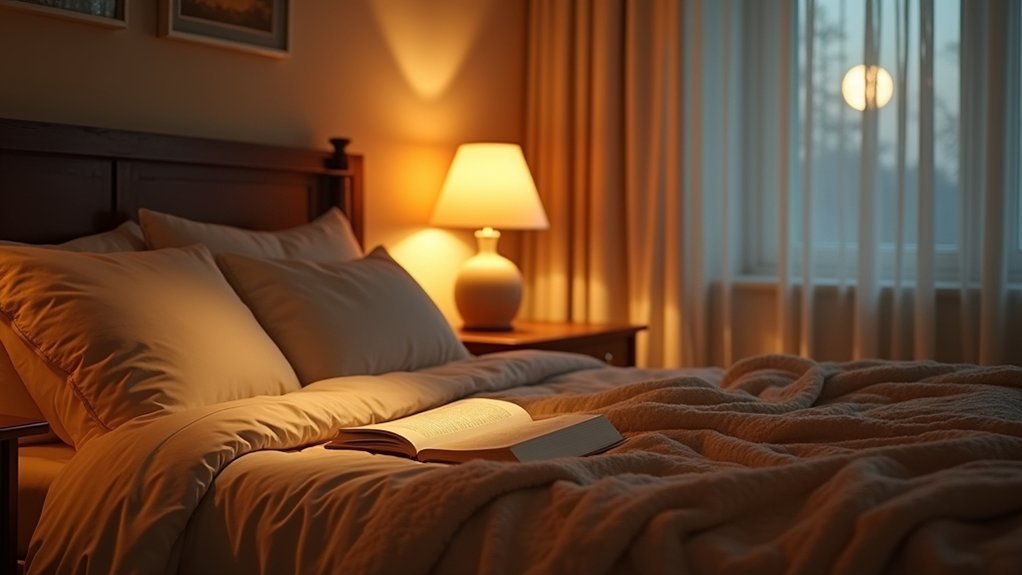
While many bedrooms rely on a single overhead light, you’ll achieve better sleep preparation by layering three distinct types of lighting throughout your space.
Ambient lighting from ceiling fixtures provides general illumination, while task lighting like bedside lamps supports specific activities such as reading. Accent lighting through wall sconces highlights architectural features and creates visual interest.
Choose warm light sources between 2,700K and 3,000K across all layers to encourage relaxation and promote melatonin production.
Warm lighting between 2,700K and 3,000K naturally signals your body to wind down and prepare for restful sleep.
Install dimming capabilities on each lighting type to control adjustable brightness throughout your evening routine. This layered approach creates a versatile environment that shifts from functional daytime use to calming nighttime ambiance, helping you wind down effectively before sleep.
Choose Warm Color Temperatures Below 3,000 Kelvins for Evening Hours
Since your bedroom lighting directly impacts your body’s natural sleep-wake cycle, selecting warm color temperatures below 3,000 Kelvins becomes essential for evening relaxation.
These warm color temperatures create a cozy atmosphere that promotes restfulness while reducing melatonin suppression, ultimately enhancing your sleep quality.
Choose LED bulbs ranging from 2,700 to 3,000 Kelvins for your ambient lighting, as they replicate the natural sunset glow that signals your body to wind down.
This gentle illumination helps you shift smoothly from daily activities to bedtime preparation.
Install dimmable fixtures throughout your bedroom to maximize these benefits.
You’ll be able to gradually lower brightness as evening progresses, creating an increasingly calming environment that naturally prepares your mind and body for restorative sleep.
Install Dimmer Switches to Gradually Reduce Light Intensity Before Bedtime
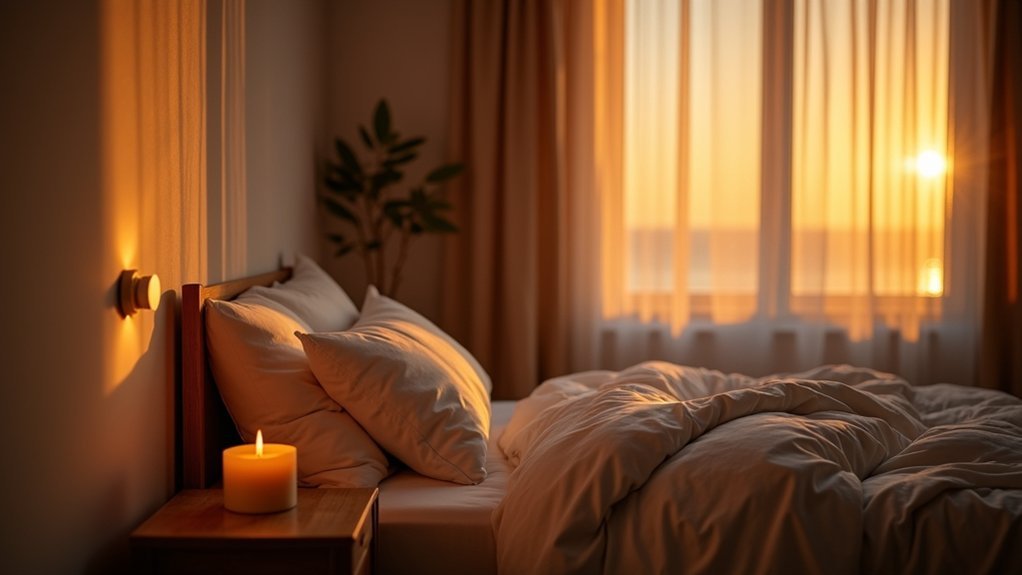
Dimmer switches give you complete control over your bedroom’s light intensity, allowing you to create the perfect environment for sleep preparation. These versatile devices transform your bedroom lighting from bright task lighting to soothing ambient lighting throughout the evening.
As bedtime approaches, you can gradually reduce light intensity, signaling your body to wind down naturally. This mood lighting approach helps suppress blue light exposure that interferes with melatonin production.
When you install dimmer switches, you’ll create relaxation-promoting warm lighting between 2,700K and 3,000K. Modern dimmers work with various bulb types and install easily, making them an accessible upgrade.
Combine your dimmer switches with layered lighting techniques to enhance your bedroom’s tranquil atmosphere. This dim lighting strategy promotes calmness and supports better sleep quality through controlled light changes.
Position Bedside Lamps and Wall Sconces to Minimize Sleep Disruption
How you position your bedside lamps and wall sconces directly impacts your sleep quality and bedroom comfort.
Place bedside lamps at heights that create soft light without direct glare into your eyes. Use warm lighting with bulbs between 2,700-3,000K to promote relaxation before sleep.
Install wall sconces at eye level to provide ambient lighting without overwhelming brightness.
Position your bedside lamps away from your direct line of sight to minimize glare that disrupts your ability to unwind.
Choose dimmable fixtures so you can adjust light intensity throughout the day, creating gradual shifts from bright to soft lighting as bedtime approaches.
Incorporate textured fabric or colored glass shades that diffuse light effectively, producing a gentle glow that enhances your bedroom’s serenity.
Eliminate Blue Light Sources Two Hours Before Sleep Time
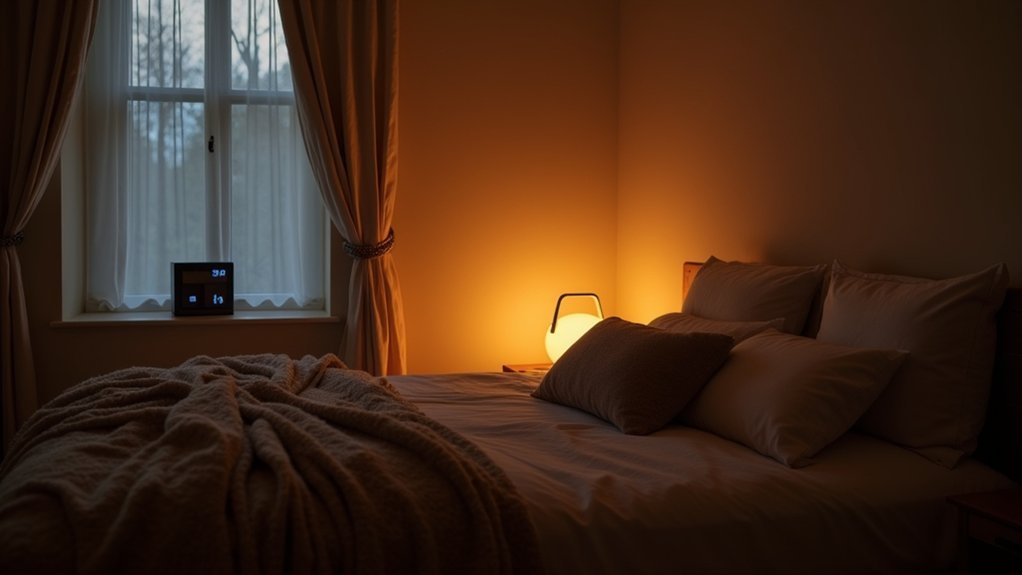
While proper lamp positioning creates a foundation for restful sleep, you’ll also need to address the blue light exposure that can sabotage your body’s natural sleep preparation.
Research shows that blue light from screens and LED fixtures suppresses melatonin production, making it harder to fall asleep and reducing sleep quality. You should eliminate blue light sources—smartphones, tablets, and harsh overhead lighting—at least two hours before bedtime to prevent increased alertness.
Instead, switch to warm light sources with a color temperature between 2,700 to 3,000 kelvins during evening hours. These warmer tones promote relaxation and help your body shift toward sleep.
If you can’t avoid devices entirely, install blue light filters or apps that reduce emissions, minimizing their sleep-disrupting effects.
Use Smart Lighting Controls to Automate Your Evening Wind-Down Routine
You can transform your evening routine by programming smart lighting controls to automatically dim your lights as bedtime approaches.
Set up voice-activated commands that instantly create the perfect sleep atmosphere without fumbling for switches in the dark.
These gradual light changes help your body naturally prepare for rest while eliminating the guesswork from your nightly wind-down process.
Schedule Automatic Dimming
Since your body naturally responds to dimming light as a sleep cue, smart lighting controls can transform your evening routine by automatically reducing brightness and shifting to warmer tones.
Through smart lighting scheduling, you’ll create a gradual shift from stimulating brightness to soft hues that promote relaxation. Set automatic dimming to begin 1-2 hours before bedtime, allowing your circadian rhythm to adjust naturally.
Customizable settings let you fine-tune intensity and color temperature to match your personal preferences. You can program different dimming schedules for weekdays versus weekends, ensuring consistency in your sleep preparation.
This automation eliminates harsh overhead lighting that disrupts melatonin production, replacing it with a calming atmosphere. The result is a seamless wind-down routine that prepares your mind and body for restorative sleep.
Voice-Activated Sleep Settings
Voice commands take this automation even further by putting complete lighting control at your fingertips—literally through spoken words.
Smart lighting systems with voice control let you effortlessly adjust your bedroom’s ambient lighting without leaving bed. Simply say “activate sleep mode” to trigger preset configurations that gradually shift to warmer, customizable color temperatures between 2,700K and 3,000K.
These voice-activated settings eliminate harsh blue light exposure that disrupts melatonin production, supporting your body’s natural sleep preparation.
You can create multiple presets for different activities—reading mode with gentle brightness or wind-down mode with minimal warm lighting.
This seamless integration promotes relaxation by removing the need to manually adjust switches or fumble with apps, ultimately improving your sleep quality through optimized lighting environments.
Gradual Light Transitions
While voice commands provide instant control, automated gradual light changes create an even more seamless pathway to better sleep.
Smart lighting controls let you program gradual dimming schedules that mirror natural sunset patterns, helping your body recognize it’s time to unwind. Set your lights to decrease brightness over 30-60 minutes, creating smooth light shifts that signal your brain to relax.
Configure color temperature adjustments from stimulating cool light (above 4,000K) to calming tones around 2,700K throughout your evening routine. This mood lighting approach greatly enhances bedroom rest quality.
For best results, program your system to shift to soft amber or red hues, which actively support melatonin production. These automated sequences eliminate guesswork, ensuring consistent sleep preparation every night.
Create Hidden Accent Lighting With LED Strips Behind Headboards
You can transform your bedroom’s ambiance by installing LED strips behind your headboard to create a soft, diffused glow that won’t disrupt your sleep preparation.
The key lies in choosing the right color temperature—opt for warm hues between 2,700-3,000K that naturally signal your body it’s time to wind down.
This hidden lighting technique adds visual depth while remaining completely concealed, giving you professional-looking accent lighting through a simple DIY installation.
Installation Behind Headboards
One of the most effective ways to transform your bedroom’s atmosphere is by installing LED strips behind your headboard, creating a sophisticated backlight effect that adds depth and visual interest to the space. Choose warm-toned LED strips up to 3,000 kelvins to maintain a cozy mood perfect for relaxation. The adhesive backing makes installation simple—just peel and stick for seamless placement.
| Feature | Recommendation | Benefit |
|---|---|---|
| Color Temperature | Up to 3,000K warm tones | Promotes relaxation |
| Dimming Capability | Adjustable brightness | Versatile ambient lighting |
| Positioning | Subtle headboard illumination | Highlights design elements |
| Installation Method | Adhesive backing | Easy, hidden placement |
Position your LED strips to create gentle ambient lighting that draws attention to your headboard’s design while avoiding harsh direct light that disrupts sleep.
Color Temperature Effects
Color temperature serves as the foundation for creating the perfect sleep-friendly environment with your hidden LED headboard lighting.
You’ll want to choose LED strips with color temperature between 2,700K and 3,000K for ideal bedroom ambiance. These warmer tones produce a gentle, warm glow that naturally reduces alertness and signals your body it’s time to unwind.
Installing color-changing LED strips behind your headboard gives you complete control over your ambient lighting throughout the evening.
Start with energizing hues during active hours, then gradually shift to calming shades as bedtime approaches. Dimmable lighting options enhance this effect, allowing you to fine-tune brightness levels for different activities like reading or meditation.
This approach promotes deep relaxation while eliminating harsh overhead lighting that disrupts your sleep environment.
Maximize Natural Light During Daytime to Support Circadian Rhythms
While artificial lighting dominates most indoor spaces, natural light serves as your body’s most powerful tool for maintaining healthy circadian rhythms.
Maximizing sunlight exposure during the day enhances melatonin production at night, directly improving your sleep quality and mood.
Transform your bedroom lighting design by installing sheer curtains that filter sunlight while maintaining privacy.
Position mirrors strategically to reflect natural light throughout the room, creating a brighter, more spacious feel.
Keep your windows spotlessly clean and remove any obstructions blocking incoming light.
These simple changes create a warm atmosphere that supports your body’s natural sleep-wake cycle.
Daily natural light exposure doesn’t just improve your circadian rhythm—it boosts productivity and creates the foundation for truly restful, rejuvenating sleep.
Select Soft, Diffused Light Fixtures Over Harsh Overhead Illumination
When you’re setting up your bedroom lighting, you’ll want to choose fixtures that create a gentle, welcoming glow rather than bright overhead lights that can jolt your senses.
Soft, diffused lighting from table lamps, floor lamps, and wall sconces helps your body naturally wind down for sleep, while harsh ceiling fixtures work against your relaxation goals.
Understanding the difference between these lighting approaches and selecting the right fixture types will transform your bedroom into a true sanctuary for rest.
Diffused Vs Harsh Lighting
Since harsh overhead lighting can jolt your nervous system and keep you wired when you’re trying to wind down, you’ll want to prioritize soft, diffused fixtures that create a gentle glow throughout your bedroom.
Diffused lighting filters brightness through textured fabric lampshades or colored glass, creating a cozy ambiance that promotes relaxation. This soft and warm illumination works as both ambient and task lighting, perfect for reading or unwinding.
You can achieve adjustable brightness with dimmable fixtures, allowing gradual changes as bedtime approaches. Warm light temperatures between 2,700K and 3,000K enhance this calming effect.
Wall sconces and bedside lamps provide targeted illumination without the jarring intensity of harsh overhead illumination, helping your body naturally prepare for restful sleep.
Ideal Fixture Types
Three types of fixtures form the foundation of restful bedroom lighting: wall sconces, table lamps, and accent lighting.
These lighting options deliver soft light that creates a calming atmosphere, unlike harsh overhead fixtures. Wall sconces and table lamps provide excellent ambient and accent illumination when paired with textured fabric or colored glass lampshades that enhance diffusion.
Installing dimmable LED lights in your fixtures allows you to adjust brightness throughout the day, creating gradual shifts toward bedtime.
Position bedside table lamps at proper heights for comfortable reading—this guarantees your task lighting doesn’t strain your eyes while maintaining the room’s peaceful ambiance.
Add accent lighting like LED strips or fairy lights around focal points for gentle enhancement without overwhelming brightness.
Incorporate Blackout Solutions to Complement Your Mood Lighting Strategy
While mood lighting sets the perfect ambiance for your evening routine, you’ll need complete darkness to achieve truly restorative sleep.
Blackout solutions work hand-in-hand with your mood lighting strategy to create the ultimate bedroom environment. Install blackout curtains or shades that completely eliminate external light sources, boosting your body’s natural melatonin production and improving sleep quality.
These solutions also reduce outside noise, creating a tranquil environment that supports deeper rest.
You can seamlessly shift from warm lighting during your bedtime routine to complete darkness for sleep. This customizable lighting approach lets you control your space throughout the day – energizing brightness when needed, soft illumination to enhance relaxation, and total darkness for restorative sleep.
Frequently Asked Questions
How Can You Get the Most Out of Your Mood Lighting?
You’ll maximize mood lighting by layering multiple sources, using warm 2,700K-3,000K temperatures, installing dimmers for flexibility, positioning lights strategically to avoid glare, and choosing smart controls for personalized ambiance.
How to Do Ambient Lighting in Bedroom?
You’ll want to layer warm LED bulbs around 2,700-3,000 kelvins using ceiling fixtures, wall sconces, and table lamps. Install dimmers and choose fabric shades to create soft, diffused lighting that eliminates harsh shadows.
How to Make Bedroom Lighting Cozy?
You’ll create cozy bedroom lighting by choosing warm 2,700K-3,000K bulbs, installing dimmable LEDs, layering ambient and accent lights, positioning soft bedside lamps, and using light-colored window treatments to enhance natural warmth.
What Lighting Improves Mood?
You’ll improve your mood with warm lighting between 2,700-3,000 kelvins that promotes relaxation. Use dimmable options and soft ambient lights like table lamps to reduce stress while avoiding cool, stimulating temperatures.
In Summary
You’ll transform your bedroom into a sleep sanctuary by implementing these mood lighting strategies. Start with warm, dimmable lights and eliminate blue light sources before bedtime. Layer your lighting thoughtfully, maximize natural light during the day, and don’t forget blackout solutions for complete darkness. Your circadian rhythm will thank you, and you’ll notice improved sleep quality within just a few nights of making these changes.




Leave a Reply