
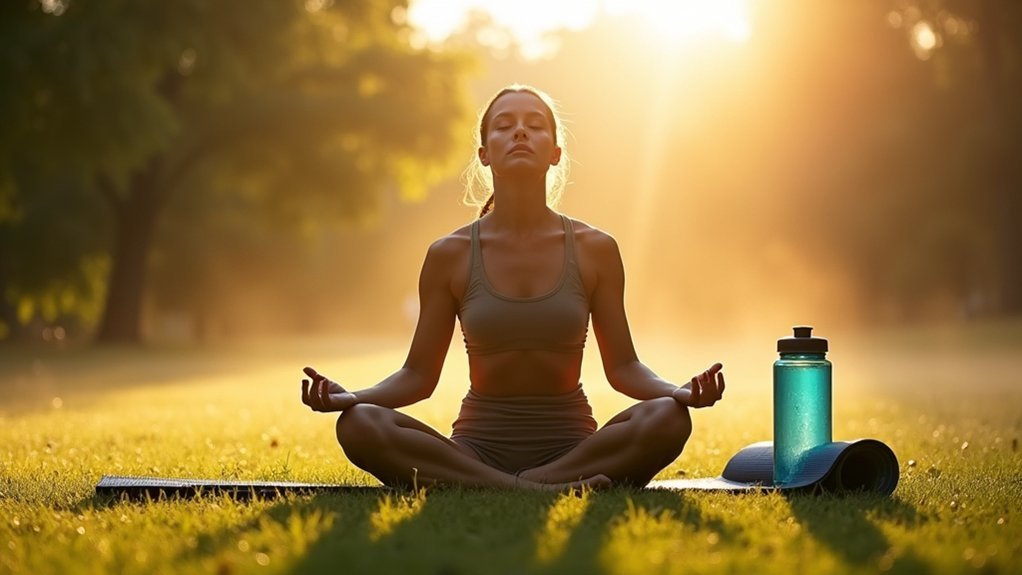
Start your day with 5-10 minutes of diaphragmatic breathing to activate your parasympathetic nervous system and lower cortisol levels throughout the day. You’ll breathe deeply through your nose, placing one hand on your chest and one on your abdomen, then exhale slowly through your mouth. This morning practice enhances oxygen flow, reduces daily stress accumulation, and creates the ideal conditions for deeper, more restorative sleep at night. Discover specific techniques that’ll transform your rest quality.
How Morning Breathing Practices Impact Sleep Quality

While you mightn’t immediately connect your morning routine to nighttime rest, starting your day with intentional breathing exercises creates a powerful ripple effect that transforms your sleep quality hours later.
When you practice diaphragmatic breathing each morning, you’re regulating cortisol levels that reduce stress throughout your entire day. This enhanced oxygenation improves lung function and decreases fatigue, setting you up for more restful nights.
These breathing techniques also boost your mental health by shifting focus away from daily worries, creating a calmer mindset that’s essential for falling asleep.
A calm mind through intentional breathing creates the perfect foundation for peaceful, restorative sleep each night.
You’ll develop better emotional balance and resilience, making sleep disturbances from anxiety less likely. This positive cycle means improved daytime energy naturally translates into deeper, more restorative sleep.
The Science Behind Breathwork and Rest
Although the connection between breathing and sleep might seem intuitive, the underlying mechanisms reveal fascinating insights about your body’s internal systems. When you practice controlled breathing, you’re activating your parasympathetic nervous system, which triggers relaxation responses that directly combat stress. Research shows deep breathing lowers cortisol levels while reducing anxiety symptoms that often prevent restful sleep.
| System | Response | Sleep Impact |
|---|---|---|
| Nervous System | Parasympathetic activation | Enhanced relaxation |
| Hormonal | Reduced cortisol levels | Decreased stress interference |
| Respiratory | Improved oxygen levels | Better physiological foundation |
| Psychological | Lower anxiety symptoms | Reduced sleep barriers |
| Circadian | Regulated sleep patterns | Improved onset/duration |
Your morning breathing exercises create ideal oxygen levels and lung function, establishing physiological conditions that support better sleep cycles throughout the day.
Basic Diaphragmatic Breathing for Relaxation

You’ll master diaphragmatic breathing by placing one hand on your chest and another on your belly, ensuring only the lower hand moves as you breathe deeply through your nose.
This technique activates your body’s relaxation response, lowering your heart rate and blood pressure while reducing anxiety and tension throughout your system.
Practicing this method for just 5-10 minutes each morning creates lasting benefits, improving your lung function and establishing efficient breathing patterns that’ll serve you throughout the day.
Proper Diaphragmatic Technique
The foundation of effective morning breathing starts with mastering diaphragmatic breathing, a simple yet powerful technique that engages your body’s primary breathing muscle. This belly breathing method activates your diaphragm rather than relying on shallow chest breathing, helping you reduce stress and build lung strength.
| Step | Action |
|---|---|
| 1 | Sit comfortably with one hand on chest, other on abdomen |
| 2 | Inhale slowly through nose, expanding belly outward |
| 3 | Exhale gradually through mouth, contracting abdomen inward |
| 4 | Practice this breathing technique for 5-10 minutes daily |
You’ll notice your chest hand remains relatively still while your belly hand rises and falls. This proper form guarantees you’re maximizing oxygen intake and strengthening your respiratory system effectively.
Relaxation Benefits Explained
Mastering diaphragmatic breathing reveals profound relaxation benefits that extend far beyond simple oxygen exchange. When you practice this technique, you’ll activate your parasympathetic nervous system, which naturally lowers your heart rate and blood pressure. Each controlled breath signals your body to shift from stress mode into a calm, restorative state.
Just five minutes of deep breathing creates noticeable improvements in mental clarity and focus, setting a positive tone for your entire day. Regular practice helps reduce anxiety by rewiring your body’s stress response patterns.
You’ll experience enhanced emotional balance and improved lung function through better oxygenation. This simple morning ritual transforms how you handle daily challenges, creating lasting relaxation benefits that carry you through demanding schedules with greater ease and composure.
Daily Practice Guidelines
When establishing your daily diaphragmatic breathing routine, start by dedicating just five minutes each morning to this powerful practice.
Find a comfortable position, either seated or lying down, and close your eyes to enhance focus. Place one hand on your chest and another on your belly to monitor proper technique.
These breathing exercises should emphasize deep inhalation through your nose, allowing your abdomen to rise while keeping your chest relatively still. Exhale slowly through your nose, feeling your belly fall naturally.
Consistent diaphragmatic breathing will reduce stress levels and shift you away from shallow chest breathing patterns.
This mindfulness-based approach enhances oxygenation, prevents daily fatigue, and greatly improves emotional well-being when practiced regularly each morning.
Alternate Nostril Breathing for Balance

Although modern life often leaves you feeling mentally scattered and physically tense, alternate nostril breathing offers a simple yet powerful solution to restore balance in both body and mind.
This breathing practice, known as Nadi Shodhana Pranayama, reduces stress while enhancing cardiovascular function and respiratory efficiency.
To perform this breathing method, use your right thumb to close your right nostril after exhaling, then inhale through your left nostril.
Switch sides, creating a rhythmic pattern that promotes mental clarity and emotional stability.
Practice this technique for just five minutes on an empty stomach during your morning routine to regulate elevated cortisol levels and markedly reduce anxiety.
You’ll experience improved focus and overall lung health throughout your day.
Box Breathing for Stress Reduction
Box breathing offers you a powerful technique to reduce stress by following a simple four-count pattern: inhale for 4, hold for 4, exhale for 4, and hold again for 4.
You’ll experience immediate stress relief as this practice lowers cortisol levels and calms your nervous system within just a few minutes.
Incorporating 5-10 minutes of box breathing into your morning routine will enhance your focus and prepare you to handle daily stressors with greater ease.
Box Breathing Technique Steps
Four simple steps form the foundation of box breathing, a powerful technique that transforms your stress response in just minutes.
You’ll start by inhaling slowly through your nose for four counts, filling your lungs completely with deep breaths. Next, hold your breath for four counts, maintaining this controlled breathing pattern.
Then exhale through your nose for four counts, releasing all the air steadily. Finally, hold empty for four counts before beginning again.
This structured breathing pattern creates immediate stress management benefits. You’ll notice your nervous system calming with each cycle, promoting deep relaxation.
Start with 6-8 complete cycles during your morning routine. As you become comfortable with this technique, you can extend the count to five or six seconds for enhanced focus and emotional regulation.
Stress Relief Benefits
Beyond the mechanical steps lies box breathing’s remarkable ability to rewire your body’s stress response system. When you practice this technique, you’re actively reducing cortisol levels, the hormone that floods your system during stressful moments.
This breathing helps regulate your nervous system, creating immediate stress relief that you can feel within minutes.
Box breathing transforms your morning routine by delivering a lower heart rate and enhanced focus. You’ll notice improved concentration that cuts through stress-related distractions, especially during high-pressure situations.
Regular practice strengthens your emotional regulation, helping you maintain balance throughout challenging days.
Just a few minutes of box breathing each morning generates mental clarity and establishes a calm foundation. This simple practice sets a positive tone, equipping you with better coping mechanisms for whatever stressors await.
Daily Practice Guidelines
When establishing your box breathing routine, start with just five minutes each morning to build consistency without overwhelming yourself. This type of breathing exercise becomes more effective with regular practice, helping you feel calm before tackling daily challenges.
| Week | Duration | Repetitions | Focus Area | Progress Marker |
|---|---|---|---|---|
| 1-2 | 3 seconds | 8-10 cycles | Basic rhythm | Comfort with pattern |
| 3-4 | 4 seconds | 10-12 cycles | Breath retention | Increased lung capacity |
| 5-6 | 5 seconds | 12-15 cycles | Deep breathing | Enhanced focus |
| 7-8 | 5+ seconds | 15-20 cycles | Advanced control | Stress mastery |
| 9+ | Flexible | As needed | Maintenance | Emotional resilience |
Morning breathing exercises work best when performed consistently at the same time, allowing your nervous system to anticipate and prepare for this calming practice.
Skull Shining Breath for Energy and Calm
Skull Shining Breath stands out as a powerful technique that bridges the gap between energizing your body and calming your mind through deliberate, rhythmic breathing patterns.
You’ll start by taking a deep inhale through your nose, then perform quick, forceful exhales through your mouth. This skull shining method engages your abdominal muscles while boosting energy levels and promoting calm simultaneously.
Practice about 10 quick exhales per breath cycle to release stagnant energy and enhance oxygenation. The breathing technique improves lung function while toning your core muscles.
Regular practice alleviates stress and anxiety, making it perfect for your morning routine. You’ll experience enhanced digestion, increased mental clarity, and sustained energy that sets a positive tone for your entire day ahead.
Progressive Breathing Meditation Techniques
You’ll start with beginner meditation breathing steps that gradually extend your inhale and exhale patterns to activate your body’s natural relaxation response.
These foundational techniques include box breathing and equal breathing, which create structure while you incorporate visualization or focus words to deepen your meditative state.
Once you’ve mastered the basics, you can progress to advanced techniques that enhance your morning routine and improve your overall mental well-being.
Beginner Meditation Breathing Steps
Three fundamental elements form the foundation of progressive breathing meditation: proper positioning, controlled breath cycles, and mindful awareness.
You’ll begin by finding a quiet space where you can sit comfortably, allowing your body to naturally relax. Start your breathing meditation with a deep inhale through your nose for three counts, letting your belly expand fully. Hold this breath for three counts to enhance your focus, then exhale slowly through your mouth for five counts, releasing tension completely.
Integrate mindfulness by visualizing a peaceful scene or focusing on a calming word during each breath cycle. As you become more comfortable with this rhythm, gradually extend each inhale and exhale duration.
Practice for 10 to 20 minutes daily to experience maximum benefits and improved morning clarity.
Advanced Progressive Techniques
Once you’ve mastered basic breathing meditation, advanced progressive breathing techniques can deepen your practice and amplify relaxation benefits.
These methods activate your body’s relaxation response more effectively than basic techniques, leading to enhanced stress reduction and improved rest quality.
Here are four powerful progressive techniques to elevate your morning routine:
- Resonant breathing – Slow your breath to 5-7 breaths per minute for maximum relaxation response activation.
- Equal breathing – Balance 3-5 count inhalations and exhalations to promote mental clarity and oxygen supply.
- Sitali breath – Cool your body while reducing stress, perfect for hot mornings or high-stress days.
- Humming bee breath – Inhale deeply and hum during exhalation for enhanced relaxation and improved rest quality.
Practice these for 10-20 minutes daily.
Optimal Duration and Timing for Morning Practice
Two key factors determine the effectiveness of your morning breathing practice: when you do it and how long you sustain it.
For ideal timing, practice within the first hour of waking to harness your body’s natural detoxification process and reset your mind. This morning breathing routine helps reduce elevated cortisol levels and promotes calm.
Start with 2-5 minutes if you’re a beginner, gradually building your comfort level to reach 10-15 minutes. Research shows that practicing for at least 5 minutes greatly enhances lung function and overall well-being throughout your day.
Starting small with just 5 minutes of breathing practice can significantly boost your lung function and daily well-being.
Daily consistency is essential for maximum stress reduction benefits and improved rest quality over time. The combination of proper timing and adequate duration creates the foundation for transformative results.
Creating Your Personal Breathing Routine
How do you transform basic breathing knowledge into a sustainable daily practice that fits your unique lifestyle and needs?
Creating your personalized routine requires experimentation and documentation to discover what works best for you.
Start by establishing these core elements for effective breathing exercises:
- Set a consistent morning schedule – Practice for 5-10 minutes daily to improve lung function and build habit momentum.
- Incorporate diverse techniques – Try diaphragmatic breathing and alternate nostril breathing for enhanced relaxation.
- Gradually increase duration – Extend sessions to 15 minutes as your comfort and capacity improve.
- Document your progress – Track feelings and responses to identify your most effective methods.
Use mindful awareness to shift focus from racing thoughts to present-moment calm, developing a personalized routine that truly serves your well-being.
Long-term Benefits of Consistent Morning Breathwork
While establishing a morning breathing routine requires initial effort and dedication, the long-term benefits you’ll experience make this daily investment profoundly worthwhile.
Your lung function will dramatically improve, enhancing oxygen utilization and preventing daily fatigue. These morning breathing exercises systematically lower your stress levels, creating better emotional regulation and sustained mental well-being.
You’ll notice significant reductions in anxiety and depression symptoms, fostering a consistently positive outlook. Your mindfulness and present-moment awareness will sharpen, directly boosting focus and productivity throughout your day.
Perhaps most importantly, your respiratory health will transform as your breathing patterns become automatically efficient, supporting your body’s natural homeostasis and reducing future respiratory complications.
This consistent practice becomes your foundation for lasting physical and mental wellness.
Frequently Asked Questions
Is It Good to Do Breathing Exercises in the Morning?
Yes, you’ll benefit greatly from morning breathing exercises. They’ll reduce your elevated cortisol levels, enhance oxygen utilization, improve focus, and promote emotional balance. You’ll experience less stress and increased productivity throughout your day.
What Is the 4 7 8 Sleep Trick?
You’ll inhale for 4 seconds, hold your breath for 7 seconds, then exhale for 8 seconds. This technique slows your heart rate and promotes relaxation, helping you fall asleep faster.
What Is the Best Breathing Exercise for the Morning?
You’ll find diaphragmatic breathing works best for mornings since it enhances oxygenation and calms your nervous system. Practice belly breathing for just five minutes to set a positive, energized tone for your entire day.
What Is the 5 5 8 2 Breathing Technique?
You’ll inhale for five seconds, hold your breath for five seconds, exhale for eight seconds, then pause for two seconds. This technique activates your body’s relaxation response through extended exhalation.
In Summary
You’ve discovered how morning breathing exercises can transform your sleep quality through consistent practice. By incorporating diaphragmatic breathing, alternate nostril techniques, and box breathing into your daily routine, you’ll regulate your nervous system and reduce stress hormones. Start with just five minutes each morning, gradually building your practice. Your commitment to these simple yet powerful techniques will create lasting improvements in both your daytime energy and nighttime rest quality.




Leave a Reply