

You’ll improve your nighttime rest by drinking 16 ounces of water immediately upon waking to reset your hydration levels after sleep. Incorporate water-rich foods like watermelon and cucumber into your morning meals, and maintain consistent timing by sipping 8 ounces every two hours throughout the day. Choose electrolyte-rich options like coconut water or water with sea salt and lemon to enhance sleep quality. Stop water intake three hours before bedtime to prevent sleep disruptions, and track your hydration patterns to discover additional strategies that’ll transform your sleep.
Start Your Day With a Glass of Water Upon Waking

While you sleep, your body continues essential functions that gradually deplete your fluid reserves, making that first glass of water upon waking a key step in resetting your hydration levels for the day.
Morning hydration sets the foundation for better sleep by establishing healthy fluid intake patterns that won’t disrupt nighttime rest.
Drinking approximately 16 ounces of water upon waking enhances metabolic function and boosts cognitive function, helping you feel more alert.
This simple habit helps regulate urine color, providing a quick hydration assessment tool throughout the day.
Incorporate Hydrating Foods Into Your Morning Meal
Since hydrating foods naturally complement your morning water intake, adding water-rich fruits and vegetables to your breakfast creates a powerful foundation for all-day hydration management.
You’ll boost your fluid intake considerably by incorporating watermelon, cucumber, and oranges, which contain over 90% water content.
These hydrating foods deliver essential vitamins and minerals that enhance your energy levels while supporting metabolic functions.
Starting your day with water-rich options helps establish positive hydration habits and maintains vital electrolyte balance throughout your body.
Morning hydration with water-rich foods creates lasting healthy habits while keeping your electrolytes perfectly balanced all day long.
This morning strategy prevents dehydration-related symptoms like fatigue and headaches while reducing nighttime thirst that disrupts restful sleep.
Establish Consistent Morning Fluid Intake Timing
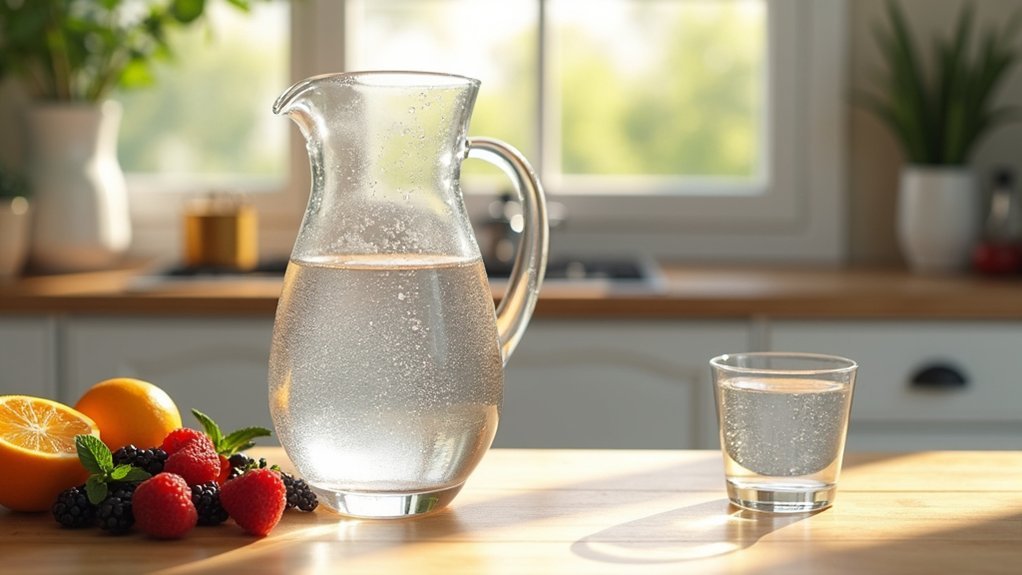
Creating a structured timing schedule for your morning hydration transforms hydration from a random habit into a powerful sleep-supporting ritual. Drinking water immediately upon waking—aim for 16 ounces—kick-starts your hydration levels and sets the foundation for better health throughout the day.
Consistent fluid intake at the same time each morning helps regulate your body’s natural rhythms, supporting both cognitive function and physical performance.
Align your morning hydration with existing habits like brushing teeth or breakfast to reinforce consistency. Track your progress using a hydration diary to monitor adequate fluid intake patterns.
This structured approach guarantees you meet daily hydration goals while establishing the proper fluid balance that contributes to quality nighttime rest and overall wellness.
Balance Electrolytes With Morning Hydration Choices
After establishing your morning hydration timing, you’ll want to focus on the quality of fluids you’re consuming to maximize their sleep-supporting benefits.
Balancing electrolytes with your morning water intake helps replenish essential minerals lost during sleep and supports ideal fluid balance throughout the day.
Consider these electrolyte-rich morning hydration choices:
- Coconut water – naturally packed with potassium and magnesium for enhanced mineral absorption
- Water with sea salt and lemon – boosts electrolyte content while improving taste and absorption
- Nutrient-dense breakfast additions – bananas, avocados, and leafy greens complement your hydration strategy
This balanced approach prevents dehydration, regulates blood pressure, and enhances cognitive function.
When your body maintains proper electrolyte levels, you’ll experience fewer nighttime awakenings due to thirst, ultimately improving sleep quality and setting yourself up for better rest.
Monitor Your Body’s Hydration Signals Throughout the Day

You can’t rely on thirst alone to gauge your hydration needs, so it’s essential to recognize your body’s early warning signs throughout the day.
Start tracking your daily fluid intake using a simple log or app, and pay attention to indicators like urine color and skin elasticity to assess your current hydration status.
Remember to adjust your water consumption based on your activity level, climate conditions, and how your body responds to different situations.
Recognize Early Dehydration Signs
How can you tell if your morning hydration routine is actually working throughout the day? Recognizing early dehydration signs helps you maintain ideal hydration before thirst kicks in—which is already a late warning signal.
Watch for these early signs that indicate you need increased fluid intake:
- Dark yellow urine instead of pale yellow, signaling inadequate water intake
- Dry mouth and fatigue appearing mid-morning or afternoon
- Slow skin recovery when you pinch the back of your hand—healthy skin turgor snaps back immediately
Don’t wait for headaches, dizziness, or poor concentration to develop. These symptoms indicate moderate dehydration that could’ve been prevented.
Monitoring these signals helps you develop proactive habits, ensuring your morning hydration sets you up for sustained energy and better sleep quality.
Track Daily Fluid Intake
While spotting dehydration signals keeps you alert to your body’s immediate needs, establishing a systematic approach to track your daily fluid intake creates lasting hydration success.
You’ll want to monitor your water consumption throughout each day, aiming for 2.5 to 4.5 liters based on your personal factors. A hydration diary helps you record every glass, cup, and bottle you drink.
Don’t forget to include hydrating foods like fruits and vegetables in your tracking—they contribute considerably to your ideal fluid levels.
This systematic monitoring creates awareness of your drinking patterns, reveals gaps in consumption, and guarantees you’re meeting your hydration goals consistently for better sleep quality.
Adjust Based on Activity
Since your hydration needs fluctuate based on physical activity, weather conditions, and stress levels, you’ll need to tune into your body’s signals and adjust your water intake accordingly.
Monitoring hydration throughout the day helps optimize your fluid intake for better overall hydration and improved sleep quality.
Your body’s response to different situations provides clear guidance for when to increase water consumption:
- Dark yellow urine signals dehydration – increase fluid intake immediately
- Intense thirst during exercise indicates you’re already behind on hydration
- Fatigue on hot days often stems from inadequate water consumption
Complement your fluid intake with hydrating foods like watermelon and cucumber.
Keep a hydration diary to track patterns between your activity level, water consumption, and sleep quality. This systematic approach helps you adjust based on daily demands.
Limit Dehydrating Beverages During Morning Hours
Although reaching for your usual morning coffee or mimosa might feel routine, these dehydrating beverages can sabotage your hydration goals and sleep quality. When you limit dehydrating beverages like caffeine and alcohol during morning hours, you’ll maintain better hydration balance throughout the day.
Both substances act as diuretics, increasing urination and potentially causing dehydration. Excessive caffeine reduces sleep efficiency and total sleep time, while alcohol disrupts nighttime melatonin production.
Your morning hydration choices directly impact cognitive function and physical performance. Instead of reaching for that third cup of coffee, opt for water, herbal teas, or smoothies. Prioritizing water over dehydrating options enhances your overall well-being and sets you up for restful sleep later.
Create a Structured Hydration Schedule From Dawn to Dusk
Creating a structured hydration schedule transforms your daily water intake from random sips into a strategic approach that supports ideal sleep.
Strategic hydration timing replaces haphazard drinking habits with intentional water consumption that enhances your nightly rest and recovery.
Your body functions depend on consistent hydration throughout the day to improve sleep quality and prepare for nighttime rest.
Follow this strategic timeline:
- Dawn Boost: Start with 16 ounces of water immediately upon waking to jumpstart your metabolism and rehydrate after sleep.
- Steady Flow: Maintain hydration through regular sipping—8 ounces every two hours using a reusable bottle.
- Evening Taper: Reduce water intake three hours before bedtime while incorporating hydrating foods like watermelon and spinach.
Monitor urine color as your hydration gauge—pale yellow indicates satisfactory levels.
This structured hydration schedule guarantees you’ll reach two liters daily while avoiding sleep disruptions.
Track Your Morning Hydration Impact on Sleep Quality
You’ll need effective measurement methods to track how your morning hydration affects your nightly rest.
Start by monitoring simple indicators like urine color and recording your daily water intake alongside sleep quality ratings.
This correlation analysis will reveal patterns that help you optimize both your hydration timing and sleep outcomes.
Morning Hydration Measurement Methods
Several simple measurement techniques can help you track how your morning hydration affects your nightly sleep quality.
These methods require no special equipment and provide immediate feedback about your body’s fluid intake needs.
Key Morning Hydration Measurements:
- Urine Color Assessment – Check your morning urine color; pale yellow indicates proper hydration, while dark yellow suggests dehydration that can negatively impact sleep quality.
- Skin Turgor Test – Pinch the skin on your hand’s back; quick return to normal position shows good hydration levels that promote better rest.
- Hydration Diary Tracking – Record your daily water consumption and correlate it with sleep patterns to identify ideal fluid intake amounts.
Start with at least 16 ounces of water upon waking.
Combine these measurements with deep breathing exercises to enhance overall wellness and nighttime rest quality.
Sleep Pattern Correlation Analysis
When you establish consistent morning hydration habits, tracking their impact on your sleep becomes essential for optimizing both routines.
Your hydration diary should document urine color, skin turgor, and daily water intake alongside sleep quality metrics like sleep onset time and duration. You’ll notice patterns emerge when adequate morning hydration reduces daytime fatigue and improves nighttime rest.
Monitor your caffeine intake alongside hydration levels, as balanced consumption supports alertness without disrupting sleep patterns. Consistent morning hydration helps regulate your circadian rhythm, creating a positive feedback loop.
Track correlations between your 16-ounce morning water intake and subsequent sleep quality improvements. This data-driven approach reveals how proper hydration directly influences your body’s natural sleep-wake cycle.
Daily Water Intake Logs
Creating a structured daily water intake log transforms your hydration tracking from guesswork into actionable data.
Your hydration diary reveals patterns between morning hydration habits and sleep quality, helping you optimize fluid balance for better rest.
Track these key elements to maximize your water intake monitoring:
- Morning baseline: Record your initial 16-ounce hydration goal alongside urine color and frequency as hygiene indicators of your overnight fluid status.
- Hydrating foods intake: Log fruits, vegetables, and other moisture-rich foods that contribute to your total fluid balance throughout the morning hours.
- Sleep correlation notes: Document any sleep disturbances from the previous night to identify connections between hydration patterns and rest quality.
This systematic approach helps you recognize how consistent morning hydration directly impacts cognitive function and nighttime sleep patterns.
Frequently Asked Questions
Is It Better to Hydrate Before Bed or in the Morning?
You’ll get better sleep if you hydrate in the morning rather than before bed. Morning hydration replenishes overnight fluid loss without disrupting sleep with bathroom trips, while supporting metabolism and cognitive function.
What Is the Best Hydration First Thing in the Morning?
You should drink 16 ounces of plain water immediately upon waking. Sip it gradually rather than gulping to enhance absorption. This’ll rehydrate your body, boost metabolism, and improve cognitive performance throughout the day.
Can Hydration Help You Sleep Better?
Yes, you’ll sleep better when you’re properly hydrated. Dehydration causes dry mouth and headaches that disrupt sleep. Drink two liters daily, but limit fluids before bedtime to prevent nighttime bathroom trips.
How Can I Stay Hydrated and Not Pee All Night?
Drink most of your water during the day, then stop two hours before bed. You’ll avoid nighttime bathroom trips while staying properly hydrated. Empty your bladder before sleeping too.
In Summary
You’ve learned how morning hydration directly impacts your sleep quality. Start implementing these habits gradually—drink water upon waking, choose hydrating foods, and maintain consistent timing. Don’t forget to balance electrolytes and monitor your body’s signals throughout the day. Track how these changes affect your nighttime rest over the next few weeks. You’ll discover that proper morning hydration is key to achieving deeper, more restorative sleep.




Leave a Reply