

You’ll avoid sleep cycle interference by keeping naps to 15-20 minutes, which keeps you in light sleep stages and prevents grogginess. If you’re severely sleep-deprived, opt for a full 90-minute cycle instead. Always finish napping before 3 PM to protect your nighttime sleep quality, and set strategic alarms to avoid waking during deep sleep Stage 3. Monitor your natural energy dips between 1-3 PM to find your ideal nap timing, and you’ll discover even more ways to perfect your rest strategy.
Keep Naps Between 15-20 Minutes to Stay in Light Sleep Stages

When you limit your naps to 15-20 minutes, you’ll stay within the lighter stages of sleep and avoid the groggy feeling that comes from waking up during deeper sleep phases.
This ideal nap duration keeps you in stages 1 and 2 of light sleep, preventing sleep inertia that makes you feel worse than before resting.
Short naps enhance your cognitive performance and boost reaction time without disrupting your natural circadian rhythms.
You’ll effectively combat afternoon sleepiness while improving memory retention. Napping for 20 minutes provides the perfect energy boost for your day’s remaining tasks.
Schedule these brief rests between 1 p.m. and 3 p.m. to align with your body’s natural patterns and maintain healthy nighttime sleep habits.
Use the 90-Minute Rule for Full Sleep Cycle Naps
While short 15-20 minute naps work perfectly for quick energy boosts, longer 90-minute naps offer a completely different advantage by allowing your body to complete an entire sleep cycle. This nap duration follows the 90-minute rule, which prevents you from waking during deep sleep stages that cause severe grogginess.
| Nap Time | Sleep Stage | Post-Nap Feeling |
|---|---|---|
| 0-20 min | Light sleep | Alert, refreshed |
| 30-60 min | Deep sleep | Groggy, sluggish |
| 90 min | Complete cycle | Alert, restored |
| 2+ hours | Multiple cycles | Confused, disoriented |
| 3+ hours | Extended sleep | Interferes with nighttime |
Full sleep cycle napping dramatically improves cognitive function and alertness, especially when you’re sleep-deprived. Schedule these longer naps earlier in the day to maintain healthy sleep patterns and avoid disrupting your nighttime sleep routine.
Time Your Naps Before 3 PM to Preserve Nighttime Sleep
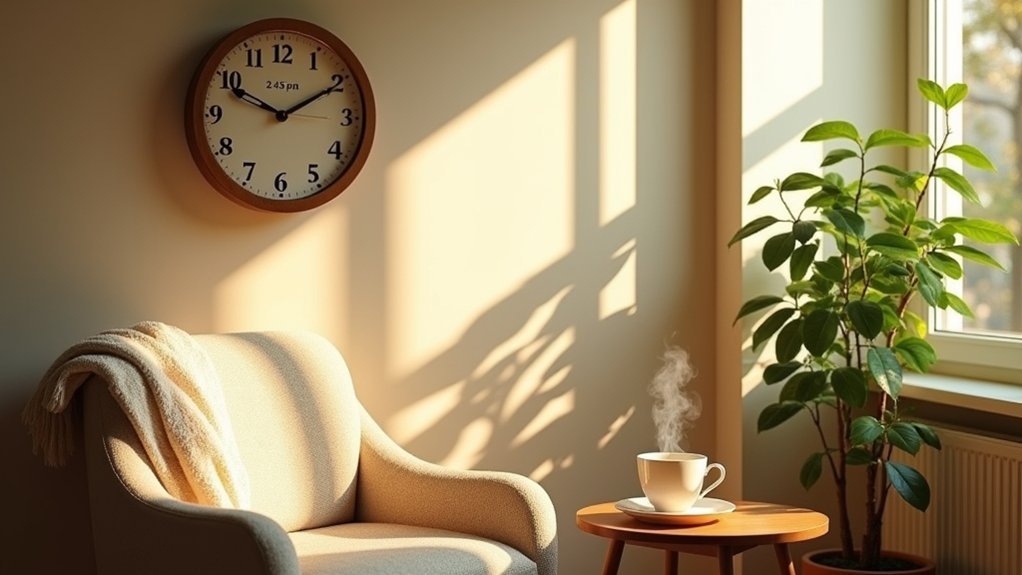
Although afternoon drowsiness naturally peaks between 1 PM and 3 PM, you’ll want to complete any napping before the 3 PM cutoff to protect your nighttime sleep quality.
Taking naps later disrupts your circadian rhythms and makes falling asleep at bedtime considerably harder. This timing isn’t arbitrary—your body’s natural alertness patterns create an ideal window for restorative rest without interference.
Short naps within this timeframe boost your alertness without triggering sleep inertia that longer, late-day naps cause.
When you time your naps properly, you’re supporting rather than sabotaging your sleep quality. Establishing a regular napping routine before 3 PM helps maintain your body’s natural sleep-wake cycle, ensuring your afternoon rest enhances rather than compromises your nighttime sleep patterns.
Avoid Deep Sleep Stage 3 by Setting Strategic Alarms
Beyond timing your naps correctly, you’ll need to control their duration to prevent the grogginess that comes from waking during deep sleep.
Set alarms for 20-30 minutes to keep your afternoon naps within light sleep stages. A 30-minute nap guarantees you won’t enter Stage 3 deep sleep, which causes that groggy feeling upon waking up.
If you need more rest, consider a 90-minute nap duration that completes full sleep cycles without interference. This longer option requires precise timing but prevents you from waking during deeper stages.
Sleep apps can track your sleep stages and optimize alarm settings, making sure you wake during lighter phases.
Strategic alarm placement is essential for maintaining the restorative benefits of napping while avoiding the sluggishness associated with interrupted deep sleep.
Monitor Your Natural Circadian Rhythm for Optimal Nap Timing

Since your body naturally experiences an energy dip between 1 p.m. and 3 p.m., timing your naps during this window aligns with your circadian rhythm for peak effectiveness.
Monitoring your sleep-wake cycle helps you identify personal patterns that enhance nap duration and prevent grogginess from deeper sleep stages.
To establish ideal nap timing:
- Track your energy levels throughout the day to identify when you feel naturally drowsy, avoiding late afternoon naps that interfere with nighttime sleep quality.
- Schedule regular naps at consistent times to reinforce your circadian rhythm and maintain steady alertness patterns.
- Choose shorter naps of 20-30 minutes during your identified low-energy periods to maximize benefits without entering sleep stages that cause post-nap fatigue.
Understanding your unique circadian patterns promotes better nap duration choices and overall sleep quality improvement.
Frequently Asked Questions
How to Nap Without Disrupting Circadian Rhythm?
You should nap for 20-30 minutes between 1-3 p.m. when your body naturally dips in energy. Don’t nap after 3 p.m. or you’ll struggle falling asleep tonight.
What Is the 30 60 90 Nap Rule?
You can nap for 30 minutes to boost alertness, 60 minutes to enhance memory retention, or 90 minutes for a complete sleep cycle that improves creativity while avoiding grogginess.
How Long Should a Nap Be to Not Interrupt Sleep?
You should limit your nap to 20-30 minutes to avoid entering deep sleep stages. This prevents grogginess and won’t disrupt your nighttime sleep schedule or circadian rhythm.
Does the Navy Seal Nap Trick Work?
You’ll find the Navy Seal nap trick effective for boosting alertness without grogginess. The 20-minute limit prevents deep sleep entry, while the afternoon timing aligns with your body’s natural energy dip.
In Summary
You’ll maximize your nap’s benefits by sticking to these timing strategies. Keep your power naps short at 15-20 minutes, or commit to a full 90-minute cycle if you’ve got time. Don’t nap after 3 PM, and always set alarms to avoid deep sleep stages. Pay attention to your body’s natural rhythms to find your perfect nap window. You’ll wake up refreshed without sabotaging tonight’s sleep.




Leave a Reply