
You can achieve peaceful sleep by using earplugs or noise-canceling headphones that provide up to 24 dB of sound reduction. Install heavy curtains and soundproof windows to block external noise, while creating consistent white noise with fans or sound machines to mask disruptions. Add sound-absorbing materials like rugs and cushions to your bedroom, and strategically rearrange furniture against shared walls. Address controllable noise sources and consider sleep separation if partner disturbances persist. These proven strategies will transform your sleep environment into the quiet sanctuary you’ve been seeking.
Use Earplugs or Noise-Canceling Headphones
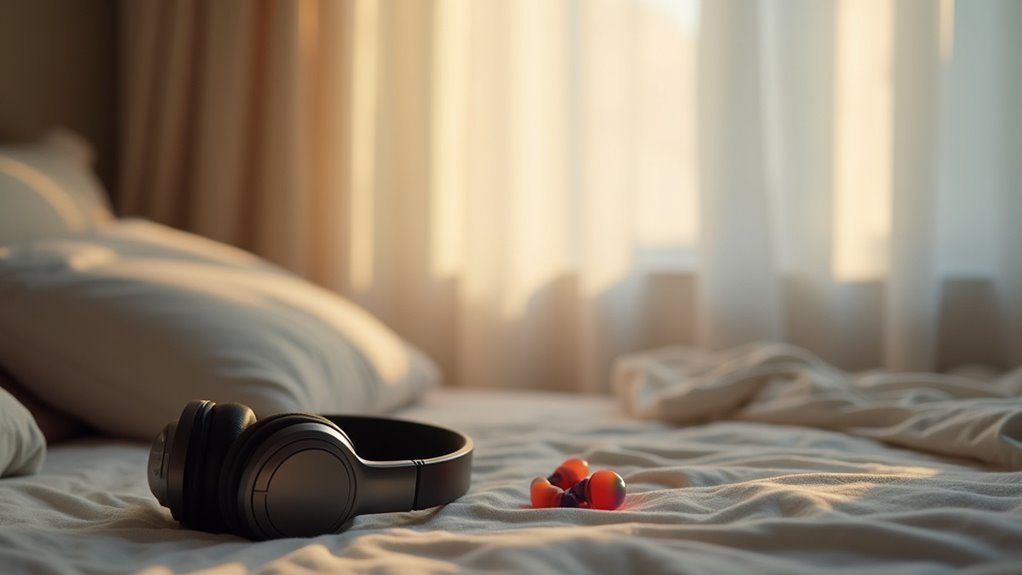
One of the most effective ways to shield yourself from disruptive sounds is using earplugs or noise-canceling headphones while you sleep. High-quality earplugs deliver up to 24 dB of sound attenuation, effectively blocking external noise that disrupts your rest.
If you find earplugs uncomfortable, noise-canceling headphones offer an excellent alternative by actively eliminating specific frequencies through opposing sound waves.
For ideal hygiene, you’ll need to replace foam earplugs regularly and clean silicone ones before each use to prevent infections.
Both options considerably improve sleep quality by reducing sleep disturbances, allowing you to achieve deep sleep cycles.
Choose the option that provides the most comfortable fit for your needs, as consistent use leads to more restorative sleep and better noise reduction results.
Install Heavy Curtains and Soundproof Your Windows
When external noise penetrates through your windows, installing heavy curtains and soundproofing these entry points creates a powerful barrier against sleep disruptions.
Heavy curtains block external noise effectively while preventing light from disturbing your rest, creating an ideal sleep environment.
Double-pane soundproof windows reduce noise almost as effectively as solid walls, dramatically enhancing your bedroom’s tranquility.
You can add acoustic window inserts to existing windows for additional protection against noise infiltration from outside sources.
Seal gaps around windows and doors using soundproofing materials like acoustic caulk to drastically decrease noise levels.
These improvements don’t just reduce noise—they also enhance temperature regulation in your bedroom, contributing to overall comfort that’ll improve sleep quality throughout the night.
Create White Noise With Fans or Sound Machines

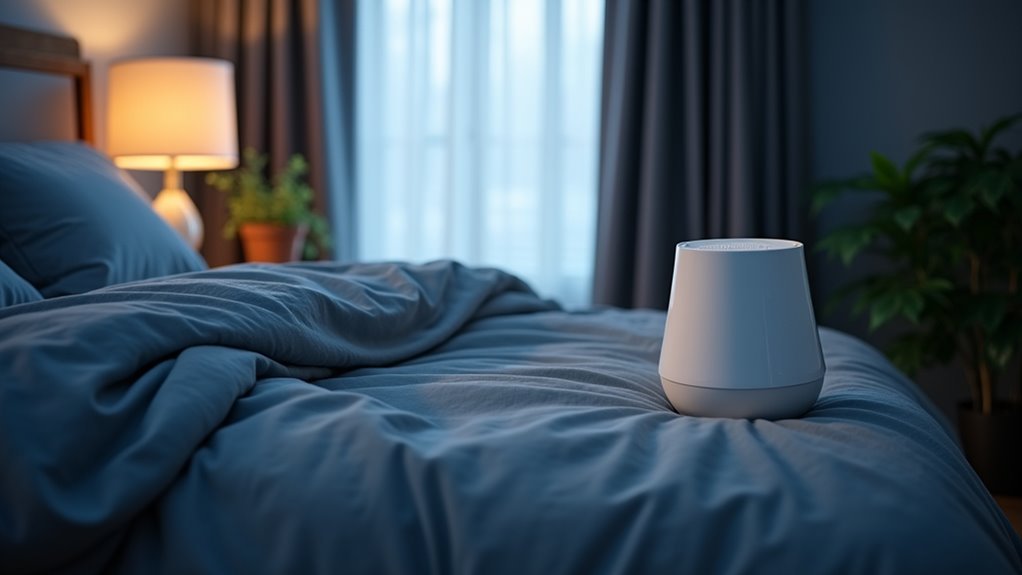
You can transform your bedroom into a peaceful sanctuary by introducing consistent background noise through fans or dedicated sound machines.
Fans offer the dual advantage of improving air circulation while masking disruptive sounds, creating an ideal sleep environment.
Sound machines provide customizable options with various noise settings and convenient features like timers and volume controls that let you tailor your experience for maximum comfort.
Fan Benefits for Sleep
Since sudden noises can jolt you awake throughout the night, fans offer an excellent solution by creating consistent white noise that masks disruptive sounds. These fan benefits extend beyond simple noise masking, as they simultaneously improve air circulation and help regulate room temperature for a comfortable sleeping environment.
| Fan Benefit | Sleep Impact |
|---|---|
| White noise generation | Masks irregular sounds that reduce disturbances |
| Air circulation improvement | Creates ideal temperature for rest |
| Consistent background noise | Prevents sudden wake-ups during night |
| Enhanced deep sleep | Increases sleep duration by 15-30 minutes |
| Cost-effective option | Delivers results without expensive equipment |
Studies show that fans can enhance sleep duration and sleep quality considerably. You’ll find this cost-effective option provides comparable results to specialized sound machines while offering additional ventilation benefits.
White Noise Machine Features
While fans provide excellent white noise benefits, dedicated sound machines offer more sophisticated features that can further enhance your sleep environment.
White noise machines deliver consistent sound specifically designed to mask disruptive noises effectively. You’ll find these devices considerably improve sleep quality by creating a reliable sound barrier.
Key features include:
- Multiple sound options – Nature sounds, fan noises, and various white noise frequencies to customize auditory environment
- Volume control – Precise adjustment capabilities for ideal comfort levels
- Auto-off timers – Energy-saving functionality that shuts off after preset intervals
- Portable options – Compact designs for maintaining soothing sounds while traveling
- Advanced sound technology – Superior noise masking compared to basic fans
These machines help maintain uninterrupted sleep cycles by providing steady background noise that prevents sudden sounds from disturbing your rest.
Add Sound-Absorbing Materials to Your Bedroom
Although external noise sources often lie beyond your control, transforming your bedroom into a sound sanctuary remains entirely achievable through strategic material choices.
Sound-absorbing materials dramatically reduce noise levels while improving bedroom acoustics. Heavy curtains serve dual purposes—blocking external sounds and preventing disruptive light infiltration. Soft furnishings like rugs, cushions, and curtains absorb sound waves naturally, creating a more peaceful atmosphere.
Consider installing acoustic tiles or soundproof wall decorations to dampen ambient noise effectively. Position bookshelves filled with books against shared walls to create an efficient sound barrier that minimizes noise transmission from adjacent rooms.
Strategically rearrange furniture by placing larger items against noise-prone areas to muffle unwanted sounds. These simple modifications work together to establish a tranquil sleep environment that promotes better rest quality.
Rearrange Your Sleep Environment for Noise Reduction
You can greatly reduce bedroom noise by strategically positioning your furniture to create natural sound barriers.
Place large items like bookshelves or dressers against shared walls to block noise from neighboring rooms, and move your bed away from windows facing busy streets.
Add soft furnishings such as thick curtains, area rugs, and extra pillows throughout the room to absorb sound reflections and dampen ambient noise.
Strategic Furniture Placement
The way you arrange furniture in your bedroom can greatly impact how much noise reaches your sleeping area.
Strategic furniture placement serves as your first line of defense against unwanted sounds that disrupt sleep quality.
- Position large furniture pieces like bookshelves and dressers against shared walls to create effective sound barriers.
- Place your bed away from windows and doors to minimize exposure to external sounds from traffic and outdoor disturbances.
- Use soft furnishings such as rugs and curtains throughout the room to absorb sound reflections and create a peaceful atmosphere.
- Experiment with different layouts until you find the ideal arrangement that reduces noise exposure.
- Consider positioning your bed in a corner to establish a buffer zone against sounds entering from multiple directions.
Soft Furnishing Additions
Building on smart furniture positioning, soft furnishings offer another powerful layer of noise reduction for your bedroom. Plush rugs and thick curtains effectively absorb sound waves, creating a quieter environment that’ll enhance sleep quality.
You’ll notice dramatic improvements when you add soft pillows and cushions throughout your space—they dampen sound reflections that would otherwise bounce around the room.
Consider investing in upholstered furniture like padded headboards or soft chairs. These pieces don’t just boost comfort; they actively absorb disruptive noises rather than reflecting them back into your space.
Experiment with different arrangements to maximize your soft furnishings’ impact. Strategic placement of these sound-absorbing materials creates a peaceful sleeping atmosphere that shields you from external disturbances.
Address Noise Sources You Can Control
While external noise sources often feel beyond your reach, many disruptive sounds originate from controllable sources within your own living space. Addressing these noise sources directly creates a foundation for peaceful sleep through effective noise reduction strategies.
Start by identifying specific culprits in your home:
- Relocate loud appliances like refrigerators or washing machines away from bedrooms using soundproofing materials.
- Apply soft furnishings such as thick rugs and heavy curtains to absorb sound transmission.
- Seal gaps around doors and windows with acoustic sealants to block outside noise infiltration.
- Establish communication with neighbors about implementing shared quiet hours during nighttime.
- Ask family members to maintain lower volume levels on electronics and conversations after bedtime.
These controllable adjustments greatly improve your sleep environment’s acoustics.
Consider Sleep Separation for Partner-Related Disturbances
When your partner’s snoring, sleep talking, or restless movements consistently disrupt your sleep, considering separate sleeping arrangements—often called a “sleep divorce”—can restore quality rest for both of you.
Sleep separation directly addresses partner-related disturbances that cause chronic disruptions to your sleep quality.
Research shows that noise disturbances from partners lead to irritability and decreased cognitive performance.
By creating a designated sleep space, you’ll protect your deep sleep cycles from interruptions, allowing for more restful sleep. This practical solution improves overall mood and daytime functioning.
You don’t need to sacrifice emotional intimacy when prioritizing sleep health.
Many couples successfully maintain strong relationships while sleeping separately, recognizing that better sleep quality benefits both partners and strengthens their connection during waking hours.
Frequently Asked Questions
How to Sleep Peacefully Without Sound?
You can achieve peaceful sleep by using high-quality earplugs, noise-canceling headphones, or white noise machines. Install heavy curtains, rearrange furniture, and add soft furnishings like rugs to absorb disruptive sounds effectively.
What Is the Best Thing to Block Out Noise When Sleeping?
You’ll find foam earplugs with 32 dB noise reduction rating work best for blocking sleep-disrupting sounds. They’re affordable, comfortable, and effectively silence most disturbances. Alternatively, noise-canceling headphones actively eliminate unwanted sounds through opposing waves.
How to Be Less Sensitive to Noise When Sleeping?
You can develop a consistent sleep routine and practice relaxation techniques like meditation before bed. Use white noise machines to condition your brain, and gradually expose yourself to minimize sensitivity.
What Noise Is Best for Peaceful Sleep?
You’ll find white noise or nature sounds like rain work best for peaceful sleep. They mask disruptive noises while creating consistent, calming backgrounds that won’t startle you awake during the night.



Leave a Reply