
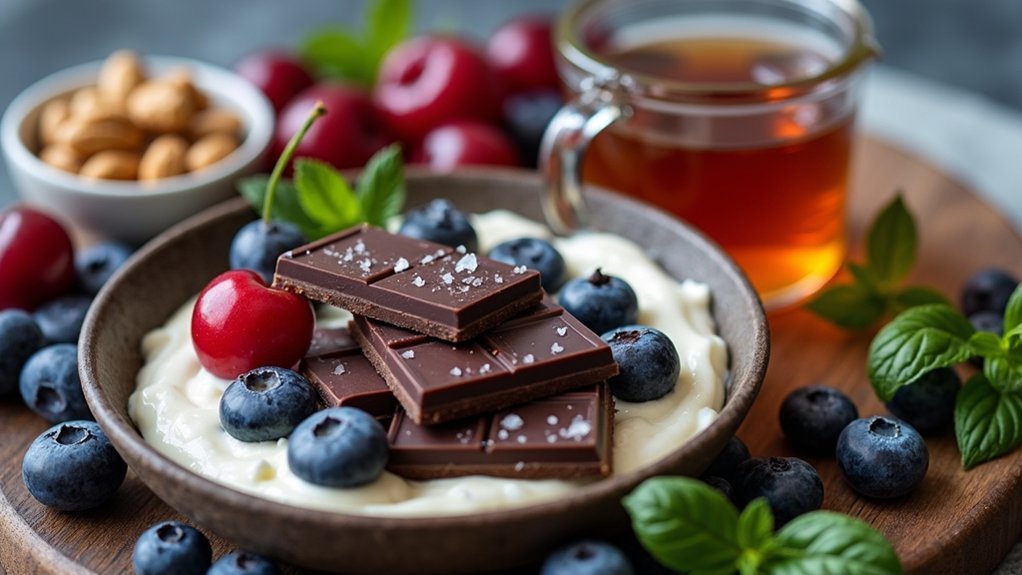
You’ll boost your REM cycle quality by eating magnesium-rich foods like almonds, spinach, and pumpkin seeds 4-6 hours before bedtime. Omega-3 fatty fish such as salmon and mackerel improve REM duration when consumed three times weekly. Tart cherry juice contains natural melatonin and can increase sleep duration by 84 minutes when drunk 1-2 hours before bed. Complex carbohydrates like oatmeal boost serotonin levels, while avoiding alcohol and high-fat foods prevents REM disruption. Strategic meal timing and specific nutrient combinations can transform your sleep architecture.
Understanding the Connection Between Nutrition and REM Sleep

While you sleep, your brain cycles through different stages, with REM sleep serving as the most critical phase for memory consolidation, emotional processing, and cognitive restoration.
What you eat directly influences your ability to achieve quality REM sleep through complex biochemical processes. Your nutrition choices affect neurotransmitter production, particularly serotonin, which converts to melatonin and regulates your sleep-wake cycle.
Your dietary choices create a direct biochemical pathway to better REM sleep by influencing serotonin and melatonin production.
Specific nutrients act as building blocks for sleep-promoting compounds. Tryptophan-rich foods trigger serotonin synthesis, while omega-3 fatty acids enhance overall sleep architecture.
Magnesium helps your nervous system relax, extending REM duration, and complex carbohydrates facilitate tryptophan’s journey to your brain.
Understanding these connections empowers you to make informed dietary choices that optimize your REM sleep quality naturally.
Magnesium-Rich Foods That Enhance Sleep Quality
You’ll find that magnesium acts as a natural sleep enhancer by regulating neurotransmitters that promote relaxation and extend your REM cycles.
Your best food sources include leafy greens, almonds, cashews, seeds, whole grains, and even dark chocolate, which can boost serotonin levels for better sleep onset.
Timing matters too—consuming these magnesium-rich foods in the evening can reduce sleep disturbances and maximize your REM sleep effectiveness.
Magnesium’s REM Benefits
As your body prepares for sleep each night, magnesium acts as a natural relaxant that helps regulate your nervous system and promotes the deeper sleep stages essential for ideal REM cycles.
When you consume magnesium-rich foods like spinach, almonds, and black beans, you’re directly supporting your brain’s ability to achieve longer, more restorative REM sleep periods.
Research shows that adequate magnesium intake helps improve sleep quality by reducing sleep disturbances and extending total sleep duration.
You’ll experience better cognitive functioning and emotional regulation when your REM cycles are properly supported.
Try incorporating magnesium-rich foods into your evening routine—a small bowl of oatmeal or yogurt with nuts can facilitate relaxation and naturally enhance your sleep architecture for optimal overnight recovery.
Top Magnesium Food Sources
Now that you understand magnesium’s sleep benefits, let’s explore the specific foods that pack the highest magnesium content for better REM sleep.
| Food Category | Top Sources | Magnesium Benefits |
|---|---|---|
| Nuts & Seeds | Almonds, pumpkin seeds | Promote relaxation, regulate neurotransmitters |
| Leafy Greens | Spinach, kale, Swiss chard | Foster calm, improve sleep quality |
| Legumes | Black beans, chickpeas | Enhance sleep duration and efficiency |
| Fruits | Avocados, bananas | Reduce insomnia symptoms |
| Grains | Whole grains, quinoa | Support overall sleep health |
Incorporating these magnesium-rich options into your daily meals can greatly improve your sleep quality. Leafy greens work particularly well in evening salads, while nuts make excellent bedtime snacks that won’t disrupt your sleep cycle.
Optimal Consumption Timing
While magnesium-rich foods provide essential sleep benefits, timing your consumption strategically can maximize their impact on REM cycle quality.
For ideal consumption timing, you’ll want to consume magnesium-rich foods four to six hours before bedtime to allow proper digestion and absorption.
Timing Guidelines for Maximum Sleep Enhancement:
- Late Afternoon Intake – Consume almonds, spinach, or pumpkin seeds between 2-4 PM to support evening melatonin production.
- Early Dinner Focus – Include leafy greens and nuts in meals eaten 4-6 hours before sleep.
- Consistent Meal Timing – Maintain regular eating schedules to strengthen circadian rhythm regulation.
- Avoid Late Consumption – Don’t eat magnesium-rich foods within 2 hours of bedtime to prevent digestive interference.
This approach guarantees magnesium-rich foods enhance sleep quality without disrupting your natural sleep-wake cycles.
Omega-3 Fatty Fish for Deep Restorative Sleep
The ocean’s bounty offers one of nature’s most powerful sleep enhancers through omega-3 fatty fish like salmon, mackerel, and sardines.
These omega-3 fatty acids, particularly EPA and DHA, directly improve your sleep quality by enhancing REM cycle duration and reducing sleep disturbances. When you consume fatty fish regularly, you’ll experience better sleep efficiency and deeper restorative rest.
You should aim for at least three servings weekly to maximize benefits. Studies consistently show that people who follow this pattern report considerably higher sleep quality compared to those with lower omega-3 intake.
These essential fats boost melatonin production, the hormone controlling your sleep-wake cycles, which naturally extends REM periods. By incorporating omega-3-rich fish into your diet, you’re actively supporting your body’s restorative sleep processes.
Tart Cherry Juice: Nature’s Melatonin Source

You’ll find one of nature’s most potent sleep aids sitting in the produce aisle: tart cherry juice contains naturally occurring melatonin that directly supports your body’s sleep-wake cycle.
This ruby-colored beverage doesn’t just help you fall asleep faster—it specifically enhances REM sleep quality through its unique combination of melatonin and powerful antioxidants.
When you drink tart cherry juice consistently, you’re fundamentally supplementing your body’s own melatonin production with a whole-food source that works in harmony with your natural sleep rhythms.
Natural Melatonin Content
Among nature’s most potent sleep-enhancing beverages, tart cherry juice stands out as an exceptional source of naturally occurring melatonin.
You’ll find that this ruby-red elixir contains considerably higher melatonin levels than most other foods, making it a powerful natural alternative for enhancing your sleep cycle.
The melatonin in tart cherry juice works directly with your body’s circadian rhythms to improve your sleep quality and extend REM phases.
Here’s what makes this natural source so effective:
- Higher concentration – Tart cherries contain more melatonin than virtually any other whole food
- Bioavailable form – The melatonin is easily absorbed by your digestive system
- Synergistic compounds – Additional nutrients enhance melatonin’s sleep-promoting effects
- Consistent potency – Natural melatonin levels remain stable in quality juice products
REM Sleep Enhancement
Research consistently demonstrates that tart cherry juice delivers remarkable improvements to REM sleep quality through its impressive concentration of natural melatonin. When you drink this powerful sleep-enhancing food, you’ll experience an average increase of 84 minutes in total sleep duration, directly benefiting your REM cycles.
The juice’s natural melatonin content works synergistically with its antioxidants to reduce inflammation and oxidative stress that typically disrupts quality sleep.
You’ll maximize these benefits by consuming tart cherry juice 1-2 hours before bedtime. This timing allows the melatonin to properly regulate your sleep-wake cycles, enhancing sleep efficiency and extending precious REM phases.
Among sleep-enhancing foods, tart cherry juice stands out as one of nature’s most effective solutions for achieving deeper, more restorative sleep.
Nuts and Seeds That Support Sleep Cycles
While many people reach for medication to improve their sleep, nuts and seeds offer a natural pathway to better REM cycles through their rich nutritional profiles.
These nutrient-dense snacks contain compounds that directly support your body’s sleep mechanisms.
Consider incorporating these sleep-supporting options into your evening routine:
- Walnuts – High in omega-3 fatty acids and melatonin, helping regulate your sleep patterns naturally.
- Almonds – Rich in magnesium and vitamin E, promoting muscle relaxation and deeper sleep stages.
- Pumpkin seeds – Loaded with tryptophan, which boosts serotonin production and melatonin synthesis.
- Mixed nuts – A handful before bed stabilizes blood sugar, preventing sleep interruptions.
You’ll find that consuming these nuts and seeds consistently can enhance your sleep cycles by providing essential nutrients your brain needs for ideal REM function.
Complex Carbohydrates for Better Sleep Onset

When you’re struggling to fall asleep quickly, complex carbohydrates can serve as your natural sleep aid by boosting serotonin levels in your brain. These nutrient-dense foods enhance tryptophan availability, which produces both serotonin and melatonin—essential hormones for healthy sleep patterns.
| Food Type | Best Timing | Sleep Benefit |
|---|---|---|
| Brown rice | 4 hours before bed | Faster sleep onset |
| Oatmeal | Evening meal | Enhanced sleep quality |
| Legumes | Dinner portion | Stable blood sugar |
You’ll experience better sleep quality when you pair complex carbohydrates with protein, maintaining steady glucose levels throughout the night. Research shows people consuming more complex carbohydrates report longer REM sleep duration compared to those eating refined alternatives. This strategic timing optimizes your body’s natural sleep-wake cycle.
Foods to Avoid Before Bedtime
Just as choosing the right foods can enhance your REM sleep quality, certain foods and beverages can sabotage your sleep cycle when consumed too close to bedtime.
These dietary choices can fragment your rest and markedly reduce REM duration.
Here’s what you should avoid before bed:
- Alcohol – While it might make you drowsy initially, alcohol disrupts REM sleep patterns and causes fragmented rest throughout the night.
- High-fat foods – Saturated fats decrease REM duration and make your sleep less restorative, leaving you tired despite adequate sleep time.
- Spicy foods – These can trigger heartburn and acid reflux, disturbing your sleep and affecting REM cycle quality.
- Sugary snacks – Processed foods cause energy spikes and crashes that interfere with achieving quality REM sleep.
Timing Your Meals for Optimal Sleep
Beyond choosing the right foods, the timing of your meals plays an essential role in optimizing your REM sleep cycles.
You’ll want to consume complex carbohydrates like whole grains 4-6 hours before bedtime to facilitate sleep onset and promote better REM cycles. Timing your meals strategically also means eating magnesium-rich foods such as nuts and leafy greens earlier in the evening to enhance sleep quality.
Avoid heavy, high-fat meals within three hours of bedtime, as they’ll disrupt digestion and negatively impact REM sleep.
Instead, establish a consistent meal schedule with dinner consumed 2-3 hours before sleep to regulate your internal clock.
Consider incorporating sleep-promoting foods like tart cherry juice or kiwi in pre-bedtime snacks to signal your body for sleep.
Creating a Sleep-Supporting Diet Plan
While understanding meal timing sets the foundation for better REM sleep, developing an all-encompassing sleep-supporting diet plan requires strategic food selection and consistent daily implementation.
Strategic food selection and consistent daily implementation form the cornerstone of any comprehensive sleep-supporting diet plan beyond basic meal timing.
You’ll need to incorporate specific nutrients that directly enhance sleep quality through multiple pathways.
Your thorough diet plan should include these essential components:
- Tryptophan-rich proteins – Add turkey, dairy products, and eggs to boost serotonin production.
- Complex carbohydrates – Choose whole grains and fruits to facilitate tryptophan brain uptake.
- Magnesium sources – Include almonds, leafy greens, and seeds for deeper REM cycles.
- Omega-3 fatty acids – Consume salmon and fatty fish for improved sleep regulation.
Consider tart cherry juice as your evening beverage, since it’s naturally high in melatonin.
These dietary sources work synergistically to optimize your REM sleep architecture.
Frequently Asked Questions
What Foods Are Good for Sleep Quality?
You’ll sleep better by eating tryptophan-rich turkey and dairy, complex carbohydrates like whole grains, tart cherry juice, fatty fish such as salmon, and nuts like almonds and walnuts for improved rest.
What Supplement Promotes REM Sleep?
You’ll find melatonin most effective for promoting REM sleep, typically in 0.5-5mg doses before bedtime. Magnesium, omega-3 fatty acids, and glycine also enhance REM quality by supporting brain function and relaxation.
Can Diet Affect REM Sleep?
Yes, your diet directly affects REM sleep quality. You’ll improve REM cycles by eating magnesium-rich nuts, tryptophan-containing dairy, fatty fish with omega-3s, and high-glycemic carbohydrates while avoiding caffeine and alcohol before bedtime.
How Can I Improve My Sleep Quality?
You can improve your sleep quality by establishing a consistent bedtime routine, keeping your bedroom cool and dark, avoiding screens before bed, and eating tryptophan-rich foods like turkey.
In Summary
You’ve learned how strategic food choices can dramatically improve your REM sleep quality. Start incorporating magnesium-rich leafy greens, omega-3 fatty fish, and tart cherry juice into your daily routine. Don’t forget to time your meals properly and avoid sleep disruptors like caffeine and heavy foods before bed. By making these simple dietary adjustments, you’ll optimize your sleep cycles and wake up feeling more refreshed and mentally sharp.




Leave a Reply