
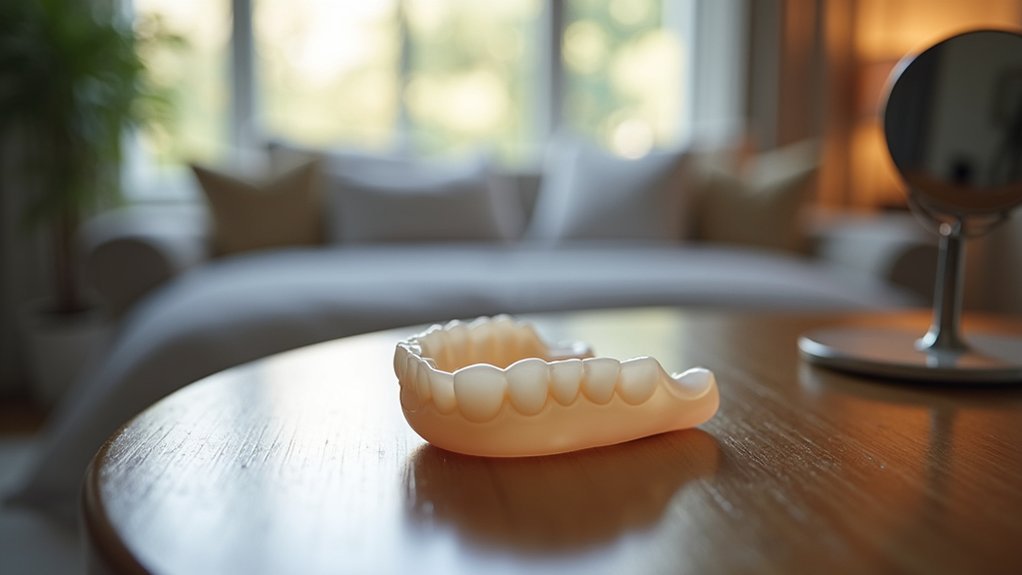
Oral appliance therapy treats your obstructive sleep apnea using a custom-made device that repositions your jaw or tongue to keep your upper airway open while you sleep. The most popular type, mandibular advancement devices (MADs), achieve a 90% compliance rate compared to CPAP’s 50%. You’ll experience a portable, discrete solution that’s effective for mild to moderate OSA, with 70% of users seeing over 50% reduction in apnea events. Below, you’ll discover everything about types, benefits, and getting started.
Understanding Oral Appliance Devices and How They Work

Sleep disruption from obstructive sleep apnea affects millions, but oral appliance therapy offers a discrete, effective solution that works while you sleep.
These dental devices keep your upper airway open by repositioning your jaw or tongue, preventing the breathing pauses that cause daytime sleepiness.
Mandibular advancement devices are the most popular type, gently moving your lower jaw forward to stop airway blockage.
Alternatively, tongue-retaining devices hold your tongue in position to maintain airflow.
Custom-made oral appliances fitted by dental providers deliver superior results compared to generic options, achieving an impressive 90% compliance rate versus 50% for CPAP machines.
This higher acceptance stems from their comfort, portability, and silent operation, making them an attractive alternative for treating obstructive sleep apnea effectively.
Types of Oral Appliances for Sleep Apnea Treatment
When choosing an oral appliance for sleep apnea treatment, you’ll encounter two primary categories that work through different mechanisms to maintain your airway.
Mandibular Advancement Devices (MADs)
1. Custom-made MADs – These provide superior comfort and effective treatment compared to over-the-counter options, reducing obstructive sleep apnea (OSA) severity by over 50% in approximately 70% of users.
2. Over-the-counter models – “Boil and bite” versions offer convenience but lack the precise fit needed for ideal breathing improvement.
Tongue-Retaining Devices (TRDs)
3. Suction-based design – Hold your tongue forward to prevent airway blockage, suitable for individuals with missing teeth.
4. Rapid Maxillary Expansion devices – Primarily used for children, these widen the upper jaw to increase airway size and improve breathing patterns.
Benefits and Effectiveness of Oral Appliance Therapy

Although CPAP machines remain the gold standard for sleep apnea treatment, oral appliance therapy offers compelling advantages that make it an increasingly popular alternative. This treatment option delivers impressive effectiveness, with 70% of users experiencing over 50% reduction in apnea events.
Custom mandibular advancement devices (MADs) show remarkable results for obstructive sleep apnea (OSA), particularly for mild to moderate cases.
Custom mandibular advancement devices deliver remarkable therapeutic outcomes for patients with mild to moderate obstructive sleep apnea.
The benefits extend beyond symptom reduction. You’ll find oral appliances comfortable and effective, with a 90% compliance rate compared to CPAP’s 50%.
About one-third of patients completely resolve their OSA symptoms, eliminating daytime fatigue and improving quality of life. The portable, user-friendly design makes oral appliance therapy an attractive option when CPAP tolerance becomes challenging.
Side Effects and Risks of Using Oral Appliances
While oral appliances offer significant benefits for sleep apnea treatment, you’ll need to evaluate potential side effects before starting therapy.
Short-term side effects typically resolve within weeks but may include:
- Increased salivation and dry mouth – Your body adjusts to the appliance gradually.
- Jaw pain and gum irritation – Common during initial adaptation period.
- Bite changes or tooth movement – Rare long-term risks requiring regular dental check-ups.
- Exacerbated symptoms for TMJ disorders – Healthcare evaluation essential before treatment.
If you have bruxism, teeth grinding can damage oral appliances and worsen dental issues.
You’ll also need sufficient healthy teeth for effectiveness.
Those with severe obstructive sleep apnea often require CPAP therapy instead.
To monitor oral health properly, schedule regular dental check-ups since certain health conditions make oral appliances unsuitable for some patients.
Getting Started With Oral Appliance Treatment

Despite these potential concerns, most patients find oral appliance therapy highly manageable with proper preparation and professional guidance.
Your journey begins with a sleep study to diagnose obstructive sleep apnea and determine if you’re a suitable candidate. Once confirmed, you’ll receive a referral to a dental sleep specialist who’ll create your custom-fit appliance.
The dentist takes detailed impressions of your teeth or uses 3D scanning technology to guarantee your mandibular advancement device fits perfectly. This precision prevents discomfort and maximizes effectiveness.
Regular follow-up visits are essential to monitor fit and comfort as your mouth adjusts to the appliance.
Don’t hesitate to communicate any side effects or concerns during these appointments. Your dentist can make necessary adjustments to optimize treatment outcomes and guarantee you’re getting the most benefit from your therapy.
Frequently Asked Questions
What Is the Most Effective Oral Appliance for Sleep Apnea?
You’ll find mandibular advancement devices (MADs) are the most effective oral appliances for sleep apnea. They reduce OSA severity by over 50% in approximately 70% of users by repositioning your lower jaw forward.
How Long Does an Oral Appliance for Sleep Apnea Last?
You’ll typically get 5-10 years from a custom oral appliance, though over-the-counter models won’t last as long. Your device’s lifespan depends on materials, maintenance habits, and whether you grind your teeth.
Is Oral Appliance Therapy Better Than CPAP?
You’ll find oral appliances aren’t necessarily better than CPAP, but they’re more comfortable and portable with higher compliance rates. CPAP remains superior for severe sleep apnea cases requiring maximum effectiveness.
Does Insurance Cover Oral Appliances for Sleep Apnea?
Yes, most insurance plans including Medicare cover custom oral appliances for sleep apnea when you’ve got a prescription and sleep study diagnosis. You’ll need pre-authorization and should verify your specific coverage details.



Leave a Reply