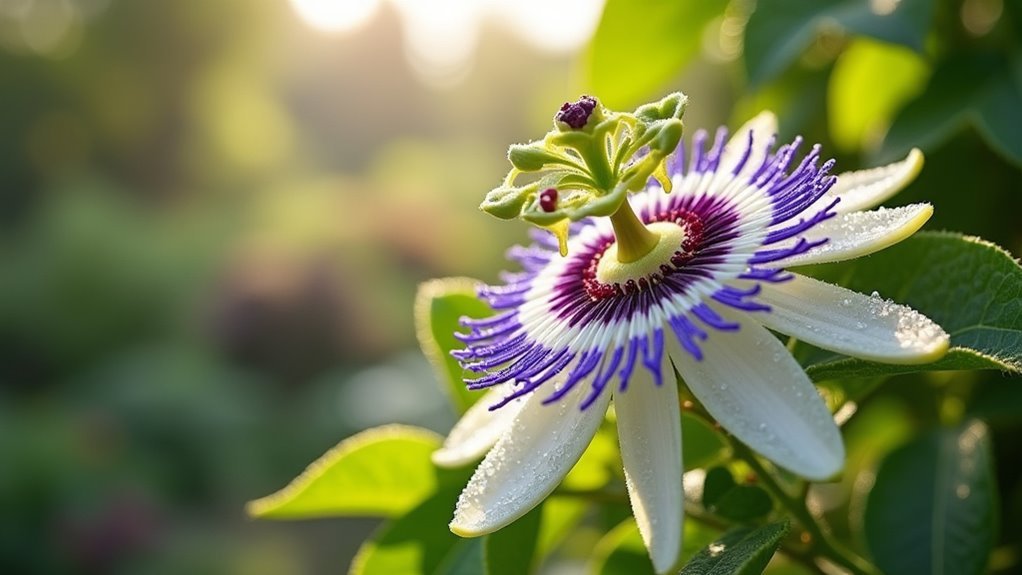
Passionflower extract’s sedative power comes from its unique ability to modulate GABA levels in your brain, reducing neuronal excitability and promoting deep relaxation. Its active compounds, including flavonoids and indole alkaloids, work similarly to benzodiazepines but naturally. Clinical studies show it’s comparable to oxazepam in effectiveness, reducing sleep onset time while enhancing slow-wave sleep patterns. You’ll discover how this natural sedative outperforms many pharmaceutical alternatives without morning grogginess.
The Science Behind Passionflower’s Sedative Properties
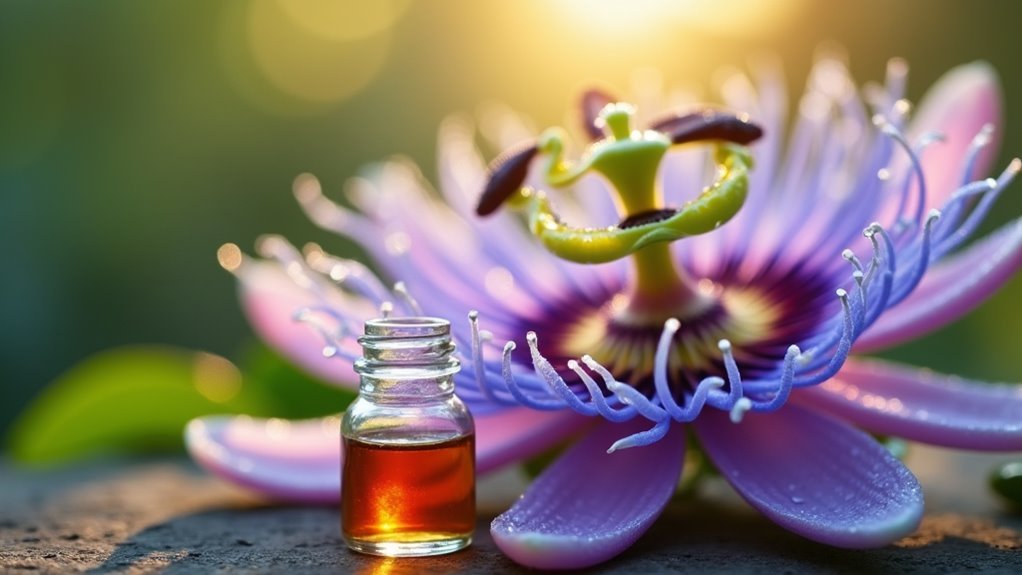
When you consume passionflower extract, its sedative effects stem from the herb’s remarkable ability to modulate gamma-aminobutyric acid (GABA) levels in your brain. This process reduces neuronal excitability and promotes deep relaxation.
The herb’s active compounds, including flavonoids and indole alkaloids, directly interact with GABA receptors, producing calming effects similar to benzodiazepines.
Research shows passionflower positively influences vital neurotransmitters like dopamine and serotonin, which regulate mood and anxiety.
Clinical trials demonstrate that this natural sedative greatly reduces anxiety levels while improving sleep quality.
Whether you’re drinking herbal tea or taking concentrated extracts, studies confirm passionflower’s effectiveness matches traditional sedatives like oxazepam.
Regular consumption creates measurable improvements in sleep patterns within just one week.
How Passionflower Modulates GABA Neurotransmitters
GABA modulation represents the primary mechanism through which passionflower achieves its impressive sedative results. When you consume Passiflora extract, specific compounds interact directly with your GABA receptors, creating a powerful anxiolytic effect that naturally calms your nervous system.
Research demonstrates how passionflower neurotransmitters work to enhance your brain’s relaxation response:
Research reveals how passionflower compounds naturally enhance your brain’s relaxation pathways, creating powerful calming effects through targeted neurotransmitter modulation.
- Increases GABA levels – The extract boosts available GABA in your brain.
- Inhibits excessive neural activity – Reduces overstimulation that causes anxiety.
- Promotes slow-wave sleep – Enhances deep, restorative sleep phases.
- Reduces sleep onset latency – Helps you fall asleep faster.
Studies show passionflower’s GABAergic effects rival traditional sedative medications, making it an effective natural alternative for managing anxiety and sleep disturbances without harsh side effects.
Clinical Evidence for Anxiety Reduction
Although anecdotal reports have long suggested passionflower’s calming properties, rigorous clinical trials now provide compelling scientific evidence for its anxiety-reducing capabilities.
Clinical studies demonstrate that Passiflora incarnata extracts effectively reduce pre-surgical anxiety in patients. A 500 mg tablet showed greater efficacy than oxazepam for reducing anxiety before surgery.
Additional research found that 700 mg water extracts greatly decreased anxiety without affecting sedation levels. For dental procedures, 260 mg doses lowered anxiety, blood pressure, and heart rate, highlighting the herb’s calming effects.
When compared to midazolam, 500 mg capsules proved equally effective for anxiolytic purposes during third molar extractions.
These findings establish passionflower as a viable natural sedative alternative to conventional medications.
Sleep Quality Enhancement Through Passionflower Extract
Beyond its proven anxiety-reducing benefits, passionflower extract demonstrates remarkable potential for enhancing sleep quality and addressing insomnia concerns.
Passiflora incarnata’s sedative effects stem from its ability to modulate GABA levels in your brain, creating enhanced relaxation that’s conducive to better sleep.
Research reveals four key sleep benefits you’ll experience:
Research demonstrates that passionflower extract delivers four distinct sleep benefits, from faster sleep onset to enhanced slow-wave sleep patterns.
- Reduced sleep onset time – You’ll fall asleep faster through calming effects
- Improved slow-wave sleep – Animal studies show significant sleep pattern enhancements
- Clinical effectiveness – 60mg extract capsules outperform placebos in insomnia patients
- Comparable results – Clinical trials indicate effectiveness matching traditional sleep medications
You can consume passionflower as herbal tea, with 250mL recommended in the evening.
A 2017 study confirmed that seven consecutive days of consumption resulted in reported sleep quality improvements.
Comparing Passionflower to Pharmaceutical Sedatives
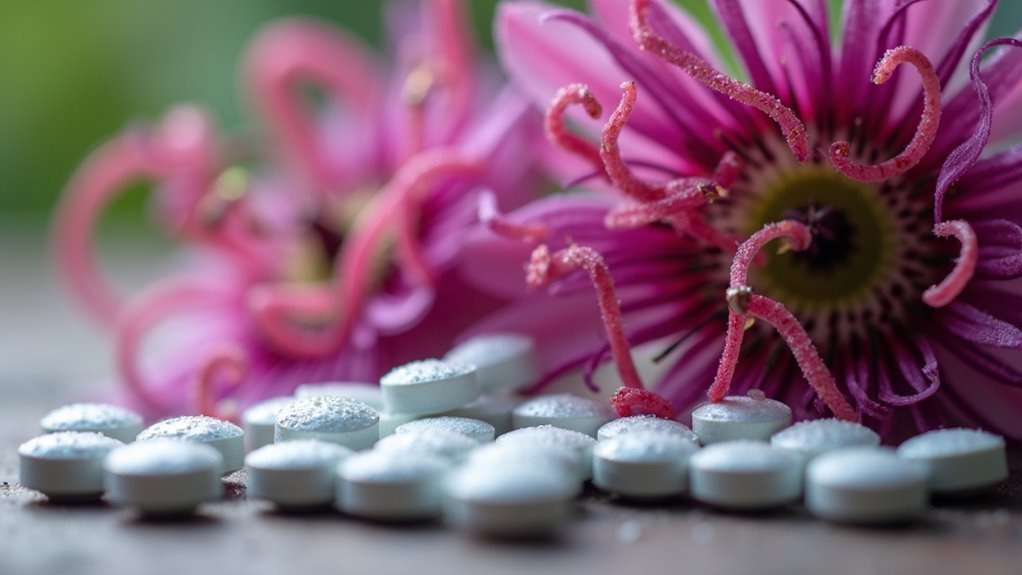
When considering sedative options, you’ll find that passionflower extract offers compelling advantages over traditional pharmaceutical alternatives.
Clinical studies demonstrate that 500 mg passionflower tablets outperform oxazepam in reducing pre-surgical anxiety, while matching the effectiveness of midazolam. You’ll benefit from passionflower’s unique ability to modulate GABA receptors without compromising cognitive function—a common drawback of pharmaceutical sedatives.
Unlike prescription medications, passionflower won’t create dependency or tolerance issues that plague benzodiazepine users.
This natural sedative provides significant anxiety relief through the same GABA pathways as conventional drugs, but with enhanced safety profiles. You’re getting comparable therapeutic effects without the cognitive impairment, addiction potential, or tolerance development associated with pharmaceutical sedatives, making passionflower an attractive alternative for managing mild anxiety and sleep disturbances.
Dosage and Administration Methods for Optimal Effects
Achieving passionflower’s therapeutic benefits requires precise dosing tailored to your specific needs and intended use.
Precise, individualized passionflower dosing is essential for maximizing therapeutic outcomes and ensuring safe, effective treatment results.
Passiflora incarnata offers flexibility in administration methods, allowing you to choose what works best for your lifestyle and desired calming effects.
Consider these proven dosage approaches for ideal results:
- Daily therapeutic effects: Take 250-900 mg extract or 500-1,000 mg three times daily for sustained anxiety relief.
- Pre-surgical sedation: Use 260-700 mg tablets 30-120 minutes before procedures to maximize sedative properties.
- Evening herbal tea: Steep 1 tablespoon dried leaves for 8-10 minutes to promote restful sleep.
- Enhanced formulation: Combine with lemon balm and chamomile for amplified therapeutic effects.
Always consult your healthcare provider before starting any Passiflora incarnata regimen, particularly if you’re taking other sedative medications to guarantee safe administration.
Active Compounds Responsible for Calming Effects
Understanding passionflower’s sedative properties requires examining the specific bioactive compounds that create its therapeutic effects. You’ll find that flavonoids and indole alkaloids interact directly with GABA receptors, enhancing the brain’s natural calming mechanisms. These active compounds work alongside harman alkaloids to produce anxiolytic properties through neurotransmitter activity modulation.
| Compound Type | Primary Function |
|---|---|
| Flavonoids | GABA receptor enhancement |
| Indole Alkaloids | Calming effects promotion |
| Harman Alkaloids | Stress reduction support |
| Chrysin | Sleep quality improvement |
| Vitexin | Anxiety relief assistance |
Clinical trials demonstrate that these compounds increase serotonin and dopamine levels, essential neurotransmitters for mood regulation. The sedative effects you’ll experience rival benzodiazepines without heavy sedation, while supporting healthy circadian rhythms for better sleep quality.
Blood-Brain Barrier Penetration and Bioavailability
Two critical factors determine passionflower extract’s sedative effectiveness: how well its compounds cross the blood-brain barrier and how much your body actually absorbs.
The blood-brain barrier presents a significant challenge for GABA-enhancing supplements. While passionflower’s flavonoids and alkaloids may influence neurotransmitter activity, their ability to reach brain receptors remains under scientific debate. This directly impacts the extract’s potential for sedation and relaxation.
Your body’s bioavailability of passionflower compounds depends heavily on preparation method:
- Liquid extracts typically offer superior absorption rates
- Capsules and tablets may have reduced bioavailability
- Individual metabolism affects compound processing
- Timing and dosage influence pharmacokinetics
Researchers continue investigating how passionflower’s active compounds penetrate the blood-brain barrier, making definitive conclusions about its sedative mechanisms premature until more thorough pharmacokinetic studies emerge.
Safety Profile and Potential Side Effects
While passionflower extract offers potential sedative benefits, you should understand its safety considerations before incorporating it into your routine. The safety profile shows it’s generally safe for short-term use, though you’ll want to watch for potential side effects.
Before adding passionflower extract to your wellness routine, familiarize yourself with its safety profile and potential side effects.
Common reactions include drowsiness, dizziness, and confusion, especially at higher doses. These effects become more pronounced when you combine passionflower with other sedative medications or CNS depressants.
If you have heart conditions, exercise caution since passionflower may cause QT prolongation, leading to irregular heartbeat.
Pregnant women should avoid it completely due to early labor risks. Before surgery, consult your healthcare provider as the extract can enhance anesthesia effects, potentially causing excessive sedation and respiratory complications.
Drug Interactions and Precautions
Before taking passionflower extract, you must consider its potential interactions with other medications and substances. Several drug interactions require your attention to prevent potentially dangerous outcomes.
Key precautions include:
- CNS depressants and sedative medications – Passionflower can enhance their effects, causing excessive sleepiness and breathing difficulties.
- Liver enzymes (CYP3A4) – Minor interactions may alter medication effectiveness in your system.
- Alcohol consumption – Combined use increases sedation and impairs cognitive function considerably.
- Pregnancy – Pregnant individuals must avoid passionflower due to uterine contraction risks.
You should consult your healthcare provider before using passionflower, especially if you’re scheduled for surgery or anesthesia.
The supplement’s effects on your nervous system could complicate medical procedures and interfere with recovery.
Passionflower Extract Vs Other Natural Sleep Aids
When you’re choosing between natural sleep aids, passionflower extract stands out for its unique mechanism of action and impressive clinical performance.
Unlike valerian root, which requires time to build up in your system, passionflower extract delivers rapid sedative effects by increasing GABA levels in your brain.
Clinical studies demonstrate its effectiveness in reducing pre-surgical anxiety and improving sleep quality, matching traditional sedatives without the morning grogginess.
You’ll find passionflower particularly beneficial for anxiety management, as it targets both sleep disturbances and their underlying causes.
Its non-habit-forming nature makes it safer for long-term use.
You can also combine it with other combination herbs like chamomile and lemon balm to enhance its natural sleep aids properties through synergistic effects.
Frequently Asked Questions
Why Does Passionflower Make You Sleepy?
Passionflower makes you sleepy because it enhances GABA levels in your brain. This inhibitory neurotransmitter reduces neuronal excitability and promotes relaxation, creating a calming effect that increases drowsiness and helps you fall asleep faster.
Is Passionflower a Strong Sedative?
Passionflower isn’t considered a strong sedative compared to prescription medications. You’ll experience mild to moderate calming effects that reduce anxiety and improve sleep quality without heavy sedation or significant drowsiness during daytime use.
What Is the Mechanism of Action of Passion Flower Extract?
You’ll find passionflower extract works by enhancing GABA receptor activity, which reduces neuronal excitability. It also interacts with benzodiazepine receptors and influences dopamine and serotonin levels, promoting relaxation and improved sleep.
What Does Passion Flower Extract Do?
You’ll experience reduced anxiety and improved sleep quality when taking passionflower extract. It enhances GABA levels in your brain, promoting relaxation and calming your nervous system naturally without harsh side effects.




Leave a Reply