

You’ll need to start by understanding normal sleep patterns for your child’s age, then systematically assess symptoms using tools like the BEARS questionnaire and sleep diaries. Document bedtime resistance, daytime sleepiness, snoring, or behavioral changes that may indicate underlying disorders. Conduct a thorough sleep history evaluation, examine the sleep environment, and consider diagnostic testing like polysomnography for suspected obstructive sleep apnea. A detailed approach reveals specific treatment strategies for best outcomes.
Understanding Sleep Pattern Development in Children

When evaluating pediatric sleep disorders, you’ll need to first understand how normal sleep patterns evolve throughout childhood development. Newborns require extensive sleep duration of 14-17 hours daily, gradually decreasing to 9-12 hours by age six.
You’ll observe that infants initially have fragmented sleep-wake cycles, but they typically consolidate sleep into longer periods by six months, often eliminating nighttime feedings.
As children mature, their circadian rhythms develop, resulting in decreased total sleep time but increased sleep period length.
You must consider that cultural and genetic factors greatly influence sleep behavior variations among children from diverse backgrounds. This knowledge proves essential when identifying abnormal patterns in pediatric populations, helping you distinguish between normal developmental variations and genuine sleep disorders requiring intervention.
Recognizing Signs and Symptoms of Sleep Disturbances
You’ll encounter various sleep complaints in your pediatric practice, ranging from bedtime resistance to excessive daytime sleepiness that affects up to 46% of school-aged children.
Different age groups present distinct warning signs—while toddlers might show behavioral meltdowns from sleep deprivation, school-aged children often display academic difficulties or hyperactivity that masks underlying sleep disorders.
You can use structured behavioral assessment tools and sleep diaries to systematically identify patterns and distinguish between normal developmental variations and clinically significant sleep disturbances.
Common Sleep Complaints
Since sleep disturbances affect nearly half of all school-aged children, you’ll need to recognize the telltale signs that indicate when a child’s sleep patterns have gone awry. Obstructive sleep apnea presents through snoring, labored breathing, and breathing interruptions during sleep, affecting up to 5% of children. You’ll notice behavioral insomnia manifesting as difficulty establishing proper sleep routines or associations, impacting up to 41% of children. Restless legs syndrome creates uncomfortable leg sensations and movement urges during rest periods in 2-4% of children.
| Sleep Disorder | Prevalence | Key Symptoms |
|---|---|---|
| Obstructive Sleep Apnea | 1-5% | Snoring, breathing interruptions |
| Behavioral Insomnia | 19.3-41% | Poor sleep associations, limit-setting issues |
| Restless Legs Syndrome | 2-4% | Leg discomfort, urge to move |
| Parasomnias | Up to 50% | Sleepwalking, night terrors |
Excessive daytime sleepiness often indicates underlying common sleep complaints requiring evaluation.
Age-Specific Warning Signs
Recognizing sleep disturbances requires understanding how symptoms change across different developmental stages.
You’ll notice different warning signs as children with sleep problems grow and develop.
Critical warning signs by age group:
- Toddlers (2-6 years): Watch for parasomnias like sleepwalking and night terrors, affecting up to 84% of this age group.
- School-age children: Listen for snoring, gasping, or labored breathing indicating potential obstructive sleep apnea (1-5% prevalence).
- Pre-teens (11-12 years): Girls especially show behavioral insomnia patterns, with difficulty initiating or maintaining sleep (19.3-41% prevalence).
- Adolescents: Look for excessive daytime sleepiness and disrupted sleep patterns suggesting Delayed Sleep Phase Disorder (3.3-8.4% prevalence).
You’re identifying these age-specific patterns to guarantee proper evaluation and intervention timing.
Behavioral Assessment Tools
Although clinical observation provides valuable insights, structured behavioral assessment tools offer systematic approaches to identify and evaluate pediatric sleep disturbances.
You’ll find the BEARS questionnaire particularly effective for screening bedtime issues, daytime sleepiness, night awakenings, sleep regularity, and snoring. A thorough sleep diary captures detailed patterns and behaviors, helping you tailor specific interventions.
When you suspect conditions like Restless Legs Syndrome, pediatric-specific questionnaires assess symptom severity based on reported behaviors.
Standardized chronotype questionnaires reveal sleep-wake preferences, providing essential insight into circadian rhythm disorders such as Delayed Sleep-Wake Phase Disorder.
Consider implementing actigraphy for objective sleep-wake cycle monitoring. These wrist-worn devices identify disturbances that caregiver reports might miss, offering extensive data for accurate diagnosis and treatment planning.
Conducting Comprehensive Sleep History Assessment
When evaluating pediatric sleep disorders, you’ll need to conduct a thorough sleep history assessment that forms the foundation of accurate diagnosis. Your all-encompassing approach should include questioning about sleep duration, regularity, bedtime resistance, nighttime awakenings, and daytime sleepiness.
Essential assessment components include:
- Sleep diary tracking – Monitor bedtimes, wake times, and sleep quality over weeks to reveal concerning patterns.
- BEARS questionnaire administration – Screen for bedtime issues, daytime sleepiness, night awakenings, regularity problems, and snoring.
- Environmental evaluation – Assess the child’s sleep environment, dietary habits, and physical activity levels with caregivers.
- Chronotype questionnaires – Identify natural sleep-wake preferences to detect potential circadian rhythm disorders.
This systematic approach guarantees you’ll capture critical information needed for accurate pediatric sleep disorder diagnosis.
Utilizing Sleep Diaries and Screening Tools

Sleep diaries serve as your primary documentation tool for tracking patterns that emerge from your thorough evaluation. You’ll capture essential data including sleep duration, bedtime resistance, and night awakening frequency, following American Academy of Sleep Medicine recommendations for pediatric sleep disorder evaluations.
Sleep diaries provide essential documentation for tracking pediatric sleep patterns, capturing duration, bedtime resistance, and awakening frequency per AASM guidelines.
Implement the BEARS questionnaire to screen for bedtime issues, daytime sleepiness, night awakenings, sleep regularity, and snoring. You’ll find chronotype questionnaires particularly valuable for analyzing your patient’s natural sleep-wake rhythms and identifying circadian rhythm disorders.
Consider actigraphy for objective sleep pattern monitoring through wrist-worn devices that complement diary information.
Don’t overlook specialized screening tools for conditions like pediatric Restless Legs Syndrome, which enable accurate diagnosis and severity evaluation, ensuring you’ll implement targeted interventions effectively.
Physical Examination Techniques for Sleep Disorders
Since sleep disorders often manifest through observable physical signs, conducting a systematic physical examination becomes essential for accurate diagnosis.
You’ll need to assess multiple body systems to identify underlying causes of sleep disturbances.
Focus on these critical examination components:
- Growth parameters – Measure height and weight to detect obesity contributing to obstructive sleep apnea.
- Airway anatomy – Inspect for craniofacial anomalies and tonsillar/adenoidal hypertrophy restricting breathing.
- Neurological examination – Assess for restless legs syndrome or narcolepsy indicators.
- Cardiovascular/respiratory systems – Rule out asthma or heart conditions causing sleep issues.
Document any physical examination findings, including abnormal breathing patterns or snoring observed during your assessment.
These observations provide valuable diagnostic insights and guide appropriate treatment decisions for your pediatric patients.
When to Consider Polysomnography Testing
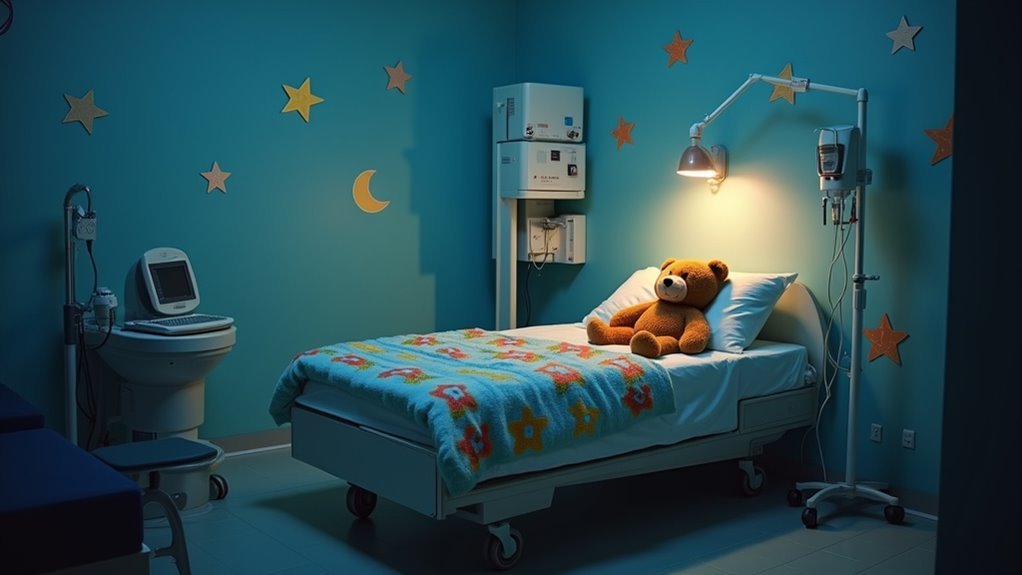
How do you determine whether a child needs thorough sleep monitoring through polysomnography?
You’ll want to take into account PSG when pediatric patients exhibit clear symptoms of obstructive sleep apnea, including loud snoring, labored breathing, or excessive daytime sleepiness.
Your clinical evaluations should also flag children with suspected narcolepsy, particularly those experiencing cataplexy episodes.
Children showing sudden muscle weakness during emotional episodes may require sleep study evaluation to confirm narcolepsy diagnosis.
PSG becomes essential when evaluating periodic limb movement disorder or Restless Legs Syndrome that disrupts sleep quality and daily functioning.
You should order polysomnography for non-REM parasomnias when you need to differentiate them from sleep-related epilepsy, especially with atypical presentations.
Let your sleep history guide PSG decisions, ensuring you’ve ruled out other sleep-related disorders first.
Thorough clinical assessment remains vital before proceeding with overnight monitoring.
Multiple Sleep Latency Test Applications
When evaluating excessive daytime sleepiness in pediatric patients, you’ll find the Multiple Sleep Latency Test (MSLT) serves as your primary diagnostic tool for quantifying sleepiness and confirming narcolepsy.
Before conducting the test, make certain children complete overnight polysomnography and maintain adequate sleep for two weeks prior.
The MSLT protocol includes:
- Four to five scheduled nap opportunities spaced two hours apart throughout the day
- Measurement of time to fall asleep in a quiet, controlled environment
- Assessment of normal sleep latency (less than 10 minutes indicates excessive sleepiness)
- Documentation of REM sleep onset to help diagnose narcolepsy in children
You’ll use MSLT results to differentiate between various hypersomnolence disorders and identify underlying causes of daytime sleepiness, making certain of accurate diagnosis and appropriate treatment planning.
Laboratory Studies and Diagnostic Markers
Beyond behavioral assessments and sleep studies, laboratory tests and diagnostic markers provide objective data to identify underlying medical conditions causing sleep disturbances in children.
You’ll need routine blood work to measure iron levels when evaluating restless legs syndrome, as iron deficiency commonly triggers this condition. Laboratory studies should include complete blood count, ferritin, and transferrin saturation to detect deficiencies requiring treatment.
When children present with excessive daytime sleepiness, you can use actigraphy alongside polysomnography to monitor sleep-wake patterns objectively.
This non-invasive tool tracks circadian rhythm disturbances over extended periods, revealing irregular sleep schedules that standard overnight studies might miss.
These diagnostic markers help you distinguish between behavioral sleep issues and medical disorders, ensuring you develop targeted treatment plans that address root causes rather than symptoms alone.
Evaluating Obstructive Sleep Apnea in Children
You’ll need to identify specific symptoms that distinguish obstructive sleep apnea from normal childhood sleep patterns.
Watch for loud snoring, labored breathing during sleep, witnessed apneic episodes, and excessive daytime sleepiness in your pediatric patients.
Remember that polysomnography remains the gold standard for diagnosing OSAS in children, as home sleep tests aren’t recommended for this population.
Recognizing OSA Symptoms
How can you identify obstructive sleep apnea in your pediatric patients before it greatly impacts their development and quality of life?
You’ll need to watch for specific symptoms that signal this serious condition affecting 1-5% of children.
Key symptoms requiring immediate evaluation include:
- Nighttime distress: Loud snoring, labored breathing, and witnessed apneic episodes that terrify parents
- Daytime struggles: Excessive daytime sleepiness causing children to fall asleep during activities
- Behavioral chaos: Irritability, difficulty concentrating, and behavioral issues destroying academic performance
- Physical signs: Mouth breathing and restless sleep with frequent night awakenings
When you observe these symptoms, especially in children with risk factors like obesity or enlarged tonsils, prompt polysomnography becomes essential.
Early recognition prevents devastating consequences on your patient’s cognitive development and social functioning.
Diagnostic Testing Requirements
When you suspect OSA in a pediatric patient, polysomnography (PSG) remains the definitive diagnostic test you must order to confirm sleep-disordered breathing events.
Don’t rely on home sleep studies for children—they’re inadequate for this complex pediatric population.
Before ordering diagnostic testing, conduct a thorough clinical assessment examining risk factors like craniofacial anomalies, trisomy 21, or symptoms including excessive daytime sleepiness and witnessed apneas.
PSG provides extensive monitoring that captures the full spectrum of obstructive sleep apnea manifestations during sleep.
You’ll need this detailed evaluation to differentiate OSA from other sleep disorders affecting 1-5% of children.
The clinical assessment guides your diagnostic approach, but PSG confirmation is essential before pursuing treatment options for suspected sleep-disordered breathing in pediatric patients.
Assessing Behavioral Insomnia and Sleep Resistance
Since behavioral insomnia affects 10% to 30% of children and stems primarily from inconsistent parental limit-setting and disrupted sleep routines, you’ll need to systematically evaluate both the child’s sleep patterns and the family’s bedtime routines.
Focus your assessment on identifying the insomnia subtype. Sleep-onset association type involves children requiring specific conditions to fall asleep, while limit-setting type reflects parental failure to enforce bedtime rules, resulting in sleep resistance.
Gather detailed caregiver reports and implement sleep diaries tracking:
- Sleep duration patterns – exposing exhausted families’ nightly struggles
- Bedtime resistance frequency – revealing frustrated parents’ helplessness
- Environmental sleep associations – uncovering dependency behaviors
- Sleep hygiene practices – identifying problematic routines
This thorough data guides your selection of appropriate non-pharmacologic interventions, particularly extinction techniques for behavioral modification.
Identifying Parasomnias and Movement Disorders
When you’re evaluating parasomnias and movement disorders in children, you’ll need to focus on gathering detailed clinical histories since kids rarely remember these nighttime events.
Your diagnostic approach should include specific testing criteria to distinguish between different sleep disorders and rule out underlying conditions like iron deficiency in suspected restless legs syndrome.
You’ll then implement targeted treatment strategies that range from environmental safety measures and sleep hygiene for parasomnias to lifestyle modifications and potential iron supplementation for movement disorders.
Clinical Assessment Methods
Although identifying parasomnias and movement disorders in children requires a systematic approach, you’ll find that extensive clinical assessment methods provide the foundation for accurate diagnosis.
Your evaluation should begin with thorough history-taking, focusing on sleep duration, quality, and patterns while incorporating behavioral observations during sleep.
Essential tools for your clinical assessment include:
- BEARS questionnaire – screens bedtime issues, daytime sleepiness, and night awakenings that reveal underlying sleep disorders
- Sleep diaries – capture detailed patterns and irregularities over time
- Polysomnography – provides definitive diagnosis for suspected parasomnias and Restless Legs Syndrome
- Actigraphy – offers objective sleep-wake monitoring data
You’ll also benefit from pediatric-specific questionnaires designed to assess RLS severity, helping differentiate it from other conditions effectively.
Diagnostic Testing Criteria
While thorough clinical assessment provides the groundwork for evaluation, establishing definitive diagnostic criteria requires specific testing protocols tailored to each suspected disorder.
For periodic limb movement disorder and restless legs syndrome, you’ll need polysomnography when symptoms persist or greatly impact daytime functioning. However, parasomnias primarily rely on detailed clinical history rather than overnight studies, unless you suspect additional sleep disorders.
You can implement the BEARS questionnaire as an effective screening tool to systematically assess bedtime problems, excessive sleepiness, awakenings, regularity, and snoring patterns. Actigraphy offers valuable objective monitoring for movement disorders over extended periods.
For sleep-wake disorders involving abnormal timing, laboratory studies measuring urinary 6-sulfatoxymelatonin confirm circadian rhythm delays, ensuring your diagnostic testing criteria align with specific clinical presentations.
Treatment and Management
Since parasomnias primarily affect children during deep sleep stages, you’ll focus your treatment approach on reassurance and environmental safety rather than pharmacological interventions.
Your management strategy should address underlying triggers like obstructive sleep apnea, which greatly reduces episode frequency.
For effective treatment and management:
- Create a protective sleep environment – Remove sharp objects and secure stairway gates to prevent injury during sleepwalking episodes.
- Address underlying sleep disorders – Treat obstructive sleep apnea when identified through clinical history evaluation.
- Screen for iron deficiency – Test iron levels in children presenting with Restless Legs Syndrome symptoms.
- Provide family education – Reassure parents that most parasomnias resolve naturally as children mature.
Circadian Rhythm Disorder Evaluation Methods
How do you accurately identify circadian rhythm disorders in pediatric patients when sleep complaints extend beyond typical bedtime resistance?
Start with thorough evaluation methods including detailed patient history and sleep diary documentation spanning 1-2 weeks. You’ll capture sleep-wake patterns, bedtimes, and morning alertness levels effectively.
Implement standardized chronotype questionnaires to assess your patient’s natural morningness or eveningness preferences. These reveal circadian alignment issues, particularly Delays in sleep-wake phase timing.
For objective confirmation, consider actigraphy monitoring over 7-14 days. Laboratory studies like dim-light melatonin onset measurement and urinary 6-sulfatoxymelatonin assays provide biochemical evidence of circadian rhythm shifts.
Don’t overlook regular follow-up assessments. You’ll need to monitor treatment effectiveness and adjust interventions based on your patient’s response to therapy.
Frequently Asked Questions
How to Score a Pediatric Sleep Questionnaire?
You’ll assign numerical values to each response based on the questionnaire’s scoring system. Add up scores for total severity, compare against established cutoffs, and incorporate caregiver observations for accurate assessment.
How Do You Evaluate a Sleep Disorder?
You’ll gather sleep history through questionnaires and diaries, conduct physical exams, and order appropriate tests like polysomnography or MSLT based on symptoms to diagnose specific sleep disorders accurately.
How Do You Diagnose a Sleep Disorder?
You’ll diagnose sleep disorders through thorough clinical evaluation, including detailed medical history and sleep questionnaires. You’ll use polysomnography for sleep apnea, MSLT for narcolepsy, and actigraphy for circadian rhythm disorders.
What Is the Screening Tool for Pediatric OSA?
You’ll use the BEARS questionnaire or Pediatric Sleep Questionnaire (PSQ) to screen for OSA symptoms. These validated tools assess snoring, breathing difficulties, and sleep disturbances through parental reports during clinical visits.




Leave a Reply