

You should replace your pillow every two years because it accumulates significant health hazards over time. Dead dust mites and their droppings can comprise up to 10% of your pillow’s weight, while bacteria, oils, and sweat create breeding grounds for allergens and infections. Your pillow’s structural integrity also deteriorates, causing poor neck alignment and chronic pain that affects sleep quality. Understanding the warning signs and proper testing methods will help you determine when it’s time for a replacement.
The Science Behind the Two-Year Replacement Rule

While you might think your pillow feels fine after a few years of use, scientific research reveals a troubling reality beneath the surface. The American Academy of Allergy, Asthma & Immunology recommends you replace pillows every two years because they accumulate dangerous allergens over time.
Scientific research reveals that pillows accumulate dangerous allergens over time, requiring replacement every two years for optimal health.
After this period, your pillow harbors up to 10% dead dust mites and their droppings, triggering allergies and asthma.
Beyond allergen concerns, your pillow’s structural integrity deteriorates, compromising the support needed for proper neck alignment. This leads to chronic pain and poor sleep quality.
Additionally, accumulated oils, sweat, and bacteria create hygiene issues that affect your skin health. Regular replacement guarantees you maintain ideal comfort, support, and cleanliness for better overall wellbeing.
Hidden Health Hazards of Old Pillows
Though most people assume their old pillow poses no serious threats, the reality is far more alarming than you’d expect. Your old pillow becomes a breeding ground for bacteria that can trigger skin breakouts and infections.
Within two years, it accumulates allergens like dust mites and their droppings, comprising up to 10% of the pillow’s weight and causing severe respiratory issues.
The moisture and heat create perfect conditions for mold growth, leading to allergic reactions. You’ll also experience neck pain from inadequate support, potentially causing long-term spinal problems.
Oils, sweat, and dead skin cells create unpleasant odors that contribute to poor sleep quality. These hidden health hazards make it essential to replace your pillows every two years for peak wellness.
How Different Pillow Materials Affect Lifespan
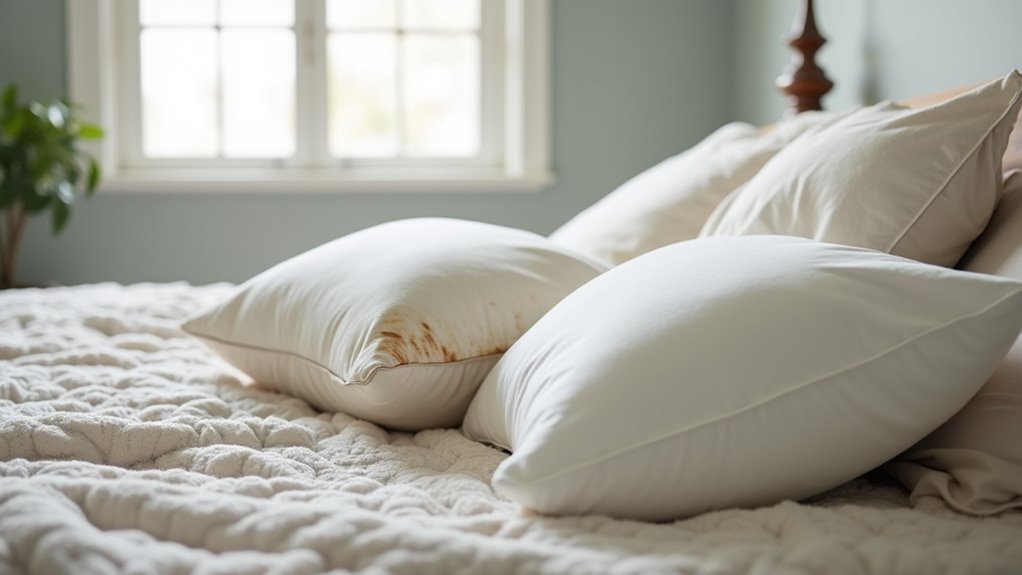
Your pillow’s material directly determines how long it’ll serve you well before needing replacement.
Memory foam typically holds its shape for 1-3 years, while down and feather options offer similar longevity if they maintain proper loft.
Synthetic materials like polyester break down fastest, usually requiring replacement within 6-12 months as they flatten and lose support more quickly than natural alternatives.
Memory Foam Durability
Memory foam pillows stand out as one of the most durable options in the bedding market, typically lasting between one to three years compared to polyester pillows that need replacement every six to twelve months.
Their extended lifespan depends heavily on your body weight, frequency of use, and maintenance routines. You’ll maximize their supportive qualities through proper cleaning and care, including spot cleaning and avoiding machine washing.
However, you should replace your pillow when it begins sagging, losing shape, or developing lumps. These signs indicate the memory foam can no longer provide proper neck support and spinal alignment.
While memory foam pillows cost more upfront, their durability makes them cost-effective over time, maintaining their supportive properties longer than most alternatives.
Down Feather Longevity
Down and feather pillows offer a completely different durability profile, lasting anywhere from one to three years with proper care.
Unlike synthetic options, down feathers compress naturally over time, losing their original loft and support capabilities. This deterioration can lead to neck pain and poor spinal alignment as your pillow fails to maintain proper positioning.
Key factors affecting down feather lifespan include:
- Compression rate – Daily use gradually flattens the filling structure
- Allergen accumulation – Dust mites and mold buildup increases after two years
- Cleaning requirements – Delicate maintenance needs for ideal hygiene
- Usage patterns – Frequent use accelerates replacement timeline
You’ll know it’s time for replacement when your pillow becomes lumpy, deflated, or won’t regain its shape after fluffing, regardless of proper cleaning maintenance.
Synthetic Material Degradation
Synthetic pillows present the shortest lifespan among all pillow types, typically requiring replacement within just 6 to 12 months of regular use.
You’ll notice that polyester and microfiber materials flatten quickly, making them the least durable option available. This material degradation occurs because synthetic fills compress under nightly pressure, causing significant loss of support over time.
You should replace them every six months to maintain proper support for your neck and spine alignment.
The rapid deterioration also impacts hygiene, as flattened synthetic materials become harder to clean effectively.
While other pillow types focus on lasting longer through quality construction, synthetic pillows simply can’t compete. Their affordable price point comes at the cost of frequent replacement needs, making them less economical long-term despite lower initial investment.
Warning Signs Your Pillow Needs Immediate Replacement
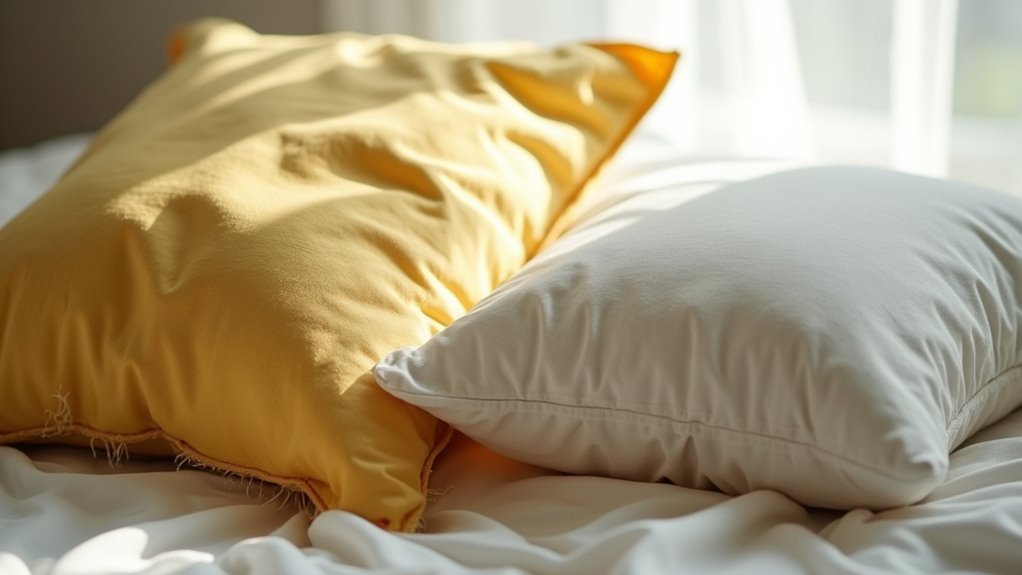
You don’t need to wait two years if your pillow shows clear warning signs of deterioration.
Physical changes like lost shape, lumps, stains, or persistent odors signal it’s time for immediate replacement.
These deterioration signs often coincide with health indicators such as increased neck pain, poor sleep quality, or allergy symptoms that suggest your pillow is no longer serving its purpose.
Physical Deterioration Signs
While pillows may seem like they’ll last forever, several physical warning signs indicate when immediate replacement becomes necessary.
Physical deterioration affects your pillow’s ability to provide adequate support, making it essential to recognize these red flags early.
Watch for these key indicators that it’s time to replace your pillows:
- Shape distortion – Noticeable lumps, flatness, or compressed areas signal compromised structural integrity.
- Visible stains or persistent odors – These indicate moisture retention and potential bacterial growth.
- Sleep-related discomfort – Waking up with neck pain or soreness suggests inadequate spinal alignment support.
- Allergy symptoms – Increased sneezing, congestion, or itchy eyes upon waking point to accumulated allergens like dust mites.
Regular inspection helps identify these physical deterioration signs before they greatly impact your sleep quality and health.
Health Impact Indicators
Beyond obvious physical deterioration, your body sends clear warning signals when your pillow can no longer support healthy sleep. Waking up with aches or neck pain indicates your pillow isn’t providing proper support for spinal alignment.
If you’re experiencing increased sneezing, congestion, or itchy eyes upon waking, your pillow likely harbors allergens like dust mites or mold that compromise your respiratory health.
Yellow stains and unpleasant odors signal moisture absorption and bacterial growth, directly affecting your skin health and overall hygiene.
When your pillow shows loss of shape through lumpiness or flattening, it can’t maintain the structural integrity needed for quality rest.
These health impact indicators shouldn’t be ignored—they’re your body’s way of telling you it’s time for immediate replacement.
Testing Your Pillow’s Support and Alignment
How can you determine if your current pillow still provides the support your body needs?
Regular testing guarantees your pillow maintains proper alignment and comfort for quality sleep.
Try these assessment methods to evaluate your pillow’s structural integrity:
- The Shoe Test – Fold your pillow in half and place a shoe on top. If it springs back to its original shape, it’s still providing adequate support.
- Wall Posture Check – Stand against a wall with your pillow positioned behind your neck to see if it maintains proper spinal alignment.
- Visual Inspection – Look for lumps, flat spots, or permanent indentations that indicate loss of support structure.
- Sleep Quality Assessment – Monitor any neck pain or discomfort that develops during sleep, which may signal inadequate pillow performance.
The Connection Between Pillow Age and Sleep Quality
Once you’ve determined your pillow needs replacing, understanding how its age directly impacts your sleep becomes important. Old pillows lose structural integrity, creating inadequate support that causes neck and back pain while disrupting proper spinal alignment. After using a pillow every two years, it accumulates allergens like dust mites and mold, triggering allergic reactions that compromise sleep quality.
| Pillow Age | Sleep Impact | Recommendation |
|---|---|---|
| 0-1 years | Ideal support | Monitor condition |
| 1-2 years | Declining comfort | Evaluate regularly |
| 2+ years | Poor alignment | Replace immediately |
Old pillows trap heat and moisture, creating uncomfortable sleep environments that disrupt rest patterns. When you replace your pillows regularly, you’ll support better spinal alignment and improve sleep quality considerably, ensuring restorative rest.
Proper Pillow Care to Maximize Lifespan
While replacing your pillow every two years remains crucial, proper care can help you maximize lifespan and maintain peak performance throughout its useful life.
Smart maintenance practices will maintain hygiene and guarantee proper alignment during sleep.
Here’s how to extend your pillow’s usability:
- Regularly wash pillows every 3-6 months following care instructions to remove allergens and bacteria.
- Use pillow protectors with zippers to shield against dust mites while extending overall lifespan.
- Air out pillows frequently to reduce moisture and odors, preventing bacterial growth.
- Fluff regularly to maintain shape and prevent lumpiness that compromises support.
For memory foam or latex pillows that aren’t machine washable, spot clean with damp cloths and mild detergent.
These practices won’t eliminate replacement needs but guarantee maximum comfort until then.
Choosing the Right Replacement Pillow for Your Needs
When replacing your pillow every two years, selecting the right option transforms your sleep quality and guarantees proper spinal alignment.
Start by considering your sleeping position—side sleepers need firmer, higher-loft pillows, while back and stomach sleepers require softer, lower-loft alternatives.
Your sleeping position determines pillow requirements—side sleepers benefit from firmer support while back and stomach sleepers need softer options.
Prioritize hypoallergenic materials like bamboo or latex if you’re prone to allergies or skin sensitivities.
Look for temperature regulation features such as breathable covers or cooling gel-infused materials to prevent overheating during sleep.
Focus on finding the perfect support and softness balance; your replacement pillow should provide adequate support without excessive firmness.
Don’t overlook sustainability when choosing—eco-friendly materials contribute to environmental health while ensuring you’re sleeping on clean, safe surfaces that enhance your overall comfort.
Frequently Asked Questions
Why Change Pillows Every 2 Years?
You should replace your pillow every two years because it accumulates allergens like dust mites and loses supportive shape, causing neck pain and disrupting sleep quality for better health.
What Is the 2 2 1 Pillow Rule?
The 2 2 1 pillow rule means you’ll replace most pillows every 2 years, polyester pillows every 6-12 months, and memory foam pillows every 1-3 years based on material durability.
What Is the Average Lifespan of a Pillow?
Your pillow’s lifespan depends on its material. Polyester lasts 6-12 months, memory foam 1-3 years, down 1-2 years, and latex 2-4 years. You’ll need replacement when it loses shape or develops odors.
What Happens if You Never Change Your Pillow?
You’ll accumulate dust mites and allergens, trap bacteria and moisture causing skin irritation, experience poor neck support leading to pain, endure unpleasant odors, and suffer compromised spinal alignment affecting sleep quality.


