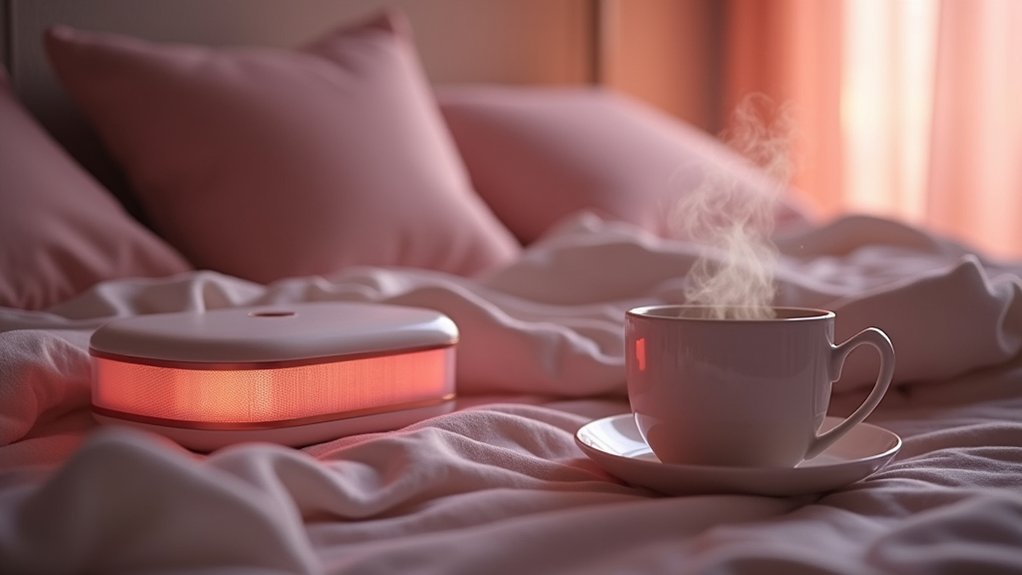
Pink noise can greatly improve your rest cycles by promoting deeper, more restorative sleep phases. Unlike white noise’s harsh static, pink noise resembles gentle rain or ocean waves, creating a softer auditory backdrop that enhances brain wave synchronization. Research shows it increases sleep spindle density, reduces sleep fragmentation by up to 23%, and helps you fall asleep 38% faster while improving memory consolidation. The best benefits emerge when you explore proper implementation techniques.
What Is Pink Noise and How Does It Work
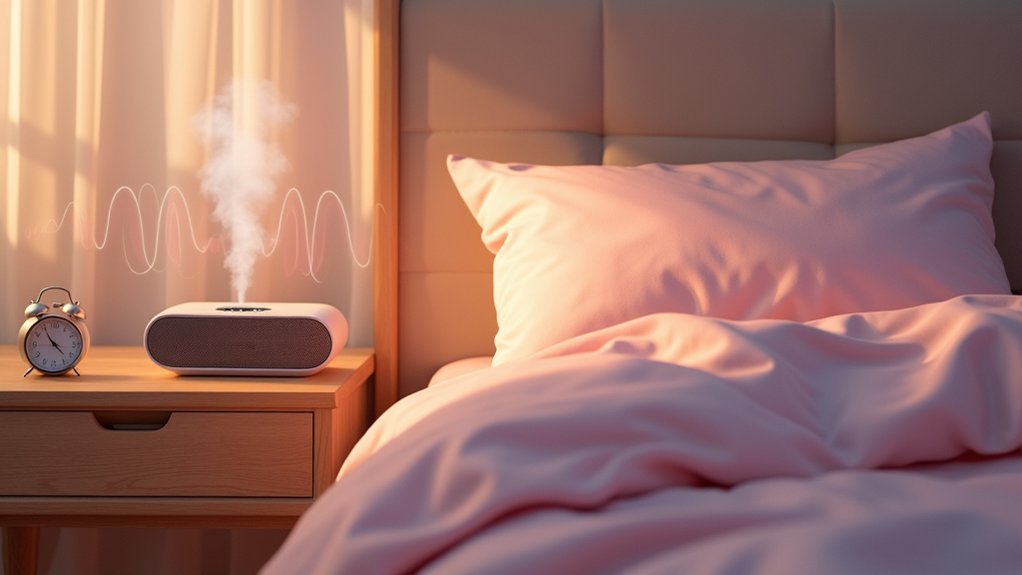
The gentle patter of rain against your window or the rhythmic crash of ocean waves creates a naturally calming atmosphere that helps you drift off to sleep. These soothing sounds are examples of pink noise, a unique audio frequency that contains all audible frequencies while giving more power to lower frequencies. This creates a softer, more pleasant sound compared to traditional white noise.
Pink noise works by serving as a consistent auditory backdrop that’s effective at masking distracting sounds throughout the night. When you listen to pink noise, it enhances brain waves associated with deep sleep and restorative sleep phases.
This improved sleep quality occurs because the balanced frequency distribution allows your brain to process the sound as naturally calming, helping you fall asleep faster and maintain uninterrupted rest.
Pink Noise Vs White Noise: Key Differences
While both pink and white noise can improve your sleep environment, understanding their key differences helps you choose the most effective option for your rest.
Pink noise emphasizes lower sound frequencies, creating a deeper sound that’s more natural and soothing than white noise’s harsh, static-like profile across all frequencies.
Key distinctions include:
- Sound quality: Pink noise resembles gentle rain or ocean waves, while white noise sounds like television static.
- Sleep benefits: Pink noise promotes deeper sleep and memory improvement, especially in older adults.
- Comfort level: Pink noise’s balanced frequency distribution feels less overwhelming than white noise’s sharper tones.
Research shows pink noise’s 3-decibel decrease per octave creates a more pleasant listening experience, making it particularly effective for enhancing quality of sleep and relaxation.
The Science Behind Pink Noise and Brain Waves
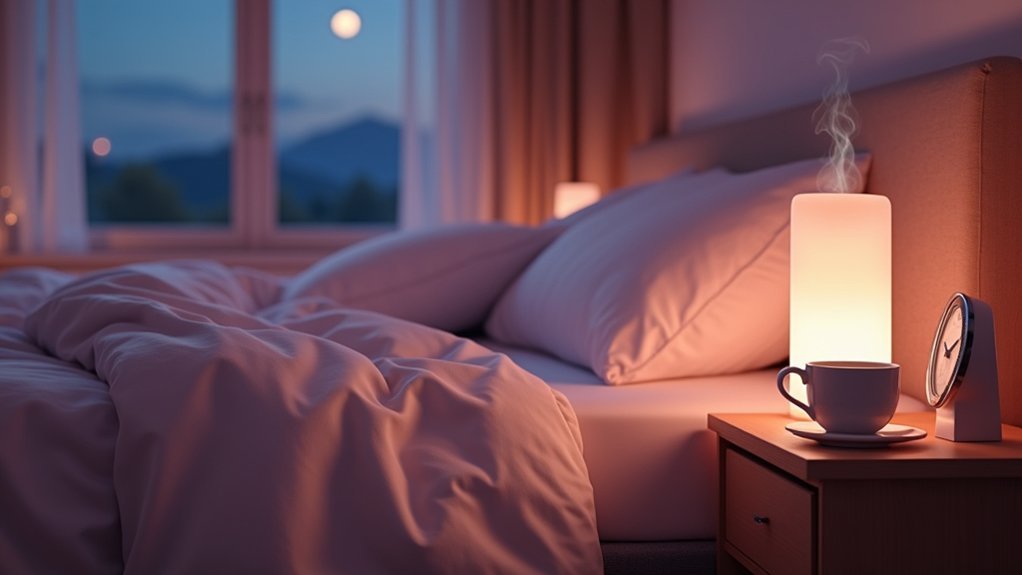
When you listen to pink noise during sleep, your brain experiences measurable changes that promote deeper, more restorative rest. This auditory stimulation enhances synchronization of brain waves, creating ideal conditions for slow wave sleep—the deepest stage of your sleep cycle.
Research shows pink noise increases sleep spindle density, directly supporting memory consolidation processes that occur during night hours. The 3-decibel per octave frequency drop in pink noise perfectly matches your brain’s natural rhythms, amplifying N3 sleep duration when most cognitive restoration happens.
This synchronization reduces sleep fragmentation, allowing uninterrupted cycles that improve overall sleep quality. Your brain waves align more effectively with pink noise’s frequency pattern, facilitating the deep, restorative sleep essential for learning, memory retention, and cognitive function recovery.
How Pink Noise Enhances Deep Sleep Quality
Building on these neurological foundations, pink noise creates measurable improvements in your deep sleep architecture through several key mechanisms. This consistent soundscape enhances slow oscillations in your brain, directly increasing the proportion of restorative rest you experience each night.
Pink noise transforms your sleep quality by:
- Extending deep sleep duration – You’ll spend longer periods in N3 stage sleep, allowing your body and mind to recover more completely.
- Blocking environmental noises – Disruptive sounds get masked, preventing sleep fragmentation that interrupts your natural cycles.
- Boosting memory improvement – Enhanced deep sleep facilitates better memory consolidation, particularly benefiting older adults.
Regular pink noise exposure conditions your brain for consistently deeper, less fragmented sleep patterns essential for ideal health and well-being.
Memory Improvement Through Pink Noise Exposure
Since pink noise strengthens the neural pathways essential for memory formation, you’ll experience sharper cognitive function and better information retention when you incorporate this sound therapy into your nightly routine.
Exposure to pink noise during sleep notably increases sleep spindle density, which directly supports memory consolidation during deep sleep phases. Studies demonstrate that you’ll perform better on memory tasks after pink noise exposure compared to silent sleep conditions.
Your brain’s natural detoxification processes also benefit from the deeper sleep quality that pink noise promotes, clearing toxic metabolites that can impair cognitive function.
Regular pink noise exposure creates positive sleep associations, establishing a cycle where improved sleep quality leads to enhanced memory improvement. This makes pink noise particularly valuable for older adults and those experiencing mild cognitive decline.
Reducing Sleep Disruptions With Consistent Sound Masking
While external noise disruptions can fragment your sleep cycles and prevent restorative rest, pink noise acts as an acoustic shield that maintains consistent sound levels throughout the night.
Pink noise creates a protective sound barrier that shields your sleep from disruptive environmental noises throughout the entire night.
This steady audio environment effectively masks sudden disturbances like traffic, neighbors, or household sounds that would otherwise jolt you awake during essential deep sleep phases.
Pink noise’s gentle frequency profile creates ideal conditions for restorative sleep by:
- Minimizing jarring interruptions that fragment your natural sleep architecture
- Conditioning your brain to associate the consistent sound with falling asleep faster
- Protecting memory retention processes that occur during uninterrupted rest cycles
Pink Noise for Faster Sleep Onset
You’ll find that pink noise greatly cuts down the time it takes to fall asleep, with studies showing up to 38% faster sleep onset in some individuals.
The steady, natural-sounding frequencies work by masking jarring environmental noises that keep your mind alert when you’re trying to wind down.
This consistent auditory backdrop creates an ideal sleep environment that helps your brain shift more smoothly from wakefulness to rest.
Sleep Latency Reduction
Pink noise can cut your sleep latency—the time it takes to drift off—by creating a steady auditory backdrop that masks jarring sounds and signals your body to relax.
Research shows you’ll fall asleep several minutes faster compared to quieter environments, as this consistent sound encourages your body’s natural relaxation response.
Regular pink noise exposure conditions your brain to associate these frequencies with sleep time, making the shift even quicker over time.
Here’s how it transforms your bedtime routine:
- Masks disruptive sounds that typically keep you tossing and turning
- Triggers relaxation response faster than silence alone
- Creates sleep associations that strengthen with consistent use
Beyond reducing sleep latency, pink noise enhances sleep quality by promoting deeper sleep stages, leading to improved cognitive function and overall restfulness.
Natural Sound Masking
When sudden noises jolt you awake or prevent you from drifting off, pink noise creates a gentle shield that smooths out these disruptive sounds.
This effective sound masking technique transforms your bedroom into a consistent auditory environment, mimicking natural environments like rainfall or ocean waves.
You’ll experience improved sleep quality as pink noise’s lower frequency emphasis provides a soothing soundscape that’s less jarring than other audio options.
The consistent background sound helps you achieve uninterrupted sleep by neutralizing environmental disturbances that would otherwise break your rest cycles.
Regular exposure supports deeper sleep stages, allowing you to maintain the restorative deep sleep your body needs for ideal recovery and enhanced overall well-being.
Cognitive Benefits Beyond Better Sleep
While you’re already experiencing better sleep with pink noise, you’re also revealing powerful cognitive advantages that extend far beyond your nighttime rest.
Your brain’s ability to consolidate memories improves considerably as pink noise increases sleep spindle density during deep sleep phases, leading to enhanced information retention and recall.
You’ll also notice sharper focus during waking hours and more stable moods throughout the day, as the stress-reducing effects of quality pink noise sleep carry over into your daily cognitive performance.
Memory Consolidation Enhancement
Beyond improving your nightly rest, pink noise delivers remarkable cognitive benefits by enhancing how your brain consolidates memories during sleep.
Research shows that pink noise increases sleep spindles density, which are critical for memory processing and retention. You’ll experience longer periods of deep sleep, directly improving your cognitive function and learning capabilities.
- Enhanced Memory Performance: Pink noise creates ideal conditions for your brain’s natural memory consolidation processes, leading to better recall and learning outcomes.
- Improved Focus: Better sleep quality translates to enhanced concentration and focus, particularly beneficial for demanding cognitive tasks.
- Cognitive Protection: For older adults, pink noise helps reduce cognitive decline by positively affecting memory retention and slow-wave brain activity patterns.
This calming soundscape supports your brain’s essential nighttime memory work.
Improved Focus Performance
As pink noise enhances your sleep quality, it creates a powerful ripple effect that sharpens your daytime focus and concentration abilities.
The deeper sleep stages you achieve help your brain develop stronger attention and motivation pathways, directly boosting your cognitive performance during waking hours.
You’ll notice pink noise’s ability to mask environmental distractions becomes a valuable tool for maintaining concentration on demanding tasks. This soothing background sound trains your brain to filter out disruptions more effectively.
Regular exposure conditions your mind to shift into focused states faster, leading to improved memory retention and enhanced productivity.
Whether you’re younger or older, these cognitive benefits extend across all age groups, making pink noise a powerful ally for sharper mental clarity and sustained attention throughout your day.
Mood Stabilization Effects
When pink noise improves your sleep quality, it triggers a cascade of neurochemical changes that stabilize your emotional well-being throughout the day.
This auditory stimulation amplifies slower brain waves during deep sleep, creating stronger emotional stability and reducing mood swings that can derail your productivity.
The consistent sound exposure helps regulate stress hormones, leading to measurable anxiety reduction and decreased irritability.
You’ll notice improved cognitive functions that extend beyond memory and attention—pink noise supports your ability to maintain emotional balance in challenging situations.
Key mood stabilization benefits include:
- Reduced instances of anxiety and emotional volatility throughout waking hours
- Enhanced stress hormone regulation leading to more consistent emotional responses
- Improved empathy and social interactions due to better cognitive health
Finding the Right Pink Noise Machine or App
How do you choose the right pink noise machine or app from the countless options available today? Start by seeking sound machines that offer continuous noise or looped soundtracks to prevent disruptive interruptions during sleep. Set your volume around 60 decibels—similar to a refrigerator’s hum—for ideal sleep quality benefits.
| Feature | Benefit |
|---|---|
| Volume timers | Gradually decrease sound for gentle awakening |
| Continuous playback | Eliminates jarring sound interruptions |
| Multiple track options | Accommodates varying personal preferences |
Consider apps and platforms like YouTube that provide diverse pink noise tracks with different styles and lengths. Look for devices with volume timers that automatically reduce sound intensity throughout the night. Since personal preferences vary greatly, experiment with various settings and sounds until you discover what enhances your sleep quality most effectively.
Optimal Volume and Timing for Pink Noise Use
Finding your ideal pink noise settings requires attention to both volume levels and timing to maximize sleep benefits. The best volume for pink noise sits around 60 decibels—similar to your refrigerator’s hum—which effectively masks disturbances without overwhelming your auditory environment.
Timing plays an important role in your sleep routine:
- Start your pink noise 30 minutes before bedtime to signal your brain it’s time to wind down
- Maintain continuous playback throughout the night for stable sleep cycles and fewer awakenings
- Consider apps with gradually decreasing volume features to ease your shift into sleep
Remember that individual preferences vary greatly.
You’ll need to experiment with different volume levels—some people prefer softer sounds while others need louder ambiance for effective masking of external disturbances.
Pink Noise Safety Considerations and Limitations
Although pink noise offers promising sleep benefits, you’ll want to understand its safety considerations and limitations before incorporating it into your nightly routine.
Pink noise is generally safe for most people, but those with hearing loss or sound sensitivity may find it uncomfortable or frustrating. Always keep the volume around 60 decibels to prevent potential hearing damage from prolonged exposure to loud sounds.
Remember that pink noise isn’t a magic solution—it won’t replace proper sleep hygiene practices like maintaining consistent bedtimes and limiting caffeine.
Personal preference plays a significant role in effectiveness, as some people find pink noise disruptive rather than soothing. While regular use can condition you to associate it with sleep, becoming overly reliant on it may not suit everyone’s needs.
Combining Pink Noise With Good Sleep Hygiene
While pink noise can improve your sleep on its own, you’ll achieve the best results when you combine it with proven sleep hygiene practices. This powerful combination enhances sleep quality by creating ideal conditions for restful sleep.
Research shows that pink noise helps condition your brain to associate specific sounds with relaxation, making your existing sleep hygiene routines more effective. The consistent background sound masks disruptive noises while supporting deeper sleep phases.
To maximize these benefits:
- Maintain consistent bedtimes while playing pink noise at comfortable volumes
- Create a cool, dark environment alongside your pink noise setup
- Limit caffeine intake before bed and use pink noise for evening relaxation
This integrated approach enhances your sleep cycles, helping you fall asleep faster and achieve more restorative rest.
Real-World Applications and Success Stories
The science behind pink noise becomes even more compelling when you see how it transforms real people’s sleep experiences.
Parents consistently report that their infants fall asleep faster and stay asleep longer when using pink noise machines, which recreate the womb’s calming sound environment.
Students and professionals have discovered significant memory retention improvements, making pink noise an invaluable tool for cognitive performance enhancement.
Older adults in research studies show remarkable results, achieving improved sleep quality and increased deep sleep phases that boost overall health and mental clarity.
Success stories flood user reviews of pink noise apps and machines, with people sharing how they’ve conquered insomnia symptoms and enhanced their sleep hygiene practices.
These real-world applications prove that better sleep through pink noise isn’t just theoretical—it’s transformative.
Frequently Asked Questions
What Color Noise Is Best for Restful Sleep?
Pink noise is your best choice for restful sleep. You’ll find its balanced frequencies more soothing than white noise, and it’ll enhance your deep sleep stages while masking disruptive sounds naturally.
What Does Pink Noise Do to Your Brain?
Pink noise synchronizes your brain waves during deep sleep, boosting memory consolidation and cognitive function. It increases sleep spindles, stabilizes neural activity, reduces sleep fragmentation, and promotes neuroplasticity while you’re resting.
How Long Should I Play Pink Noise?
You should play pink noise for 30 minutes to an hour before sleep to signal wind-down time. For ideal results, continue playback throughout the night to maintain consistent sound blocking at 60 decibels.
What Is Pink Noise Best For?
Pink noise is best for improving your sleep quality and helping you fall asleep faster. It masks distracting sounds, promotes deeper rest, and can enhance your memory performance and learning capabilities.




Leave a Reply