

You can effectively manage sleep apnea using these proven positional therapy methods: side sleeping with specialized cervical pillows, the tennis ball technique sewn into shirt backs, wedge pillows for 30-45 degree elevation, positional sleep belts with vibro-tactile sensors, full-body pillows for position maintenance, adjustable bed frames, specialized therapy vests, targeted neck alignment support, and combination approaches using multiple tools. These non-invasive solutions naturally keep airways open by preventing back sleeping and maintaining proper spinal alignment throughout the night, and there’s much more to discover about optimizing each technique.
Side Sleeping Position With Pillow Support

While back sleeping often worsens sleep apnea by allowing your tongue and soft tissues to collapse into your airway, side sleeping creates a natural pathway for easier breathing throughout the night.
Side sleeping opens your airway naturally, preventing tongue and soft tissue collapse that blocks breathing during back sleep.
This side sleeping position serves as effective positional therapy by considerably reducing airway obstruction compared to supine positioning.
You’ll want to use a specialized pillow designed to maintain proper alignment and keep you comfortable in this lateral position.
The left side is particularly beneficial since it enhances blood flow and reduces cardiac pressure.
For additional support, consider adding head elevation with a wedge pillow to promote ideal airflow.
This combination approach leads to measurable improvements in your oxygen levels while reducing snoring episodes, ultimately enhancing your overall sleep quality.
Tennis Ball Technique for Back Sleep Prevention
Although it sounds unconventional, the tennis ball technique offers one of the most practical and affordable methods for preventing back sleeping that worsens your sleep apnea symptoms.
This positional therapy method involves sewing a tennis ball into your shirt’s back, creating discomfort when you roll onto your back during sleep. You’ll naturally maintain a side-sleeping position, which considerably reduces obstructive sleep apnea episodes and snoring.
Research shows this cost-effective approach can dramatically improve your sleep quality without requiring special equipment.
The tennis ball technique consistently prompts you to avoid problematic sleeping positions, helping form new sleeping habits over time.
With regular use, you’ll experience long-term improvements in apnea symptoms while developing automatic side-sleeping behaviors that persist even without the device.
Wedge Pillows for Upper Body Elevation
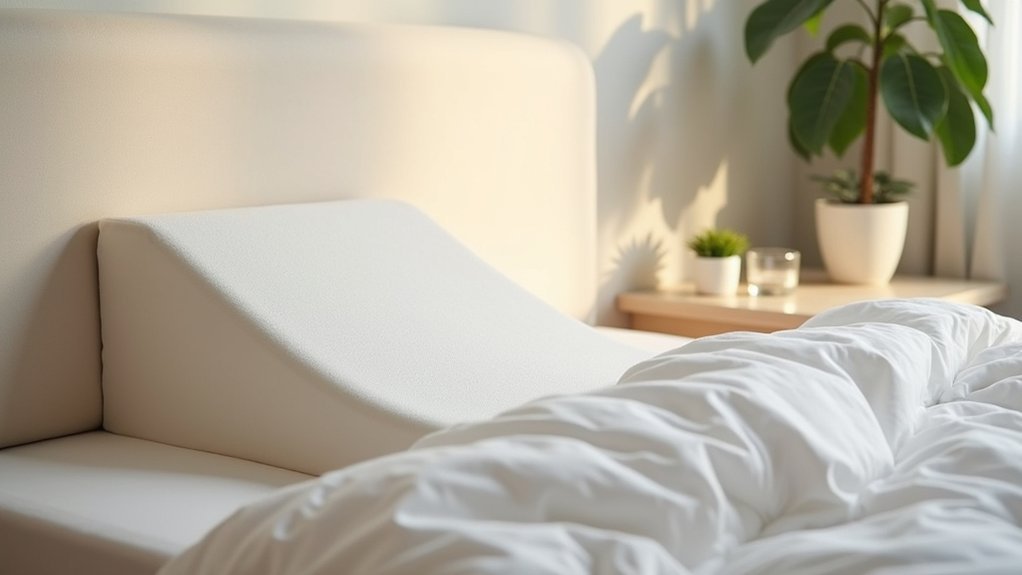
Beyond wearable solutions like the tennis ball method, wedge pillows provide another effective positional therapy approach that elevates your upper body to combat sleep apnea.
These specially designed pillows create a 30 to 45-degree incline that uses gravity to keep your airways open, reducing airway obstruction during sleep. You’ll find wedge pillows particularly beneficial if you have positional obstructive sleep apnea, as upper body elevation promotes better airflow while you sleep.
This non-invasive option effectively reduces snoring and sleep disturbances without requiring complex equipment.
Many wedge pillows feature memory foam construction that contours to your body, enhancing comfort and sleep quality. You can easily incorporate this affordable positional therapy method into your routine, and it complements other sleep apnea treatments seamlessly.
Positional Sleep Belts and Wearable Devices
You’ll find positional sleep belts feature adjustable straps and lightweight materials that comfortably secure around your torso to prevent back sleeping.
Modern wearable devices integrate vibro-tactile sensors that detect your sleeping position and deliver gentle vibrations when you roll onto your back.
These compact, prescription-based devices combine ergonomic belt design with smart technology to maintain side-sleeping throughout the night.
Belt Design Features
Modern positional sleep belts incorporate sophisticated design elements that prioritize both comfort and effectiveness in managing sleep apnea symptoms.
You’ll find these devices feature adjustable straps that wrap around your chest or waist, ensuring a comfortable fit regardless of your body size. The compact design won’t feel bulky during sleep, while vibro-tactile feedback technology automatically detects your position and delivers gentle vibrations to encourage side sleeping without fully waking you.
Most positional sleep belts are lightweight and streamlined, making them unobtrusive throughout the night. The vibration intensity adjusts based on your sleeping position, providing just enough stimulation to prompt movement.
If you’re diagnosed with mild to moderate obstructive sleep apnea, prescription use of these devices is often recommended for ideal results.
Wearable Technology Integration
When it comes to managing sleep apnea through position control, wearable technology has revolutionized how patients can maintain ideal sleeping positions throughout the night.
These innovative wearable devices use vibration technology to detect when you’re sleeping on your back and gently prompt you to shift to side sleeping for better airflow. You’ll find these compact devices comfortable enough to wear all night without sleep disruption.
Research shows positional therapy effectively reduces symptoms in 49.5% of mild obstructive sleep apnea cases. The devices automatically adjust vibration intensity based on your movement, providing consistent sleep position support.
For those diagnosed with mild to moderate positional sleep apnea, these wearable solutions offer a practical non-invasive alternative to CPAP therapy, making treatment more accessible and user-friendly.
Body Pillows for Sleep Position Maintenance
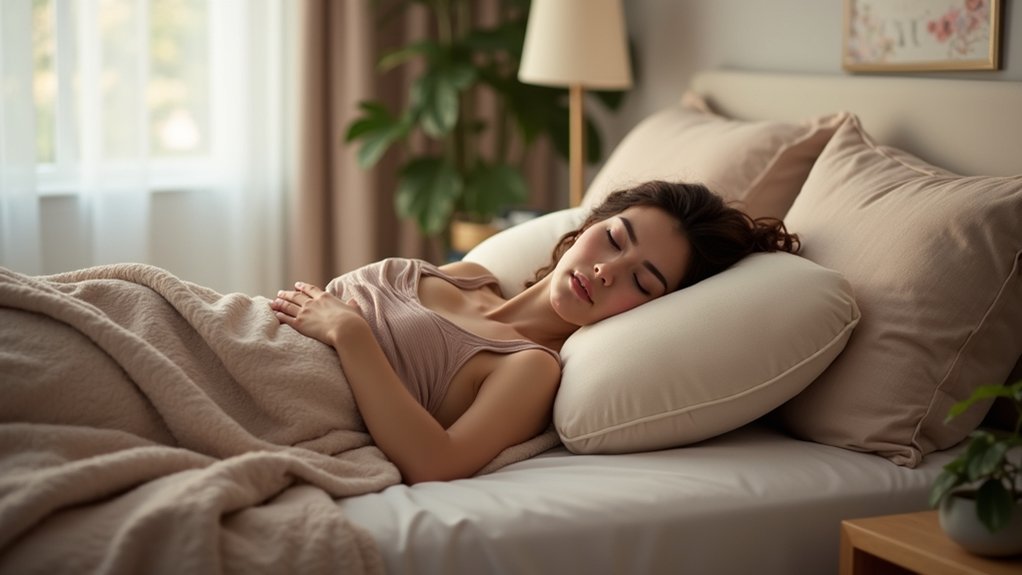
Body pillows offer a simple yet effective solution for maintaining side-sleeping positions throughout the night, particularly benefiting individuals with positional obstructive sleep apnea.
These versatile tools promote proper spine alignment while reducing airway obstruction that worsens when you’re sleeping on your back. Research shows positional therapy using body pillows effectively helps approximately 19.4% of moderate sleep apnea patients manage their symptoms.
You’ll find body pillows encourage side sleeping by providing something to hug or wrap around, preventing nighttime rolling onto your back.
This positioning naturally aligns your spine and hips, improving overall sleep quality while reducing back pain. Investing in a high-quality body pillow tailored to your preferences enhances adherence to treatment, leading to better management of sleep apnea symptoms through consistent positional therapy.
Smart Sleep Position Monitors and Apps
While body pillows provide physical support for maintaining proper sleep positions, smart sleep position monitors and apps take positional therapy to the next level through real-time tracking and automated feedback.
These devices use advanced sensors to monitor your sleep throughout the night, tracking apnea occurrences and analyzing your position patterns. When you roll onto your back, vibration alerts gently prompt you to return to side sleeping, reducing symptoms of obstructive sleep apnea.
Sleep tracking apps paired with wearable devices offer extensive insights into your sleep quality, duration, and disturbances.
Many integrate with health applications, letting you correlate sleep data with lifestyle factors like diet and exercise. Advanced algorithms provide personalized feedback based on your individual patterns, enhancing adherence to positional therapy.
Adjustable Bed Frame Positioning
Adjustable bed frames offer one of the most effective solutions for managing sleep apnea through strategic positioning. When you elevate your head and torso 30-45 degrees, gravity helps reduce airway obstruction during sleep. This positioning greatly decreases apneic events and improves overall sleep quality for those with positional obstructive sleep apnea.
| Feature | Benefit | Sleep Impact |
|---|---|---|
| Programmable positions | Find your comfortable angle | Enhanced side sleeping |
| Head elevation | Reduces airway collapse | Fewer breathing interruptions |
| Device compatibility | Works with positional therapy devices | Extensive treatment approach |
You’ll find that adjustable bed frames integrate seamlessly with other positional therapy devices, creating a thorough sleep environment. The programmable settings let you discover the ideal comfortable angle that keeps your airways open while supporting side sleeping throughout the night.
Specialized Positional Therapy Vests
Since traditional sleep position training can be challenging to maintain consistently, specialized positional therapy vests offer an innovative solution that gently guides you back to side sleeping whenever you roll onto your back.
These lightweight devices use vibro-tactile feedback to detect when you’ve shifted positions, delivering gentle vibrations that alert you without fully waking you up. This technology considerably reduces airway obstruction during sleep, making these vests particularly effective treatment options for positional obstructive sleep apnea.
The adjustable vibration intensity guarantees personalized intervention throughout the night. Research shows these vests improve sleep quality while reducing apnea events in patients with mild to moderate cases.
For best results, prescription use is recommended, allowing healthcare providers to monitor your progress and confirm proper treatment guidance.
Cervical Pillow Support for Neck Alignment
Proper neck alignment plays an essential role in maintaining open airways during sleep, and cervical pillows provide the targeted support your spine needs to reduce obstructive sleep apnea symptoms.
These specialized pillows feature contoured designs that cradle your head while maintaining elevation, promoting better airflow throughout the night. You’ll experience improved sleep quality as the pillow reduces neck pain caused by poor sleeping posture.
Many cervical pillows offer adjustable densities, letting you customize support based on your comfort preferences. When integrated into your positional therapy routine, these pillows complement side sleeping techniques effectively.
This combination enhances spinal health while managing sleep apnea symptoms, creating a thorough approach to better rest.
Combination Methods Using Multiple Positioning Tools
When you combine multiple positioning tools, you’ll create a more robust defense against sleep apnea episodes than relying on any single method alone.
These combination methods maximize your positional therapy effectiveness by addressing different aspects of sleep position maintenance.
You can pair a side-sleeping pillow with a hip belt to prevent rolling onto your back during sleep. Sleep-tracking apps provide valuable feedback about your positioning patterns, helping you adjust your approach for better adherence.
Adding gentle vibrating reminders strengthens your behavioral techniques when you start shifting positions.
Comfort-focused equipment like breathable fabrics and soft straps improves your overall sleep quality while maintaining therapeutic positioning.
This all-encompassing approach combines physical barriers, technology assistance, and behavioral training to create a personalized system that works consistently throughout the night.
Frequently Asked Questions
What Is the Best Positional Therapy for Sleep Apnea?
You’ll find side sleeping most effective for reducing airway obstruction. Use wearable devices that vibrate when you roll onto your back, and consider sleep-tracking apps to help maintain proper positioning throughout the night.
What Is the Best Position to Lay in if You Have Sleep Apnea?
You should sleep on your side, preferably your left side, to reduce airway obstruction. This position improves airflow and minimizes pressure on your heart, greatly reducing sleep apnea symptoms.
What Is the Most Successful Treatment for Sleep Apnea?
CPAP therapy’s your most successful treatment option, maintaining open airways for most patients. You’ll find it works better than other methods, though combining it with lifestyle changes like weight loss and avoiding alcohol optimizes your results.
Does Positional Therapy Work for Sleep Apnea?
Yes, positional therapy works for sleep apnea, especially if you’re a back sleeper. It’s effective for about 49.5% of mild cases and 19.4% of moderate cases, helping reduce airway obstruction.




Leave a Reply