

You can master progressive muscle relaxation through proven techniques like Jacobson’s classic method, which systematically tenses and releases muscle groups from toes to forehead. Try the quick 4-muscle group approach for bedtime, targeting hands, shoulders, stomach, and feet with 5-10 second tension holds followed by complete release. Breathing-focused methods synchronize your breath with muscle relaxation, while passive techniques require no physical effort yet effectively calm anxious thoughts. These evidence-based approaches will transform your sleep quality and stress management capabilities.
Classic Jacobson Progressive Muscle Relaxation Method
When stress overwhelms your daily life, the Classic Jacobson Progressive Muscle Relaxation method offers a scientifically-backed solution that’s been helping people find calm for nearly a century.
Developed by Edmund Jacobson in the 1920s, this progressive muscle relaxation (PMR) technique works by systematically tensing and relaxing each muscle group from your toes to forehead.
Progressive muscle relaxation systematically targets each muscle group, creating deliberate tension followed by purposeful release from toes to forehead.
You’ll tense each muscle for 5-10 seconds while inhaling, then relax for 10-20 seconds while exhaling. This contrast helps you recognize the difference between tension and relaxation.
The method’s health benefits include improved sleep quality and lower blood pressure. Regular practice can reduce symptoms of anxiety and stress without requiring special equipment, making it accessible whenever you need relief.
Modified 16-Muscle Group Tension and Release Technique
You’ll find the Modified 16-Muscle Group Tension and Release Technique offers a more streamlined approach than Jacobson’s original method, focusing on fewer muscle groups while maintaining effectiveness.
This simplified sequence targets your hands, arms, shoulders, face, stomach, and legs through systematic tension and release cycles.
The contrast you’ll experience between tensed and relaxed states helps your body recognize and achieve deeper relaxation more efficiently.
Streamlined Muscle Group Sequence
The 16-muscle group sequence offers a streamlined approach to progressive muscle relaxation that’s both thorough and manageable for beginners and experienced practitioners alike.
This technique targets specific muscle groups through systematic tension and release, creating distinct contrasts between tight and relaxed sensations throughout your body.
You’ll start at your feet and work upward through calves, thighs, buttocks, abdomen, chest, arms, shoulders, neck, and face. Tense each muscle group for 5-10 seconds while inhaling, then quickly exhale as you release the tension.
This modified version of traditional relaxation techniques enhances your awareness of physical stress patterns while providing effective stress relief.
Regular practice builds your ability to recognize and release tension, making this approach an accessible tool for managing daily stress and improving overall relaxation skills.
Tension Release Benefits
Beyond learning the proper sequence, understanding how tension and release creates lasting benefits will motivate you to maintain consistent practice. This technique transforms your awareness of physical tension, helping you recognize stress patterns throughout your body.
You’ll develop stronger stress management skills as you systematically target each muscle group. Regular practice delivers measurable health improvements. Your blood pressure can decrease, headaches become less frequent, and sleep quality improves considerably.
The relaxation response you cultivate reduces anxiety symptoms and enhances your overall mood. The modified approach specifically addresses chronic tension areas, providing targeted relief where you need it most.
As you master tension release cycles, you’ll experience deeper relaxation states and develop lasting mind-body awareness that supports long-term well-being and stress resilience.
Quick 4-Muscle Group Relaxation for Bedtime

Four strategic muscle groups can transform your bedtime routine when you’re pressed for time but need effective relaxation. This streamlined progressive muscle relaxation technique targets your hands, shoulders, stomach, and feet—areas where tension accumulates throughout the day.
| Muscle Group | Technique |
|---|---|
| Hands | Squeeze into fists for 5-10 seconds, then release |
| Shoulders | Raise toward ears, hold briefly, then drop |
| Stomach | Tense abdominal muscles tightly, then relax completely |
| Feet | Curl toes tightly, hold momentarily, then release |
This method improves sleep quality by systematically releasing physical tension. It’s particularly effective for relaxation for kids and adults managing health conditions. You’ll notice immediate relief as each muscle group shifts from tension to deep relaxation, preparing your body for restorative sleep.
Breathing-Focused Progressive Muscle Relaxation
You’ll enhance your PMR practice by focusing on intentional breathing patterns that sync with muscle tension and release cycles.
Start with deep breathing preparation to establish a calm foundation before beginning any muscle work.
Master breath-muscle coordination techniques by timing your inhales with tension phases and exhales with relaxation phases.
Deep Breathing Preparation
Before you begin tensing and releasing muscle groups, establishing proper breathing creates the foundation for effective progressive muscle relaxation.
Deep breathing serves as your gateway to calm the nervous system and prepare your body for the tensing sequences ahead.
Start by taking several slow breaths through your nose, focusing on expanding your diaphragm completely. Fill your lungs fully, then exhale slowly with a long, deliberate sigh. This exhale releases initial tension and signals your body to shift into relaxation mode.
Maintain this consistent breathing rhythm throughout your PMR session. It’ll enhance your focus while relaxing your muscles and help you manage distractions during the process.
This breathing preparation amplifies physical relaxation effects, making it considerably easier to achieve deep tranquility.
Breath-Muscle Coordination Techniques
When you synchronize your breathing with muscle tension and release, you create a powerful connection that amplifies the relaxation response throughout your entire body. This breath-muscle coordination technique transforms ordinary muscle exercises into a deeply relaxing experience that effectively combats stress.
| Inhale Phase | Exhale Phase |
|---|---|
| Take a deep breath | Release tension completely |
| Tense muscle group 5-10 seconds | Feel profound relief |
| Maintain awareness of breath | Allow muscles to go limp |
| Focus on the contrast | Notice the calm sensation |
You’ll find this method helps you relax more thoroughly than traditional techniques alone. The coordinated breathing anchors your mind, minimizing distractions while improving lung capacity and respiratory function, ultimately enhancing sleep quality and reducing stress levels.
Guided Visualization With Muscle Tension Release
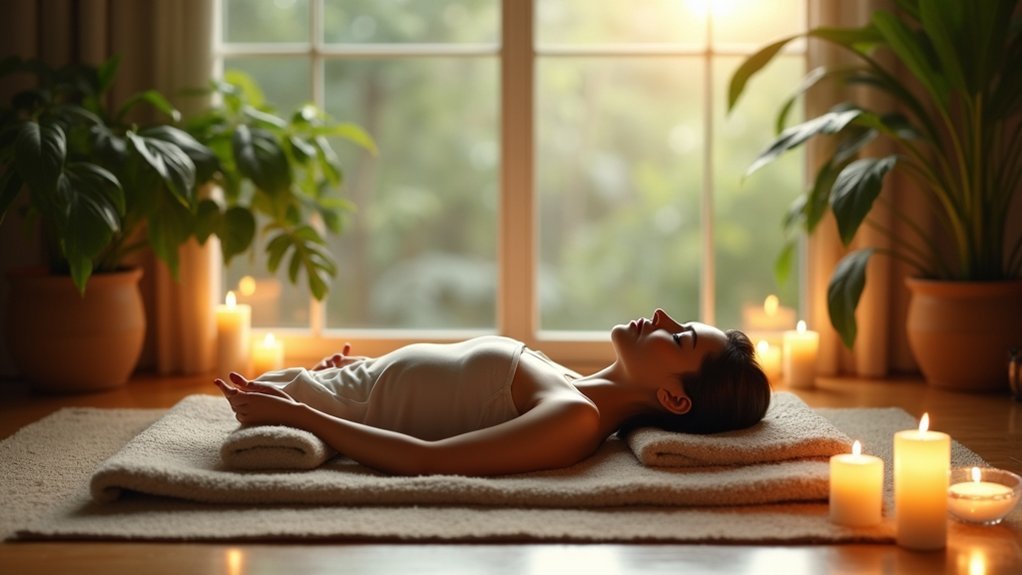
As your mind creates vivid images of tranquil settings, your body simultaneously releases tension through deliberate muscle contractions and relaxations, forming a powerful combination that deepens your overall relaxation experience.
Guided visualization with muscle tension release merges mental imagery with progressive muscle relaxation, creating an enhanced mind-body connection that effectively reduces stress levels and promotes deeper rest.
You’ll picture peaceful environments like beaches or forests while systematically tensing and releasing muscle groups. This dual approach activates your natural relaxation response more effectively than either technique alone.
Research demonstrates significant reductions in reported muscle tension and anxiety levels when combining these methods. Following guided audio recordings guarantees you’ll experience thorough relaxation, as they lead you through both visualization and muscle relaxation steps for best stress relief and improved sleep quality.
Body Scan Progressive Relaxation Without Tensing
While guided visualization with muscle tension release requires active contractions, body scan progressive relaxation takes a gentler approach by focusing purely on awareness and observation. You’ll systematically move your attention through different body parts without tensing muscles, promoting deep relaxation through mindful observation.
Starting at your toes, you’ll notice sensations, tension, or discomfort in each area. This mindfulness technique strengthens your mind-body connection and helps identify stress locations. The body scan can be performed lying down or seated, making it accessible anywhere.
| Body Area | Focus Duration | Sensation Check | Awareness Level | Relaxation Depth |
|---|---|---|---|---|
| Feet/Toes | 1-2 minutes | Temperature/pressure | High | Beginning |
| Legs | 2-3 minutes | Heaviness/lightness | Deepening | Moderate |
| Torso | 2-3 minutes | Breathing/heartbeat | Enhanced | Deep |
| Arms/Hands | 1-2 minutes | Tingling/warmth | Focused | Deeper |
| Head/Face | 1-2 minutes | Muscle release | Complete | Maximum |
Regular practice improves sleep quality and reduces anxiety effectively.
Sequential Toe-to-Head Muscle Relaxation Protocol
Though body scan techniques rely on passive observation, the sequential toe-to-head muscle relaxation protocol takes a more active approach by systematically tensing and releasing muscle groups throughout your entire body.
This progressive muscle relaxation method helps you achieve full-body relaxation while teaching you to recognize the difference between tension and release.
Here’s how to perform this technique effectively:
- Start with your feet – Curl your toes and arch your feet for 5-10 seconds while inhaling, then exhale slowly and relax for 10-20 seconds.
- Progress upward systematically – Move through calves, thighs, buttocks, abdomen, chest, shoulders, arms, hands, neck, jaw, and forehead.
- Maintain consistent timing – Tense and relax each muscle group using the same 5-10 second tension, 10-20 second relaxation pattern.
- Focus on contrast – Pay attention to how different tension feels compared to relaxation to enhance the calming effect.
This approach helps relieve stress and supports mental health.
Autogenic Training Combined With Muscle Release
When you combine autogenic training with progressive muscle relaxation, you create a powerful dual approach that engages both your mind and body in the relaxation process.
You’ll focus on self-generated sensations like warmth in your arms or heaviness in your legs while systematically tensing and releasing muscle groups. This integration enhances your body awareness and deepens the relaxation response beyond what either technique achieves alone.
These relaxation techniques work synergistically – autogenic training’s mental imagery complements PMR’s physical muscle release cycle.
You’ll find this combination particularly effective for stress reduction and chronic tension relief. Research shows improved sleep quality and reduced anxiety when you practice both methods together, making this dual approach ideal for managing insomnia and heightened stress levels through enhanced muscle tension recognition and release.
Mindful Progressive Muscle Relaxation for Deep Sleep
As you prepare for sleep, mindful progressive muscle relaxation transforms the traditional PMR technique into a powerful bedtime ritual that addresses both physical tension and racing thoughts.
This approach combines muscle release with present-moment awareness, creating ideal conditions for deep sleep while managing stress effectively.
Steps for Mindful PMR:
- Start from your toes – Tense each muscle group for 5-10 seconds while inhaling deeply.
- Work systematically upward – Progress through legs, torso, arms, and head sequentially.
- Exhale and release – Let go completely while focusing on the contrast between tension and relaxation.
- Maintain awareness – Notice bodily sensations throughout the 15-20 minute practice.
Regular progressive muscle relaxation prevents health problems related to poor sleep, greatly improving your quality of life through enhanced rest.
Passive Progressive Relaxation for Sleep Maintenance
When you wake up in the middle of the night, your mind often races and your body tenses, making it difficult to return to sleep.
You’ll find that passive progressive relaxation offers a gentle solution that doesn’t require the physical effort of actively tensing muscles when you’re already drowsy.
This technique specifically helps you manage sleep disruptions by using targeted midnight awakening strategies that calm both your nervous system and racing thoughts.
Sleep Disruption Management
Sleep disruptions can leave you feeling exhausted and frustrated, but passive progressive muscle relaxation offers a gentle yet effective solution for maintaining restful sleep throughout the night.
This technique systematically releases physical tension while calming racing thoughts that often trigger anxiety and insomnia.
Here’s how progressive muscle relaxation manages sleep disruptions:
- Tension Release Pattern – Start with your feet and progressively work upward, tensing each muscle group for 5 seconds before releasing.
- Mental Focus Shift – Concentrate on the contrast between tension and relaxation to quiet anxious thoughts.
- Deep Relaxation State – Allow your body to sink into complete muscular release after each cycle.
- Nightly Ritual Integration – Practice consistently before bedtime to signal your body it’s time for restorative rest.
Midnight Awakening Techniques
Midnight awakenings can jolt you from deep sleep, leaving your mind racing and your body tense with frustration. Progressive muscle relaxation offers an effective solution for these disruptive moments.
Find a comfortable position and begin with slow, deep breaths to calm your system. Start the process by tensing and then relaxing each muscle group, beginning with your feet and working upward. Hold tension for 5-10 seconds, then consciously release, noticing the contrast between tightness and relaxation.
Pay special attention to areas like tension in your neck, where stress commonly accumulates. This systematic approach helps your body recognize the shift toward rest.
Regular practice strengthens your relaxation response, ultimately delivering better quality sleep and fewer nighttime disruptions over time.
Frequently Asked Questions
How Do You Relax Your Muscles Progressively?
You’ll systematically tense each muscle group for five seconds, then release completely while breathing deeply. Start with your feet, progressively work upward through legs, torso, arms, and face, noticing the contrast.
How Do You Sleep During PMR?
You’ll naturally drift into sleep by maintaining slow, deep breathing while systematically tensing and releasing each muscle group. If your mind wanders, gently refocus on the relaxation process.
How Do I Stop Tensing My Muscles When I Sleep?
Practice progressive muscle relaxation before bed by tensing then releasing each muscle group. Create a calming routine with deep breathing, gentle stretching, and maintain a comfortable sleep environment to prevent unconscious muscle tension.
What Is the Best Relaxation Technique for Sleep?
You’ll find Progressive Muscle Relaxation most effective for sleep. Tense each muscle group for five seconds, then relax for twenty. This systematic approach reduces physical tension and anxiety, signaling your body it’s bedtime.




Leave a Reply