
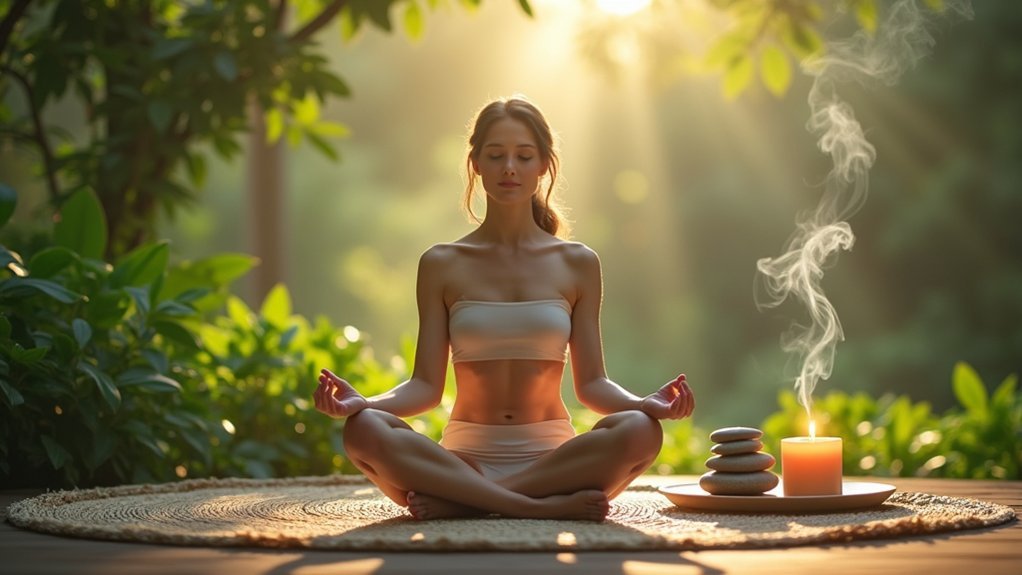
You can dramatically improve your recovery by practicing specific breathing techniques that activate your parasympathetic nervous system. Try box breathing with four-count cycles, diaphragmatic breathing for 5-10 minutes, or pursed lip breathing with two-count inhales and four-count exhales. Combine these with mindfulness meditation and guided visualization before sleep to reduce stress and enhance rest quality. Consistent daily practice, even just 5-10 minutes, transforms your body’s natural ability to repair and rejuvenate while revealing deeper recovery benefits.
Understanding How Breathing Affects Recovery and Rest

When you finish an intense workout or stressful day, your breathing pattern directly determines how quickly and effectively your body shifts into recovery mode.
Proper breathing techniques activate your parasympathetic nervous system, signaling your body to slow down and repair. Deep breathing naturally lowers your heart rate and improves heart rate variability, creating ideal conditions for recovery.
Shallow, quick breaths keep you in a hyperaroused state, preventing effective rest and increasing anxiety.
Diaphragmatic breathing enhances oxygen intake while promoting profound relaxation throughout your system. Regular breathing exercises don’t just reduce stress—they actively improve your mental health and accelerate physical healing.
Essential Breathing Techniques for Deep Relaxation
Five proven breathing techniques can transform your recovery sessions from ordinary rest periods into powerful healing experiences.
Pursed lip breathing slows your pace by having you inhale through your nose for two counts and exhale through pursed lips for four counts. This technique proves effective during physical activities while promoting deep relaxation.
Diaphragmatic breathing encourages proper diaphragm usage for stress reduction. Practice this belly breathing technique for five to ten minutes, three to four times daily, feeling your abdomen rise and fall.
Resonant breathing activates your body’s relaxation response at five to seven breaths per minute. Practice for ten to twenty minutes to greatly reduce stress and anxiety.
Box breathing uses equal four-count cycles for inhaling, holding, exhaling, and holding to improve focus and calm.
Meditation Practices That Enhance Sleep Quality

Building on these breathing foundations, meditation practices specifically designed for bedtime can dramatically improve your sleep quality and help you achieve the restorative rest your body needs.
Mindfulness meditation enhances awareness of thoughts and sensations, helping you manage sleep-related anxiety more effectively. Guided visualization techniques help promote relaxation by encouraging a calm mental state before sleep.
When you incorporate deep breaths through diaphragmatic breathing, you’ll lower your heart rate and create easier shifts into sleep. Mantra meditation focuses your mind on repetitive phrases, reducing intrusive thoughts that disrupt rest.
These techniques help provide essential stress relief. Research shows that 10-20 minute meditation sessions greatly enhance sleep duration and overall satisfaction.
Box Breathing and Diaphragmatic Methods for Stress Relief
As stress builds throughout your day, two powerful breathing techniques can provide immediate relief and restore your sense of calm.
Box breathing involves a simple four-count pattern: inhale for four seconds, hold, exhale for four seconds, then hold again. This breathing technique creates mental clarity and helps reset your emotional states during challenging moments.
Diaphragmatic breathing engages your belly rather than your chest, allowing deeper breaths that trigger your body’s relaxation response. Focus on your abdomen’s rise and fall while breathing slowly and deliberately. Practice this technique for five to ten minutes, three to four times daily.
Both methods effectively reduce stress by slowing your heart rate and activating your nervous system’s calm response, making them essential tools for daily stress management.
Combining Breathwork With Mindfulness for Better Recovery

When you combine intentional breathing with mindfulness practices, you’ll create a powerful foundation for deeper recovery that goes beyond simple relaxation.
Your awareness of breath during rest periods becomes a gateway to present-moment restoration, while mindful positioning of your body enhances the effectiveness of each breathing technique.
This integration transforms recovery from a passive process into an active practice where you’re fully engaged with your body’s natural healing mechanisms.
Breath Awareness During Rest
While your body naturally knows how to breathe, intentionally focusing on your breath during rest periods creates a powerful gateway to deeper recovery.
Breath awareness transforms passive downtime into active healing by engaging your parasympathetic nervous system, which lowers your heart rate and promotes relaxation.
Diaphragmatic breathing serves as your foundation for stress reduction during rest. As you practice mindfulness with breathing techniques like box breathing or equal breathing, you’ll identify tension patterns throughout your body.
This awareness allows you to target specific areas that need attention.
Your mental state directly impacts recovery quality. Regular breath awareness practice improves sleep by creating calm conditions that combat insomnia.
Mindful Recovery Positioning
Your body position directly influences how effectively breathwork promotes recovery. Mindful recovery positioning combines intentional breathing with comfortable posture to maximize your recovery techniques.
When you practice diaphragmatic breathing while maintaining proper alignment, you’ll activate your parasympathetic nervous system, lowering your heart rate and promoting deeper relaxation.
Focus on your breath and body sensations during recovery sessions. This mindful approach enhances stress reduction while supporting physical healing.
You can integrate visualization methods alongside your breathing practice, imagining renewal and restoration as you inhale deeply.
Consistent practice of techniques like Box Breathing or Equal Breathing within mindful positioning frameworks will improve your overall well-being.
You’ll notice faster recovery times from physical exertion when you commit to this integrated approach.
Present Moment Restoration
Because recovery happens most effectively in the present moment, combining intentional breathwork with mindfulness creates a powerful restoration practice that anchors your awareness while your body heals.
When you focus on deep, diaphragmatic breathing during meditation, you’ll activate your body’s natural relaxation response and greatly reduce stress levels.
Practice breathing techniques like Equal Breathing or Resonant Breathing for 10-20 minutes to enhance oxygen supply and cultivate profound calm.
This combination doesn’t just help you relax—it fosters greater self-awareness and promotes emotional balance essential for effective recovery.
Your mindfulness practice paired with intentional breathing creates an ideal healing environment, allowing both physical restoration and mental clarity to flourish simultaneously during your recovery process.
Building a Daily Practice for Optimal Rest and Rejuvenation
You’ll transform your recovery by establishing morning breathing routines that energize your day and evening meditation habits that prepare your body for restorative sleep.
Your success depends on consistency over perfection—it’s better to practice for five minutes daily than to attempt lengthy sessions sporadically.
Start small with simple techniques and gradually build your practice as these habits become second nature.
Morning Breathing Routines
The foundation of ideal daily recovery begins with intentional morning breathing routines that prime your body and mind for peak performance. Dedicating just 5-10 minutes to structured breathing exercises like Deep Breathing and Pursed Lip Breathing will reduce stress levels while enhancing mental clarity throughout your day.
Start with belly breathing to activate your diaphragm, calming your mind and preparing your body for physical activity ahead. Practice Equal Breathing to establish a balanced breathing pattern that improves emotional stability and daily interactions.
Box Breathing serves as an excellent anxiety management tool, building resilience against daily stressors. These techniques enhance oxygen flow, promote focus, and create positive momentum.
You’ll find that consistent morning breathing routines transform not only how you start each day but also how effectively you recover and rejuvenate.
Evening Meditation Habits
As your day winds down, establishing consistent evening meditation habits creates the perfect link between daily activities and restorative sleep.
You’ll find that regular evening meditation greatly reduces stress while enhancing overall relaxation. Deep breathing techniques like box breathing activate your parasympathetic nervous system, naturally promoting calm as you shift toward sleep.
Mindfulness meditation clears distracting thoughts that often interfere with rest, creating space for peaceful rejuvenation. If you’re new to this practice, guided meditation sessions provide valuable structure and support, making it easier to build sustainable habits.
Enhance your evening meditation by incorporating visualization techniques. Imagine serene environments that create mental spaces conducive to rest.
These breathing and visualization combinations work together, transforming your evenings into powerful recovery periods that optimize sleep quality and prepare you for tomorrow’s challenges.
Consistency Over Perfection
When perfectionism becomes your enemy, consistency transforms into your greatest ally for building sustainable breathing and meditation practices. You don’t need flawless sessions to reduce stress and feel better—you need regular engagement with breathing exercises that fit your lifestyle.
Practicing just 5-10 minutes, three to four times daily, creates meaningful progress without overwhelming pressure. Your daily practice thrives on flexibility rather than rigid schedules. Some days you’ll manage full sessions; others might offer only quick breathing moments between tasks.
Track your progress to celebrate small wins and maintain motivation. Use guided apps for structure and support when you’re struggling.
Frequently Asked Questions
What Is the 5 5 5 Technique?
The 5-5-5 technique is a breathing exercise where you’ll inhale for five seconds, hold your breath for five seconds, then exhale for five seconds, promoting relaxation and stress reduction.
What Are the Best Breathing Techniques for Recovery?
You’ll benefit most from diaphragmatic breathing to activate your parasympathetic nervous system, box breathing for mental calm, and resonant breathing at 5-7 breaths per minute to reduce stress and enhance recovery.
What Is the 4 4 4 4 Breathing Technique?
You’ll inhale for four counts, hold your breath for four, exhale for four counts, then hold empty lungs for four. This box breathing pattern regulates your nervous system and reduces stress effectively.
What Is the 4 7 8 Sleep Trick?
You inhale through your nose for four counts, hold your breath for seven counts, then exhale completely through your mouth for eight counts. This breathing pattern helps you relax and fall asleep faster.
In Summary
You’ve now got the tools to transform your rest and recovery through intentional breathing and meditation. Start with just five minutes daily, focusing on one technique that resonates with you. Whether it’s box breathing before bed or diaphragmatic breathing during stressful moments, consistency matters more than perfection. Your body will adapt and respond better to these practices over time, leading to deeper sleep, reduced stress, and enhanced overall well-being.




Leave a Reply