

You can use CBT-I relaxation techniques to calm your racing mind and tense muscles within minutes of practice. Try the 4-7-8 breathing method by inhaling for 4 seconds, holding for 7, and exhaling for 8 seconds to activate your body’s natural relaxation response. Progressive muscle relaxation works by systematically tensing and releasing muscle groups from your feet upward, while guided imagery engages your imagination with calming mental scenes. These evidence-based techniques will reveal deeper sleep strategies ahead.
Understanding CBT-I and Relaxation for Sleep

When sleep becomes elusive night after night, Cognitive Behavioral Therapy for Insomnia (CBT-I) offers a structured, evidence-based approach that addresses the root causes rather than just masking symptoms. This thorough treatment combines relaxation techniques with cognitive restructuring to tackle both physical tension and racing thoughts that keep you awake.
You’ll work through 6-8 tailored sessions that include deep breathing exercises and progressive muscle relaxation to calm your nervous system.
CBT-I also incorporates sleep hygiene education, helping you understand how daily choices affect your rest. Studies show this multicomponent approach improves insomnia symptoms by 70-80%, making it the gold standard first-line treatment.
Deep Breathing Exercises for Nighttime Calm
As your mind races with the day’s worries and your body remains tense from stress, deep breathing exercises offer a simple yet powerful way to activate your body’s natural relaxation response.
The 4-7-8 technique works particularly well for nighttime calm: inhale through your nose for 4 seconds, hold for 7 seconds, then exhale through your mouth for 8 seconds. This pattern helps lower your body’s stress response and reduces anxiety before bedtime.
Focus on deep abdominal breathing rather than shallow chest breathing. Just a few minutes of practice can greatly improve your sleep quality and quiet racing thoughts.
You can enhance these effects by combining deep breathing with progressive muscle relaxation or guided imagery techniques for maximum nighttime relaxation.
Progressive Muscle Relaxation Techniques
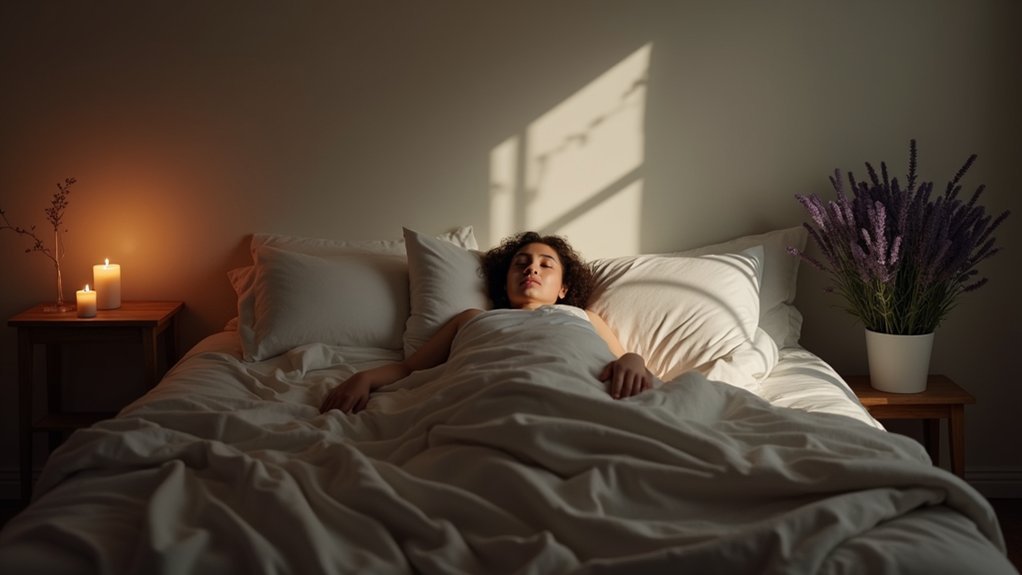
While deep breathing calms your mind, progressive muscle relaxation (PMR) targets the physical tension your body holds onto throughout the day. This technique systematically tenses and releases muscle groups from your feet upward, helping you identify where tension hides and consciously let it go.
Regular PMR practice can greatly improve your sleep quality by:
- Lowering anxiety levels through nervous system calming
- Reducing muscle tension that keeps you awake
- Creating awareness of physical stress patterns
- Establishing a consistent bedtime routine for better sleep
Though mastering Progressive Muscle Relaxation takes practice, audio guides can help you learn effectively.
When you incorporate PMR into your nightly routine, you’ll develop a powerful tool for managing insomnia and stress-related sleep disturbances while enhancing overall relaxation.
Guided Imagery and Visualization Methods
Your mind can become a powerful ally in achieving restful sleep through guided imagery and visualization techniques.
You’ll learn to create calming mental images that transport you away from daily stressors, practice body scan visualization to release physical tension, and use specialized sleep-focused imagery scripts designed to ease your passage into slumber.
These methods work by engaging your imagination to establish a peaceful mental environment that naturally promotes relaxation and sleep readiness.
Creating Calming Mental Images
When you close your eyes and picture yourself walking along a peaceful beach with waves gently lapping at the shore, you’re engaging in guided imagery—a powerful CBT relaxation technique that harnesses your mind’s natural ability to create calming mental experiences.
This visualization method helps reduce anxiety and improves sleep quality by shifting your focus from daily stressors to tranquil mental landscapes. You can customize these calming scenes to match your personal preferences, whether it’s a forest clearing or mountain meadow.
Effective guided imagery involves:
- Engaging all five senses to create vivid, immersive experiences
- Choosing personally meaningful locations that evoke deep relaxation
- Practicing regularly to strengthen your visualization skills
- Incorporating the technique into your consistent bedtime routine
These relaxation techniques enhance overall sleep hygiene when practiced consistently.
Body Scan Visualization
As you gradually shift your attention from one part of your body to another, body scan visualization creates a systematic pathway to deep relaxation that’s particularly effective for bedtime preparation.
This guided imagery technique helps you mentally focus on each body part, identifying and releasing stored tension while promoting awareness of physical sensations.
Starting from your head and moving down to your toes, you’ll develop a stronger mind-body connection that greatly reduces anxiety and improves sleep quality.
Regular practice enhances mindfulness, helping you recognize stress signals and respond with appropriate relaxation techniques.
When you incorporate body scan visualization into your bedtime routine, you’ll create a peaceful change that shifts focus away from racing thoughts, making it an invaluable tool for managing insomnia.
Sleep-Focused Imagery Scripts
Building on the foundation of body awareness, sleep-focused imagery scripts take visualization one step further by immersing you in vivid, calming scenes designed specifically to guide your mind toward sleep.
These guided imagery techniques help you create mental pictures of serene environments that distract from racing thoughts and reduce anxiety.
Research shows this meditation approach greatly reduces insomnia symptoms by lowering physiological arousal and enhancing relaxation.
As part of CBT-I techniques, sleep-focused imagery improves overall quality when practiced regularly.
- Visualize tranquil beaches, quiet forests, or peaceful meadows
- Practice for just 5-10 minutes as part of your nighttime routine
- Use audio tracks or written scripts designed for sleep meditation
- Combine with other CBT relaxation techniques for maximum effectiveness
Autogenic Relaxation Training
You can harness autogenic relaxation training as a powerful self-directed technique that uses specific verbal cues to trigger your body’s natural relaxation response.
This method involves repeating calming phrases like “My arms are heavy and warm” while systematically focusing on different body parts to release tension and promote sleepiness.
Through consistent practice of these body awareness steps, you’ll develop the ability to quickly shift into a relaxed state that prepares your mind and body for restful sleep.
What Is Autogenic Training
Autogenic training transforms your body’s stress response through a powerful combination of verbal cues and mental imagery designed to create deep relaxation. This self-directed technique helps you reduce physiological tension by repeating specific phrases that encourage feelings of warmth and heaviness throughout different body parts.
Research demonstrates autogenic training’s effectiveness in decreasing anxiety symptoms and promoting overall stress reduction. With consistent practice, you’ll master this accessible approach to managing stress-related conditions naturally.
Key benefits include:
- Considerably lowering your body’s stress response through guided mental focus
- Reducing anxiety symptoms and physiological tension effectively
- Enhancing sleep quality by creating calm mental states before bedtime
- Providing natural insomnia relief without medication dependency
Regular practice requires time and dedication, but autogenic training offers lasting improvements in both relaxation and sleep quality.
Verbal Cues and Phrases
The foundation of autogenic training rests on carefully crafted verbal cues that guide your body into progressively deeper states of relaxation.
These calming statements work by directing your focus to specific body parts while mentally repeating phrases like “My arms are heavy and warm” or “My breathing is calm and regular.” As you practice these verbal cues, you’ll notice enhanced physical relaxation as your muscles naturally respond to the suggestions.
Regular use of these techniques can considerably reduce anxiety and help manage symptoms of insomnia.
When you incorporate autogenic training into your bedtime routine, these verbal cues become powerful tools that prepare your mind and body for sleep. The repetitive nature of the phrases creates a meditative state that can effectively improve sleep quality.
Body Awareness Practice Steps
Beginning with a comfortable position either lying down or seated, focus your attention on your right arm while mentally repeating “My right arm is heavy.” Notice how this simple directive starts to create actual physical sensations of weight and warmth as you continue the repetition for 30-60 seconds.
This autogenic relaxation technique enhances body awareness through systematic muscle relaxation:
- Progress through each body part sequentially – arms, legs, torso, and head – using phrases like “My legs are heavy and warm.”
- Maintain consistent practice at the same bedtime each night to strengthen your relaxation skills.
- Create a quiet environment free from distractions to maximize effectiveness.
- Focus solely on physical sensations rather than daily stressors during each session.
Regular autogenic relaxation improves sleep quality by training your mind for effective stress management at bedtime.
Mindfulness Meditation for Better Sleep
Although racing thoughts and bedtime anxiety can seem impossible to quiet, mindfulness meditation offers a powerful solution that’ll transform your relationship with sleep. This practice helps you reduce anxiety by focusing on the present moment without judgment, creating the perfect foundation for restful sleep.
Regular mindfulness meditation can dramatically improve sleep quality while reducing troublesome insomnia symptoms. Key techniques include body scanning, where you systematically relax each muscle group, and breath awareness, which calms your racing mind through focused breathing patterns.
These methods promote deep relaxation by altering brain activity related to stress. When you incorporate mindfulness meditation into your nightly routine, you’ll create an effective wind-down ritual that prepares your mind for restorative sleep.
Creating Your Personalized Bedtime Relaxation Routine

How can you transform scattered relaxation attempts into a powerful, personalized bedtime routine that consistently delivers quality sleep?
You’ll need to establish consistent practices that signal your body it’s time to wind down. Start by creating a calming environment with dimmed lights, reduced noise, and comfortable temperatures to enhance sleep quality.
Your personalized relaxation routine should include:
- Mindfulness meditation or gentle stretching for at least 10 minutes to promote anxiety reduction
- Deep breathing or progressive muscle relaxation as core relaxation techniques
- Calming music or sleep meditation audio tracks tailored to your preferences
- Sleep diary tracking to monitor how different methods impact your rest
Experiment with various combinations until you discover what works best.
Keep your bedtime routine consistent, allowing it to become your nightly pathway to restorative sleep.
Maximizing the Effectiveness of CBT-I Relaxation Practices
When you practice CBT-I relaxation techniques consistently, you’ll notice their power compounds over time, transforming from simple exercises into reliable sleep-inducing tools. Your sleep quality improves as these CBT techniques become second nature.
Progressive muscle relaxation and deep breathing work best when practiced nightly, creating clear signals that bedtime rest is approaching.
You’ll reduce anxiety more effectively by combining multiple relaxation techniques tailored to your preferences. Guided imagery helps quiet racing thoughts, while autogenic relaxation promotes deeper physical calm.
Track your progress using a sleep diary to identify which individualized practices yield the strongest results. This data allows you to refine your approach and maximize effectiveness.
Frequently Asked Questions
What Is the Best Way to Relax Before Bedtime?
You’ll sleep better by practicing deep breathing exercises, progressive muscle relaxation, or guided imagery. Create a consistent routine that includes these techniques while keeping your bedroom quiet and comfortable for ideal rest.
How Can CBT Improve Sleep?
CBT improves your sleep by restructuring negative thoughts about bedtime and changing problematic sleep behaviors. You’ll learn stimulus control techniques, relaxation methods, and personalized strategies that reduce falling-asleep time and nighttime awakenings effectively.
What Techniques Are Used to Promote Rest and Sleep?
You’ll find deep breathing exercises, progressive muscle relaxation, and guided imagery most effective. Try the 4-7-8 breathing method, systematically tense and release muscle groups, then visualize calming scenes for better sleep.
What Is the Best Relaxation Technique for Sleep?
You’ll find combining deep breathing with progressive muscle relaxation works best for sleep. The 4-7-8 breathing method paired with systematic muscle tension release creates powerful synergy that’ll calm your nervous system more effectively than single techniques.




Leave a Reply