

You can ease restless leg syndrome naturally by establishing consistent sleep schedules, creating cool bedroom environments, and incorporating gentle daily exercise like walking or swimming. Apply heat therapy for 15-20 minutes followed by cold for 10-15 minutes to relax muscles and reduce inflammation. Gentle calf massages, iron-rich foods, and magnesium supplementation support muscle function. Practice deep breathing, yoga, and mindfulness meditation to reduce stress that worsens symptoms. These thorough strategies offer effective relief when applied consistently.
Sleep Schedule Modifications for RLS Relief

While RLS symptoms can disrupt your nightly rest, establishing a consistent sleep schedule serves as one of the most effective natural interventions for managing this condition.
You’ll relieve symptoms by going to bed and waking up at the same time daily, which improves your overall sleep quality. Aim for seven to nine hours of sleep nightly, and consider shifting your schedule later to enhance deep sleep phases that reduce RLS disturbances.
Incorporate gentle stretching into your evening routine to alleviate leg discomfort before bed.
Create a calming bedtime routine by dimming lights and playing soothing music, signaling your body to prepare for better sleep.
These modifications work together to establish healthier sleep patterns and minimize RLS interference.
Exercise and Movement Therapies
You can greatly reduce your RLS symptoms by incorporating specific types of physical activity into your daily routine.
Moderate exercise during the day enhances sleep quality while promoting the relaxation your body needs to combat restless sensations.
Simple practices like gentle stretching before bedtime and regular yoga sessions offer targeted relief by calming your nervous system and easing leg discomfort.
Moderate Daily Exercise Benefits
Because moderate daily exercise promotes healthy blood flow and muscle function, incorporating activities like walking, swimming, or cycling into your routine can greatly reduce RLS symptoms.
These activities enhance leg muscle health while helping alleviate Restless Legs Syndrome discomfort through improved circulation. You’ll also improve sleep quality since regular physical activity regulates your sleep patterns, which is essential when RLS symptoms typically worsen at night.
Exercise can enhance endorphins release, naturally reducing the uncomfortable sensations and urge to move your legs.
However, avoid intense or late workouts as they can disrupt sleep and worsen symptoms. Adding stretching exercises specifically targeting your legs provides immediate relief while boosting flexibility and circulation.
Focus on gentle, consistent movement rather than vigorous activity for ideal RLS management.
Gentle Stretching Before Bed
When combined with your daily exercise routine, gentle stretching before bed offers targeted relief for RLS symptoms by directly addressing muscle tension and improved circulation in your legs. This bedtime routine can greatly enhance your flexibility while reducing symptom intensity.
| Stretch Type | Duration | Benefits |
|---|---|---|
| Calf stretches | 30-60 seconds | Relieves lower leg tension |
| Hamstring stretches | 30-60 seconds | Reduces thigh muscle tightness |
| Gentle yoga poses | 5-10 minutes | Promotes mental relaxation |
| Ankle rotations | 1-2 minutes | Improves blood flow |
| Leg elevation | 3-5 minutes | Enhances circulation |
Establishing consistent gentle stretching practices helps relieve symptoms over time. These targeted exercises promote muscle relaxation and improved sleep quality, making your bedtime routine more effective for managing RLS naturally.
Yoga for RLS Relief
Ancient practices of yoga offer powerful relief for restless leg syndrome through targeted poses that combine gentle movement, deep breathing, and mindful relaxation.
Regular yoga practice reduces RLS symptoms by improving circulation and promoting muscle relaxation in your legs. The stretching movements help alleviate discomfort while deep breathing techniques calm your nervous system.
Benefits of yoga for RLS relief include:
- Forward bends and gentle leg stretches that enhance blood flow
- Stress reduction through mindful breathing exercises
- Improved sleep quality for better symptom management
- Natural muscle relaxation without medication dependency
You’ll find yoga complements other lifestyle changes as part of a holistic approach to managing RLS.
Research shows consistent practice can reduce both frequency and intensity of symptoms, making it an effective natural remedy for long-term relief.
Dietary Changes and Nutritional Support
While medications can provide relief for restless leg syndrome, you’ll often find that strategic dietary changes offer a natural and effective approach to managing your symptoms.
Focus on consuming iron-rich foods like red meat, beans, and leafy greens, particularly if your ferritin levels are at or below 50 mcg/L. Enhance iron absorption by pairing supplements with vitamin C sources such as citrus fruits and bell peppers.
Monitor your caffeine intake from coffee, tea, and chocolate, as reducing consumption can greatly improve symptoms. Prioritize proper hydration and include magnesium-rich foods to support muscle function.
Always consider consulting with a healthcare provider before making major dietary adjustments or starting supplementation to guarantee personalized nutritional support for your RLS management.
Heat and Cold Therapy Applications
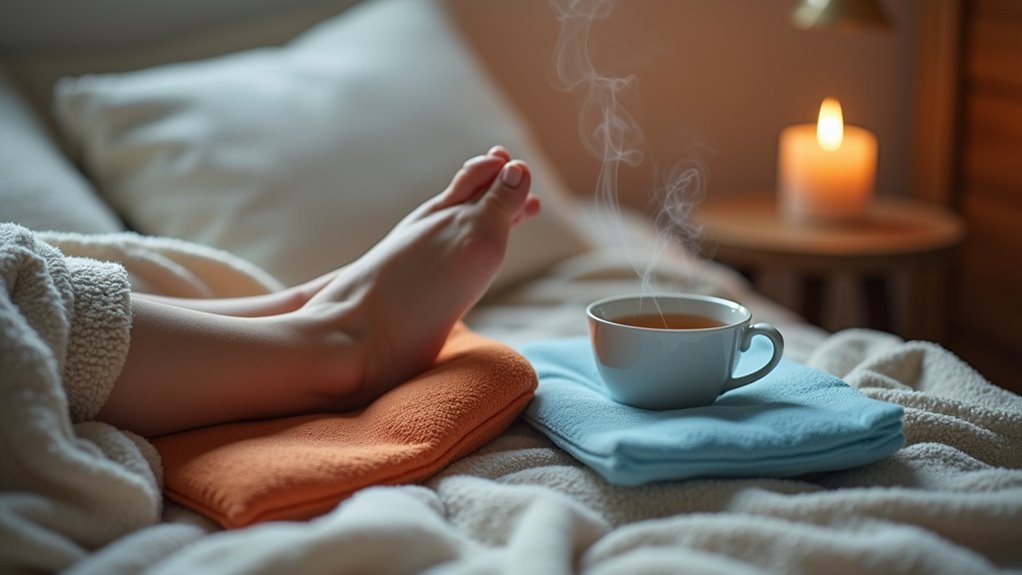
You can find immediate relief from RLS symptoms by applying targeted temperature treatments to your affected legs.
A heating pad will help soothe muscle tension and improve circulation, while ice packs can numb uncomfortable sensations and reduce inflammation.
Alternating between these hot and cold applications throughout your evening routine creates a powerful combination that addresses multiple aspects of restless leg discomfort.
Heating Pad Benefits
When restless leg syndrome disrupts your sleep, a simple heating pad can become your most valuable nighttime ally. This accessible therapy can relieve uncomfortable sensations by relaxing tense muscles and boosting blood circulation in your legs. The gentle warmth helps improve your body’s natural ability to shift into restful sleep, making those restless nights more manageable.
Using a heating pad consistently before bedtime creates a soothing routine that signals your body it’s time to wind down. The heat penetrates deep into muscle tissue, addressing the underlying discomfort that keeps you awake.
Key benefits of heating pad therapy:
- Relaxes muscle tension and reduces cramping sensations
- Increases blood flow to affected areas
- Promotes natural relaxation responses
- Enhances sleep quality when used consistently
For maximum effectiveness, combine your heating pad with gentle stretching or deep breathing exercises to amplify the calming effects.
Ice Pack Relief
Ice therapy offers a complementary approach to heat treatment that can provide immediate relief when restless leg syndrome symptoms flare up. You can apply ice packs to your legs for 15-20 minutes to achieve effective ice pack relief and numb uncomfortable sensations.
Cold therapy helps reduce inflammation while providing quick symptom relief during acute RLS episodes. Always wrap ice packs in cloth to prevent skin damage or frostbite.
You’ll find that alternating between heat and cold applications enhances muscle relaxation and improves blood circulation throughout your legs. This combination approach addresses discomfort more thoroughly than using either method alone.
Incorporating cold therapy consistently into your broader RLS management strategy, alongside lifestyle modifications, can greatly enhance your overall symptom relief and improve your quality of life.
Temperature Alternation Methods
Building on both individual heat and cold applications, temperature alternation methods maximize the therapeutic benefits of contrast therapy for restless leg syndrome management.
You’ll find that switching between heat therapy and cold therapy creates a powerful combination that can relieve symptoms more effectively than using either method alone. This approach stimulates blood circulation while reducing muscle tension, providing both immediate and sustained benefits.
The contrast between temperatures helps alleviate discomfort by triggering your body’s natural healing responses. While cold therapy offers temporary relief by numbing sensations, heat therapy relaxes tight muscles, creating a thorough treatment approach.
Temperature Alternation Guidelines:
- Apply heat for 15-20 minutes, followed immediately by cold for 10-15 minutes
- Repeat the cycle 2-3 times during symptom flares
- Use towels between skin and temperature sources
- Experiment with timing to find your ideal pattern
Massage and Physical Touch Techniques

One of the most accessible and effective approaches for managing restless leg syndrome involves using your hands to provide targeted relief through massage and physical touch techniques.
Gentle calf massages before bedtime can greatly reduce discomfort while promoting relaxation and improving circulation in your legs. You’ll find that incorporating these techniques into your nightly routine helps relieve muscle tension that often accompanies RLS symptoms.
Enhance your massage sessions by using a heating pad during treatment, which amplifies the soothing effects and provides additional relief.
The physical touch stimulates your body’s release of endorphins, naturally reducing stress and anxiety that can worsen symptoms. Regular stretching combined with massage creates a powerful combination for managing RLS symptoms effectively.
Relaxation and Breathing Practices
When your mind races and muscles tense up, restless leg syndrome symptoms typically worsen, making relaxation and breathing practices essential tools in your natural treatment arsenal.
Deep breathing exercises help reduce stress and tension that can aggravate RLS symptoms while promoting calm before bedtime. Incorporating yoga provides dual benefits through stretching and relaxation techniques that alleviate discomfort and improve sleep quality.
- Mindfulness meditation distracts your mind from RLS sensations while fostering deep relaxation
- Gentle stretching before bed relieves leg discomfort and enhances overall relaxation
- Guided relaxation techniques from podcasts or videos help you wind down effectively
- Deep breathing exercises reduce stress and create a sense of calm before sleep
These practices work together to prepare your body for restful sleep while potentially easing troublesome RLS symptoms.
Yoga and Stretching Routines
Targeted yoga poses and stretching routines offer powerful relief for restless leg syndrome by addressing the physical tension and poor circulation that often trigger uncomfortable sensations.
You’ll find that incorporating gentle stretching before bed helps calm leg discomfort while promoting deep relaxation. Specific poses like Legs-Up-the-Wall and Child’s Pose work particularly well because they facilitate blood circulation and release tightness in your legs.
When you practice yoga regularly, you’re improving your flexibility and reducing muscle tension that contributes to RLS symptoms.
Don’t forget to combine these movements with deep breathing techniques—this enhances the relaxation response and helps you manage stress that can worsen symptoms.
Regular yoga practice greatly improves sleep quality, giving you better rest despite RLS challenges.
Environmental Sleep Optimization
Because restless leg syndrome symptoms intensify in poorly designed sleep environments, you’ll need to transform your bedroom into a sanctuary that actively supports symptom relief.
To optimize sleep and manage RLS naturally, focus on establishing a calming bedtime routine that includes dimming lights and playing soothing music to signal your body it’s time to rest.
Creating a comfortable sleep environment requires attention to these key elements:
- Keep your room cool and invest in a supportive mattress
- Remove all TVs and computers to maintain proper sleep hygiene
- Use guided relaxation techniques through podcasts or videos before bed
- Choose aisle seats when traveling to allow necessary leg movement
These environmental adjustments work together to minimize RLS discomfort and promote restorative sleep.
Caffeine and Substance Elimination
While environmental changes provide a foundation for better sleep, eliminating certain substances from your daily routine can deliver even more remarkable improvements for RLS symptoms.
Caffeine stands as the primary culprit—found in coffee, tea, chocolate, and cola—that can greatly worsen your leg discomfort. You’ll want to avoid caffeine entirely in the hours before bedtime to improve sleep quality.
Alcohol and tobacco also intensify symptoms of RLS while disrupting your natural sleep patterns. Studies confirm that even moderate caffeine consumption increases leg discomfort frequency in sensitive individuals.
To reduce symptoms effectively, gradually decrease your caffeine intake rather than stopping abruptly. This approach minimizes withdrawal effects while helping you adjust to a substance-free routine that supports better rest.
Iron and Vitamin Supplementation
After eliminating problematic substances, you can take a more direct approach by addressing potential nutritional deficiencies that fuel RLS symptoms.
Iron deficiency stands as the most significant nutritional factor linked to restless leg syndrome, particularly when brain iron levels drop below ideal ranges.
Iron deficiency represents the primary nutritional culprit behind restless leg syndrome, especially when brain iron stores become depleted.
Your doctor should test ferritin levels, and if they’re at or below 50 mcg/L, iron supplementation becomes essential. A typical starting dose involves 325 mg of ferrous sulfate daily. You’ll enhance absorption by pairing iron supplements with vitamin C sources like citrus fruits or supplements.
- Monitor ferritin levels regularly since brain iron deficiency can exist despite normal blood iron
- Expect approximately one month before iron levels increase and symptoms begin improving
- Take iron supplements on empty stomach for maximum absorption
- Continue supplementation until ferritin levels consistently exceed 50 mcg/L to alleviate symptoms
Herbal and Plant-Based Remedies
Though nutritional supplementation provides a foundational approach, herbal remedies offer gentle yet effective alternatives for managing restless leg syndrome symptoms.
Valerian root’s calming effects promote relaxation and improve sleep quality, potentially reducing RLS discomfort. Passionflower works similarly, using its sedative properties to decrease anxiety and enhance rest.
You’ll find magnesium supplements derived from plant sources like spinach particularly beneficial for muscle relaxation and leg comfort.
Essential oils such as lavender and chamomile provide aromatherapy options that encourage relaxation when applied topically or diffused.
Ginseng represents another traditional option that may boost energy levels while reducing RLS episode frequency through consistent use.
These plant-based approaches complement conventional treatments effectively.
Mind-Body Distraction Strategies
Beyond physical remedies, your mind holds powerful tools for managing restless leg syndrome through strategic distraction techniques. When uncomfortable sensations arise, you can redirect your attention through reading, puzzle-solving, or listening to calming music and podcasts.
These mind-distraction techniques effectively reduce awareness of RLS symptoms during rest periods.
Mindfulness meditation offers another powerful approach by promoting relaxation and stress reduction, since anxiety often worsens RLS symptoms. Guided imagery allows you to visualize peaceful scenes, shifting focus away from leg discomfort entirely.
- Reading or puzzles – Engage your mind to divert attention from leg sensations
- Calming music or podcasts – Provide soothing auditory distraction during rest
- Mindfulness meditation – Reduce stress and anxiety that worsen symptoms
- Guided imagery – Visualize peaceful scenes to redirect focus
Incorporating gentle movement like tai chi combines distraction with physical relief.
Frequently Asked Questions
What Gives Immediate Relief for Restless Leg Syndrome?
You’ll find immediate relief through gentle calf stretching and massages before bed. Try soaking in a warm bath, applying heating pads or ice packs, taking light walks, or practicing deep breathing techniques to calm symptoms.
What Vitamin Stops Restless Leg Syndrome?
No single vitamin completely stops restless leg syndrome, but you’ll find vitamin D, B12, and E most helpful. You should also take vitamin C to boost iron absorption, since iron deficiency often worsens RLS symptoms.
Will Drinking More Water Help Restless Legs?
Yes, drinking more water can help your restless legs. Proper hydration supports muscle function and may reduce involuntary movements. Drink water throughout the day, but limit intake before bedtime to avoid disrupting sleep.
What Foods Trigger Restless Leg Syndrome?
Foods that’ll trigger your restless leg syndrome include caffeine from coffee, tea, and chocolate, alcohol especially evenings, high-sugar foods, refined carbohydrates causing blood sugar fluctuations, and iron-deficient diets lacking red meat or legumes.




Leave a Reply