
You’ll need to expose yourself to 10,000 lux bright light for 30-90 minutes shortly before your shift starts to effectively reset your circadian rhythm. Use full-spectrum light therapy devices during the first 2-4 hours of your night shift to boost alertness, then create complete darkness with blackout curtains when it’s time to sleep during the day. Maintain consistent timing even on days off and track your progress through a sleep diary. The strategies below will help you optimize your entire approach.
Understanding How Light Affects Your Circadian Rhythm
When you’re working night shifts, understanding how light manipulates your body’s internal clock becomes essential for getting quality sleep.
Light exposure serves as your circadian rhythm’s primary regulator, telling your body when to feel alert or sleepy. During night shifts, bright light becomes your ally by suppressing melatonin production and boosting alertness when you need it most.
Bright light becomes your most powerful tool for suppressing melatonin and maintaining alertness throughout demanding night shifts.
The timing of light exposure matters considerably. Morning light helps shift your internal clock to accommodate unconventional work schedules, while evening light delays sleep onset—perfect for staying alert during overnight hours.
Research shows that bright light therapy before night shifts dramatically improves sleep quality and total sleep time. For maximum effectiveness, you’ll want light intensities exceeding 2500 lux to successfully reset your circadian rhythms and combat shift work’s disruptive effects.
Optimal Light Intensity and Duration for Night Shift Workers
You’ll need bright light at 10,000 lux intensity to effectively shift your circadian rhythm and combat shift work sleep disorder.
Plan for 30-90 minute exposure sessions, with longer durations typically producing better results for sleep quality improvement.
Time your light therapy to begin shortly before your night shift starts to maximize alertness during work hours and improve your post-shift sleep.
10,000 Lux Standards
Effective light therapy for shift work sleep disorder requires specific intensity levels and timing to reset your circadian rhythm.
You’ll need at least 2,500 lux of light exposure to considerably improve sleep quality and alertness during your shifts. However, full-spectrum lamps or portable visors delivering 10,000 lux provide even better results for maintaining wakefulness throughout the night.
Your therapy sessions should last between 30 to 90 minutes for best effectiveness. Time your light exposure shortly before your night shift begins to enhance alertness and combat excessive sleepiness.
Night shift workers who consistently use proper light therapy before their shifts can successfully adapt their biological clock, delaying sleep onset and improving overall sleep efficiency while resynchronizing disrupted circadian rhythms.
30-90 Minute Exposure
Ninety minutes represents the ideal duration for light therapy sessions when you’re preparing for night shift work. This minute exposure window provides optimal circadian rhythm adjustment while enhancing your alertness for upcoming shifts.
| Duration | Light Intensity | Timing | Sleep Quality Impact | Alertness Level |
|---|---|---|---|---|
| 30 min | 2500+ lux | Pre-shift | Moderate improvement | Good |
| 60 min | 2500+ lux | Pre-shift | Better improvement | Very good |
| 90 min | 2500+ lux | Pre-shift | considerable improvement | Excellent |
| 120 min | 2500+ lux | Pre-shift | Diminishing returns | Excellent |
| 150 min | 2500+ lux | Pre-shift | No added benefit | Excellent |
Research shows that 90-minute light therapy sessions greatly increase your total sleep time and sleep efficiency. You’ll experience delayed circadian rhythms that align better with night work schedules, ultimately improving your overall sleep quality and daytime rest periods.
Pre-Shift Timing Protocol
Timing your light therapy session correctly can make the difference between struggling through your night shift and maintaining peak alertness throughout your work hours.
You should schedule your light exposure shortly after waking up to align with your body’s natural circadian rhythm. This timing helps your biological clock adapt more effectively to night work schedules.
Plan your 10,000 lux light therapy session 30 to 90 minutes before your shift begins. This pre-shift protocol enhances your alertness when you need it most and promotes better adaptation to your reversed sleep schedule.
Consistent timing is essential for success.
After your night shift ends, wear blue-blocker glasses until bedtime to protect melatonin production and improve your sleep quality during daylight hours.
Best Times to Use Bright Light During Your Shift
You’ll get the most benefit from bright light therapy when you time it strategically around your night shift schedule.
Start with light exposure shortly before your shift begins to prime your alertness and help reset your circadian rhythm for the work ahead.
During your shift, use additional light sessions during the first half when you’re most likely to experience that natural dip in energy and focus.
Pre-Shift Light Exposure
When you’re preparing for a night shift, strategically timing your light exposure can make the difference between feeling alert and struggling through grogginess.
Pre-shift light exposure is your most powerful tool for optimizing performance and adjusting your circadian rhythm before work begins.
Here’s how to maximize your pre-shift routine:
- Start 30-90 minutes before your shift – This timing window allows your body to naturally boost alertness.
- Use at least 2500 lux intensity – Bright light therapy at this level effectively signals your brain to stay awake.
- Maintain daily consistency – Regular pre-shift exposure helps resynchronize your circadian rhythm over time.
This approach greatly enhances your sleep quality on subsequent days while reducing the disruptive effects of night work on your natural sleep-wake cycle.
Mid-Shift Alertness Boosting
Once your shift begins, the strategic timing of bright light therapy becomes critical for maintaining peak alertness throughout your work hours.
You’ll achieve maximum benefits by using bright light during the first 2-4 hours of your shift, when exposure to 10,000 lux for 30-90 minutes markedly enhances wakefulness and performance. This initial timing suppresses melatonin production, keeping you naturally alert.
However, don’t overlook mid-shift applications. Implementing bright light therapy during the middle of your shift effectively delays your circadian rhythm phase, helping you stay focused when fatigue typically peaks.
Regular light exposure throughout your shift, combined with proper breaks and hydration, not only maintains alertness but also improves sleep quality once you’re off duty.
Choosing the Right Light Therapy Equipment
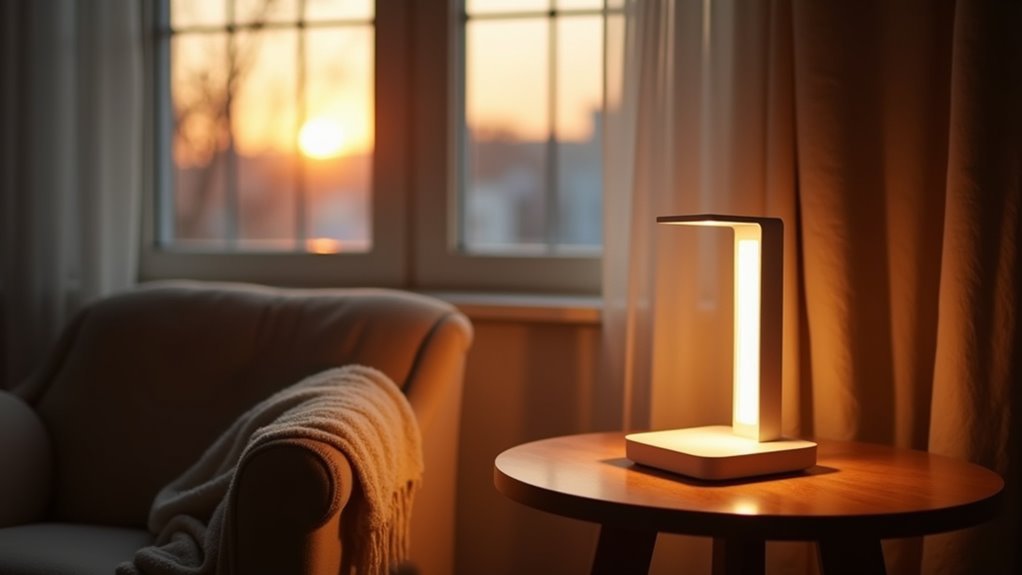
Since effective light therapy depends heavily on using the right equipment, selecting a device that meets specific clinical standards becomes crucial for shift workers seeking relief from sleep disorders.
You’ll need light therapy equipment that delivers at least 10,000 lux of bright light to effectively regulate your circadian rhythms and boost alertness during challenging work schedules.
When choosing your device, consider these key features:
- Full-spectrum capability with UV filtering for safe, prolonged exposure
- Portable design like light visors for on-the-go convenience during breaks
- Adjustable settings for both intensity and duration to match your individual needs
Time your light exposure strategically—use therapy before or during shifts to maximize wakefulness.
The right equipment with proper adjustable settings guarantees you’ll receive ideal benefits tailored to your specific shift work requirements.
Creating Darkness for Better Daytime Sleep
After completing your night shift, your biggest challenge becomes creating an environment dark enough to trick your body into recognizing it’s time for restorative sleep.
Creating darkness is essential for boosting melatonin production and improving sleep quality during daylight hours.
Darkness triggers your body’s natural melatonin release, making it the cornerstone of quality daytime sleep for night shift workers.
Install blackout curtains or use eye shades to eliminate sunlight completely. These tools dramatically enhance your ability to achieve deep, restorative sleep.
You’ll also want to minimize exposure to light from electronic devices, especially blue light from screens, which disrupts your natural sleep cycle.
Maintain your sleep schedule consistently, even on days off, to reinforce your body’s internal clock.
Add earplugs or white noise machines to block external disturbances, ensuring you get the quality rest your body needs.
Using Light Boxes Effectively During Work Hours

While darkness helps you sleep during the day, strategically timed bright light exposure during your night shift becomes your most powerful tool for staying alert and productive.
A quality light box emitting at least 10,000 lux positioned 16 to 24 inches from your face effectively suppresses melatonin production and enhances alertness throughout your shift work hours.
To maximize your light box benefits:
- Schedule 30-90 minute sessions at your shift’s start to realign your circadian rhythm
- Use during breaks for brief exposure that maintains energy levels
- Establish daily consistency to help your body adapt to demanding schedules
This targeted light exposure strategy combats fatigue while supporting your body’s natural adjustment to unconventional work patterns, making night shifts more manageable and productive.
Blue Light Benefits and Precautions for Shift Workers
Blue light specifically targets the photoreceptors in your eyes that regulate circadian rhythm, making it an exceptionally powerful tool for shift workers who need precise control over their sleep-wake cycles. When you’re exposed to bright light therapy exceeding 2500 lx before and during night shifts, you’ll enhance alertness while suppressing melatonin production.
| Timing | Blue Light Action | Purpose | Precaution |
|---|---|---|---|
| Pre-shift | Expose yourself | Boost alertness | Use 2500+ lx intensity |
| During shift | Continue exposure | Maintain wakefulness | Monitor duration carefully |
| Post-shift | Block blue light | Preserve melatonin | Wear blocking glasses |
| Sleep time | Avoid exposure | Enable quality of sleep | Create dark environment |
However, timing matters significantly. Excessive blue light without proper scheduling can worsen shift workers sleep difficulties, making post-shift rest nearly impossible.
Timing Light Exposure for Rotating Shift Schedules
When you’re working rotating shifts, you’ll need to strategically time your light exposure to match each schedule change.
You should get bright light shortly after waking for your specific shift – evening exposure works best when shifting to night work, while morning light helps when reverting back to day shifts.
It’s equally important that you avoid bright light after your shift ends, as this can disrupt your ability to sleep during your designated rest period.
Pre-Shift Light Exposure
Since rotating shift schedules constantly challenge your body’s natural circadian rhythm, timing your light exposure correctly becomes essential for maintaining alertness and adjusting to new work patterns.
Pre-shift light exposure serves as a powerful tool to prepare your body for upcoming work demands and minimize sleep disturbances.
You’ll achieve peak results by implementing bright light exposure 30 to 90 minutes before your shift begins. This strategic timing helps signal your brain to increase alertness when needed most.
Consider these key guidelines for effective pre-shift light therapy:
- Use light sources exceeding 2500 lux intensity for maximum circadian rhythm adjustment
- Maintain consistent exposure timing to reinforce your body’s adaptation process
- Apply morning light for night shifts and evening light when switching back to day work
Post-Shift Light Avoidance
Just as pre-shift light exposure prepares your body for work, managing light after your shift becomes equally important for quality sleep.
Post-shift light avoidance is vital because bright light, especially blue light, suppresses melatonin production and disrupts your body’s natural sleep mechanisms.
When commuting home after your night shift, wear dark sunglasses to minimize light exposure. This simple step helps your circadian rhythms understand it’s time to wind down.
Once home, create a darkened environment using blackout curtains or eye shades in your bedroom.
Your goal is sleeping 7-9 hours in complete darkness, allowing your body to recover from night work demands.
Effective post-shift light avoidance, combined with pre-shift light therapy, reinforces your circadian rhythms and markedly improves overall sleep quality.
Schedule-Specific Light Timing
Rotating shift schedules demand precise light timing strategies that adapt to your changing work patterns. Your circadian rhythm needs consistent cues to synchronize with each new sleep schedule, making strategic light exposure essential for maintaining alertness and sleep quality.
When shifting between different shifts, you’ll need specific approaches:
- Pre-shift preparation: Expose yourself to bright light 30-90 minutes before night shifts begin to enhance alertness and prime your body for nighttime work.
- Post-shift recovery: Use morning light exposure when returning to daytime schedules to reset your internal clock effectively.
- Consistency maintenance: Stick to fixed rise times after establishing new patterns to reinforce your adjusted sleep schedule.
Longer light exposure sessions typically produce better results, so aim for the upper end of the 30-90 minute range when possible.
Combining Light Therapy With Other Sleep Strategies
While light therapy serves as a powerful tool for managing shift work sleep disorder, you’ll achieve the best results when you combine it with other proven sleep strategies.
Maintaining consistent sleep hygiene practices enhances light therapy’s effectiveness in realigning your circadian rhythm. Avoid caffeine and heavy meals before sleep, and create a dark environment using blackout curtains or eye shades after your shifts to minimize disturbances.
Strategic napping for 20-minute periods boosts alertness and performance when paired with light therapy sessions.
This combination helps manage excessive sleepiness during work hours while improving your total sleep time. By integrating these complementary approaches, you’ll maximize light therapy’s benefits and create a thorough system that addresses multiple aspects of shift work sleep challenges.
Common Light Therapy Mistakes to Avoid
Although light therapy can effectively manage shift work sleep disorder, many people sabotage their progress by making critical timing errors.
Poor timing of light exposure can actually worsen your circadian rhythm disruption instead of fixing it.
Here are three critical mistakes that undermine your results:
- Wrong timing – Using bright light close to bedtime inhibits melatonin production and keeps you awake.
- Insufficient light intensity – Light below 2500 lux won’t effectively shift your biological clock.
- Inconsistent schedule – Skipping daily treatments prevents your circadian rhythm from properly adjusting.
You’ll also struggle if you ignore basic sleep hygiene practices.
Light therapy works best when combined with creating a completely dark sleep environment after your shift ends.
Monitoring Your Progress With Light Treatment
Once you’ve implemented a consistent light therapy routine, tracking your progress becomes essential for determining whether the treatment is working effectively.
Keep a sleep diary to document your sleep patterns, duration, and quality while noting changes in alertness and mood. Monitor your light therapy sessions carefully, aiming for 30 to 90 minutes of exposure before shifts to optimize your circadian rhythm adjustment.
Consider using actigraphy or polysomnography to objectively measure sleep outcomes like total sleep time and efficiency. Pay attention to whether your sleep-wake cycle aligns better with your desired schedule after treatment. Document any phase shifts in your circadian rhythm patterns.
Regularly consult your healthcare provider to review progress and adjust your protocol based on documented experiences and persistent symptoms.
Frequently Asked Questions
How to Deal With Shift Work Sleep Disorder?
You should use bright light therapy before night shifts, wear dark sunglasses after day shifts, maintain consistent sleep schedules, avoid caffeine before sleep, and consider melatonin supplements under medical guidance.
Can Light Therapy Help With Sleep Disorders?
Light therapy can greatly improve your sleep disorders by enhancing sleep efficiency and total sleep time. You’ll experience better circadian rhythm synchronization, reduced sleep disturbances, and improved overall sleep quality through targeted light exposure.
What Is Bright Light Therapy for Shift Work Sleep Disorder?
You’ll expose yourself to bright light exceeding 2500 lux before or during night shifts. This non-pharmacological treatment helps resynchronize your circadian rhythms, improving sleep quality and duration when you’re working irregular hours.
How to Use Light Therapy for Night Shift Workers?
You should use bright light therapy 30-90 minutes before your night shift with at least 2500 lux intensity. Wear dark sunglasses after shifts and blue-blocker glasses before bedtime to maintain proper sleep cycles.




Leave a Reply