
You can stop sleep apnea choking by sleeping on your side with body pillows, elevating your head 30-45 degrees, and maintaining a healthy weight through regular exercise and balanced nutrition. Use CPAP therapy for consistent airway pressure, avoid alcohol and sedatives before bed, and quit smoking to reduce throat inflammation. Stay hydrated throughout the day, practice good sleep hygiene with consistent sleep schedules, and seek professional sleep study evaluation for proper diagnosis. These extensive strategies will transform your sleep quality and overall health.
Sleep on Your Side to Keep Airways Open
When you sleep on your back, your tongue and soft tissues can collapse backward and block your airway, but shifting to your side creates a natural solution.
Side sleeping considerably reduces airway obstruction by keeping your throat open and preventing your tongue from falling back. Research demonstrates that people with sleep apnea experience fewer apneic episodes in lateral positions compared to back sleeping.
Side sleeping keeps airways open and significantly reduces sleep apnea episodes compared to back sleeping positions.
You’ll notice fewer choking and gasping episodes when you maintain side sleeping throughout the night. Use a body pillow or wedge pillow to help you stay positioned correctly.
This simple positioning change can dramatically improve your sleep quality and reduce daytime sleepiness. Side sleeping works as an effective, non-invasive lifestyle modification that complements other sleep apnea treatments like CPAP therapy for better airways management.
Maintain a Healthy Weight Through Diet and Exercise
Beyond positional adjustments, your body weight plays a major role in sleep apnea severity. Excess fat around your neck obstructs airways during sleep, making breathing interruptions more frequent and severe.
To maintain a healthy weight, focus on combining regular exercise with proper nutrition. Exercise improves respiratory function while supporting weight management. Even modest physical activity helps reduce sleep apnea symptoms considerably.
A balanced diet rich in fruits, vegetables, whole grains, and lean proteins accelerates weight loss effectively. Studies show that losing just 10% of your body weight can dramatically improve sleep apnea symptoms.
Avoid processed foods and excessive alcohol, which cause weight gain and throat inflammation. Implement meal planning and consistent physical activity for long-term success in managing your sleep apnea.
Use CPAP Therapy for Consistent Airway Pressure
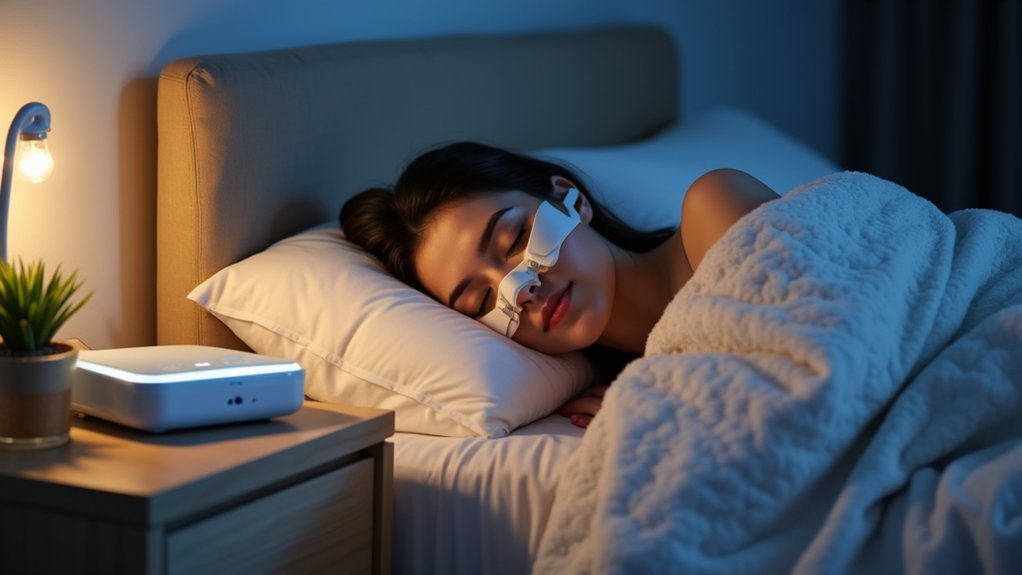
Although lifestyle changes help manage sleep apnea symptoms, CPAP therapy remains the gold standard treatment for moderate to severe cases. This continuous positive airway pressure device delivers a steady stream of air through a mask, keeping your airway open throughout the night.
CPAP therapy dramatically reduces apneas and hypopneas by over 90%, virtually eliminating those frightening choking episodes that disrupt your sleep.
You’ll need an adjustment period to get comfortable with the mask, but most patients report significant improvements in sleep quality and reduced daytime fatigue.
Regular follow-up appointments guarantee proper settings and mask fit. Beyond symptom relief, CPAP therapy protects you from serious complications like high blood pressure, heart disease, and stroke associated with untreated obstructive sleep apnea.
Avoid Alcohol and Sedatives Before Bedtime
You mightn’t realize that your evening glass of wine or relaxation medication is sabotaging your sleep apnea treatment.
Alcohol and sedatives relax your throat muscles, making airway blockages more likely and turning mild snoring into dangerous breathing interruptions.
Creating an alcohol-free evening routine at least 4-6 hours before bed can dramatically reduce your choking episodes and improve your sleep quality.
How Alcohol Worsens Apnea
When you consume alcohol before bedtime, it relaxes the muscles in your throat and increases the likelihood of airway obstruction, making your sleep apnea symptoms considerably worse.
Even moderate alcohol intake triggers more frequent apneic episodes by interfering with your normal breathing patterns throughout the night.
The sedative effects of alcohol depress your central nervous system, which inhibits your respiratory function and heightens your risk of choking during sleep.
This dangerous combination creates a perfect storm for obstructive sleep apnea complications.
To protect yourself, you’ll need to avoid alcohol for at least four to six hours before bedtime.
This timing allows your body to metabolize the alcohol and prevents it from disrupting your sleep breathing patterns.
Safe Evening Routines
Creating a safe evening routine requires more than just timing your last drink—sedatives and anti-anxiety medications pose equally serious risks to your breathing during sleep.
These substances depress your central nervous system, weakening your body’s natural respiratory drive and potentially triggering more severe choking episodes.
Even moderate alcohol consumption exacerbates sleep apnea by promoting deeper sleep that leads to frequent breathing interruptions.
Both alcohol and sedatives relax your throat muscles, increasing airway obstruction risk.
Instead, establish safe evening routines that include proven relaxation techniques like deep breathing exercises or gentle stretching.
These alternatives improve sleep quality without compromising your breathing.
Studies show individuals who abstain from these substances experience notably fewer and less severe apnea episodes, making substance-free evenings essential for managing your condition.
Elevate Your Head While Sleeping
You’ll find that raising your head during sleep creates a natural advantage against airway obstruction by using gravity to keep breathing passages clear.
Choosing the right pillow height or investing in an adjustable bed can make this positioning both comfortable and effective for reducing sleep apnea episodes.
This simple elevation technique works by preventing your tongue and soft tissues from collapsing backward into your throat while you’re lying down.
Proper Pillow Height Selection
While many people overlook the importance of pillow selection, choosing the right height can considerably reduce airway obstruction and improve your sleep apnea symptoms.
You’ll want to position your head at a 30-45 degree angle to promote proper airway alignment and minimize snoring episodes. Memory foam or contour pillows work best because they conform to your head and neck shape, providing consistent support throughout the night.
Don’t settle for the first pillow you try. You’ll need to experiment with different heights until you find what feels most comfortable and reduces choking sensations.
Ascertain your pillow stays firm enough to prevent your head from sinking too low, which could compromise your breathing during sleep.
Adjustable Bed Benefits
Beyond pillow adjustments, an adjustable bed offers even greater control over your head positioning throughout the night.
These beds allow you to customize elevation angles, providing individualized support that enhances your breathing patterns during sleep. By elevating your upper body, you’ll reduce the likelihood of throat muscles collapsing, which prevents airway obstruction—a primary cause of sleep apnea choking episodes.
Research shows that sleeping at an incline decreases apneic episodes and improves overall sleep quality.
Adjustable beds also alleviate GERD symptoms, which can contribute to nighttime choking and aspiration. Many models include massage settings and memory foam mattresses, further enhancing comfort and promoting better sleep hygiene.
You’ll find it easier to maintain healthy sleeping posture throughout the night.
Gravity Assists Airway Opening
When gravity works in your favor, it becomes a powerful ally in maintaining clear airways throughout the night. Elevating your head by 30 degrees helps prevent airway obstruction by keeping your throat open naturally. This positioning reduces choking episodes and considerably decreases obstructive sleep apnea severity.
| Sleep Position | AHI Reduction | Equipment Needed |
|---|---|---|
| Flat sleeping | 0% | Standard pillow |
| 15-degree elevation | 25% | Extra pillows |
| 30-degree elevation | 45% | Wedge pillow |
| Adjustable bed | 60% | Electric bed frame |
Research shows positional therapy dramatically lowers apnea-hypopnea index scores, indicating fewer breathing interruptions. You can achieve this elevation using adjustable beds or wedge pillows. This simple adjustment improves airflow, reduces snoring, and serves as an effective first step for mild to moderate cases.
Consider Oral Appliance Therapy
If you’re struggling with mild to moderate obstructive sleep apnea and find CPAP therapy uncomfortable or cumbersome, oral appliance therapy offers a promising alternative that’s often easier to tolerate.
These custom-fitted dental devices reposition your lower jaw and tongue to keep your airway open during sleep, preventing apnea episodes.
Research shows oral appliances effectively reduce apneas and hypopneas per hour while improving sleep quality and reducing daytime sleepiness.
Clinical studies demonstrate that oral appliances significantly decrease sleep disruptions per hour while enhancing overall sleep quality and reducing daytime fatigue.
Consider these important factors:
- Professional fitting – Work with a dentist specializing in sleep medicine for proper customization
- Regular monitoring – Schedule follow-ups to check fit and watch for side effects like jaw discomfort
- Insurance verification – Check coverage beforehand since policies vary greatly
This non-invasive treatment provides comfortable relief for many sleep apnea sufferers.
Practice Good Sleep Hygiene Habits
You’ll find that practicing good sleep hygiene habits can greatly reduce your sleep apnea symptoms and improve your overall sleep quality.
Start by establishing a consistent sleep schedule that has you going to bed and waking up at the same time every day, even on weekends.
You’ll also want to create an ideal sleep environment and develop a relaxing bedtime routine that signals to your body it’s time to wind down.
Establish Consistent Sleep Schedule
Although sleep apnea disrupts your natural rest patterns, establishing a consistent sleep schedule serves as one of the most effective ways to regulate your body’s internal clock and minimize symptoms.
When you go to bed and wake up at the same time daily, you’re training your body to anticipate sleep, which improves overall sleep quality despite sleep apnea challenges.
Your consistent sleep schedule should include these essential elements:
- Target 7-9 hours nightly – Adequate rest reduces daytime fatigue and sharpens mental clarity.
- Limit daytime naps – Keep them under 30 minutes to avoid disrupting nighttime sleep.
- Create a pre-sleep routine – Use relaxation techniques like deep breathing to signal wind-down time.
Additionally, minimize screen exposure an hour before bed, as blue light interferes with melatonin production and disrupts your sleep-wake cycle.
Create Optimal Sleep Environment
While maintaining a consistent sleep schedule forms the foundation of better rest, transforming your bedroom into an ideal sleep environment can greatly reduce sleep apnea symptoms and improve your overall sleep quality.
Keep your bedroom cool, dark, and quiet since temperature fluctuations and noise disrupt sleep patterns and worsen breathing difficulties. Invest in a supportive mattress and elevating pillows that position your head higher than your body, enhancing airflow and reducing airway obstruction during sleep. This simple adjustment helps keep your breathing passages open throughout the night.
Additionally, limit screen exposure and blue light at least one hour before bedtime, as these interfere with melatonin production. Create a relaxing bedtime routine like reading or meditating to signal your body it’s time to wind down naturally.
Develop Relaxing Bedtime Routine
Establishing a consistent bedtime routine signals your body when it’s time to prepare for sleep, which can greatly reduce sleep apnea episodes and improve your overall rest quality.
Your bedtime routine should begin at least one hour before you plan to sleep, allowing your body sufficient time to shift from wakefulness to rest.
Creating a relaxing environment involves dimming lights and reducing noise levels throughout your home.
This environmental shift helps trigger your body’s natural sleep mechanisms and prepares your mind for deeper, more restorative sleep.
Key calming activities to incorporate include:
- Reading a book to shift focus away from daily stressors
- Taking a warm bath to relax tense muscles and lower body temperature
- Practicing deep breathing exercises to activate your parasympathetic nervous system
Quit Smoking to Reduce Throat Inflammation
If you’re a smoker struggling with sleep apnea, breaking the habit represents one of the most impactful changes you can make for your airway health. When you quit smoking, you’ll reduce throat inflammation that directly contributes to obstructive sleep apnea symptoms. Smoking irritates your upper airway, increasing mucus production and causing obstruction during sleep.
| Smoking Effects | Quitting Benefits |
|---|---|
| 3x higher sleep apnea risk | Improved airway function |
| Increased mucus production | Reduced throat swelling |
| Worsened choking episodes | Better breathing patterns |
| Persistent airway irritation | Enhanced sleep quality |
You’ll notice improvements within weeks of cessation. Healthcare professionals can provide counseling and nicotine replacement therapy to support your efforts, ultimately reducing your sleep apnea severity.
Stay Hydrated Throughout the Day
Beyond eliminating harmful substances from your routine, maintaining proper hydration plays a significant role in managing sleep apnea symptoms.
When you’re adequately hydrated, your throat tissues stay moist, reducing inflammation and airway obstruction that contributes to sleep apnea episodes.
Dehydration worsens mucus production, creating additional blockages in your airways during sleep.
Inadequate hydration triggers excess mucus formation, leading to increased airway obstructions and more frequent sleep apnea events.
You’ll want to focus on consistent fluid intake throughout the day rather than drinking large amounts before bedtime.
Here are three key hydration strategies:
- Drink 8-10 cups of water daily, adjusting for your activity level and climate
- Include hydrating foods like fruits and vegetables in your meals
- Limit caffeine and alcohol as these substances dehydrate your body and worsen symptoms
This approach helps maintain clear airways and reduces choking episodes.
Seek Professional Sleep Study Evaluation
While self-care strategies can greatly improve your sleep apnea symptoms, getting a professional sleep study evaluation remains the gold standard for accurate diagnosis and treatment planning.
A sleep specialist will conduct polysomnography, monitoring your breathing patterns and blood oxygen levels throughout the night. This thorough assessment can occur at a sleep center or through home sleep apnea testing, depending on your specific circumstances.
During your evaluation, you’ll receive physical examinations of your throat, mouth, and nose, plus measurements of your neck and waist circumference. These assessments help determine your obstructive sleep apnea severity and risk factors.
Once your sleep study results are analyzed, your specialist can recommend appropriate treatments, whether that’s CPAP therapy, lifestyle modifications, or surgical interventions tailored to your condition.
Frequently Asked Questions
How Do I Stop Choking From Sleep Apnea?
You’ll reduce sleep apnea choking by sleeping on your side, losing weight, using CPAP therapy, trying oral appliances, and avoiding alcohol before bed to keep airways open.
What Is the 3% Rule for Sleep Apnea?
You’ll encounter the 3% rule when your oxygen levels drop below 90% for more than 3% of total sleep time, indicating you need sleep apnea treatment or intervention.
How Do You Keep Your Airway Open During Sleep?
You’ll keep your airway open by sleeping on your side, using a CPAP device, maintaining healthy weight, avoiding alcohol before bed, and considering oral appliances that reposition your jaw.
How Do I Stop My Tongue From Blocking My Airway While Sleeping?
You’ll prevent tongue blockage by sleeping on your side, using a mandibular advancement device, practicing tongue strengthening exercises, maintaining healthy weight, and avoiding alcohol before bed.




Leave a Reply